

When Thirst Fades with Age: Keeping Edmonds Seniors Safely Hydrated

Most people trust thirst to tell them when to drink. But for older adults, that signal is no longer dependable. The body’s ability to detect dehydration weakens with age, meaning seniors can become significantly dehydrated before they ever feel the urge to reach for a glass of water.
This is not a minor inconvenience. Dehydration in older adults is linked to falls, cognitive decline, kidney problems, and hospitalizations. Understanding why this happens — and what to do about it — is one of the most practical steps families and caregivers can take to protect a senior’s health.
What you will learn:
- Why the body’s natural thirst signal becomes less reliable with age, and the health risks that come with undetected dehydration.
- Simple warning signs that can help families and caregivers spot dehydration early, before it leads to something serious.
- Practical strategies for building a daily hydration routine that doesn’t rely on feeling thirsty.
- How thoughtful home care can provide the structure and gentle encouragement seniors need to stay safely hydrated.
Table of Contents
Why Thirst Becomes Less Reliable with Age
The sensation of thirst is regulated by the brain, specifically by receptors that monitor fluid levels in the body. As people age, these receptors become less sensitive. By the time a senior feels thirsty, they may already be in a mild state of dehydration.
Several additional factors compound this problem:
- Reduced kidney efficiency — Aging kidneys are less effective at conserving water, increasing fluid loss.
- Medication side effects — Diuretics, blood pressure medications, and certain antidepressants can accelerate fluid loss.
- Chronic conditions — Diabetes and heart disease can affect how the body manages fluids.
- Mobility limitations — When getting up to get a drink requires effort or assistance, seniors may simply drink less.
- Bathroom concerns — Fear of incontinence or frequent nighttime trips can lead seniors to limit fluid intake deliberately.
Because these changes develop gradually, many seniors and their families do not realize there is a problem until symptoms appear.

The Real Health Risks of Dehydration
Dehydration affects nearly every system in the body. Even mild fluid loss can have noticeable consequences for older adults.
Short-term effects include:
- Fatigue and low energy
- Headaches
- Constipation
- Dizziness or lightheadedness
- Difficulty concentrating or increased confusion that can be mistaken for Dementia
More serious complications include:
- Low blood pressure and increased fall risk
- Urinary tract infections
- Kidney strain or failure
- Rapid heart rate
- Hospitalization
What makes dehydration particularly dangerous for seniors is that its early symptoms — confusion, weakness, fatigue — are often mistaken for signs of aging or other conditions. This can delay treatment and allow the situation to worsen.
Warning Signs Families Should Watch For
Because seniors may not recognize or report dehydration symptoms, family members and caregivers play a critical role in early detection.
Watch for these signs:
- Dry mouth or cracked lips
- Dark yellow or amber-colored urine
- Infrequent urination
- Dry or flaky skin
- Sudden increase in confusion or forgetfulness
- Unusual fatigue or weakness
- Dizziness when standing up
If these symptoms appear suddenly or worsen over a short period, contact a healthcare provider promptly. Do not wait to see if they resolve on their own.
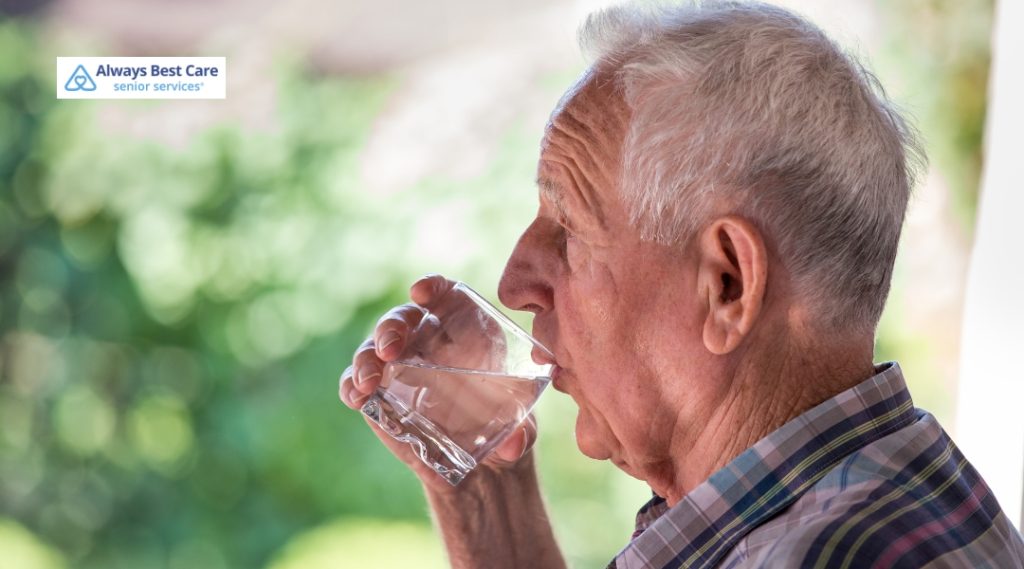
Building a Hydration Routine That Works
Since thirst cannot be relied upon, hydration needs to become a structured habit rather than a reactive response.
Practical strategies include:
- Drinking a full glass of water with every meal and medication
- Keeping a water bottle visible and within easy reach throughout the day
- Setting phone or watch reminders to drink every one to two hours
- Drinking a glass of water before going outside or engaging in any physical activity
- Sipping fluids steadily throughout the day rather than consuming large amounts at once
Consistency matters more than quantity at any single moment. Small, regular sips throughout the day are more effective — and more manageable — than trying to catch up all at once.
Hydration Goes Beyond Water
Plain water is ideal, but it is not the only way to stay hydrated. Many foods and beverages contribute meaningfully to daily fluid intake.
Hydrating foods to incorporate:
- Watermelon, cucumbers, and strawberries
- Oranges and other citrus fruits
- Lettuce and leafy greens
- Broth-based soups
- Yogurt and low-fat milk
- Herbal teas (caffeine-free options are best)
Incorporating these into regular meals adds hydration without requiring seniors to drink more than feels comfortable. It also supports better nutrition overall.

How Caregivers Make a Difference
For seniors who live alone or manage multiple health conditions, maintaining consistent hydration can be genuinely difficult. Caregivers — whether family members or professional home care aides — can provide the structure and encouragement that makes a real difference.
Caregivers can help by:
- Offering water and hydrating beverages at regular intervals throughout the day
- Preparing meals that include high-water-content foods
- Monitoring urine color and frequency as a simple hydration check
- Noting any behavioral or physical changes that may signal dehydration
- Communicating observations to family members or healthcare providers
These are not complicated interventions. They are consistent, attentive habits that significantly reduce the risk of dehydration-related health events.
Supporting Healthy Habits Every Day
Dehydration is largely preventable. With the right routines and attentive support, seniors can maintain their energy, protect their cognitive health, and reduce their risk of serious complications — all from something as simple as drinking enough fluids each day.
If your loved one needs support building healthy daily habits at home, Always Best Care of Edmonds, WA is here to help. Our caregivers provide compassionate, consistent assistance with nutrition, hydration, and overall well-being.
Call Always Best Care of Edmonds, WA at (425)955-2273 to schedule a care consultation and learn how we can help your loved one stay healthy, hydrated, and independent at home.

Frequently Asked Questions
Q: How much water should seniors drink each day?
A: Most older adults need around 6 to 8 cups (48–64 ounces) of fluid per day, though individual needs vary based on health conditions, medications, activity level, and climate. A healthcare provider can give personalized guidance.
Q: Why do seniors feel less thirsty as they age?
A: The brain’s thirst receptors become less sensitive over time, meaning the signal to drink arrives later — or not at all — even when the body needs fluids. This is a normal physiological change, but it requires proactive management.
Q: What is the easiest way to tell if a senior is dehydrated?
A: Urine color is one of the simplest indicators. Pale yellow urine generally suggests adequate hydration, while dark yellow or amber urine is a sign that more fluids are needed. Dry mouth, fatigue, and confusion are also common early signs.
Q: Are caffeinated drinks okay for seniors?
A: Moderate amounts of caffeinated beverages like coffee or tea are generally fine and do contribute to fluid intake. However, caffeine has a mild diuretic effect, so water and caffeine-free options should make up the majority of daily fluid intake.
Q: Can dehydration confuse seniors?
A: Yes. Dehydration is a well-documented cause of sudden confusion or cognitive changes in older adults. If a senior becomes unexpectedly disoriented or forgetful, dehydration should be considered and ruled out promptly.
Q: How can caregivers encourage seniors who resist drinking fluids?
A: Offering a variety of options — flavored water, herbal teas, broths, or hydrating snacks — can help. Tying fluid intake to existing routines, like meals or medication times, also makes it easier to build consistent habits without it feeling like an added task.
Link to the Markdown File version of this article.