3 Months Before Death Symptoms [What To Look Out for + FAQs]
![3 Months Before Death Symptoms [What To Look Out for + FAQs]](https://alwaysbestcare.com/wp-content/uploads/2024/10/3-months-before-death-symptoms-hero-image.png "3 Months Before Death Symptoms [What To Look Out for + FAQs] 2")
Table of Contents
Declining Health in the Elderly: Key Takeaways
- As we age, our health often declines due to a combination of factors such as cellular aging, reduced organ function, and a weakened immune system
- Three months before death, symptoms might include changes in breathing, altered senses, and a reduced desire to eat or drink
- Every older adult is different; some show signs of decline sooner than others, and the pace can vary from person to person
End-of-life is a universal reality. Unlike specific health conditions that impact only certain individuals, this stage is an inevitable part of the human experience.
Globally, it’s estimated that 20 million people need some form of end-of-life care, emphasizing how essential it is to face this time with empathy, compassion, and gentle support.
While physical and mental changes are a natural part of aging, they can also signal more serious health issues, especially as someone nears the end of their life.
That might leave you wondering: “What are the 3 months before death symptoms to look out for”?
Whether it’s forgetting recent events or losing interest in food, paying attention to these signs can really make a difference.
In this article, we’ll guide you through:
- Recognizing the sign of elderly decline
- Discussing the symptoms that might appear three months before death
- Share tips on how to care for your senior loved one
- Answer common FAQs about declining health in the elderly
- Explain how our services at Always Best Care can help
Why Does Health Deteriorate With Age?
Aging happens when cellular damage accumulates over time. This accumulation gradually minimizes physical and mental abilities and increases disease risks.
Health tends to deteriorate with age due to several factors, including:
- Cellular Aging: As people age, their cells become damaged due to biological, chemical, or immunological factors. In the elderly, this damage accumulates, leading to reduced cellular function and the inability to regenerate tissues, which contributes towards overall health decline.
- Compromised Organ Function: Over time, organs like the heart, kidneys, and lungs, gradually lose some of their functionality due to changes in cells and tissues.
- Weakened Immune System: With a decreasing number of white blood cells able to respond to new antigens, immune health declines with age, making it more difficult to ward off infections.
- Chronic Inflammation: Chronic low-level inflammation tends to increase with age, contributing to the development of age-related diseases, like arthritis, heart disease, and Alzheimer’s.
- Lifestyle Factors: A person’s life choices, like what they eat and how active they are, play an integral role in their health and resilience as they age.
When Does Health Begin To Decline in Elderly Individuals?
Elderly individuals’ health can vary and largely depends on factors, such as genetics, lifestyle choices, and pre-existing health conditions.
For example, individuals who are 30 years old may begin to lose lean tissue. At this age, muscles, the liver, kidneys, and other organs may start to lose some of their cells.
Generally, noticeable changes may begin in the mid-60s to early 70s. During this period, common signs of sudden health decline in the elderly include diminished physical strength and limited mobility.

10 Signs Your Elderly Parent Needs Help
Caring for a senior loved one can be challenging. Whether you’re the primary caregiver or just want to be there for them, knowing what to expect is essential.
It’s also important to remember that everyone is different. Not every elderly individual shows the same signs of decline, and the rate of decline can vary.
These are a few signs of decline to keep an eye on:
- Depression: A feeling of persistent sadness
- Anhedonia: The lack of enjoyment or interest in activities
- Anxiety: Heightened fear about events, such as end-of-life planning
- Hypersomnia: Excessive sleepiness
- Wandering: Becoming lost or confused about their location
- Limited Mobility: Difficulty moving around or completing daily tasks
- Dwindling Appetite: Loss of appetite or changes in eating habits
- Incontinence: Loss of bladder control or frequent bathroom emergencies
- Poor Housekeeping: A noticeable decline in the cleanliness
- Unexplainable Behavior Changes: Acting in ways that are unusual or out of character, such as aggression or making rude gestures or comments
- Memory Loss: More significant and noticeable gaps in memory, such as forgetting birthdays or loved ones’ names
“Families often overlook subtle signs such as increased forgetfulness, missed medications, changes in hygiene, withdrawal from social activities, unexplained weight loss, or difficulty managing daily tasks like cooking or paying bills. Early intervention – through medical evaluation, added support at home, and lifestyle adjustments – can address issues before they become crises, helping seniors stay safer, healthier, and independent with a better quality of life for longer”.
Sheila Davis
Chief Operating Officer at Always Best Care
What To Expect: 3 Month Before Death Symptoms
Everyone’s journey at the end of life is different. Some people decline slowly, while others change more quickly.
Here are the symptoms that might appear three months before death:
- Breathing might change, meaning it might slow down, become irregular, or sound shallow
- They may stop eating or drinking as their body naturally starts to slow down
- You might notice their skin looking paler or taking on a bluish tint
- They’ll likely sleep much more and spend less time awake or alert
- Some restlessness or agitation can happen as the body adjusts
- Their hands, feet, nose, and ears might feel cool due to reduced circulation
- They could experience sensory changes, like seeing or hearing things others don’t
As your loved one approaches the end of life, it’s not about having the perfect words; it’s about showing up.
A quiet presence, a hand to hold, or even just sitting nearby can speak volumes.
How To Help Your Senior Loved One When Their Health Declines
When someone receives a new diagnosis or their existing condition worsens, it can be tough for both the patient and their family members.
Having a plan in place enables a healthier response to these changes.
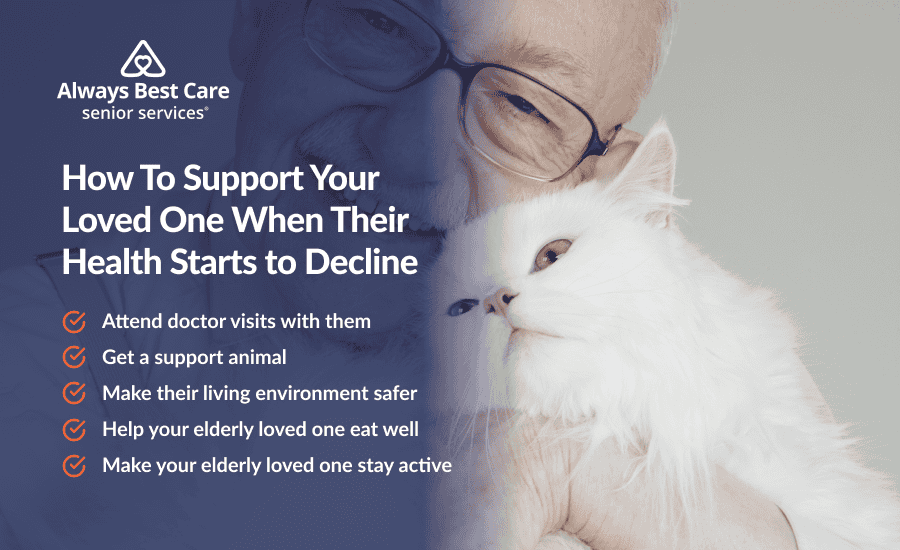
- Schedule and accompany your senior loved one to regular doctor visits to monitor their health and effectively manage existing conditions.
- Consider getting a pet for your senior loved one. Pets can provide significant comfort, companionship, and emotional support, enhancing your loved one’s quality of life.
- Use senior-friendly furniture, install grab bars in the bathroom, ensure good lighting, and remove trip hazards like loose rugs.
- Help your elderly loved one eat well by preparing tasty, healthy meals for them.
- Encourage your elderly loved one to stay active by practicing simple exercises, such as walking, stretching, or chair yoga to keep their strength and mobility.
- Set up a system to help them manage their medications, such as using daily pill organizers.
- Spend quality time with them and listen to their concerns to help them combat feelings of loneliness or depression.
- Encourage your elderly loved one to participate in community or senior center activities to keep them socially active and engaged with peers.
- Consider hiring a professional caregiver if you can’t provide the care they need. This can include part-time help from home health aides or full-time care in an assisted living facility.
Our Compassionate Services Help You Cope With Signs of Elderly Decline
Understanding the signs of declining health in the elderly can help you know what your loved one is going through. It can also make the transition smoother for everyone involved in their care.
At Always Best Care, our dedicated caregivers are here to guide you through recognizing these symptoms.
With operations in 250 territories, we’re always ready to support family caregivers and ease their burdens.
- In-home care services: Our skilled caregivers are ready to make life more comfortable for your elderly loved one. They offer everything from round-the-clock care and companionship to safety supervision, help with bathing and grooming, light housekeeping, and transportation.
- Skilled home health care services: We develop personalized care plans that cater specifically to chronic conditions, ensuring your loved one’s medical needs are managed effectively.
- Specialized home care services: Right in the comfort of their own home, we provide your elderly loved one with daily social interactions and healthcare guidance. We use cutting-edge technology like personal emergency response systems, balance tracking systems, and remote patient monitoring to manage symptoms efficiently.
- Respite care services: We offer temporary relief for caregivers, giving you a well-deserved break while ensuring your loved one receives uninterrupted, compassionate care.
- Dementia care services: We provide specialized care for individuals with dementia, focusing on their comfort, safety, and overall well-being to ensure they feel secure and valued.
- Senior living referral services: Let us help you find the perfect senior living options that align with your loved one’s preferences and needs. We’re here to guide you every step of the way.
- Veterans assistance program: We are committed to delivering top-quality care to veterans and helping them in getting the funds they need for their care requirements.
Declining Health in the Elderly: FAQs
Why do seniors sleep so much?
Excessive sleep in seniors can be linked to:
- Chronic health conditions, like heart disease, diabetes, or kidney problems
- Medication side effects that cause drowsiness or fatigue
- Depression or emotional withdrawal, which is common with loneliness or grief
- Cognitive decline, including early signs of dementia or Alzheimer’s
- Weakened immune system or poor nutrition, which leaves the body feeling more fatigued
How can you tell when an elderly person is starting to decline?
You might notice a few physical changes that suggest your loved one is slowing down. These can include:
- Trouble getting around or needing more help to move
- A noticeable change in posture or the way they walk
- Feeling weaker or more frail than usual
- Struggling with coordination or balance
- Getting winded easily or having a hard time catching their breath
- Feeling sore or in pain more often
- Tiring quickly from everyday activities
What are the signs that the end of life might be near?
If your loved one is nearing the end of life, you might start to see:
- Hallucinations
- Little or no interest in eating or drinking
- Breathing changes, like long pauses, shallow breaths, or unusual sounds
- A general sense of withdrawal, even from people they care about
Is declining health always a sign the end is near?
Not always. Many older adults live with ongoing health issues for years.
But if you’re noticing big changes, like little interest in food or confusion, it could be a sign that they need more support, even if they’re not at the end of life.
How can I support a loved one going through this?
Just being there goes a long way. Check in often, help out with meals or doctor visits, and make their space feel safe and comfortable.
Most of all, listen. Your calm presence can bring more comfort than you might realize.