
24-Hour Care: Benefits & How To Choose the Right Provider

Table of Contents
24-Hour Care: Key Takeaways
- With trained caregivers available around the clock, your loved one is never alone
- 24-hour care reinforces independence while preventing emergencies
- Understanding what 24-hour home care includes is key to finding the right fit for your family
By 2034, older adults will officially outnumber kids under 18. That’s a first in U.S. history.
With more seniors choosing to age at home, the need for 24-hour care will only continue to grow.
If you’re wondering how you can help Mom or Dad, our guide:
- Breaks down the benefits of 24-hour care
- Covers how 24-hour home care differs from live-in care
- Shares how to decide if it’s the right fit for your elderly loved one
Benefits of 24-Hour Home Care
Wondering if 24-hour care is worth it? Here’s how round-the-clock support can bring peace of mind, safer routines, and more comfort, for both you and your loved one.
1. Someone Is Always There To Prevent Emergencies
Picture this: It’s 2 a.m., and your loved one wakes up disoriented, unsure whether it’s morning or night. They shuffle toward the bathroom, skipping their walker, thinking they don’t need help.
With 24-hour care, they are never alone. There’s always a calm, capable professional nearby to help with:
- Medication reminders
- Mobility and transfers
- Medical emergencies
- Meal prep and hydration
- Bathroom trips (especially overnight)
2. Decreases Anxiety, Especially With Dementia
Let’s be honest: even when health challenges come up, most older adults would rather stay in the comfort of their own home.
A recent AARP survey found that nearly 75% of adults aged 50 and older want to age in place instead of moving into an assisted living facility.
- Eases anxiety and cuts down on confusion
- Helps maintain independence and confidence
- Supports healthier routines, like regular meals, sleep, and hygiene
3. Encourages Personalized Care
In a facility, one caregiver might be responsible for 10, 15, or even 20 residents.
At home? Care is 100% focused on your loved one.
This means:
- No sitting in discomfort or missing meals
- No skipped medications or rushed routines
- Care that adjusts in real time; based on mood, behavior, or medical needs.
4. Health Concerns Are Called Out Sooner
WWith round-the-clock care, even the smallest changes are noticed and addressed before they escalate:
- Is that cough getting worse?
- Is your loved one eating less?
- Are they more tired than usual?
Caregivers can flag these early signs and communicate with family or doctors. This helps you avoid ER visits, manage chronic conditions, and catch infections or issues early.
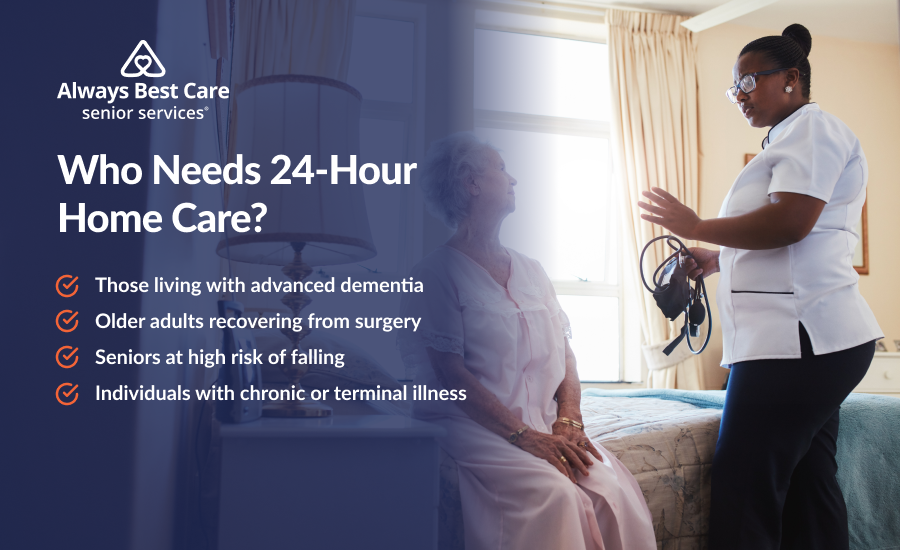
Who Needs 24-Hour Home Care?
While not every senior requires continuous supervision, 24-hour home care can be life-changing for those facing serious health or safety concerns.
1. Seniors Living With Advanced Dementia or Alzheimer’s
As memory loss gets worse, many older adults start having trouble with everyday tasks, get confused more easily, or even wander without realizing it.
These behaviors often become more pronounced in the evening, a phenomenon known as sundowning.
With 24-hour care, a trained caregiver is always nearby to:
- Redirect wandering or agitation
- Create a calming, structured environment
- Assist with meals, hygiene, and medications
2. Older Adults Recovering From Surgery
The days and weeks after a major surgery can be overwhelming, especially for seniors who live alone.
A recent study shows that frail older adults face higher risks of hospital readmission.
A 24-hour caregiver can support recovery by:
- Assist with mobility and transfers
- Monitor symptoms or side effects
- Ensure medications are taken on time
3. Seniors at High Risk of Falling
Did you know falls are a leading cause of injury for people over 65? It’s more common than many families realize.
If your loved one is unsteady on their feet, has vision problems, or feels weaker than they used to, having 24-hour care can help keep them safe.
Caregivers can:
- Offer hands-on support when walking or standing
- Help navigate stairs, bathrooms, and uneven surfaces
- Provide immediate assistance if a fall does occur
4. Individuals With Chronic or Terminal Illness
When health challenges get more serious, it’s not unusual for seniors to need extra hands-on help.
24-hour home care offers:
- Companionship during difficult times
- Symptom monitoring and comfort-focused support
- Help with feeding, toileting, and repositioning
24-Hour Home Care vs. Live-In Care: What’s the Difference?
Although they’re often confused, live-in care and 24-hour care offer different levels of support. Knowing the difference can help you choose what’s best for your loved one.
| Feature | Live-In Care | 24-Hour Care |
| Care setup | One caregiver lives in the home | Caregivers rotate in shifts |
| Coverage | Daytime support; caregiver sleeps at night | Continuous, awake care day and night |
| Best for | Daily help and companionship | Complex needs (advanced dementia) or cannot be left alone |
| Night support | Occasional or light overnight help | Active overnight monitoring |
| Independence | Supports routine and independence | Full assistance with safety focus |
| Care setting | In your loved one’s home | In your loved one’s home |
| Cost | Typically, more affordable | Higher due to multiple caregivers |
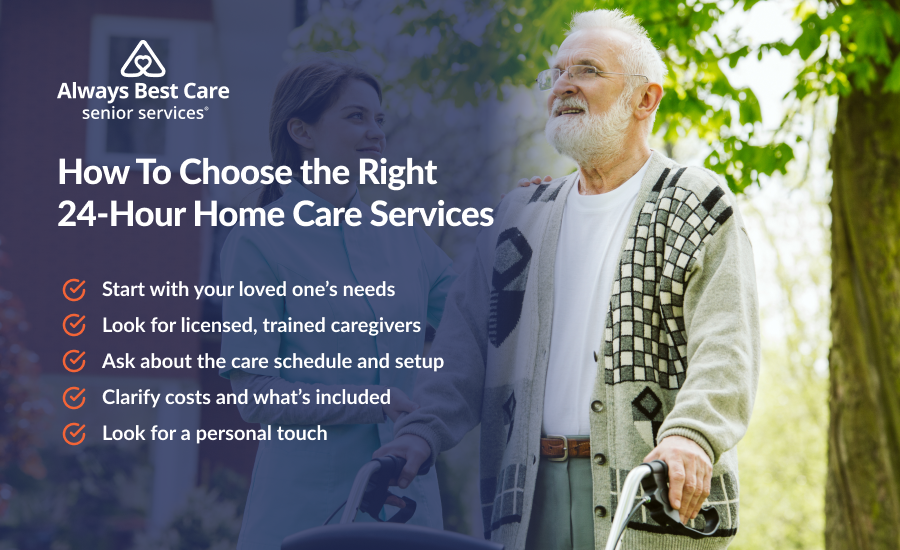
How To Choose the Right 24-Hour Home Care Services
This isn’t just about hiring help; it’s about finding someone who’ll be there for the quiet moments, the tough days, and all the little things in between.
From late-night restlessness to morning routines and mealtime conversations, 24-hour care touches every part of daily life.
Here’s how to make sure you’re choosing a provider you can truly rely on:
1. Start With Your Loved One’s Needs
Before reaching out to any agency, get specific about what kind of support is needed:
- Is it mostly physical help (like bathing, transportation, or fall prevention)?
- Do they need memory care or dementia support?
- Will the caregiver be managing medications or helping with mobility devices?
- Is companionship and emotional support just as important as medical tasks?
Being clear on this will help you filter out providers that don’t match your needs.
2. Look for Licensed, Trained Caregivers
Quality can really vary, so don’t be afraid to ask questions. A trustworthy caregiver should be:
- Background-checked and insured
- Certified or licensed (especially for medical support)
- Trained in elder care, dementia, or chronic conditions if needed
Ask how the agency screens, trains, and supervises their staff, and how they handle callouts or schedule changes.
3. Ask About the Care Schedule and Setup
When people say “24-hour care,” they might mean a few different things:
- Live-in care: One caregiver lives in the home and works long shifts, typically with sleep breaks.
- Rotating shifts: Two or three caregivers rotate 8- to 12-hour shifts to provide constant awake coverage.
Before choosing care, it’s important to ask:
- Will someone be awake and available overnight?
- How are meals and rest breaks managed?
- Is the caregiver expected to stay awake all night, or are they allowed to rest?
Choose the setup that works best for your loved one’s habits and safety needs.
4. Get Clear on Costs and What’s Included
24-hour home care is a big investment, so transparency matters. Ask:
- Is care priced by the hour, by the day, or on a weekly basis?
- Do we need to commit to a certain number of shifts or hours to begin?
- Do they accept long-term care insurance or VA benefits?
- Are there additional fees (for weekends, holidays, or certain medical tasks)?
Don’t be afraid to shop around. Get the pricing in writing so you can see exactly what’s included and how each provider stacks up.
5. Look for a Personal Touch
A caregiver can have all the right skills on paper, but if they don’t click with your loved one, it won’t feel right.
Look for:
- Caregivers who speak the same language or who understand the little cultural nuances that make your loved one feel at home
- Agencies that offer trial shifts or caregiver matching
- Caregivers who are responsive, respectful, and human
Find Around-the-Clock Support With 24-Hour Care from Always Best Care
When care needs become nonstop, having the right support can make all the difference.
At Always Best Care, our experienced caregivers provide 24-hour, in-home support that prioritizes safety, comfort, and dignity.
Whether it’s help with mobility, medication reminders, or simply having someone there at all hours, you can breathe a little easier knowing your loved one is in good hands.
24-Hour Care: FAQs
What is 24 hour home health care? Who benefits from it?
24-hour home health care is around-the-clock support provided in the comfort of your loved one’s home.
Caregivers work in shifts to ensure someone is always awake and available, offering peace of mind for families who can’t be there 24/7.
At what point does someone with dementia need 24-hour care?
24-hour care often becomes necessary when safety is at risk.
Families and caregivers should watch for signs of overall decline, such as:
- Unexpected weight loss
- Frequent bruising
- Noticeable changes in posture
These changes may indicate that your loved one can no longer manage safely on their own and needs constant support to stay protected and comfortable at home.
Is 24hr care at home covered by Medicare?
No, Medicare doesn’t cover 24-hour care at home. Medicare covers only part-time or intermittent home health care, such as skilled nursing or therapy services ordered by a doctor.