How To Prevent Falls at Home: Room-by-Room Safety Tips
Table of Contents
How To Prevent Falls at Home: Key Takeaways
- When it comes to how to prevent falls at home, one of the most important steps is keeping every room easy to navigate
- Add a few simple safety features, like grab bars in the bathroom, non-slip mats in the shower, and sturdy handrails on both sides of the stairs
- One important way to help prevent falls at home is by encouraging your elderly loved one to practice gentle balance exercises to prevent recurrent elderly falls
Each year, more than one out of four seniors experience a fall.
What if your loved one stood up too quickly, lost their balance, and no one was around to help?
While many recover, some falls can lead to serious complications. In fact, 2023 saw the highest number of fall-related fatalities in the U.S., with more than 47,000 fatalities.
That’s why fall prevention at home matters more than ever.
In this guide, we will:
- Share how to prevent falls at home, with tips tailored to every room in the house
- Discover how tech, such as our Balance Tracking System, can help
- Explore how Always Best Care can help prevent falls and keep your loved one safe at home
How To Prevent Falls at Home: Entryway and Hallways
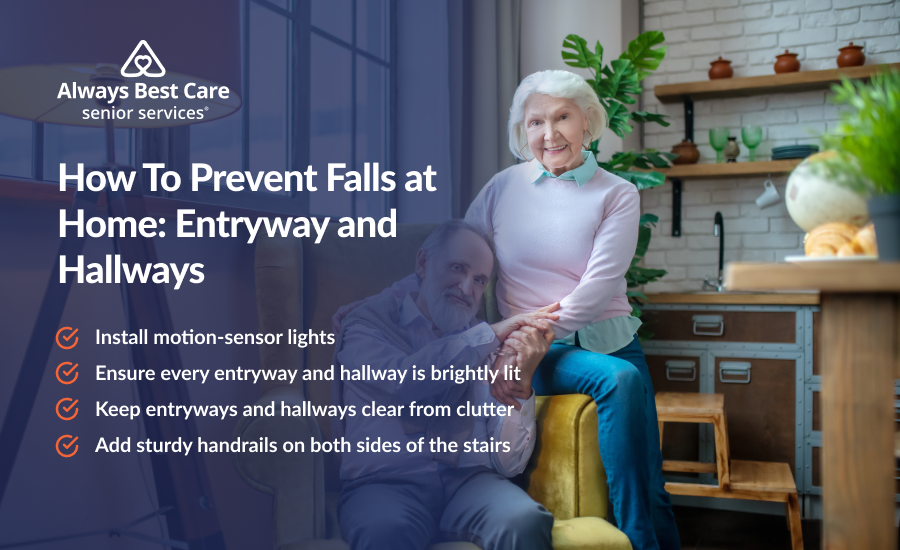
To help keep your loved one safe from the moment they walk through the door, make sure every entryway and hallway is brightly lit.
Ever tried walking through a dark hallway half-awake? Motion-sensor lights illuminate the moment someone moves, making nighttime trips much safer.
It’s also important to keep entryways and hallways clear, as shoes, loose rugs, or dangling cords can easily become tripping hazards.
Stairs can be difficult to navigate, particularly when vision or balance isn’t what it used to be. Adding sturdy handrails on both sides and using bright tape to highlight each step can make them much safer.
So, you might be wondering, “How do handrails on stairs help keep you safe?”
They offer dependable support when going up or down the stairs, which can be especially reassuring if someone is feeling unsteady.
Handrails can make all the difference if someone trips or misses a step, helping stop a small slip from turning into a serious fall.
How To Prevent Falls in the Kitchen
When it comes to preventing falls at home, the kitchen is one spot you definitely don’t want to overlook.
Try keeping everyday items, such as plates, snacks, or spices, within easy reach at waist level. That way, there’s no need to stretch or climb on a chair to grab something.
Wipe up any spills right away to keep floors from getting slippery and consider adding non-slip mats near the sink and stove where water and oil tend to land.
If an older adult uses the kitchen regularly, double-check that the flooring is even and that any changes on the surface are easy to see and step over safely.

Bathroom Fall Prevention Tips and Slippery Shower Safety Strategies
Bathrooms can be tricky with slippery floors and tight spaces, making them one of the most common places for falls.
Grab bars near the toilet and in the shower or tub are a great place to start, as they give your elderly loved one something sturdy to hold onto when they’re especially vulnerable.
Non-slip mats inside and outside the shower can also help keep things steady underfoot, especially on wet floors.
If standing for long periods is tough, a shower chair paired with a handheld showerhead can make bathing feel safe and a lot more relaxing.
It’s also worth looking into a raised toilet seat or a safety frame to make sitting down and standing up a whole lot easier.

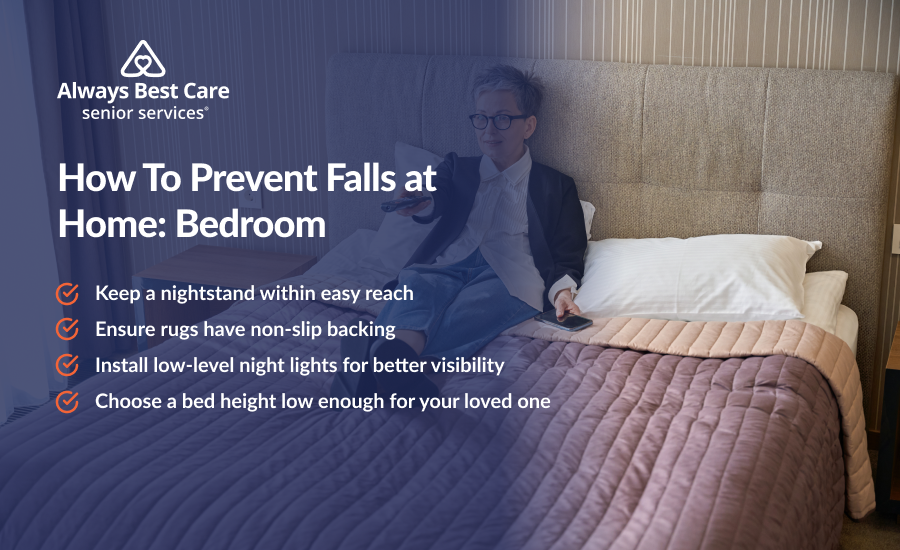
How To Prevent Falls at Home: Easy Changes in the Bedroom
Making the bedroom safe and cozy is a big part of how to prevent falls at home, especially at night, when it’s easier to get disoriented or lose your balance.
Keep a nightstand within easy reach, with a lamp or light switch that’s simple to use, even when half-awake.
Low-level night lights in hallways can safely light the path to the bathroom, reducing the risk of stumbling in the dark.
If there are rugs in the room, make sure they have non-slip backing or consider removing them altogether to reduce the risk of tripping.
One thing people often overlook? Bed height. It should be low enough so your elderly loved one’s feet can touch the floor when they sit down.
How to Prevent Falls at Home: Turn the Living Room Into a Safe Space
The living room is where we relax, gather, and unwind, but it can also be full of hidden fall risks, especially for older adults.
Try to arrange the furniture in a way that creates wide, open walkways, avoiding tight corners or sharp turns that might be hard to navigate with a walker or cane.
Take a moment to look for anything that could become a tripping hazard, like throw rugs, power cords, or small items left on the floor.
When it comes to seating, choose chairs and sofas that are sturdy and won’t shift when someone sits down or stands up.
How To Prevent Falls at Home: Outdoor Areas
Don’t forget the porch, steps, and garage when thinking about how to prevent falls at home. Make sure all outdoor lighting is strong enough to clearly illuminate walking paths.
Take a walk around the outside of the home and check for things that could cause a stumble, like uneven sidewalks or loose bricks.
Adding non-slip treads to outdoor stairs is a simple way to boost safety, especially in wet or icy weather.
How To Prevent Falls at Home: Additional Tips
A complete approach to how to prevent falls at home includes the entire household.
Encourage your loved one to wear sturdy, non-slip shoes around the house, instead of slippers or just socks, which can be surprisingly slippery on hard floors.
It also helps to make sure glasses and hearing aids are used regularly. When vision or hearing is off, it’s easier to miss things like a corner of a rug or a step down.
Plus, don’t forget the power of movement, a little stretching, a short walk, or even some gentle chair yoga each day can go a long way in building strength and balance.
Home Health Fall Prevention Tips
While we’ve already covered the main areas, here are a few more simple tips to keep in mind when thinking about how to prevent falls at home.
- Get professional help: One recent study explored how home visits could help older adults stay safer at home. Therapists worked directly with individuals to spot fall risks, make simple changes around the house, and recommend gentle exercises.
- Utilize technology: Another recent study explored how everyday tech, like apps, motion sensors, and fall alert systems, can play a role in preventing falls. The goal? To combine these smart tools with traditional care approaches.
- Stay on top of medications: Some medications can cause dizziness, drowsiness, or balance issues. Review prescriptions regularly with a doctor or pharmacist to spot any potential fall risk medications your elderly loved one might be taking.
- Encourage a consistent routine: Sticking to a daily routine, like consistent mealtimes and bathroom breaks, can make the day feel more predictable and help prevent rushed movements that might lead to a fall.
Find Fall Prevention Services at Always Best Care
At Always Best Care, we know that fall prevention isn’t one-size-fits-all. That’s why we create a care plan that’s tailored to each person.
To get it right, we use a Balance Tracking System to assess fall risk and spot any trouble areas before they become real hazards.
That’s where our caregivers come in, not just to keep your loved one safe, but to offer the kind of support that feels natural and respectful.
Here’s what fall prevention looks like with our care:
- Provide respectful personal care like help with bathing, grooming, dressing, and getting around
- We work with families to create safer living spaces, finding and addressing little things that could cause a fall
- Offer gentle support with daily activities that might feel challenging or unsteady, so your loved one can move through their day with more ease
How To Prevent Falls at Home: FAQs
What are the most important steps for fall prevention at home?
Fall prevention at home starts with making the environment safe and supportive as possible.
That means clearing clutter from walkways, adding grab bars in bathrooms, securing loose rugs, and making sure lighting is bright.
Why is preventing falls at home so important for older adults?
Preventing falls at home in the elderly is essential because even a simple fall can lead to serious injuries, hospital stays, or long-term mobility issues.
In fact, a recent review of fall trends in older adults found that while some fall rates might be declining, fall-related injuries and hospital visits are still on the rise.
How can families start with fall prevention at home for a loved one?
A good first step in preventing falls at home is simply looking at the space with fresh eyes.
- Are there dark corners?
- Wobbly rugs?
- Everyday items tucked on high shelves?
For older adults, it helps to bring in a professional who understands fall prevention at home in the elderly.