

How Does Private Pay Home Care Work for Seniors in Conyers, GA?

For many older adults, home represents comfort, independence, and a lifetime of memories. Yet everyday activities such as bathing, getting dressed, preparing meals, and moving safely around the house can become more challenging with age. Families exploring home care in Conyers, GA often want to understand how private pay services work and whether they can help their loved ones continue living comfortably at home.
Private pay home care allows families to arrange nonmedical assistance based on individual needs, preferences, and available resources. Rather than changing an older adult’s entire routine, the goal is to provide practical help where it is needed while encouraging continued participation in familiar activities.
At Always Best Care of Atlanta Metro, we understand that introducing outside assistance can raise questions about independence, scheduling, and financial planning. Learning how private pay care works can help families approach these decisions with greater confidence while keeping their loved one’s comfort and wishes at the center of the conversation.
Table of Contents
What Is Private Pay Home Care?
Private pay home care refers to nonmedical assistance paid for directly by individuals or families. It allows older adults to receive support with everyday activities while continuing to live in their own homes.
The amount and type of assistance depend on the person’s needs and the services available through the provider. Some seniors benefit from help with bathing, grooming, or dressing, while others need assistance preparing meals, maintaining household routines, or enjoying regular companionship.
Private pay arrangements also allow families to discuss scheduling preferences and determine which daily responsibilities require dependable support.

Supporting Independence Through Personalized Assistance
Receiving home care does not mean giving up control over everyday decisions. Older adults can remain involved in choosing their clothing, planning meals, participating in hobbies, and deciding how they prefer to spend their time.
A caregiver may organize supplies, provide reminders, or assist with tasks that have become difficult without automatically taking over activities the person can still manage.
This approach helps maintain dignity and encourages seniors to remain active participants in their daily routines.
Understanding the Difference Between Personal Care and Medical Care
Private pay personal care generally focuses on nonmedical activities of daily living. It is different from skilled medical home health services.
Nonmedical caregivers may provide personal care assistance, companionship, meal preparation, and other authorized support. They do not independently diagnose medical conditions, prescribe treatments, or make clinical decisions.
Families should discuss medical concerns with qualified healthcare professionals and confirm the specific responsibilities included in their home care plan.
How Does Private Pay Personal Care Work?
Arranging private pay home care generally begins with a conversation about an older adult’s needs, followed by a discussion of available services, scheduling, and payment arrangements.
Although every family’s situation is different, the following steps provide a practical overview of how care planning may begin.
1. Identify Everyday Care Needs
Start by considering which activities have become more difficult and which tasks the older adult can still complete comfortably.
A family may notice challenges with bathing, preparing regular meals, keeping up with laundry, or moving around the home. These observations can help identify where additional assistance may be useful.
It is equally important to recognize the activities a senior wants to continue managing independently.
2. Discuss Personal Preferences
Older adults should have a meaningful voice in decisions about their care whenever possible.
Ask about preferred morning routines, favorite meals, social activities, and any concerns about receiving assistance from someone outside the family.
Respecting these preferences can help make home care feel like a supportive partnership rather than an unwanted change.
3. Develop an Individual Care Plan
A care coordinator can discuss the family’s priorities and explain which nonmedical services may be appropriate.
A personalized plan may address daily activities requiring assistance, preferred visit times, mobility considerations, and communication expectations.
The plan should also clarify responsibilities so the senior, family members, and caregiver understand what assistance will be provided.
4. Arrange and Review Care Visits
Once services and scheduling are agreed upon, care can begin according to the established plan and caregiver availability.
Families should periodically review whether the arrangement continues to meet their loved one’s needs. Changes in mobility, daily routines, or family circumstances may require adjustments.
Regular communication helps keep the care plan practical and responsive.
Which Daily Activities Can Personal Caregivers Support?
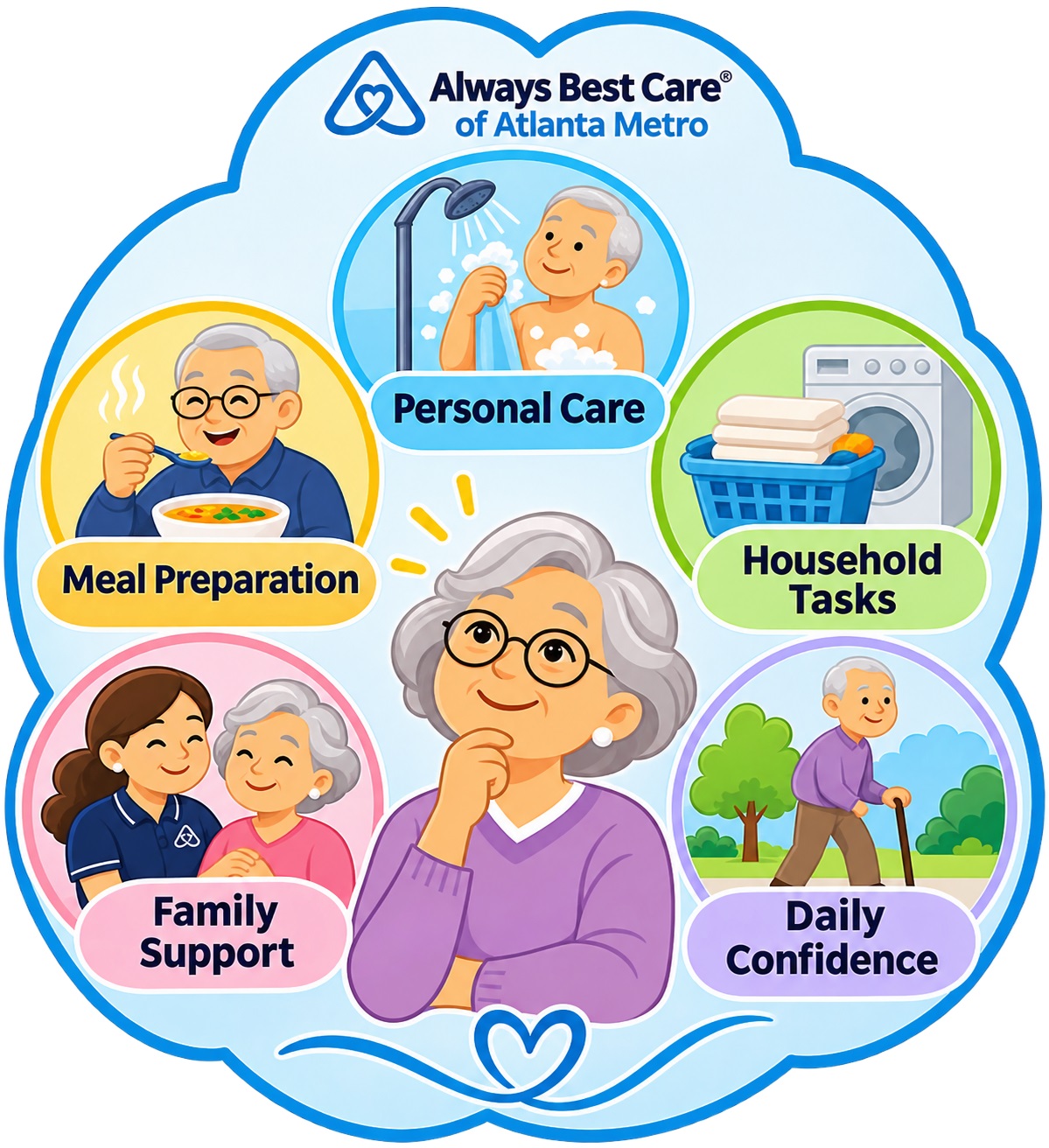
Personal caregivers can help older adults manage nonmedical activities that contribute to comfort, dignity, and more manageable daily routines.
The table below highlights common areas where assistance may be appropriate.
| Care Activity | Examples of Nonmedical Support |
| Personal hygiene | Assistance with bathing, grooming, and dressing |
| Mobility | Help moving around the home and walking safely |
| Meals | Meal preparation and appropriate eating assistance |
| Household routines | Laundry, light housekeeping, and organization |
| Companionship | Conversation and shared activities |
| Daily organization | Medication reminders and assistance with errands |
The exact responsibilities depend on the individual’s care plan, caregiver qualifications, and services authorized by the agency.
For seniors who need assistance with several everyday activities, personalized in-home care for daily living support may provide greater consistency than relying entirely on occasional help from relatives.
Why Do Families Choose Private Pay Home Care?
Families often consider private pay home care because it allows them to arrange practical assistance without immediately changing their loved one’s living environment.
The benefits extend beyond completing household tasks. Appropriate support can also help preserve established routines and create a more manageable balance of family responsibilities.
Greater Control Over Daily Routines
Many older adults prefer waking up at familiar times, eating meals they enjoy, and continuing hobbies that are important to them.
Home care can be arranged around these established habits when scheduling and services allow.
Maintaining personal choice can be especially meaningful for seniors who value their independence and want to remain involved in decisions about their daily lives.
More Manageable Family Responsibilities
Adult children often balance caregiving with employment, parenting, and household obligations.
When a professional caregiver assists with selected activities, relatives may have fewer daily responsibilities to manage on their own.
This arrangement can allow family members to spend more of their time together enjoying conversations, shared interests, and meaningful activities.
Familiar Surroundings and Relationships
Remaining at home allows seniors to stay connected with personal belongings, neighbors, pets, and familiar surroundings.
These connections may provide reassurance when physical abilities or everyday support needs are changing.
However, home care is not appropriate for every situation. Seniors with complex medical or supervision needs may require additional services or a different care setting. Families should evaluate those needs with qualified professionals.
How Can Families Plan for Private Pay Home Care Costs?
Understanding the financial commitment is an important part of arranging private pay care.
Costs depend on the services requested, the frequency and duration of visits, and the provider’s terms. Families should request clear information about pricing and scheduling before making a decision.
Consider the following questions when reviewing available options:
- What assistance is essential? Identify the daily activities that require dependable support.
- How often is care needed? Consider whether assistance is necessary on particular days or at specific times.
- What is included in the quoted rate? Ask about minimum visit lengths, additional charges, and billing arrangements.
- Can the schedule change? Understand how the agency handles adjustments and cancellations.
- How will expenses be reviewed? Establish a realistic budget and revisit it as care needs change.
Private pay services should not be assumed to qualify for insurance or government-program reimbursement. Coverage and eligibility depend on the applicable policy or program, and routine personal care may not be covered when it is the only assistance required.
Families should verify any potential benefits directly with the relevant insurer or program administrator rather than relying on unconfirmed reimbursement.
Planning ahead can help families choose a level of assistance that addresses current needs while remaining mindful of long-term financial priorities.
When Should Seniors Consider Personal Care at Home?
The need for additional assistance is not always obvious. Some older adults experience gradual changes, while others begin having difficulty with daily activities after an illness, hospitalization, or mobility change.
Families may want to discuss home care when they notice:
- Increasing difficulty with bathing, grooming, or dressing.
- Meal preparation becoming tiring or difficult.
- Household chores regularly remaining unfinished.
- Relatives spending more time assisting with personal needs.
- An older adult feeling uneasy completing certain activities alone.
These situations do not automatically mean professional care is necessary. Instead, they provide opportunities to discuss preferences, identify challenges, and determine whether practical assistance could make daily life more manageable.
When difficulties arise suddenly or involve new medical symptoms, families should seek appropriate medical evaluation rather than assuming nonmedical caregiving alone will address the concern.
How Does Private Pay Care Compare with Family Caregiving?
Family caregiving and professional home care can complement one another. Families do not necessarily have to choose between providing assistance themselves and arranging outside support.
Relatives often offer emotional reassurance, coordinate appointments, and help with important decisions. Professional caregivers can assist with agreed-upon daily activities during scheduled visits.
For example, an adult daughter may continue visiting her father in the evenings while a caregiver helps him prepare for the day and manage personal hygiene in the morning.
This arrangement can create a more manageable division of responsibilities while allowing relatives to remain closely involved in their loved one’s life.
When Additional Family Caregiver Relief May Help
Family members who provide regular assistance also need time to manage work, personal responsibilities, and their own well-being.
Families can explore respite care options for family caregiver relief when temporary assistance may help maintain continuity of support.
The right balance depends on the senior’s needs, family availability, and the services that can be arranged.
Common Questions About Private Pay Home Care
Can Seniors Receive Personal Care Without Moving?
Yes. In-home personal care is intended to help older adults with everyday nonmedical activities while they remain in their own residences. Whether remaining at home is appropriate depends on individual care and safety needs.
Does Private Pay Home Care Require a Medical Diagnosis?
Not necessarily. Families may arrange nonmedical assistance because an older adult needs help with daily activities, even without a specific medical diagnosis. Providers can explain their assessment and admission requirements.
Can Families Change a Personal Care Schedule?
Care schedules may be adjusted when needs change, subject to the agency’s policies and caregiver availability. Families should discuss scheduling flexibility before beginning services.
How Can Seniors Feel More Comfortable Accepting Help?
Begin by asking which activities feel difficult and where assistance would be welcome. Involving older adults in decisions about routines, boundaries, and caregiver interactions can help preserve their sense of independence.
Making Confident Home Care Decisions in Conyers, GA
Choosing private pay home care is an important family decision, but it does not have to mean giving up independence or changing every part of daily life. The goal is to identify where practical assistance can make familiar routines easier while respecting each senior’s abilities, preferences, and personal priorities.
Always Best Care of Atlanta Metro helps families discuss personal care needs, understand available nonmedical support, and explore appropriate care arrangements.
If you are considering home care in Conyers, GA, schedule a personalized home care consultation or call (770) 318-3270 to discuss your loved one’s daily needs and available support options.