

Early Signs of Dementia Families Should Recognize

Occasionally forgetting a name or misplacing a household item can happen at any age. However, when memory changes begin affecting familiar routines, conversations, or everyday decisions, families may wonder whether something more serious is developing. For those exploring home care in Lawrenceville, GA, understanding possible early dementia signs can help loved ones respond with patience, compassion, and appropriate medical guidance.
At Always Best Care of Atlanta Metro, we understand how concerning it can feel when an aging parent begins behaving differently. Families may notice small changes long before they understand what those changes mean. Recognizing patterns and knowing when to seek professional advice can make these situations easier to approach.
Although dementia affects people differently, learning about common warning signs can help families protect their loved one’s dignity, maintain meaningful relationships, and plan appropriate support without making premature assumptions.
Table of Contents
What Are the Early Signs of Dementia?
Early signs of dementia may include persistent memory difficulties, confusion during familiar activities, changes in judgment, communication problems, and shifts in mood or behavior. These changes become more concerning when they interfere with everyday functioning.
Dementia is not a single disease. It describes a group of symptoms associated with changes in memory, thinking, language, and other cognitive abilities. Alzheimer’s disease is one possible cause, but other conditions can produce similar difficulties.
Understanding Memory Changes and Other Possible Causes
Memory loss alone does not establish a dementia diagnosis. Medication effects, sleep problems, depression, infections, and other medical conditions can sometimes contribute to cognitive changes.
Families should avoid assuming that every memory problem is dementia or simply a normal part of aging. A qualified healthcare professional can evaluate persistent symptoms, consider possible causes, and recommend appropriate next steps.
Seven Early Dementia Signs Families Should Recognize
The following warning signs can help families identify changes worth discussing with a healthcare professional. No single behavior confirms dementia, and patterns over time are generally more informative than isolated incidents.
1. Frequently Forgetting Recent Conversations
A parent may repeatedly ask the same question, forget recently discussed plans, or struggle to remember information shared earlier in the day.
Unlike occasional forgetfulness, these difficulties may continue even after reminders. Families can respond calmly, provide simple written notes when helpful, and avoid criticizing repeated questions.
2. Difficulty Completing Familiar Tasks
Activities that once felt automatic may gradually become confusing.
For example, someone who has prepared the same breakfast for years might forget the order of familiar steps or struggle to follow a recipe. An older adult may also have difficulty operating household appliances they previously used without assistance.
These changes deserve attention, particularly when they create potential safety concerns.
3. Confusion About Time or Place
A person may lose track of dates, become confused about appointments, or have difficulty understanding how much time has passed.
Some individuals also become disoriented in familiar surroundings.
Sudden confusion requires prompt medical evaluation, because an acute illness, medication-related problem, or another medical condition may be responsible. Families should not assume an abrupt change is simply part of dementia.
4. Trouble Finding the Right Words
Conversations may become more difficult when someone frequently loses their train of thought, substitutes unusual words, or struggles to name familiar objects.
Families can help by allowing additional time for responses, reducing background distractions, and avoiding unnecessary corrections.
Maintaining a patient, respectful conversation can help older adults feel included even when communication becomes challenging.
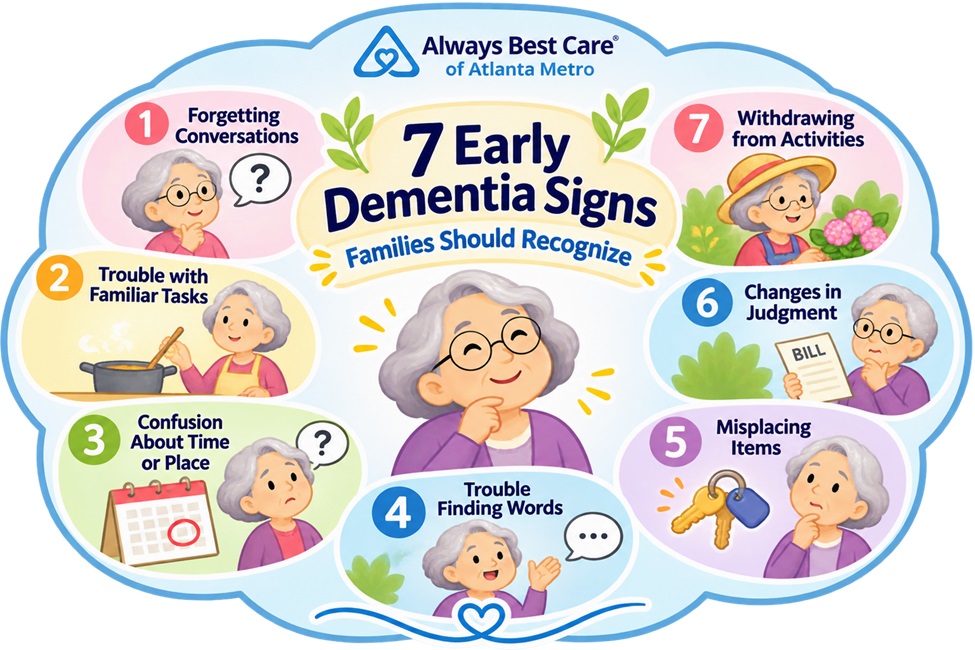
5. Misplacing Items in Unusual Locations
Occasionally losing keys or forgetting where an item was placed is common. Repeatedly putting familiar objects in unexpected locations and being unable to retrace steps may indicate a more significant concern.
A person might also become frustrated or suspicious when belongings cannot be found.
Instead of arguing about where an item belongs, family members can offer reassurance and help look for it together.
6. Changes in Judgment and Decision-Making
Difficulty evaluating everyday situations can affect financial decisions, household responsibilities, or personal safety.
Families might notice unusual spending, missed bills, or reduced awareness of potentially unsafe situations.
These observations should encourage supportive conversations rather than immediate assumptions about someone’s abilities. Where appropriate, families can discuss practical safeguards while preserving the older adult’s involvement in decisions.
7. Withdrawal From Favorite Activities
A senior who previously enjoyed gardening, family gatherings, or neighborhood activities may begin avoiding those interests.
Withdrawal can have several explanations, including hearing difficulties, depression, fatigue, physical discomfort, or cognitive changes.
Understanding the underlying cause is more helpful than assuming dementia is responsible.
Recognizing these possible signs allows families to observe changes more thoughtfully. Rather than focusing on isolated mistakes, consider whether difficulties are becoming more frequent, affecting familiar activities, or creating concerns about daily safety.
When Should Families Seek a Medical Evaluation?
Families should consider scheduling a medical appointment when changes in memory, communication, judgment, or behavior become persistent, progressively worse, or interfere with everyday activities.
A healthcare professional may review medical history, medications, cognitive functioning, and other possible explanations. Early evaluation can help identify potentially treatable causes and support appropriate planning.
Everyday Forgetfulness Versus Changes Worth Discussing
Occasional forgetfulness is a common part of everyday life, but persistent changes in memory, behavior, or familiar routines may deserve closer attention. Families should consider how often these difficulties occur, whether they are becoming more noticeable, and how they affect an older adult’s daily activities. The following comparison highlights differences between ordinary forgetfulness and changes that may warrant a conversation with a healthcare professional.
| Everyday Situation | Change Worth Discussing |
| Briefly forgetting someone’s name | Frequently forgetting recent conversations |
| Occasionally misplacing keys | Repeatedly storing items in unusual places |
| Needing help learning new technology | Struggling with previously familiar daily tasks |
| Occasionally losing track of a date | Repeated confusion about time or place |
| Feeling tired after social activities | Increasing withdrawal from usual interests |
This comparison is educational and should not be used to diagnose dementia. The meaning of any symptom depends on the person’s circumstances and medical evaluation.
When Sudden Changes Require Immediate Attention
Sudden confusion, abrupt behavioral changes, or new neurological symptoms should not be treated as routine signs of aging.
Symptoms such as sudden weakness, facial drooping, difficulty speaking, or severe unexplained confusion may indicate a medical emergency. Families should seek emergency medical assistance when these symptoms occur.
Prompt evaluation is especially important because some conditions causing cognitive changes may require urgent treatment.
How Can Families Respond to Early Memory Changes?
A calm, supportive response can make difficult conversation easier. Instead of focusing on mistakes, families can acknowledge concerns, observe patterns, and invite their loved ones to participate in decisions.
The following approaches can help families respond thoughtfully while preparing for medical discussions.
Five Practical Ways to Offer Support
Supporting a loved one experiencing memory changes begins with patience, understanding, and open communication. Families can take simple, practical steps to maintain familiar routines, reduce frustration, and encourage independence while recognizing when professional medical guidance may be needed.
- Keep conversations respectful. Avoid testing someone’s memory or repeatedly pointing out forgotten details.
- Write down observations. Record when changes occur, how frequently they happen, and whether they affect daily activities.
- Maintain familiar routines. Consistent mealtimes, activities, and household arrangements may make daily life easier to navigate.
- Simplify communication. Use clear sentences, ask one question at a time, and allow enough time for responses.
- Arrange appropriate medical guidance. Share specific observations with a healthcare professional rather than relying on assumptions.
These steps can help families approach changes with greater patience while gathering useful information for professional evaluation.
Encourage Open Conversations Without Pressure
Families should also ask what their loved one finds difficult.
Someone may recognize changes in their memory or concentration but feel embarrassed, frustrated, or concerned about losing independence.
Listening carefully can reveal which adjustments would be most helpful. It also helps families distinguish between activities requiring assistance and those their loved one can continue managing confidently.
Avoid discussing concerns in a way that makes the older adult feel excluded from decisions about their own life.
How Can In-Home Dementia Care Support Daily Routines?
Nonmedical dementia care can assist with familiar activities, personal care, companionship, and household routines. It does not replace medical evaluation or treatment, but it may provide practical support as everyday needs change.
For example, a caregiver may help someone follow a familiar morning routine, select clothing, prepare meals, or participate in enjoyable activities.
Families considering personalized dementia and Alzheimer’s care can explore how nonmedical assistance may fit their loved one’s daily needs, preferences, and established habits.
Supporting Independence Without Taking Over
Maintaining independence means allowing older adults to participate in activities they can still manage.
A caregiver might arrange clothing in a convenient order while allowing the senior to choose what to wear. During meals, assistance can be offered without unnecessarily taking over the entire activity.
Preserve Familiar Choices
Simple decisions, such as selecting a favorite sweater, choosing a meal, or participating in a familiar hobby, can help preserve personal identity and dignity.
Families should continue offering appropriate choices rather than assuming that memory difficulties eliminate someone’s ability to express preferences.
Adjust Assistance as Needs Change
A task that feels manageable one day may require additional assistance another day.
Caregivers and family members should communicate about changing abilities and adjust practical support within the established care plan. Patience and flexibility can help prevent unnecessary frustration.
Making the Home Easier to Navigate
Familiar surroundings can be reassuring, but clutter, poor lighting, and confusing household arrangements may create unnecessary challenges.
Families can consider simple environmental adjustments to make everyday routines more manageable.
Simple Household Adjustments to Consider
Small changes to the home environment can help seniors experiencing memory difficulties navigate familiar spaces with greater comfort and confidence. Families can focus on keeping essential items accessible, reducing distractions, and creating a more organized living space that supports everyday routines.
- Keep frequently used items in consistent locations.
- Maintain clear walking paths throughout the home.
- Improve lighting in hallways and common rooms.
- Use simple, easy-to-read labels where helpful.
- Reduce unnecessary background noise during conversations.
These adjustments do not eliminate dementia-related risks, but they may help older adults navigate familiar spaces more comfortably.
Families should review safety concerns individually, particularly when changes in judgment, mobility, or orientation become more noticeable.
How Can Family Caregivers Prepare for Changing Needs?
Family caregivers can prepare by establishing communication routines, identifying available support, and reviewing responsibilities before daily demands become overwhelming.
Planning does not require predicting every future change. Instead, families can focus on current priorities while remaining prepared to make adjustments.
Coordinate Family Responsibilities
Start by discussing which relatives can help with appointments, meals, errands, or regular visits.
Agree on how important observations will be shared while respecting the older adult’s privacy and preferences.
A clear division of responsibilities can reduce confusion and help family members recognize when additional assistance may be needed.
Organize Important Daily Information
A written household routine may include preferred meals, meaningful activities, emergency contacts, and information relevant to caregiving.
Keeping practical details organized can help relatives and caregivers provide more consistent assistance.
Families should store sensitive medical and personal information securely and share it only with appropriate individuals.
Consider Respite Support for Family Caregivers
As caregiving responsibilities increase, family members may need scheduled breaks to manage employment, household responsibilities, and their own well-being.
Families can explore personalized home care assistance in Lawrenceville when additional support may help maintain continuity of daily care while giving family caregivers time to rest.
Planning should remain flexible. Not every person with dementia experiences the same changes, and decisions should reflect actual needs rather than assumptions about what will happen next.

Common Questions About Early Dementia Signs
Can Dementia Begin Without Noticeable Memory Loss?
Yes. Some forms of dementia initially affect language, judgment, behavior, or visual processing more noticeably than memory. Persistent changes deserve medical evaluation even when someone remembers recent events reasonably well.
Can Stress Cause Symptoms Similar to Dementia?
Stress, depression, sleep difficulties, and certain medical conditions can affect concentration and memory. A healthcare professional can assess possible causes rather than assuming symptoms indicate dementia.
Should Families Correct Every Memory Mistake?
Not necessarily. Repeated corrections can create frustration without improving understanding. Unless an error creates a safety concern or requires important clarification, a calm response and gentle redirection may be more helpful.
Can Someone with Early Dementia Continue Living Alone?
Some individuals can continue living independently during the early stages, depending on their abilities, environment, and available support.
Families should assess individual safety needs with appropriate professionals rather than making decisions based solely on a diagnosis.
Supporting Seniors with Compassionate Home Care in Lawrenceville, GA
Recognizing possible dementia symptoms can be emotionally challenging, particularly when changes appear gradually. Families do not need to interpret every forgotten detail as a warning, but persistent difficulties with memory, communication, or everyday activities deserve attention.
A thoughtful approach combines appropriate medical guidance, respectful conversations, familiar routines, and practical assistance when needed. By involving older adults in decisions and responding patiently to changing abilities, families can help preserve dignity and meaningful connections.
Always Best Care of Atlanta Metro understands that every family has different caregiving priorities. For those considering home care in Lawrenceville, GA, our team can discuss available nonmedical assistance, companionship, and personalized daily support.
Call (770) 318-3270 or schedule a personalized dementia care consultation to discuss your loved one’s needs and explore appropriate home care options.