

What Is Respite Care for Family Caregivers

Caring for an aging parent or another loved one can be deeply meaningful, but it also requires time, energy, and attention. Between preparing meals, assisting with personal routines, arranging appointments, and managing household responsibilities, family caregivers may find themselves putting their own needs aside.
For families exploring home care in Covington, GA, respite care offers a practical way to share caregiving responsibilities while helping an older adult remain comfortable at home. It allows family members to take temporary breaks while another caregiver provides agreed-upon assistance.
Understanding how respite care works can help families plan ahead rather than waiting until daily responsibilities become overwhelming. Whether someone needs a few hours for personal appointments or recurring assistance throughout the week, respite care can make caregiving responsibilities more manageable.
Table of Contents
What Is Respite Care and How Does It Work?
Respite care is temporary assistance that allows a family caregiver to step away from caregiving responsibilities while another person provides support.
Depending on the arrangement, a respite caregiver may help with companionship, personal care, meal preparation, and familiar household routines.
In-home respite care allows older adults to receive this assistance in their own surroundings. Families can discuss the activities requiring support, preferred schedules, and individual needs before services begin.
Occasional Versus Recurring Respite Care
Respite care does not have to follow the same schedule for every family. Some households arrange occasional visits when appointments, work obligations, or personal events arise.
Others prefer recurring assistance on specific days to establish a predictable routine.
Both approaches can be useful. The appropriate arrangement depends on the older adult’s needs, the family caregiver’s availability, and the services offered by the provider.
How Respite Care Supports the Entire Family
Respite care serves two important purposes. It gives family caregivers time to address personal responsibilities while helping their loved ones continue receiving appropriate daily assistance.
For older adults, maintaining familiar routines and having opportunities for companionship may make the temporary transition more comfortable.
When Should Family Caregivers Consider Respite Support?
Families can consider respite care whenever caregiving responsibilities make it difficult to rest, work, maintain relationships, or attend to personal needs.
They do not need to wait until someone feels completely exhausted before discussing additional assistance.
Common Signs That Additional Support May Help
Recognizing changes in daily responsibilities can help families decide when to explore temporary caregiving assistance.
Some common situations include:
- Personal appointments are frequently postponed because someone needs to remain at home.
- A family caregiver struggles to get uninterrupted rest.
- Work responsibilities regularly conflict with caregiving duties.
- Meal preparation, personal care, and household tasks occupy much of the day.
- Relatives disagree about how caregiving responsibilities should be divided.
- A caregiver has limited time for hobbies, friendships, or other meaningful activities.
These experiences do not mean a family member is providing inadequate care. Instead, they may indicate that responsibilities could be shared more effectively.
Planning Support Before Responsibilities Become Overwhelming
Some families arrange respite care after changes in an older adult’s mobility or daily routine. Others recognize that one person cannot reasonably manage every responsibility indefinitely.
Temporary assistance may also be helpful during a demanding work period, a family event, or a time when the primary caregiver needs additional rest.
Planning ahead gives families more opportunities to discuss expectations, schedules, and individual preferences.
What Services Can In-Home Respite Care Include?
In-home respite care generally focuses on nonmedical assistance that helps older adults maintain familiar routines while family caregivers are away.
The specific activities depend on the person’s needs, the agreed-upon care plan, and the services available from the provider.
Examples of Everyday Respite Care Assistance
The following table outlines common types of nonmedical support families may discuss when arranging respite care.
| Type of Support | Example of Assistance |
| Personal care | Assistance with dressing and grooming |
| Meal support | Preparing and serving meals |
| Companionship | Conversation, games, and favorite activities |
| Household help | Laundry and light housekeeping |
| Daily routines | Reminders and assistance with familiar activities |
| Mobility support | Appropriate assistance moving around the home |
These activities can help maintain a comfortable daily routine while giving family caregivers time to attend to other responsibilities.
Families considering personalized in-home care assistance can discuss which services may be appropriate for their loved one’s needs.
Understanding the Limits of Nonmedical Respite Care
Nonmedical respite caregivers provide assistance with everyday activities rather than skilled medical treatment.
They do not replace physicians, nurses, or therapists. If an older adult requires wound care, injections, medical assessments, or other skilled services, those needs should be addressed by appropriately qualified healthcare professionals.
Clarifying these responsibilities before care begins helps families establish realistic expectations.
How Does Respite Care Benefit the Whole Family?
Respite care can create opportunities for rest, personal responsibilities, and more balanced caregiving arrangements.
It may also introduce older adults to additional companionship while preserving familiar activities and household routines.
Time for Family Caregivers to Recharge
A break might involve attending an appointment, visiting a friend, exercising, working, or simply enjoying an afternoon without caregiving responsibilities.
Having time for these activities can help family members maintain their own routines and relationships.
Respite care is not a guaranteed solution for caregiver stress, however. People experiencing persistent physical or emotional difficulties may benefit from additional professional guidance.
Familiar Routines for Older Adults
Many seniors appreciate predictable schedules and familiar surroundings.
In-home respite care can help maintain regular mealtimes, favorite activities, and household preferences while another family member is away.
A caregiver might share a conversation, assist with a planned activity, or provide practical help with daily tasks.
Maintaining these routines can make the experience feel less disruptive for an older adult who is adjusting to receiving assistance from someone new.
A More Sustainable Family Care Plan
When caregiving responsibilities are shared, relatives may have more opportunities to communicate about changing needs and plan ahead.
Scheduled respite visits can become part of an ongoing family support arrangement rather than being reserved only for emergencies.
Families can also reassess the arrangement when schedules, personal preferences, or daily care needs change.
How Do Families Arrange Respite Care at Home?
Arranging respite care begins with identifying which activities require assistance and how much time the family caregiver would like to take away.
A clear plan helps everyone understand what to expect and can make the transition more comfortable for the older adult.
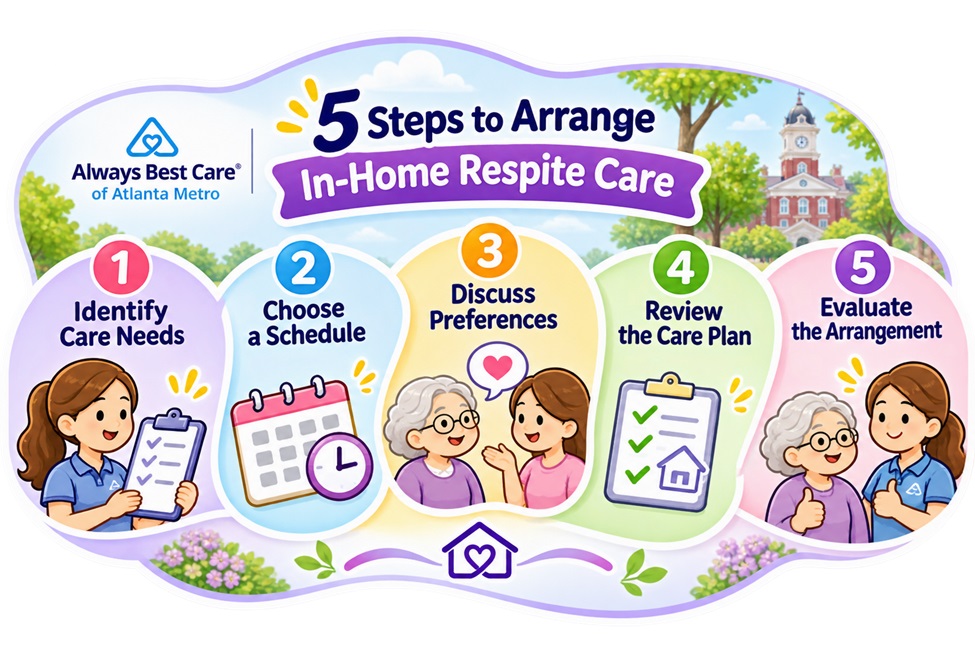
Five Steps to Plan In-Home Respite Care
Families can use the following steps to organize their needs and prepare for temporary caregiving assistance.
- Identify daily care needs. List activities that require assistance, including meals, dressing, companionship, mobility, or household routines.
- Choose a practical schedule. Decide whether occasional visits or recurring support would better accommodate the family’s responsibilities.
- Discuss personal preferences. Share preferred routines, communication styles, favorite activities, and concerns about welcoming a new caregiver.
- Review the care plan. Confirm which activities are included, how family members will receive updates, and whom to contact if questions arise.
- Evaluate the arrangement. Ask the older adult and family caregiver whether the schedule and assistance are meeting their needs.
These steps can help families prepare for respite care while keeping the older adult involved in decisions whenever possible.
Helping a Loved One Feel Comfortable with Respite Care
Some older adults may hesitate to accept outside assistance because they value privacy or worry that family members are withdrawing from their lives.
Explain that respite care is intended to support the entire family rather than replace meaningful relationships.
Invite your loved one to participate in selecting activities, discussing preferences, and establishing familiar routines.
When practical, begin with a shorter introductory visit. Sharing coffee, looking through photographs, or preparing lunch together may help create a more relaxed atmosphere.
Preparing Information for a Respite Caregiver
Before the first visit, families can organize essential information to help the caregiver understand the older adult’s routine.
Useful details may include:
- Emergency contacts and preferred communication methods.
- Typical meal schedules and food preferences.
- Favorite activities and companionship preferences.
- Mobility assistance needs and household safety considerations.
- Important routines and any communication difficulties.
Medical instructions, when applicable, should come from qualified healthcare professionals.
How Much Does In-Home Respite Care Cost?
Respite care costs vary depending on the number of hours requested, the type of assistance needed, scheduling requirements, and the provider’s pricing structure.
Families should request clear information about rates and service expectations before beginning care.
Understanding Private-Pay Respite Care
With private-pay respite care, the family or care recipient pays directly for the agreed-upon services.
This arrangement allows families to discuss schedules and assistance based on their circumstances and the provider’s availability.
Before selecting a service, it is helpful to understand what is included in the quoted rate and whether additional charges may apply.

Questions to Ask Before Scheduling Care
Before arranging respite care, families should understand the provider’s scheduling options, available services, and communication procedures. Asking specific questions during the initial consultation can help clarify expectations and ensure the care arrangement aligns with the older adult’s needs and the family’s daily responsibilities.
- Are there minimum visit lengths?
- Can respite visits be scheduled regularly?
- Are evening or weekend visits available?
- What happens if a scheduled visit needs to be changed?
- Which personal care and household activities are included?
- How are care updates communicated to family members?
These questions can help families compare available arrangements and choose support that fits their routines.
Frequently Asked Questions About Respite Care
Is Respite Care Only for Full-Time Family Caregivers?
No. Family members who provide occasional but substantial assistance may also benefit from temporary caregiving support. The appropriate arrangement depends on the older adult’s needs and the family’s responsibilities.
Can Respite Care Help Families Supporting Someone with Dementia?
Yes. Nonmedical respite care may provide companionship, help with familiar routines, and assistance with daily activities for an older adult living with dementia.
Families should discuss cognitive needs, supervision requirements, and safety concerns before arranging visits.
Can Respite Care Be Scheduled Every Week?
Respite care may be arranged through recurring visits, depending on provider availability and the agreed-upon care plan.
A predictable schedule can be particularly helpful for family caregivers who work or have regular appointments.
What Should Families Leave for a Respite Caregiver?
Families should prepare emergency contacts, daily schedules, meal preferences, mobility instructions, and relevant information about communication or behavior.
Having these details available can help the caregiver provide consistent assistance.
Find Compassionate Respite Care Support in Covington, GA
Caring for someone you love should not require setting aside every other part of your life. Thoughtful respite planning can give family caregivers time to manage personal responsibilities while helping older adults maintain familiar routines and meaningful connections.
Whether your family needs occasional assistance or recurring support, discussing care needs early can help everyone prepare for a more comfortable arrangement.
At Always Best Care of Atlanta Metro, we help families exploring home care in Covington, GA understand available nonmedical assistance, scheduling options, and ways to support their loved ones at home.
Call (770) 318-3270 to discuss respite care options for your family and learn how personalized assistance may fit into your caregiving routine.