

This website uses cookies so that we can provide you with the best user experience possible. Cookie information is stored in your browser and performs functions such as recognising you when you return to our website and helping our team to understand which sections of the website you find most interesting and useful.
Trusted In-Home Senior Support across Cedar Rapids, IA
Families often start looking for help when a parent’s routine begins to feel harder to manage, whether that means missed meals, unsafe movement, loneliness, or caregiver fatigue. Our home care support for seniors in Cedar Rapids, IA, helps older adults stay safer and more comfortable at home while giving families clearer day-to-day confidence across Cedar Valley, IA.
Locally owned by David and Kehinde Ogunnoiki, Always Best Care of the Cedar Valley Inc. pairs national strength and standards with local accessibility, expert caregiver training, extensive background checks, and a free consultation led by a Care Coordinator. We serve Cedar Rapids, IA families with individualized care plans that support independence, dignity, and steady communication from the first conversation.

What Families in Cedar Rapids, IA Face When Deciding on Professional Help

Small Changes Can Signal a Bigger Need
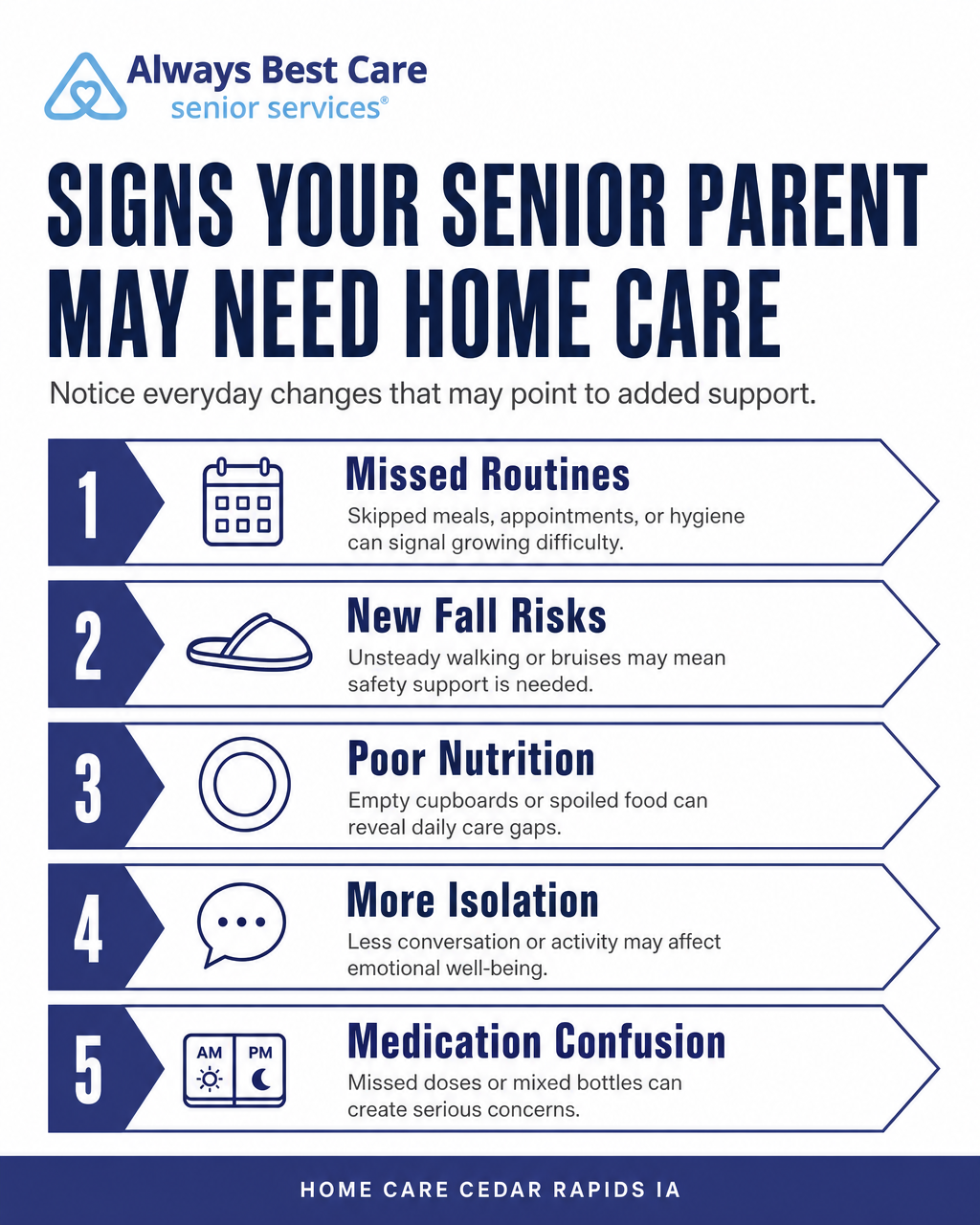
Families in Cedar Rapids, IA often notice changes before a loved one asks for help, from skipped routines to new safety concerns. Always Best Care of the Cedar Valley Inc. helps families understand whether support now could prevent greater stress later. For households, the right time is often when daily care feels uncertain, inconsistent, or too much for one family caregiver.
- Daily Routine Changes: Missed meals, poor hygiene, or forgotten medications can show that support should begin before a crisis develops.
- Family Caregiver Strain: Exhaustion, missed work, or constant worry can signal that one person should not carry the full care load alone.
- Safety Warning Signs: Falls, wandering, unsafe cooking, or mobility struggles often mean supervision and home routines need stronger structure.
- Health Transition Needs: A hospital discharge, new diagnosis, or surgery recovery period may require temporary help that protects progress.
- Emotional Well-Being: Isolation, confusion, or loss of interest in favorite activities can improve with consistent companionship and engagement.
Our Senior Home Care Services for Families in Cedar Rapids, IA
We help Cedar Rapids, IA families choose practical care that fits changing routines, recovery needs, and long-term independence goals. Our services range from daily personal assistance to specialized support and family respite, with each plan shaped around safety, comfort, and dignity.
Personal Care Services
Personal care helps when bathing, dressing, meals, mobility, or reminders become difficult to manage alone, especially as routines change for seniors in Cedar Rapids, IA. Families can explore personalized in-home assistance as part of a flexible care plan that supports safer mornings, steadier evenings, and more confident daily living.

24-Hour Care
24-hour care provides around-the-clock support for seniors who need steady supervision, comfort, and help through the day and night. This can be useful after a health change, during advanced memory concerns, or when family members need dependable coverage for complex routines.
Bathing, Grooming & Dressing
Bathing, grooming, and dressing support helps seniors maintain hygiene, dignity, and confidence while reducing fall risks in private spaces. Caregivers can assist with preferred clothing, grooming habits, adaptive tools, and safe bathroom routines that respect comfort and personal choice.
Cognitive Impairments
Cognitive impairment support helps seniors living with confusion, memory loss, or decision-making challenges stay oriented and safer at home. Care may include routine cues, redirection, supervision, and calm communication that helps reduce stress for both the senior and family.
Companionship
Companionship gives seniors social connection, conversation, and meaningful engagement that can reduce loneliness and support emotional well-being. Visits may include hobbies, games, reading, walks, meal conversation, or simple daily check-ins that keep the day more positive.
Errands & Transportation
Errands and transportation support helps seniors get to appointments, pick up essentials, and maintain independence without unnecessary driving risks. Caregivers can help plan outings, provide door-through-door assistance, and make trips feel safer and less overwhelming.
Escort to Activities
Escort to activities helps seniors continue attending social events, faith gatherings, family occasions, or wellness programs with reliable support. This service can include help getting ready, safe transportation coordination, mobility assistance, and companionship throughout the outing.
Hospice Support / End-of-Life
Hospice support and end-of-life assistance provide non-medical comfort, presence, and practical help during a sensitive stage of care. Caregivers can assist with positioning, hygiene, family respite, peaceful companionship, and coordination around the family’s preferred routines.
Hospital to Home
Hospital-to-home support helps seniors settle safely after discharge, when fatigue, medication changes, or mobility limits can create risk. Care may include meal help, reminders, transportation to follow-up visits, light housekeeping, and monitoring for changes that families should know about.
Incontinence / Toileting
Incontinence and toileting assistance helps seniors manage personal needs with dignity, cleanliness, and reduced discomfort. Caregivers can support scheduled toileting, changing, hygiene, laundry needs, and safer movement to and from the bathroom.
Laundry Services
Laundry services help keep clothing, linens, towels, and bedding clean so seniors have a healthier and more comfortable home environment. Caregivers can sort, wash, dry, fold, and put away items according to household preferences.
Light Housekeeping
Light housekeeping supports a cleaner, safer living space by reducing clutter, trip hazards, and everyday household stress. Help may include dishes, kitchen wipe-downs, bed making, trash removal, organizing common areas, and maintaining pathways for safer movement.
Meal Preparation
Meal preparation helps seniors eat more regularly and enjoy food that fits their tastes, routines, and nutritional needs. Caregivers can prepare simple meals, encourage hydration, track concerns, and make mealtimes more social and comfortable.
Medication Reminders
Medication reminders help seniors stay on schedule with prescribed routines while reducing the chance of missed doses or confusion. Caregivers do not administer medications, but they can prompt, observe, document concerns, and alert family when patterns change.
Mobility
Mobility support helps seniors move more safely between rooms, chairs, beds, bathrooms, and vehicles. Caregivers can provide standby assistance, transfer support, fall-risk awareness, and encouragement that helps preserve strength and confidence.
Nutrition Monitoring
Nutrition monitoring helps families understand whether a loved one is eating, drinking, and maintaining healthier daily patterns. Caregivers can observe appetite changes, encourage balanced meals, note concerns, and share updates that support timely family decisions.
Overnight Care
Overnight care gives seniors support during nighttime hours when falls, confusion, toileting needs, or anxiety may increase. Caregivers can provide reassurance, safety checks, bathroom assistance, and morning transition help for a smoother start to the day.
Safety Supervision
Safety supervision helps reduce risks related to wandering, unsafe cooking, falls, or forgotten routines. This support can be especially helpful when families notice new hazards but want their loved one to remain comfortable at home.
Technology Assistance
Technology assistance helps seniors use phones, tablets, reminders, emergency tools, and communication devices with less frustration. Caregivers can support video calls, appointment reminders, family messages, and simple device routines that strengthen connection.
Specialized Care Services
Specialized services help when a senior’s needs involve illness, recovery, dementia, mobility risks, or more complex care coordination for Cedar Rapids, IA households. These options give families focused support during transitions, long-term conditions, and periods when ordinary daily help is not enough.
Cancer Care and Recovery
Cancer care and recovery support helps seniors manage fatigue, appointments, meals, and daily comfort during treatment or healing. Caregivers can assist with transportation coordination, light meals, rest routines, companionship, and family updates during demanding care periods.
Dementia and Alzheimer’s Care
Dementia and Alzheimer’s care supports seniors with memory loss through calm routines, safety awareness, and familiar daily structure. Caregivers can help with redirection, personal care, meal prompts, wandering concerns, and activities that match the person’s abilities.
End of Life Care
End of life care provides compassionate non-medical support focused on comfort, dignity, and practical help for the family. Caregivers can assist with personal care, companionship, light household tasks, and respite so loved ones can focus on meaningful time together.
Fall Prevention
Fall prevention support helps identify risky habits and daily situations that can lead to injury. Caregivers can encourage safer movement, keep pathways clear, support transfers, and reinforce routines that reduce hazards during common activities.
In-Facility Care
In-facility care gives seniors extra personal attention while they live in a hospital, rehabilitation center, assisted living community, or other setting. Caregivers can provide companionship, advocacy support, meal encouragement, and updates that help families stay informed.
Neurological Disorders
Neurological disorder support helps seniors living with conditions that affect movement, speech, memory, or daily function. Caregivers can assist with routines, mobility, personal care, meal support, and patient companionship that adapts to changing needs.
Palliative Care
Palliative care support focuses on comfort, daily assistance, and quality of life for seniors managing serious illness. Caregivers can help with meals, hygiene, companionship, positioning, and family respite while medical providers guide clinical needs.
Post-Hospitalization Care
Post-hospitalization care helps seniors return home with support for strength, safety, meals, and follow-up routines. Caregivers can watch for changes, encourage rest, assist with mobility, and help families manage the vulnerable days after discharge.
Post-Surgical Care
Post-surgical care supports seniors as they recover from procedures that limit movement, energy, or independence. Caregivers can help with meals, hygiene, dressing, transportation coordination, and safe movement while the body heals.
Ready, Set, Go Home
Ready, Set, Go Home supports the transition from hospital or rehab to home by helping families plan safer routines. Care may include discharge preparation, home readiness, transportation coordination, meal planning, and early support during the adjustment period.
Rehabilitation
Rehabilitation support helps seniors follow daily routines that complement therapy goals and protect progress at home. Caregivers can assist with transportation, encouragement, mobility support, meals, and household tasks while the senior regains strength.
Respite Care
Respite care gives family caregivers a reliable break while their loved one receives attentive support and companionship. This option can be scheduled for a few hours, overnight coverage, or recurring relief during demanding caregiving seasons.
Surgery Recovery
Surgery recovery support helps seniors handle temporary limits after a procedure while reducing strain on family caregivers. Caregivers can prepare meals, help with dressing, provide reminders, support mobility, and watch for changes that need attention.
Transitional Care
Transitional care helps seniors move between care settings, routines, or health phases with fewer gaps and less confusion. Caregivers can support discharge plans, appointment follow-through, household setup, and communication so families feel more organized.
Respite Care Services
Respite care services give family caregivers time to rest, work, travel, or manage personal responsibilities while their loved one receives attentive care. For Cedar Rapids, IA families, this support can prevent burnout and keep care more sustainable over time.
Meal Preparation
Meal preparation during respite care ensures seniors continue eating regularly while the primary caregiver steps away. Caregivers can follow family instructions, prepare familiar foods, encourage hydration, and note any appetite changes.
Professionally Trained Caregivers
Professionally trained caregivers provide consistent support so family members can feel more comfortable taking needed breaks. Each visit can follow the care plan, respect household preferences, and keep routines familiar for the senior.
Companionship & Entertainment
Companionship and entertainment help keep seniors engaged while family caregivers are away. Caregivers may share conversation, music, puzzles, reading, games, walks, or hobbies that match the senior’s interests and energy level.
Dressing, Grooming & Bathing
Dressing, grooming, and bathing assistance helps seniors stay clean, comfortable, and confident during respite visits. Caregivers can support morning routines, evening changes, bathroom safety, and personal preferences with patience and respect.
Medication Reminders
Medication reminders during respite care help seniors keep their normal schedule when family members are not present. Caregivers can provide prompts, observe completion, follow written instructions, and report concerns to the appropriate family contact.
Assistance with Activities of Daily Living
Assistance with activities of daily living supports essential routines like transferring, toileting, eating, dressing, and personal hygiene. This service helps maintain comfort and safety while the family caregiver gets relief from hands-on responsibilities.
Laundry Services
Laundry support keeps clothing, towels, and linens fresh during respite care periods. Caregivers can wash, dry, fold, and put away items so the home feels orderly when family members return.
Light Housekeeping
Light housekeeping helps maintain a safer, calmer environment while respite care is taking place. Caregivers can tidy common areas, wash dishes, remove trash, make beds, and reduce clutter that could create fall hazards.
24/7 Monitoring & Notification Services
Monitoring and notification services add an extra layer of awareness when seniors need oversight beyond scheduled visits. Technology-enabled tools can support timely updates, routine tracking, and early awareness of changes that may require family attention.
Post Procedure Monitoring
Post procedure monitoring helps seniors stay supported after outpatient procedures or medical appointments. Caregivers can observe comfort, encourage rest, assist with meals, support movement, and notify family when something seems different.
Transportation to Appointments or Events
Transportation to appointments or events helps seniors maintain medical follow-through and social connection while caregivers take a break. Support may include planning, safe entry and exit, waiting assistance, and accompaniment throughout the outing.
In-Home Safety Assessments
In-home safety assessments help identify hazards that could make caregiving harder or increase fall risk. Recommendations may focus on pathways, lighting, bathroom routines, furniture placement, and practical adjustments that support safer movement.
Structured Activities for Seniors
Structured activities for seniors provide meaningful engagement during respite visits and reduce boredom or restlessness. Caregivers can plan simple activities around memory, movement, creativity, music, or conversation based on the senior’s preferences.
In Home Care Services
In home care is helpful when daily routines become too difficult, unsafe, or inconsistent for an older adult living at home. Families in Cedar Rapids, IA may need support after a hospital stay, during memory changes, or when caregiving demands begin affecting work and rest. With the right plan, seniors receive practical help while families gain steadier communication, safer routines, and more peace of mind.
Why Choose Always Best Care of the Cedar Valley Inc. for Families in Cedar Rapids, IA
Always Best Care of the Cedar Valley Inc. is locally owned by David and Kehinde Ogunnoiki and combines national standards with personal service. We support Cedar Rapids, IA families with free consultations, individualized care planning, and close communication.
Our Promise to Cedar Rapids, IA Families
- Locally Owned Leadership: David and Kehinde Ogunnoiki bring accessible, relationship-based guidance to Cedar Rapids, IA families who want care that feels personal, responsive, and centered on dignity.
- Care Plans Built First: Every engagement begins with a free consultation where a Care Coordinator sits down with your loved one, listens closely, and builds an individualized service plan around real routines.
- Prepared Caregivers: Our caregivers complete expert training and extensive background checks, giving families greater confidence that daily support is delivered with patience, consistency, and respect.
Frequently Asked Questions about Home Care Support for Families in Cedar Rapids, IA
How Do Cedar Rapids, IA Families Know When Professional Care is the Right Next Step?
Many families start considering care when everyday routines become harder to manage safely or consistently. Warning signs can include missed meals, unsafe movement, medication confusion, isolation, or caregiver exhaustion. If you are comparing options, reading about how home care providers support daily safety can help you understand what trained caregivers can do. The right time is often before a major crisis, because earlier support can protect independence while giving family caregivers needed relief and clearer communication.
What Health Changes Should Cedar Rapids, IA Families Watch for Before Starting Support?
Health changes can show up gradually, so it helps to notice patterns rather than one isolated concern. Increased falls, weight loss, poor hygiene, new confusion, hospital discharge, or reduced mobility may mean extra help is needed at home. Families often use senior health guidance for care decisions to better understand how daily support connects with wellness. Professional caregivers can assist with routines, observe changes, encourage safer habits, and share updates so loved ones can respond sooner.
How Can Cedar Rapids, IA Families Make Care Feel Comfortable for a Hesitant Parent?
A hesitant parent may worry about losing independence, privacy, or control, so the conversation should begin with respect and reassurance. Start small by discussing the tasks that feel tiring or unsafe, then frame help as a way to preserve preferred routines. Practical tips for supporting aging loved ones can make these conversations easier. Many families begin with a limited schedule for companionship, meals, or light household help, then adjust as trust grows and needs become clearer.

Senior Care Support for Families in Cedar Rapids, IA, That You Can Count On
When your family needs help deciding what comes next, Always Best Care of the Cedar Valley Inc. is ready to listen, explain options, and build a plan around your loved one’s routines. We serve Cedar Rapids, IA families with compassionate support that helps seniors stay safer, more comfortable, and more connected at home. From Cedar Rapids, IA respite needs to Cedar Rapids, IA specialized care planning, our team helps you move forward with confidence. Reach out today to start support across Cedar Rapids, IA.