

Managing Diabetes with Seniors: Keeping Your Loved Ones Thriving at Home in Cypress, TX

Diabetes ranks among the most widespread chronic conditions affecting older adults today, yet here’s the good news—it’s absolutely manageable with the right approach. As we age, though, keeping blood sugar in check gets trickier. Metabolism changes, medication interactions multiply, and other health issues complicate the picture. But don’t worry; plenty of seniors thrive with diabetes when they’ve got solid support, education, and consistent monitoring in place.
The reality is that families and caregivers are the backbone of successful diabetes management. Your involvement—whether that’s helping with meal prep, reminding about medications, or simply checking in regularly—makes all the difference between complications and a vibrant, active life. At Always Best Care of Cypress, TX, we’ve seen firsthand how the right support transforms outcomes for older adults managing diabetes.
What you will learn:
- The unique challenges seniors face when managing diabetes, including medication coordination and appetite changes.
- Practical strategies for diabetes management at home, such as meal planning, exercise, and medication tracking.
- How professional in-home care provides essential support, from meal preparation to medication reminders, ensuring better control over diabetes.
- Key red flags to watch for that could signal complications with diabetes, and when to seek immediate medical attention.

Table of Contents
Understanding Diabetes in Older Adults
Diabetes messes with how your body processes glucose, causing blood sugar to climb higher than it should. When left unchecked over time, this excess sugar damages the heart, kidneys, eyes, nerves, and practically every organ system. Seniors typically deal with one of two types:
Type 2 diabetes – The far more common culprit, usually tied to insulin resistance and lifestyle factors
Type 1 diabetes – Less frequent in older adults but still present in those diagnosed earlier in life
For seniors, diabetes management becomes a juggling act. You’re balancing multiple medications, adapting to appetite changes, managing reduced activity levels, and tackling other health complications that throw a wrench in daily routines.

What Makes Diabetes Trickier for Older Adults
Managing diabetes centers on consistency, yet seniors often face real obstacles that make staying on track harder:
- Missing blood sugar checks or skipping insulin doses at the right time
- Eating sporadically or skipping meals due to appetite changes
- Physical limitations that make cooking from scratch nearly impossible
- Vision problems that make reading medication labels or measuring doses frustrating
- Juggling multiple prescriptions for different conditions
- Confusion about complex medication schedules
These challenges frequently lead to unpredictable blood sugar swings and heightened hypoglycemia risk—especially scary for seniors living alone.
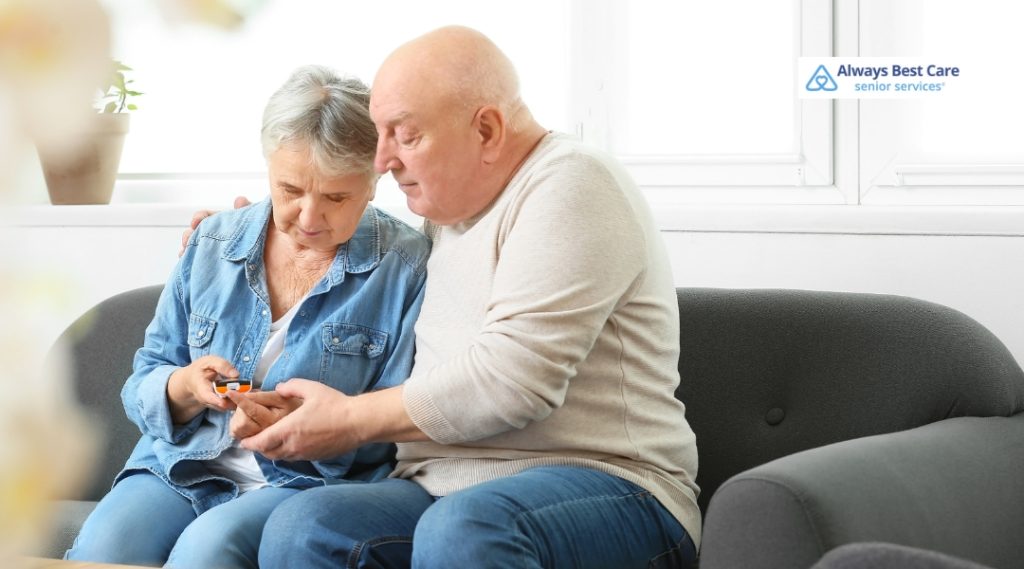
Smart Strategies for Managing Diabetes at Home
Nourishing Your Body the Right Way
A solid diet forms the foundation of diabetes management. We recommend meals featuring:
- High-fiber options like vegetables, beans, and whole grains
- Lean proteins such as fish, chicken, or plant-based alternatives
- Minimal added sugars and refined carbohydrates
- Smaller, more frequent meals to prevent dramatic blood sugar spikes
Here’s where we at Always Best Care can step in. Our caregivers assist with grocery shopping, meal planning, and food prep—ensuring your loved one enjoys tasty, nutritious meals that support their health without feeling restrictive.
Getting Moving Every Day
Exercise does wonders for blood sugar levels and boosts circulation, mood, and overall strength. For most seniors, gentle activities work best:
- Strolling around the neighborhood or indoors
- Easy stretching or beginner yoga
- Seated exercises for those with mobility concerns
- Light gardening or household tasks
Always check with a doctor before starting anything new to ensure it’s safe and appropriate for your situation.
Staying on Top of Medications and Testing
Consistency matters enormously, yet it’s often where things slip. We suggest:
- Setting phone reminders for testing and medication times
- Using labeled pill organizers to keep things straight
- Maintaining a simple daily log of blood sugar readings
- Scheduling regular check-ins with healthcare providers
Our caregivers excel at flagging changes in appetite, mood, or energy levels—often the earliest warning signs that blood sugar’s getting out of whack.
Recognizing Red Flags Before They Become Problems
Unmanaged diabetes can spiral into serious complications quickly. Keep an eye out for:
- Excessive thirst or frequent urination
- Sudden exhaustion or weakness
- Blurred or fuzzy vision
- Unexpected weight loss
- Wounds or infections that heal slowly
Any of these warrants an immediate call to your healthcare provider.

How In-Home Care Makes a Real Difference
Honestly, diabetes management can feel overwhelming, especially for seniors flying solo. That’s where we come in. Always Best Care caregivers support your loved one by:
- Handling grocery shopping and meal preparation
- Encouraging movement, hydration, and healthy habits
- Providing medication reminders and keeping track of readings
- Spotting and reporting concerning symptoms
- Offering companionship that reduces stress and anxiety
With compassionate, professional support right there at home, seniors maintain better control and enjoy genuine independence.

Tailoring Care to Your Loved One’s Needs
Here’s what makes diabetes management in older adults different from younger populations: one-size-fits-all approaches don’t work. Healthcare guidelines recognize that functionally independent seniors need different targets than frail or medically complex older adults. That’s why we customize our approach to match each person’s situation, abilities, and health goals.
Frequently Asked Questions
Q: What’s the difference between Type 1 and Type 2 diabetes in older adults?
A: Type 2 is far more common in seniors and usually develops due to insulin resistance and lifestyle factors, while Type 1 is less frequent but can persist in those diagnosed earlier in life.
Q: How often should seniors check their blood sugar?
A: This varies by individual and medication type. Your healthcare provider will recommend the best schedule, but consistency is key.
Q: Can seniors still enjoy their favorite foods with diabetes?
A: Absolutely! It’s about balance and portion control. Our caregivers help make meal planning enjoyable and sustainable, not restrictive.
Q: What should I do if my loved one shows signs of low blood sugar?
A: Keep fast-acting carbohydrates nearby—juice, glucose tablets, or candy—and seek immediate medical attention if symptoms worsen.
Q: How can in-home care help with diabetes management?
A: Caregivers provide medication reminders, assist with meal prep, encourage activity, monitor symptoms, and offer the consistent support that makes all the difference.

Need Help Managing Diabetes for Your Loved One? Contact Always Best Care of Cypress Today!
Managing diabetes doesn’t have to feel like an uphill battle. With the right guidance, proper care, and steady daily support, your loved one can maintain excellent health, stay safe, and live independently at home. The key is getting professional help that understands the unique challenges older adults face.
If you’re looking for compassionate, experienced support for managing diabetes with seniors in Cypress, TX, reach out to Always Best Care today. We’re here to help your family navigate this journey with confidence and peace of mind. Contact us to schedule a care consultation and discover how our team can make a real difference in your loved one’s health and happiness. Contact Always Best Care of Cypress at (281) 246-0080 to learn more and schedule your free consultation.