Beyond Band-Aids: When Garner Families Should Call a Skilled Nurse
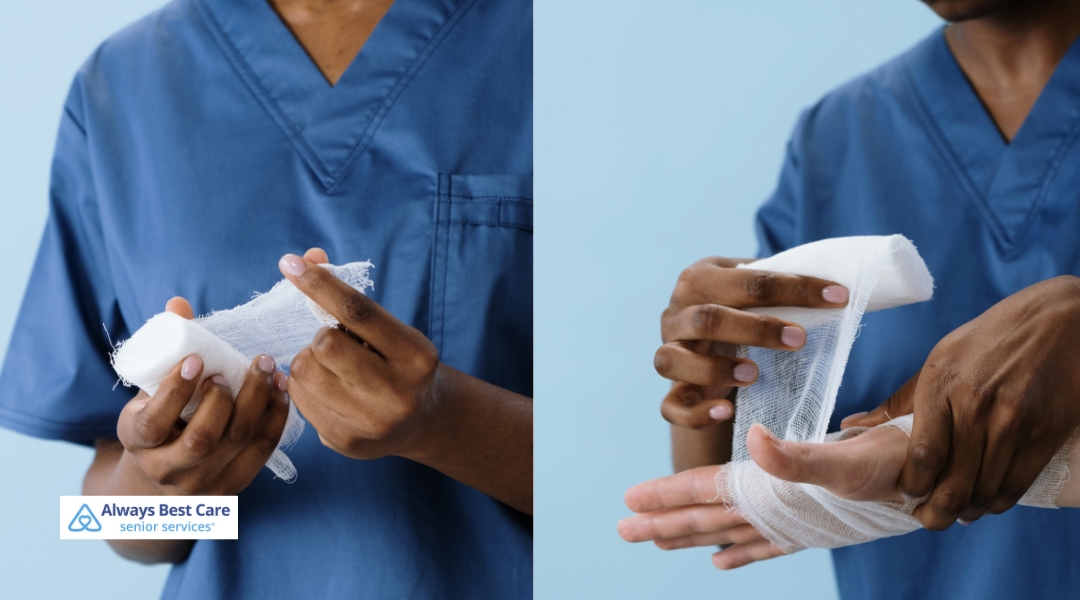
Managing a wound at home sounds straightforward — until it isn’t. For older adults, even a small cut or skin tear can turn into a serious health issue if it isn’t treated correctly. Slower healing, chronic conditions, and age-related skin changes all raise the stakes. Knowing when to handle wound care at home and when to call in a skilled nurse can make a real difference in how well and how quickly a senior recovers.
What You Will Learn:
- How aging affects wound healing, and the common health factors that can quietly make things more complicated for your loved one.
- Which types of wounds call for a skilled nurse at home, and the warning signs that mean it’s time to act fast.
- What a home health nurse actually does during wound care visits, and how in-home caregivers support the healing process alongside them.
- Simple, practical steps families can take every day to help prevent pressure injuries before they start.
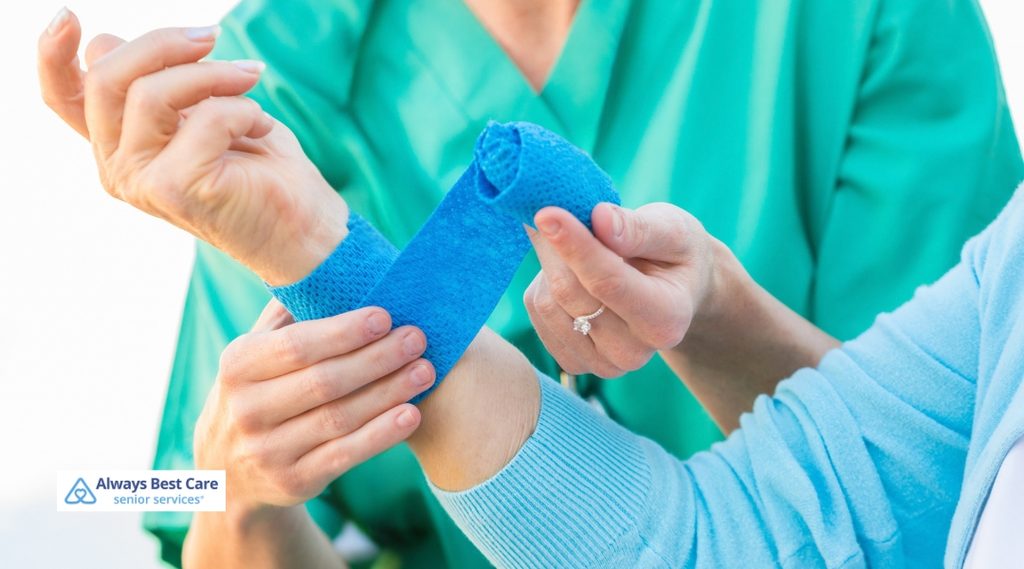
Table of Contents
How Aging Changes the Way Wounds Heal
Skin becomes thinner and more fragile with age, making it easier to injure and harder to repair. But the challenges go beyond the skin itself.
Several factors can slow or complicate healing in older adults:
- Reduced circulation — Less blood flow to the extremities means fewer nutrients and oxygen reach the wound site, slowing tissue repair.
- Chronic conditions — Diabetes, heart disease, and autoimmune disorders can each interfere with the body’s healing response in different ways.
- Medications — Blood thinners, steroids, and certain other drugs can affect clotting and immune function.
- Nutritional gaps — Protein, zinc, and vitamins A and C are all essential for tissue repair. Deficiencies are common in older adults and can quietly stall healing.
- Limited mobility — Seniors who spend long periods in bed or a wheelchair face a higher risk of pressure injuries, which are among the most difficult wounds to treat.
Nutrition also plays a critical role. According to Dietitians of America, adequate protein, vitamin C, zinc, and hydration are all essential to tissue repair, and many older adults do not consistently meet these needs.
Types of Wounds That Often Require Skilled Nursing
Not every wound needs a home health nurse, but some do. Skilled nursing is typically recommended when a wound is complex, slow to heal, or carries a high risk of infection.
Common wound types that benefit from professional care include:
- Pressure injuries (bedsores) — Especially Stage 2 and above, which involve broken skin or deeper tissue damage
- Diabetic foot ulcers — These require careful monitoring due to the risk of infection and poor circulation
- Post-surgical incisions — Particularly when staples or sutures are still in place or the wound needs regular assessment
- Venous or arterial ulcers — Wounds caused by poor circulation that require specialized dressing and compression therapy
- Infected wounds — Any wound showing signs of infection needs professional evaluation and may require prescription treatment
- Skin tears — Common in older adults with fragile skin, these can be deceptively difficult to close and keep clean
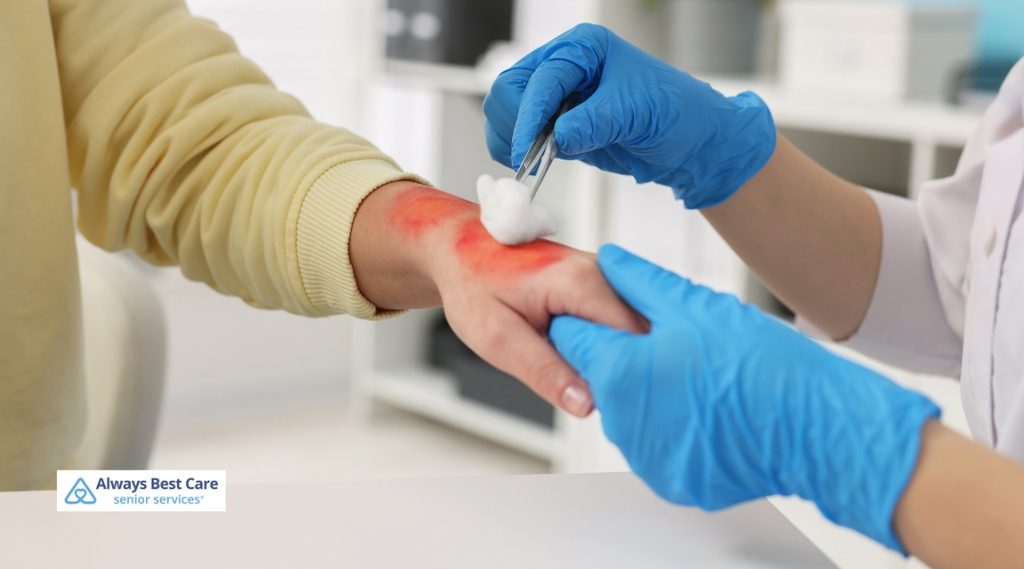
- Burns — Even moderate burns in seniors warrant skilled assessment
Seniors with diabetes, compromised immune systems, or circulatory conditions are at higher risk and should be monitored closely. The American Diabetes Association notes that foot wounds in people with diabetes can deteriorate quickly and should never be left unassessed.
Warning Signs That a Wound Needs Immediate Attention
Some changes around a wound are normal — mild redness or slight swelling in the first day or two can be part of the healing process. But certain signs indicate something is wrong and should not be ignored.
Contact a healthcare provider promptly if you notice:
- Increasing redness, warmth, or swelling that spreads beyond the wound edges
- Pus, cloudy drainage, or a foul odor
- The wound appears to be getting larger or deeper rather than closing
- Fever, chills, or sudden confusion in the senior
- Red streaks extending from the wound (a sign of spreading infection)
- No visible improvement after two weeks of consistent care
For seniors with diabetes or compromised immune systems, these warning signs can escalate quickly. When in doubt, call a healthcare provider rather than waiting.
What a Skilled Home Health Nurse Does for Wound Care
When a physician orders skilled nursing for wound care, a licensed nurse visits the senior at home on a scheduled basis. This is not just a check-in — it is active, clinical care delivered in a familiar environment.
Depending on the wound type and the care plan, a skilled nurse may:
- Perform a thorough wound assessment at each visit, documenting size, depth, and healing progress
- Debride the wound (remove dead or damaged tissue) when necessary
- Apply specialized dressings suited to the wound type — moisture-retentive, antimicrobial, or compression-based
- Administer or coordinate antibiotic therapy if infection is present
- Monitor for systemic signs of infection or complications
- Educate the senior and family members on proper wound care between visits
- Communicate directly with the physician if the wound changes or is not progressing
This level of care is especially important after a hospital discharge, when wounds are still fresh and the risk of complications is highest.
Preventing Pressure Injuries Before They Start
For seniors with limited mobility, prevention is just as important as treatment. Pressure injuries develop when sustained pressure cuts off blood flow to the skin — often over bony areas like the heels, tailbone, hips, and elbows.
Practical prevention strategies include:
- Repositioning regularly — Shifting position every two hours for bed-bound seniors, or more frequently if skin changes are already present
- Pressure-relieving surfaces — Specialized mattresses and cushions can significantly reduce risk
- Skin hygiene — Keeping skin clean and dry, especially in areas prone to moisture (under folds, around incontinence pads)
- Nutrition and hydration — Adequate protein and fluid intake supports skin integrity
- Daily skin checks — Caregivers should inspect high-risk areas at each care visit and report any redness or changes early
Health America recognises pressure injuries as a significant patient safety concern, particularly for older adults receiving care at home or in long-term settings
How In-Home Caregivers Support the Healing Process
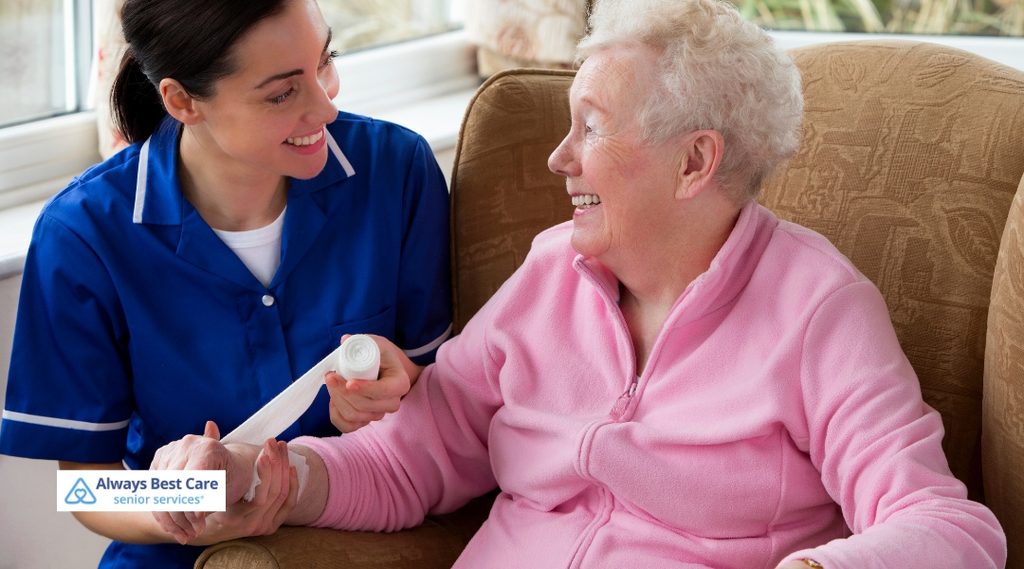
Skilled nursing addresses the medical side of wound care, but recovery involves more than dressing changes. Seniors healing at home often need consistent support with daily tasks that directly affect their health outcomes.
An in-home caregiver can:
- Prepare nutritious meals that support healing
- Assist with personal hygiene without disturbing wound sites
- Help with mobility and repositioning to prevent new pressure injuries
- Remind seniors to take prescribed medications on schedule
- Observe and report any changes in the senior’s condition to family or the care team
- Provide companionship, which supports emotional well-being during recovery
When skilled nursing and in-home care work in coordination, seniors receive both the clinical expertise and the day-to-day support they need to heal safely at home.
Always Best Care of Garner can connect your family with skilled home health services and in-home caregivers who work together to support your loved one’s recovery. Contact Always Best Care of Garner at (919)504-5523 to schedule a care consultation and learn what options are available in your area.
Frequently Asked Questions
Q: Can Medicare cover skilled nursing for wound care at home?
A: Medicare Part A and Part B may cover home health services, including skilled nursing for wound care, if a physician certifies that the care is medically necessary and the patient is considered homebound. Coverage specifics vary, so it is worth confirming with the home health agency and your insurance provider.
Q: How do I know if a wound qualifies for home health services?
A: A physician or nurse practitioner must evaluate the wound and determine that skilled care is needed. If your loved one was recently discharged from a hospital or rehab facility, ask the discharge planner about home health orders before leaving.
Q: How often will a nurse visit for wound care?
A: Visit frequency depends on the wound type, severity, and the physician’s orders. Some wounds require daily visits initially; others may need care two to three times per week. The schedule is typically adjusted as the wound heals.
Q: What if the wound is not improving despite skilled nursing care?
If a wound is not responding to treatment, the nurse will communicate this to the physician, who may order additional diagnostics, a different treatment approach, or a referral to a wound care specialist. Non-healing wounds should never be left unaddressed.
Q: Can a family member be trained to change wound dressings?
Yes. Skilled nurses often teach family caregivers how to perform basic wound care tasks between visits. However, complex wounds — particularly those with infection, deep tissue involvement, or specialized dressings — should be managed by a professional.