Home Health for Stroke Recovery in Madison
Recovering from a stroke requires time, consistency, and the right level of care. While hospital treatment and rehabilitation programs provide essential early support, recovery does not end after discharge. Many seniors continue to face physical and cognitive challenges that require ongoing attention at home.
For families in Madison, home health services provide a dependable solution that allows seniors to continue healing in a comfortable and familiar environment. With proper support, stroke survivors can make steady progress toward regaining independence and improving their quality of life.
Table of Contents
Continuing Care After Hospital Discharge
After a stroke, many seniors leave the hospital with a recovery plan that includes therapy and medical follow-ups. However, managing this care independently can be difficult without professional support.
Home health services bridge the gap between hospital care and daily living. By bringing skilled professionals into the home, seniors receive consistent care that supports recovery without the added stress of transportation.
This approach makes care more personalized, helping seniors focus on rebuilding their strength while remaining in a safe and supportive environment.
Skilled Nursing Support for Recovery
Skilled nursing care plays an important role in ensuring that recovery continues safely at home. A licensed nurse provides medical supervision and helps manage ongoing health needs.
Nursing support may include:
- Monitoring vital signs such as blood pressure and heart rate
- Managing medications and ensuring proper usage
- Watching for early signs of complications
- Educating family members about care routines
- Coordinating with physicians and healthcare providers
Having a medical professional involved in daily care helps reduce risks and provides reassurance for both seniors and their families.
Physical Therapy for Improved Mobility
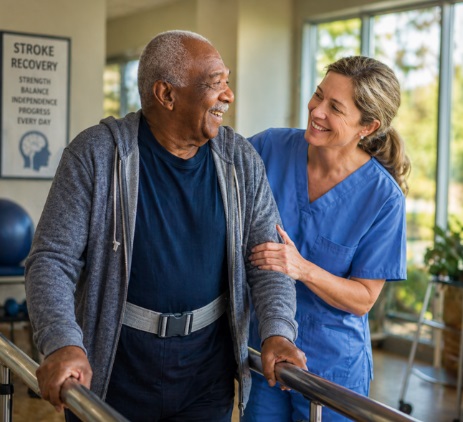
Many stroke survivors experience weakness, limited mobility, or difficulty with coordination. Physical therapy focuses on improving these areas to help seniors regain independence.
A physical therapist may work with seniors to:
- Strengthen muscles and improve coordination
- Enhance balance and stability
- Support safe walking and movement
- Increase flexibility and range of motion
Providing therapy in the home allows exercises to be tailored to everyday situations. This helps seniors practice movements they use regularly, making recovery more practical and effective.
Occupational Therapy for Daily Function
After a stroke, routine tasks can become more difficult. Occupational therapy helps seniors relearn essential skills and adapt to changes in their abilities.
Therapists support seniors by:
- Practicing daily self-care activities such as dressing and grooming
- Teaching safer ways to perform household tasks
- Improving fine motor skills and hand coordination
- Recommending tools that make tasks easier
- Making adjustments to improve home safety
These strategies allow seniors to regain confidence and continue participating in daily routines.
Managing Chronic Conditions During Recovery
Stroke recovery often involves managing other health conditions such as high blood pressure, diabetes, or heart disease. These conditions can affect recovery progress if not properly controlled.
Maintaining a consistent routine with medications, diet, and activity is essential. Families who remain involved in daily care can help reduce complications and support better outcomes.
Regular communication with healthcare providers ensures that all aspects of a senior’s health are addressed throughout recovery.
Tracking Progress and Preventing Complications
Recovery from a stroke can vary widely between individuals. Some seniors experience steady improvement, while others may need additional time and support.
Home health professionals monitor recovery by watching for signs such as:
- Changes in speech or communication
- Increased weakness or mobility issues
- Balance problems or risk of falling
- Fatigue or confusion
Early identification of these concerns allows care plans to be adjusted quickly, helping prevent more serious complications and supporting continued progress.
Emotional Support Throughout Recovery
The challenges of stroke recovery are not only physical. Many seniors experience emotional changes as they adjust to new limitations. Feelings of frustration, anxiety, or isolation can affect motivation and overall well-being.
Having a reliable support system is essential during this time. Caregivers, family members, and healthcare professionals all play a role in providing encouragement and reassurance.
Consistent emotional support helps seniors stay engaged throughout the recovery process and maintain a positive outlook as they continue to improve.
Supporting Stroke Recovery at Home in Madison
At Always Best Care of Madison, we understand that stroke recovery requires a personalized approach that addresses both medical and emotional needs. Our team works closely with families to provide dependable care that supports seniors throughout their recovery journey.
From assistance with daily routines to coordination with healthcare providers, we are committed to helping seniors remain safe, comfortable, and independent at home.
Call Always Best Care of Madison today at (608) 315-2378 to explore personalized in-home care services and find the right support for your loved one.