
Home Care Strategies for Individuals with Dementia

Living with dementia presents unique challenges that can affect memory, communication, daily activities, and overall quality of life. As the condition progresses, individuals often require additional support to maintain independence and safety while remaining in familiar surroundings. Families frequently seek compassionate solutions that allow their loved ones to continue living comfortably at home while receiving personalized assistance.
Professional home care services in Madison, WI, can play a valuable role in helping individuals with dementia navigate daily life. By combining structured routines, supportive environments, and meaningful social engagement, families can create a positive experience for their loved ones while reducing many of the common challenges associated with cognitive decline.
At Always Best Care of Madison, we understand the importance of providing individualized support that promotes dignity, comfort, and well-being for seniors living with dementia. The following strategies can help families enhance care at home and create a more supportive environment for their loved ones.
Table of Contents
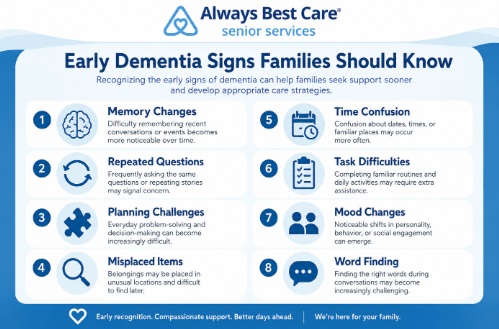
Early Signs of Dementia Families Should Know
Recognizing the early signs of dementia can help families seek support sooner and develop appropriate care strategies. While occasional forgetfulness is a normal part of aging, dementia-related symptoms typically become more frequent and begin interfering with everyday activities.
Some common early signs include:
- Difficulty remembering recent conversations or events
- Repeating questions or stories multiple times
- Challenges with planning or problem-solving
- Misplacing items in unusual locations
- Increased confusion about dates, times, or places
- Difficulty completing familiar tasks
- Changes in mood, personality, or social behavior
- Trouble finding the right words during conversations
Family members are often the first to notice subtle changes. Paying attention to these signs can help ensure individuals receive the support they need while maintaining their quality of life for as long as possible.
Creating a Dementia Friendly Home Environment
The home environment plays a significant role in supporting individuals living with dementia. A well-organized, familiar, and safe space can reduce confusion and promote greater independence.
Simple adjustments may include:
- Keeping frequently used items in consistent locations
- Reducing clutter throughout the home
- Improving lighting in hallways and living areas
- Using labels or visual cues on drawers and cabinets
- Removing tripping hazards such as loose rugs
- Installing grab bars in bathrooms
- Securing potentially dangerous household items
Creating a calm atmosphere is equally important. Excessive noise, busy décor, or frequent disruptions can sometimes increase confusion and anxiety. A predictable and comfortable environment helps individuals feel more secure and confident in their surroundings.
Effective Communication Tips for Dementia Caregivers
Communication can become increasingly challenging as dementia progresses. Family members and caregivers often find that adapting their communication style can lead to more positive interactions and fewer frustrations.
Helpful communication strategies include:
- Speaking slowly and clearly
- Using simple sentences and straightforward language
- Maintaining eye contact
- Offering one instruction at a time
- Allowing extra time for responses
- Avoiding arguments or corrections
- Using reassuring body language and facial expressions
Listening patiently is just as important as speaking clearly. Even when words become difficult to express, individuals with dementia continue to experience emotions and appreciate being treated with respect and understanding.
Positive communication helps strengthen relationships and creates opportunities for meaningful connections throughout the caregiving journey.
Managing Daily Routines for Alzheimer’s Patients
Consistent routines provide structure and familiarity, which can be especially beneficial for individuals living with Alzheimer’s disease and other forms of dementia.
Daily schedules may include:
- Regular wake-up and bedtime routines
- Consistent mealtimes
- Scheduled physical activity
- Personal care activities at the same time each day
- Opportunities for social interaction
- Relaxation periods throughout the day
When routines remain predictable, individuals often experience less confusion and anxiety. Familiar patterns can help reduce decision-making demands and make daily tasks feel more manageable.
Flexibility remains important, however. Some days may require adjustments based on energy levels, mood, or changing needs. The goal is to provide stability while remaining responsive to the individual’s preferences and comfort.
How Home Care Supports Cognitive Health
Maintaining cognitive engagement is an important part of dementia care. While dementia affects memory and thinking abilities, meaningful activities can help stimulate the mind and encourage continued participation in daily life.
Professional caregivers often support cognitive wellness through activities such as:
- Conversation and companionship
- Reading together
- Listening to favorite music
- Completing puzzles or word games
- Looking through family photo albums
- Participating in hobbies and crafts
- Gentle physical exercise
- Community involvement when appropriate
These activities provide opportunities for mental stimulation while fostering emotional well-being. Engagement can help individuals remain connected to their interests, memories, and personal identities.
Families seeking in-home care services in Madison, WI, often appreciate additional support that fosters meaningful daily interaction and helps loved ones remain active and engaged.
Reducing Stress for Family Members Caring for Loved Ones
Caring for a loved one with dementia can be rewarding, but it can also place significant emotional and physical demands on family members. Many caregivers balance multiple responsibilities, including work, parenting, and household obligations.
Some effective ways to reduce caregiver stress include:
- Accepting help from trusted family members and friends
- Taking regular breaks for self-care
- Joining caregiver support groups
- Maintaining healthy sleep habits
- Staying physically active
- Seeking respite care when needed
- Learning more about dementia and caregiving techniques
Caregivers often focus entirely on their loved one’s needs while neglecting their own well-being. Prioritizing personal health and emotional support helps caregivers remain effective and resilient over the long term.
Professional home care services can also provide valuable assistance by sharing caregiving responsibilities and offering families greater peace of mind.
Supporting Independence and Quality of Life at Home
Dementia affects each person differently, making individualized care essential. By recognizing early symptoms, creating a supportive home environment, maintaining structured routines, encouraging cognitive engagement, and practicing effective communication, families can help their loved ones experience greater comfort and confidence at home.
For families seeking trusted home care services in Madison, WI, Always Best Care of Madison is dedicated to providing compassionate support tailored to each individual’s unique needs. Our experienced caregivers help seniors maintain their independence, dignity, and quality of life while remaining in the familiar surroundings they cherish. Call (608) 315-2378 today to learn how our team can support your loved one and your family throughout the dementia care journey.