
Why Seniors May Not Feel Thirsty: Staying Hydrated in Madison
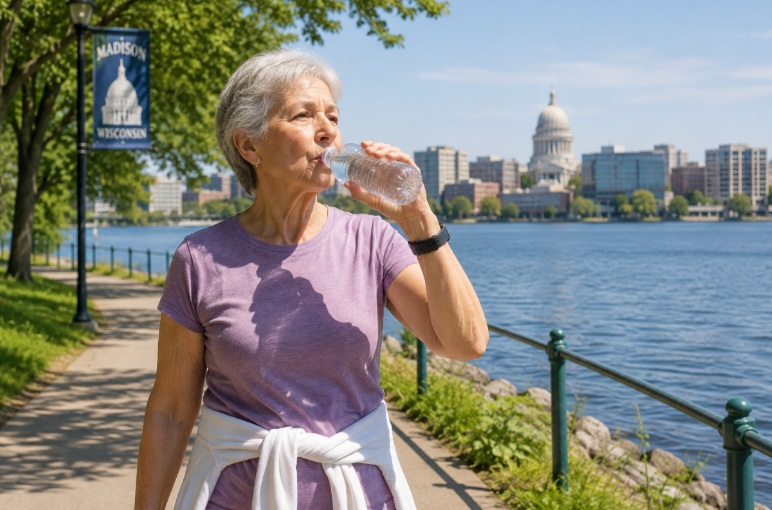
Feeling thirsty is usually the body’s reminder to reach for a drink. As people grow older, however, that natural signal can become less noticeable. A senior may go for hours without drinking enough fluids simply because thirst does not feel as strong as it once did.
This change makes hydration an important part of healthy aging. Adequate fluids support many essential functions, including digestion, circulation, temperature regulation, blood pressure, and brain health. When seniors cannot rely on thirst alone, establishing consistent hydration habits becomes especially valuable.
For families in Madison, understanding how hydration needs change with age can make it easier to support an older loved one. Simple routines, accessible beverages, hydrating foods, and caregiver reminders can all help seniors maintain healthier fluid intake throughout the day.
Table of Contents
Why Thirst May Become Less Noticeable with Age
The body normally responds to a need for fluids by creating the sensation of thirst. With age, the brain may become less responsive to changes in hydration. As a result, an older adult might already need fluids before feeling noticeably thirsty.
Several other factors may also make it more difficult for seniors to drink enough throughout the day, including:
- Decreased kidney function
- Certain medications, such as diuretics
- Chronic health conditions
- Mobility challenges that make getting a drink difficult
- Concerns about frequent trips to the bathroom
Mobility can be an easily overlooked factor. A senior who finds it difficult to get up and walk to the kitchen may postpone getting a drink. Repeating this throughout the day can gradually reduce overall fluid intake.
Because these changes may occur slowly, seniors and their families may not immediately realize that hydration habits need to be adjusted.
Understanding the Health Risks of Dehydration
Not getting enough fluids can affect a senior’s health in ways that may influence both comfort and everyday activities. Even mild dehydration can contribute to changes in energy, concentration, digestion, and balance.
Possible effects of dehydration include:
- Fatigue and reduced energy
- Dizziness or lightheadedness
- Headaches
- Constipation
- Confusion or difficulty concentrating
- Low blood pressure
- Increased risk of falls
- Urinary tract infections
When dehydration becomes severe, medical treatment or hospitalization may be necessary. This makes prevention especially important for older adults who may not recognize their body’s early need for fluids.
Rather than waiting for obvious thirst, families can encourage seniors to treat hydration as part of their normal daily wellness routine.
What Dehydration Warning Signs Should Madison Families Watch For?
Older adults may not always realize when they are becoming dehydrated. Family members and caregivers can provide an extra layer of awareness by noticing changes in appearance, behavior, or familiar daily routines.
Possible warning signs include:
- Dry mouth or cracked lips
- Dark-colored urine or infrequent urination
- Dry skin
- Increased confusion or forgetfulness
- Weakness or unusual fatigue
- Dizziness when standing
- Loss of appetite
Some signs may be easier for another person to notice than for the senior experiencing them. For example, a family member may recognize that a loved one seems unusually tired, confused, or less interested in meals.
If these symptoms appear suddenly, become severe, or continue to worsen, families should contact the appropriate healthcare provider.
Making Hydration Part of a Madison Senior’s Daily Routine
Because thirst may not provide a dependable reminder, establishing a routine can make healthy hydration easier to maintain.
Simple strategies may include:
- Drinking water with each meal
- Keeping a reusable water bottle nearby
- Setting reminders to drink fluids at regular times
- Drinking water before going outdoors or participating in appropriate activity
- Sipping fluids consistently rather than waiting until strong thirst develops
Connecting fluids with activities that already happen every day can also be useful. For example, a senior might have a drink with breakfast, another with medication when appropriate, and fluids with lunch and dinner.
Keeping beverages within easy reach is especially helpful for seniors with limited mobility. A water bottle near a favorite chair or a glass within reach at the dining table can remove an unnecessary barrier to staying hydrated.
Adding Hydrating Foods to Meals and Snacks
Water is an important source of hydration, but it is not the only way seniors can increase fluid intake. Many foods contain significant amounts of water while also providing useful nutrients.
Hydrating options may include:
- Watermelon
- Cucumbers
- Strawberries
- Oranges
- Lettuce
- Broth-based soups
- Low-fat milk
- Herbal teas
- Yogurt
These foods can be incorporated into meals and snacks throughout the day. Fruit may be served with breakfast, yogurt can make a convenient snack, and broth-based soups can add both fluids and variety to meals.
This approach can be particularly helpful for older adults who do not enjoy drinking large amounts of plain water.
Families should continue following any dietary or fluid recommendations provided by the senior’s healthcare team, particularly when a medical condition affects fluid intake.
Adjusting Hydration Habits During Warmer Madison Weather
Fluid intake deserves additional attention during warmer weather or when seniors spend more time outdoors. Older adults may lose fluids while walking, gardening, attending family gatherings, or participating in community activities without immediately feeling thirsty.
Having water readily available before leaving home can make hydration easier. Seniors may also benefit from drinking fluids before appropriate physical activity and taking regular opportunities to hydrate while they are outside.
After returning home, fluid intake should continue as part of the normal routine rather than waiting for strong thirst to develop.
Families can also plan outdoor activities around comfort and weather conditions. Physical activity should always match the senior’s abilities and follow recommendations from their healthcare provider.
How Can Caregivers Help Seniors Stay Hydrated?
Maintaining consistent hydration can be more challenging for seniors who live alone or those managing health concerns, mobility limitations, or changes in memory. Family members and caregivers can provide practical reminders and assistance throughout the day.
Caregivers may help by:
- Offering water and other appropriate beverages regularly
- Keeping drinks within easy reach
- Preparing meals that include hydrating foods
- Providing reminders to drink fluids
- Watching for possible signs of dehydration
- Encouraging hydration during warm weather or physical activity
- Communicating concerns to family members or healthcare providers
These actions may seem small, but consistency can make them valuable. A senior who regularly forgets to drink may benefit from a caregiver incorporating hydration reminders naturally into meals, activities, and other daily routines.
Supporting Hydration While Preserving Independence
Helping an older adult stay hydrated does not mean taking control of every meal or beverage. Effective support should make healthy choices easier while allowing seniors to remain involved in their own routines.
Some older adults may only need occasional reminders. Others may benefit from someone preparing meals, refilling a water bottle, or placing drinks where they can be reached safely.
Personalizing this assistance allows caregivers to provide help where it is genuinely useful without unnecessarily limiting independence.
It can also make hydration feel less like another health task. When beverages and hydrating foods become a natural part of meals, conversations, and daily activities, healthy habits may be easier to maintain over time.
How Always Best Care of Madison Supports Healthy Hydration
At Always Best Care of Madison, we understand that healthy aging is often supported by small habits practiced consistently. Hydration is one of those important habits, and some seniors may benefit from additional reminders or assistance throughout the day.
Our caregivers can help older adults maintain healthier routines through:
- Hydration reminders
- Nutritious meal preparation
- Assistance with everyday activities
- Companionship
- Observing changes in normal routines
- Encouragement to maintain healthy daily habits
This type of personalized support can be particularly valuable when mobility challenges, fatigue, or other concerns make everyday routines more difficult to manage independently.
By helping with practical daily needs, caregivers can support seniors who want to remain comfortable and confident in their own homes.
Helping Madison Seniors Stay Healthy and Hydrated
A reduced sense of thirst can be a normal part of aging, but dehydration does not have to become part of a senior’s everyday life. Building regular drinking habits, keeping fluids accessible, incorporating hydrating foods into meals, and recognizing warning signs can all help older adults maintain healthier routines.
Family members and caregivers can provide another layer of consistency when a loved one needs reminders or practical assistance. The goal is not simply to encourage seniors to drink more water. It is to create manageable habits that support comfort, energy, wellness, and independence at home.
If your loved one could benefit from additional assistance with hydration, nutrition, or other everyday routines, Always Best Care of Madison is ready to help.
Call Always Best Care of Madison at (608) 234-4761 to learn more about personalized in-home care and how our caregivers can help your loved one stay healthy, hydrated, and independent at home.