Preventive Screenings for Seniors

Preventive screenings can feel like another task on a busy family calendar. Yet they allow older adults and their healthcare providers to discuss risks, review changes, and plan appropriate follow-up care. At Always Best Care of Madison, we help families keep everyday routines organized while treating each senior with patience, dignity, and respect.
Families considering home care services in Fitchburg, WI often wonder how non-medical assistance fits into preventive care. This guide explains common screening topics, ways to prepare, and the practical role caregivers may play before and after appointments.
Table of Contents
Which Preventive Screenings May Be Recommended?
No universal schedule fits every senior. Recommendations may depend on age, sex, family history, medications, previous results, current conditions, and personal preferences. The Centers for Disease Control and Prevention reports that three in four American adults have at least one chronic condition, highlighting the importance of ongoing conversations with healthcare providers about appropriate preventive care. Therefore, ongoing conversations with a physician can help families understand which screenings may be appropriate.
Common topics include:
- Blood pressure and cholesterol checks
- Colorectal, breast, cervical, lung, or prostate screenings when appropriate
- Vision, hearing, dental, and bone health examinations
- Vaccinations based on age and medical history
Not every screening is suitable for every person, and breast cancer awareness can help older adults recognize changes that deserve discussion with a healthcare provider. A licensed healthcare provider should weigh the possible benefits, risks, overall health, and the senior’s preferences before recommending screenings.
Why Can Preventive Care Become Harder to Manage with Age?
Keeping up with preventive care may become more complicated when an older adult has several appointments, multiple healthcare providers, transportation challenges, or changes in mobility. Even remembering which appointment is scheduled next can become difficult when healthcare responsibilities are added to normal household routines.
Family members may also be coordinating care while managing jobs, children, or other responsibilities. Creating a predictable system can make it easier for everyone to know what is coming next without expecting one person to manage every detail.
How Can Families Keep Health Information Organized?
Families can keep appointment information, provider contact details, medication lists, allergies, and questions together in one accessible place. A notebook, folder, or digital calendar may help depending on what the senior finds easiest to use.
Keeping information organized does not mean family members should interpret medical information themselves. Test results and medical recommendations should be discussed directly with the appropriate healthcare professional.
What If Transportation Makes Appointments Difficult?
Transportation can become an obstacle when a senior no longer drives, feels uncomfortable traveling alone, or has mobility limitations. Planning transportation ahead of time may reduce the chance of a missed appointment and help minimize last-minute stress.
Families may coordinate rides themselves or arrange appropriate assistance. When non-medical home care is part of the senior’s routine, transportation and companionship may also be incorporated into the care plan when appropriate.
How Can Families Respect a Senior’s Independence?
Older adults should remain involved in their healthcare routines whenever possible. Rather than automatically taking over appointment planning, family members can ask what type of assistance would be most useful.
One person may appreciate transportation but prefer to speak privately with a healthcare provider. Another may want a trusted family member nearby to help keep track of information. Respecting these preferences can help the senior remain involved while still receiving practical support.
Creating a Manageable Screening Schedule
Some checks may happen yearly, while others are scheduled every few years or only for people with certain risk factors. Recommendations may also change after an illness, diagnosis, medication change, or unusual result. A simple written plan can keep everyone informed.
Two habits can make appointment planning easier for seniors and family caregivers.
Prepare Before the Appointment
We can help organize a medication list, allergies, previous results, questions, and appointment details in one folder. Families can also use senior health resources for ongoing wellness and planning while confirming transportation and asking the medical office whether special preparation is needed.
Keep Clear Follow-Up Notes
After the visit, families can write down the next steps, expected results, and future appointment dates. Questions about test results, symptoms, diagnoses, or treatment should always go to the appropriate licensed healthcare professional.

5 Steps for a More Organized Appointment Day
Preparing ahead can help an older adult approach an appointment with fewer last-minute details to manage. Families can use a simple routine that keeps practical needs organized while leaving medical decisions to healthcare professionals.
- Confirm the appointment details. Double-check the date, time, location, transportation arrangements, and any preparation instructions provided by the medical office.
- Gather important information. Keep identification, insurance information, medication lists, allergies, and other requested paperwork together.
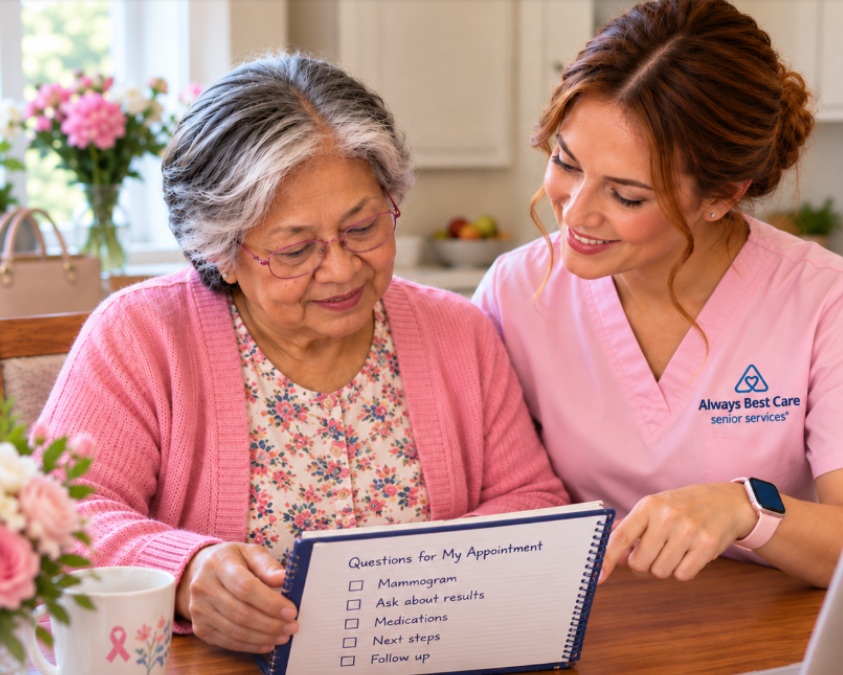
- Write down questions. Encourage the senior to prepare questions or concerns they want to discuss so important topics are less likely to be forgotten.
- Plan for comfort. Consider clothing, mobility needs, meals, hydration, and enough travel time so the day does not feel unnecessarily rushed.
- Organize the follow-up. After the appointment, record future dates and keep written instructions from the healthcare provider where the senior and family can easily find them.
This routine can be adjusted according to the older adult’s abilities and preferences. Some seniors may need help with several steps, while others may need assistance only with transportation or organization.
Making Preventive Care Part of a Healthy Routine
Preventive screenings are easier to remember when they are viewed as part of the senior’s broader wellness routine rather than isolated appointments. Families can keep an updated calendar and review upcoming healthcare visits alongside other important activities.
Consistent routines around meals, hydration, movement, personal care, and rest can also make busy appointment days easier to navigate. These everyday habits do not replace preventive screenings or medical care. Instead, they provide structure around the healthcare plan established by the senior and licensed professionals.
Families should also pay attention when an older adult begins having difficulty managing responsibilities that were previously routine. Forgetting appointments, struggling with transportation, or becoming overwhelmed by paperwork may indicate that additional organizational or daily assistance could be useful.
Simple Ways to Stay Prepared for Preventive Care
Preventive care involves more than remembering an appointment date. A few practical habits can help older adults and their families stay better prepared throughout the year.
- Keep Records Together
Store appointment information, provider details, and relevant paperwork in one place. - Plan Transportation Early
Arrange transportation before appointment day whenever possible. - Prepare Questions
Write down concerns the senior wants to discuss with the healthcare provider. - Bring Important Information
Have medication lists, allergies, identification, and requested documents ready. - Track the Next Step
Record follow-up appointments and keep provider instructions organized.
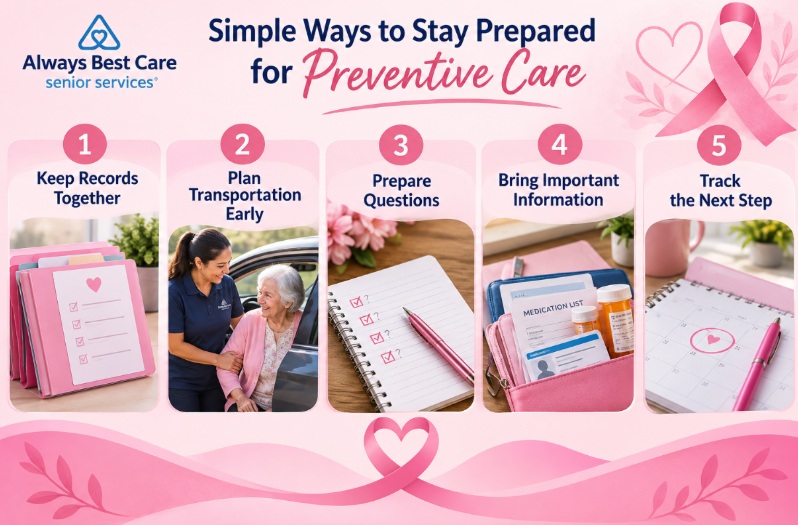
These habits can reduce confusion while helping older adults remain involved in managing their own healthcare routines.
The Supportive Role of Home Care
Non-medical caregivers do not diagnose conditions, order screenings, interpret results, or provide medical treatment. Instead, we can support the daily routines that make appointments easier to manage. Assistance may include reminders, transportation, companionship, meal preparation, dressing support, light housekeeping, and organizing paperwork.
Compassionate Help Around Appointments
A caregiver may stay with a senior before or after a screening, provide reassurance, and help the day follow a familiar routine. Our caregivers are carefully screened, trained, bonded, and insured, with ongoing training that supports dependable service.
Because care is personalized, we can adjust non-medical assistance around changing routines and family needs. However, clinical decisions remain between the senior and licensed professionals.
Supporting the Routine After an Appointment
Returning home does not always mean the day’s responsibilities are finished. An older adult may still have meals to prepare, household tasks to manage, paperwork to organize, or future appointments to remember. Practical support can help keep these responsibilities from becoming overwhelming.
Everyday Comfort and Assistance
Help with meal preparation, light housekeeping, dressing, errands, and other routine activities may be especially useful on a busy appointment day. The goal is not to change the senior’s medical plan but to make everyday responsibilities easier to manage.
Maintaining a familiar home routine may also help the senior return to normal activities after an appointment without feeling pressured to handle everything at once.
Family Communication and Follow-Up
When several relatives are involved in supporting an older adult, keeping everyone informed can prevent duplicated efforts or missed responsibilities. Families can determine who will handle transportation, scheduling, paperwork, or other practical needs.
Any questions about results, symptoms, diagnoses, medications, or treatment should be directed to the appropriate healthcare professional. Family members and non-medical caregivers can help organize information without making clinical decisions.
Helping Seniors Stay Ready for Screenings
Preventive care becomes more manageable when families keep clear records, communicate with healthcare providers, and arrange practical help when needed. A little preparation can make appointment days feel more organized while allowing older adults to remain involved in decisions about their health.
At Always Best Care of Madison, we provide respectful assistance that supports seniors without stepping into the role of medical professionals. Our non-medical caregivers can help with the everyday routines surrounding appointments while families and licensed healthcare providers continue to manage clinical needs and decisions.
To discuss home care services in Fitchburg, WI and appointment support for someone you love, call (608) 315-2378 or explore help with senior appointment routines to discuss your loved one’s needs.