Helping Seniors Recover After Treatment

Recovery does not end when a senior returns home. The days and weeks afterward can affect comfort, confidence, and the ability to resume familiar routines. At Always Best Care of Madison, we understand that families may need calm, dependable assistance during this transition. For those considering home care services in Verona, WI, nonmedical support can make daily responsibilities feel safer and more manageable.
Below, we explain how caregivers can help with everyday routines, how families can create a supportive home environment, and when to share concerns with licensed healthcare professionals.
Table of Contents
Why Is Support at Home Important After Treatment?
After surgery, rehabilitation, or other treatment, seniors may feel tired, uncomfortable, or less steady than usual. For older adults recovering from breast cancer treatment, understanding breast cancer awareness and support for older adults can also help families stay attentive to their loved one’s needs.
Activities such as bathing, getting dressed, preparing meals, and moving around the home may take more time or require assistance. Having appropriate help with everyday responsibilities can allow seniors to focus on the recovery plan established by their healthcare professionals.
What Can Families Expect During the Transition Home?
Returning home can be reassuring, but familiar surroundings do not necessarily mean a senior is immediately ready to resume every previous responsibility. Energy, mobility, appetite, sleep patterns, and comfort may be different during recovery. The amount of assistance needed can also change from day to day.
Families can make the transition easier by focusing first on essential routines and following instructions from the senior’s healthcare team.
How Can Families Prepare Before the Senior Comes Home?
Before the senior returns, families can look at the home from a practical perspective. Frequently used items can be placed within easy reach, pathways can be cleared, and appropriate meals and household supplies can be prepared ahead of time.
Families can also organize discharge information, follow-up appointment details, and contact information for healthcare professionals. Having these details in one place can make the first few days at home easier to manage.
What Daily Tasks May Require Extra Help?
A senior who was previously independent may temporarily find certain activities more tiring or difficult. Depending on the individual’s abilities and care plan, nonmedical assistance may be useful for:
- Dressing and personal routines
- Meal preparation
- Light housekeeping and laundry
- Transportation and errands
- Appropriate mobility assistance
- Companionship and everyday reminders
The goal is not to take over unnecessarily. Assistance can focus on tasks that are currently difficult while allowing the senior to continue participating in activities they can safely manage.
How Can Families Avoid Doing Too Much Too Soon?
It can be tempting to focus on getting life back to normal as quickly as possible. However, families should follow activity guidance provided by the senior’s healthcare professionals rather than creating their own recovery timeline.
Keeping the daily schedule flexible and allowing extra time for routine activities can reduce unnecessary pressure. Nonmedical caregivers can also handle appropriate household responsibilities while the senior follows their professional recovery plan.
Assistance with Everyday Activities
We can support seniors with personal care, meal preparation, light housekeeping, errands, companionship, and other daily tasks. This assistance can help conserve energy for activities recommended by the healthcare team.
Our in-home care is nonmedical, so caregivers can provide dependable assistance with everyday routines without replacing doctors, nurses, or therapists. Clinical instructions, medication decisions, wound care, and treatment changes remain with qualified healthcare professionals.

Five Ways to Make Daily Recovery Routines More Manageable
A predictable routine can help each day feel less overwhelming, although recovery may not follow a perfect schedule. Families can use these practical strategies while continuing to follow professional medical instructions:
- Plan around essential activities. Prioritize personal care, meals, appointments, and other necessary responsibilities rather than filling the schedule.
- Keep commonly used items accessible. Place appropriate household items where the senior can reach them without unnecessary searching.
- Prepare meals ahead of time. Having meals or ingredients available can simplify days when energy is limited.
- Allow extra time for routines. Dressing, moving around the home, and preparing for appointments may take longer during recovery.
- Keep important information organized. Store follow-up dates, written healthcare instructions, and important contact information together.
A structured routine should still allow flexibility. The senior’s healthcare team should guide decisions involving activity restrictions, treatment, medication, wound care, and rehabilitation.
Creating a Supportive Home Environment
Clear walkways, good lighting, and frequently used items placed within reach may help a senior move around the home with greater confidence. An uncluttered environment can be particularly helpful when strength or mobility has temporarily changed.
Caregivers can also help prepare suitable meals, provide appropriate reminders based on established directions, and prevent essential household tasks from piling up.
Helpful care should also respect a senior’s privacy, preferences, and abilities. Rather than taking over every activity, caregivers can provide the level of assistance needed while encouraging appropriate independence.
For example, a caregiver may lay out clothing while allowing the senior to handle the parts of dressing they can manage. During meal preparation, the senior might choose the meal or participate in a simple step. These everyday choices can help preserve a sense of control.
Supporting Nutrition, Comfort, and Everyday Wellness
Everyday routines can contribute to a more manageable recovery environment. Nonmedical caregivers cannot prescribe a diet or determine what a senior should eat for a medical condition, but they can assist with meals according to the person’s preferences and instructions from qualified healthcare professionals.
Caregivers may help with meal preparation, grocery-related tasks, personal routines, light housekeeping, and companionship. If a senior has dietary restrictions or other medical requirements, those instructions should come from the healthcare team.
Comfort also matters. Fresh clothing, a tidy living space, familiar activities, and reassuring companionship can help daily life feel more manageable while professional treatment or rehabilitation continues.
Keeping Recovery Information Organized
Returning home may involve discharge paperwork, follow-up appointments, written instructions, and contact information from several healthcare professionals. Keeping these materials organized can help families quickly locate the information they need.
| Recovery Area | Practical Nonmedical Support |
|---|---|
| Meals | Help with meal preparation and everyday nutrition routines |
| Personal routines | Assist with bathing, dressing, grooming, and mobility |
| Household needs | Help with light housekeeping and everyday household tasks |
| Appointments | Provide transportation assistance for appointments |
| Companionship | Provide conversation, companionship, and everyday engagement |
| Daily reminders | Provide nonmedical medication reminders |
| Errands | Assist with shopping and other everyday errands |
These forms of practical assistance can help keep everyday responsibilities from becoming overwhelming during recovery. Families can determine which areas require the most support based on their loved one’s current abilities, preferences, and daily routine.
Clear role boundaries remain important. Caregivers can assist with everyday living and communicate appropriate observations, while licensed healthcare professionals remain responsible for clinical assessment, diagnosis, medication decisions, wound care, and treatment changes.
A Simple Recovery-at-Home Checklist
Families can also use a simple checklist to keep everyday recovery needs organized.
Keep Pathways Clear
Maintain uncluttered areas around frequently used spaces.
Organize Daily Essentials
Keep commonly used personal items within convenient reach.
Prepare Meals and Supplies
Plan appropriate meals and household necessities ahead of time.
Track Appointments
Keep follow-up dates and transportation arrangements organized.
Know Who to Contact
Keep healthcare provider information and written instructions accessible.
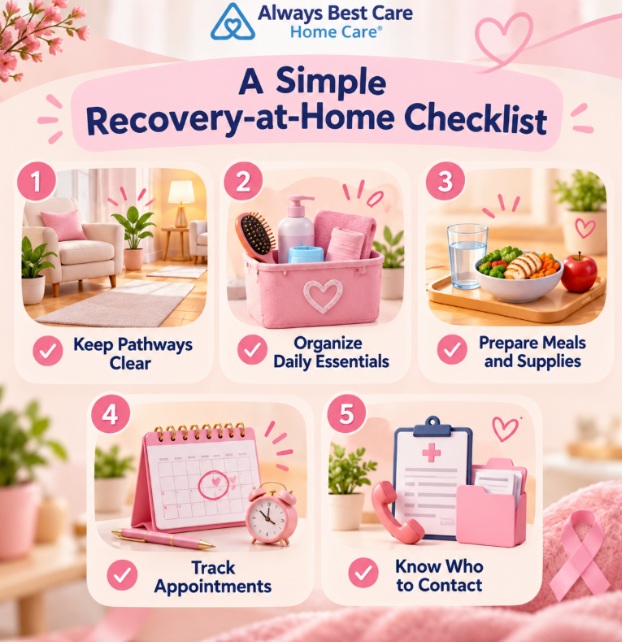
These steps focus on practical home organization rather than medical care. Treatment instructions, activity restrictions, and clinical recovery decisions should continue to come from licensed healthcare professionals.
When Should Licensed Professionals Step In?
Home care can support everyday living, but new or worsening medical concerns require professional attention. Families should follow discharge instructions and speak with the senior’s healthcare provider about unusual swelling, increasing discomfort, sudden confusion, breathing trouble, severe weakness, or other concerning changes.
Emotional changes also deserve attention. Companionship can provide reassuring social interaction, but ongoing sadness, intense anxiety, or major behavior changes should be discussed with a physician or licensed mental health professional.
Following the Discharge and Recovery Plan
Families can keep written discharge instructions accessible and refer to the healthcare team’s guidance when questions arise. Follow-up appointments, rehabilitation instructions, medication directions, and other clinical recommendations should remain under the direction of licensed healthcare professionals.
Nonmedical caregivers can support the surrounding routine through appropriate reminders, organization, and communication with family members.
Responding to Urgent Concerns
Families should know whom to contact if a concerning change occurs during recovery. Questions about symptoms, medications, wounds, treatment, or changes in the recovery plan should be directed to the appropriate healthcare professional rather than handled by a nonmedical caregiver.
For an urgent or life-threatening concern, families should call 911.
Adjusting Home Support as Recovery Progresses
The amount of assistance a senior needs immediately after returning home may change over the following days or weeks. As everyday activities become easier, families can review which tasks still require support and which the senior can manage more independently.
Home care can adjust around these changing routines. A senior may initially need more assistance with meals, personal care, transportation, or household responsibilities, then gradually require less help in certain areas.
These changes should not be used to make independent medical conclusions about recovery. Treatment, rehabilitation, medication, activity restrictions, and other clinical decisions remain with licensed professionals. Nonmedical support can instead focus on making daily life manageable while respecting the senior’s abilities and choices.
Supporting a More Comfortable Recovery at Home
A thoughtful recovery plan combines professional medical direction with patience, familiar routines, and reliable daily assistance. Families seeking home care services in Verona, WI can receive personalized nonmedical support based on their loved one’s preferences and changing needs.
At Always Best Care of Madison, we pair carefully trained caregivers with compassionate, consistent service. Call (608) 315-2378 to talk with us about creating a supportive in-home routine for your loved one’s recovery and discuss how home care services can match their changing needs.