Home Wound Care in Midlothian: When to Call a Skilled Nurse
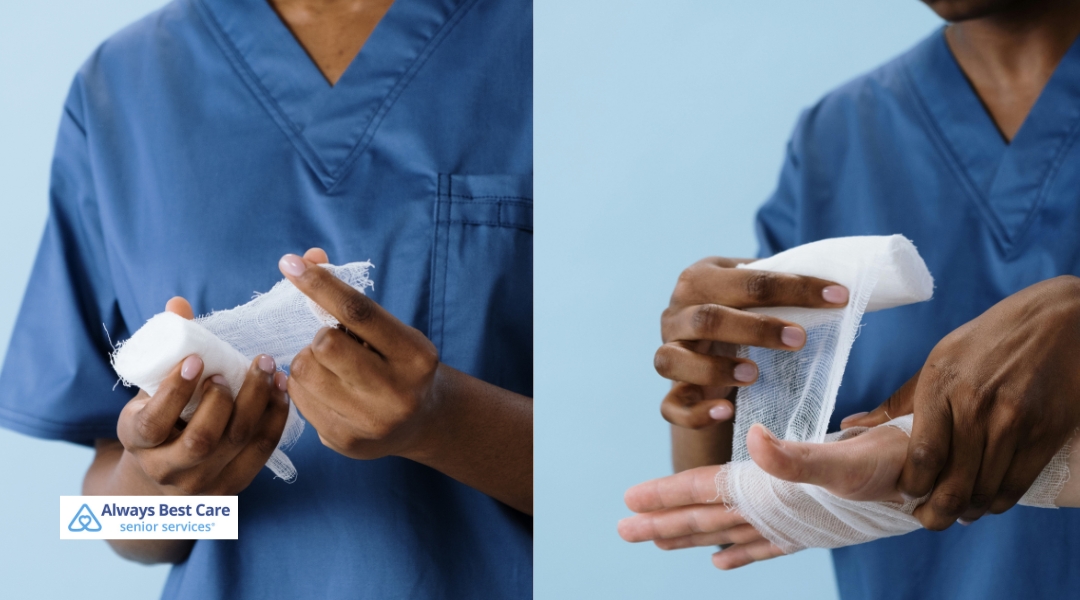
Healing from a wound at home sounds straightforward — until it isn’t. For older adults, even a small cut or skin tear can turn into a serious health issue if it isn’t managed properly. Slower healing, chronic conditions, and age-related skin changes all raise the stakes. Knowing when to handle wound care at home and when to bring in a skilled nurse can make a real difference in how well and how quickly a senior recovers.
What You Will Learn:
- How aging changes wound healing and why seniors need a little extra care during recovery.
- Which types of wounds benefit from skilled nursing and the warning signs families should always watch for.
- What a skilled home health nurse does during in-home wound care visits to keep your loved one on track.
- How in-home caregivers and simple prevention strategies work with clinical care to support a safe, comfortable recovery at home.
Table of Contents
How Aging Changes the Way Wounds Heal
The skin does a lot of work as a protective barrier, but it becomes less effective with age. By the time a person reaches their 70s or 80s, the skin is significantly thinner, produces less collagen, and takes much longer to repair itself after injury.
Beyond the skin itself, several factors compound the challenge:
- Reduced blood flow means less oxygen and fewer nutrients reach the wound site, slowing tissue repair.
- Immune system changes make it harder for the body to fight off bacteria that enter through broken skin.
- Chronic conditions like diabetes, heart disease, and peripheral artery disease directly interfere with the healing process.
- Medications such as blood thinners, steroids, and immunosuppressants can delay clotting and tissue regeneration.
- Nutritional gaps are common in older adults and can significantly impair healing — protein, zinc, and vitamins A and C are especially important for wound repair.
Nutrition also plays a critical role. According to Dietitians of America, adequate protein, vitamin C, zinc, and hydration are all essential to tissue repair, and many older adults do not consistently meet these needs.
Wounds That Typically Require Skilled Nursing Care
Not every wound needs a nurse, but certain types carry enough complexity or risk that professional oversight is strongly recommended.
Surgical wounds following a procedure need careful monitoring for signs of dehiscence (reopening) or infection, especially in the first few weeks after discharge.
Pressure injuries (bedsores) develop when sustained pressure cuts off blood flow to the skin, most often in seniors with limited mobility. Stage 2 and above injuries — where the skin has broken open — require skilled assessment and a structured care plan.
Diabetic foot ulcers are among the most serious wound types. Poor circulation and nerve damage in the feet mean these wounds can worsen rapidly and, if left untreated, may lead to infection or amputation.
Venous and arterial leg ulcers result from circulation problems and often require compression therapy, specialized dressings, and close monitoring.
Infected wounds of any kind — regardless of how they started — need professional evaluation to determine whether antibiotics or more advanced treatment is needed.
Post-hospitalization wounds in seniors who have recently been discharged are particularly vulnerable to complications, especially when the transition home happens quickly.
Seniors with diabetes, compromised immune systems, or circulatory conditions are at higher risk and should be monitored closely. The American Diabetes Association notes that foot wounds in people with diabetes can deteriorate quickly and should never be left unassessed.
Warning Signs Families Should Never Ignore
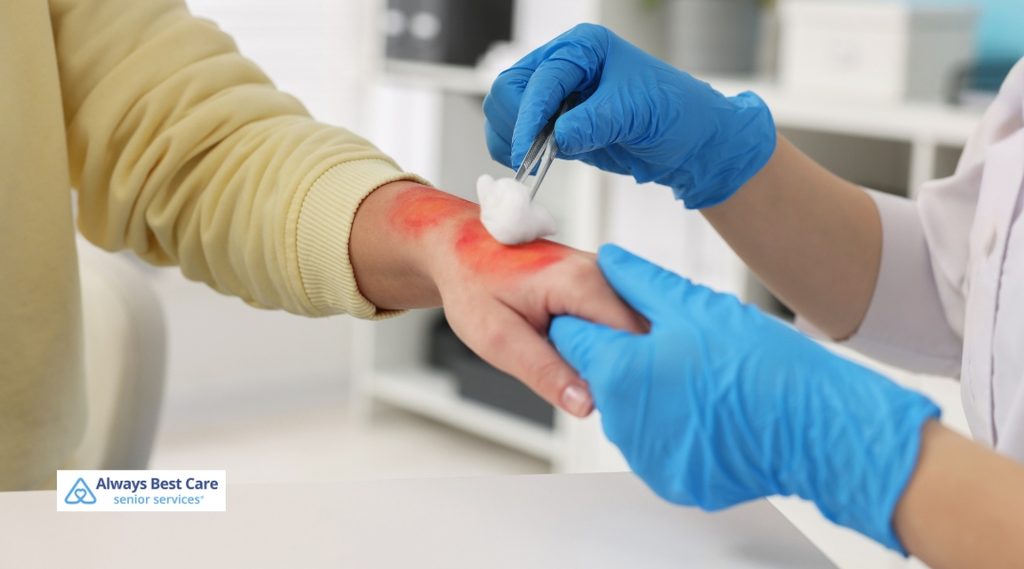
Wound healing is not always linear, but certain changes signal that something is wrong and that medical attention is needed promptly.
Watch for:
- Increasing redness, warmth, or swelling around the wound
- Discharge that is cloudy, yellow, green, or foul-smelling
- The wound edges pulling apart or the wound appearing larger than before
- Skin that looks dark, black, or necrotic (dead) around the wound
- Fever, chills, or confusion — which may indicate a systemic infection
- Pain that is getting worse rather than better over time
- No visible improvement after two weeks of consistent care
Seniors with diabetes or circulation issues should be monitored especially closely, as their wounds can deteriorate quickly and with fewer obvious early warning signs.
What a Skilled Home Health Nurse Does for Wound Care in Midlothian
When a physician orders skilled nursing as part of a home health plan, a licensed nurse visits the senior at home and provides clinical-level wound care that goes well beyond what most families can safely manage on their own.
Skilled nursing wound care typically includes:
- Wound assessment — measuring the wound, documenting its appearance, and tracking changes over time
- Debridement — removing dead or damaged tissue that can block healing (when ordered by a physician)
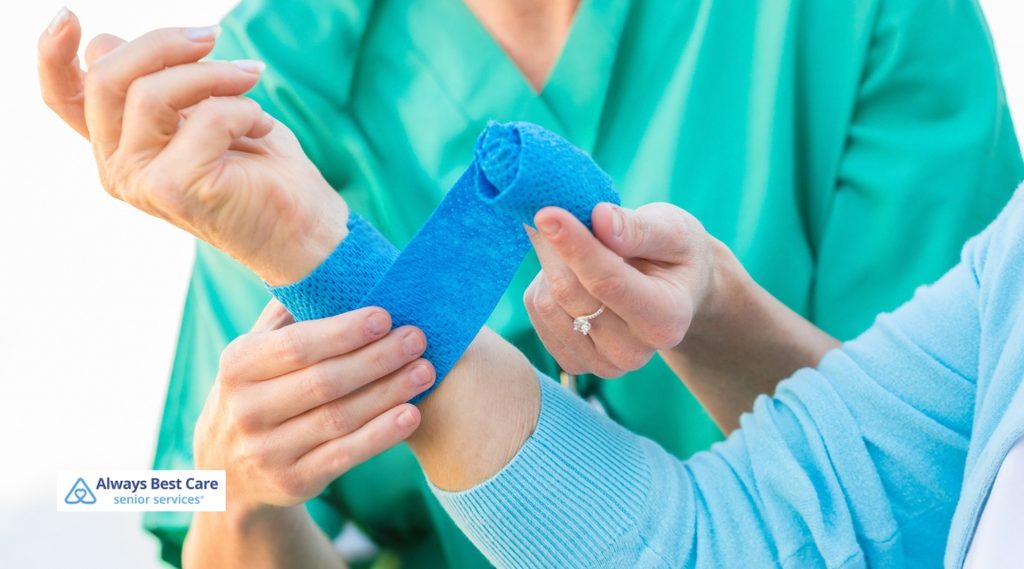
- Dressing changes — selecting and applying the appropriate wound dressing based on the wound type and stage
- Infection monitoring — identifying early signs of infection and communicating with the care team
- Medication management — administering or coordinating topical or oral treatments as prescribed
- Patient and family education — teaching caregivers how to care for the wound between visits and what to watch for
- Care coordination — keeping the physician and other providers informed of the wound’s progress
This level of care is especially valuable when a senior has just returned home from a hospital stay or surgery, when the wound is complex, or when the family does not feel confident managing the wound independently.
Preventing Pressure Injuries Before They Start
For seniors with limited mobility, prevention is just as important as treatment. Pressure injuries are largely preventable with the right approach.
Key prevention strategies include:
- Repositioning regularly — shifting position at least every two hours for bed-bound seniors, or more frequently if recommended
- Using pressure-relieving surfaces — specialized mattresses, overlays, and cushions can significantly reduce risk
- Keeping skin clean and dry — moisture from incontinence or perspiration accelerates skin breakdown
- Inspecting high-risk areas daily — heels, sacrum, hips, elbows, and the back of the head are the most common sites
- Optimizing nutrition and hydration — adequate protein and fluid intake support skin integrity
Health America recognises pressure injuries as a significant patient safety concern, particularly for older adults receiving care at home or in long-term settings.
How In-Home Caregivers Support the Healing Process
Skilled nursing addresses the medical side of wound care, but recovery also depends on how well a senior is supported day to day. In-home caregivers play a meaningful role in filling that gap.
A caregiver can assist with:
- Preparing nutritious meals that support healing
- Helping with personal hygiene without disturbing wound sites
- Assisting with mobility and repositioning to reduce pressure
- Reminding seniors to take prescribed medications on schedule
- Observing and reporting any changes in the wound or the senior’s overall condition
- Providing companionship, which supports emotional well-being during recovery
When skilled nursing and in-home caregiving work in tandem, seniors receive both the clinical care and the everyday support they need to heal safely at home.
Supporting Safer Recovery in Midlothian
Complex wound care does not have to fall entirely on families. With the right professional support, seniors in Midlothian can recover at home with confidence — receiving expert clinical care in a familiar, comfortable environment.
Always Best Care of Midlothian offers services designed to support older adults through recovery and beyond. Depending on your loved one’s needs and what is available in your area, home health services may include skilled nursing, and in-home caregivers can provide the daily assistance that makes healing more manageable.
If your loved one is dealing with a wound, recovering from surgery, or managing a condition that affects healing, reach out to Always Best Care of Midlothian at (804)531-4318 to schedule a care consultation and explore your options.
Frequently Asked Questions
Q: How do I know if a wound needs a nurse or if I can treat it at home?
A: Minor wounds — small cuts or scrapes that are clean, not deep, and showing steady improvement — can often be managed at home with basic first aid. However, if the wound is large, deep, infected, not healing, or related to a chronic condition like diabetes, a skilled nurse should be involved. When in doubt, contact a healthcare provider.
Q: Does Medicare cover skilled nursing for wound care at home?
A: Medicare Part A may cover skilled nursing as part of a home health benefit if the senior is homebound, has a physician’s order for skilled care, and the services are provided by a Medicare-certified home health agency. Coverage specifics vary, so it is worth confirming eligibility with the agency and the senior’s insurance provider.
Q: How often will a nurse visit for wound care?
A: Visit frequency depends on the wound type, severity, and the physician’s orders. Some wounds require daily visits; others may need a nurse two to three times per week. The care plan is adjusted as the wound progresses.
Q: Can a wound look fine on the surface but still be infected?
A: Yes. Some infections, particularly in seniors with diabetes or poor circulation, develop in deeper tissue layers without obvious surface changes. This is why professional assessment matters — a nurse can identify signs that are not always visible to the untrained eye.
Q: What should I do if a wound is not healing after two weeks?
Contact the senior’s physician or home health provider. A wound that has not shown measurable improvement after two weeks may need a different treatment approach, a wound care specialist referral, or evaluation for underlying conditions that are interfering with healing.