
Home Care for the Elderly: What To Look Out for & FAQs
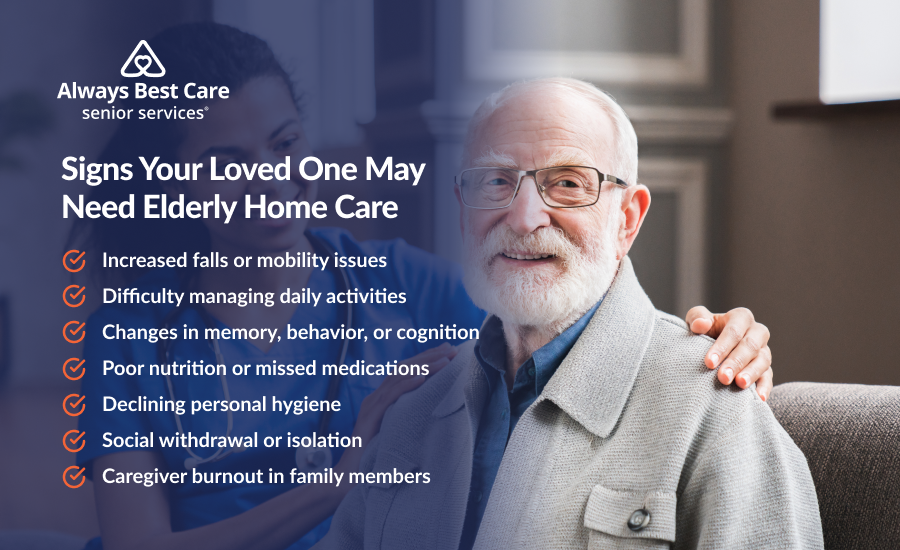
Table of Contents
Home Care for the Elderly Explained: Key Takeaways
Caring for an aging loved one is deeply meaningful, but it can also be difficult, especially when you’re juggling work, family, or living in another state.
At the same time, many older adults are facing growing challenges themselves.
A 2024 study found that more older adults are struggling with everyday tasks, making it harder for them to live independently.
If your loved one wants to remain in familiar surroundings, home care for the elderly offers a practical solution.
By the end of this guide, you will:
- Recognize the seven key signs your loved one might need 24-hour elderly home care
- Understand what 24/7 home care really means for seniors
- Discover how Always Best Care offers around-the-clock support and in-home care services
7 Signs Your Loved One Needs 24 Hour Home Care for the Elderly
If you’re seeing any of the following, it could be your cue to step in:
1. Increased Falls or Mobility Issues
Has your loved one had a recent fall or come close to one? Are they grabbing onto furniture as they walk or pausing nervously before taking the stairs?
Even minor balance issues can quickly become dangerous. A single fall can lead to hospital stays or a loss of independence altogether.
Here are a few things you might start to notice:
- Unexplained bruises or scrapes
- Trouble getting in and out of chairs or bed
- Shuffling feet or holding onto walls and furniture
2. Difficulty Managing Daily Activities
Everyday tasks like house cleaning, cooking, or paying bills might slowly become overwhelming, but your loved one might stay quiet, not wanting to be a burden or admit they’re struggling.
In fact, a 2024 study found that older adults who experienced a fall were twice as likely to develop difficulties with daily activities like bathing, dressing, and cooking within the following year.
If you’re starting to notice a decline in how they manage these routines, it might be time to consider around-the-clock support.
Some everyday signs to watch for:
- Missed medications or appointments
- Piles of laundry or unopened mail
- Spoiled or empty food in the fridge
3. Changes in Memory, Behavior, or Cognition
You might notice your elderly loved one repeating themselves more often, forgetting familiar names, or showing signs of confusion.
While some forgetfulness is normal with age, noticeable cognitive or behavioral changes can signal the early stages of dementia or Alzheimer’s.
Here’s what to keep an eye out for:
- Getting lost in familiar places
- Difficulty managing money or following instructions
- Increased agitation, anxiety, or personality changes
4. Poor Nutrition or Missed Medications
Meal preparation and medication management are among the first routines to slip when someone begins to struggle at home.
You might notice the following:
- Loss of appetite
- Expired food or an empty fridge
- Missed doses or confusion about prescriptions
Left unchecked, these issues can lead to malnutrition, dehydration, or dangerous medication errors.
5. Declining Personal Hygiene
Personal care can feel overwhelming for someone with physical or cognitive decline, and understandably, they may not want to talk about it.
These quiet shifts are often your early warning signs:
- Unwashed hair or body odor
- Same clothes worn repeatedly
- Difficulty managing toileting or incontinence
6. Social Withdrawal or Isolation
Has your loved one stopped spending time with others or doing things they once enjoyed? Maybe they no longer call friends, attend church, or even want to leave the house.
Isolation in older adults can lead to:
- Depression or anxiety
- Cognitive decline
- Worsened physical health
7. Caregiver Burnout in Family Members
Sometimes, the clearest sign isn’t with your loved one; it’s with you.
If you’re juggling caregiving on top of work, family, and your own health, exhaustion and guilt can creep fast.
You might be experiencing caregiver burnout if:
- You feel emotionally drained
- You’re always worried about your loved one’s safety
- You’re skipping your own appointments or self-care
What Does 24/7 Home Care Mean for Elderly Individuals?
24/7 home care means your loved one has constant support in the comfort of their own home.
Whether they need help getting out of bed, managing medications, or staying safe overnight, a caregiver is always there.
This level of care is ideal for seniors who:
- Require overnight care
- Are at risk of falling or wandering
- Feel anxious or unsafe when alone
- Live with dementia or chronic conditions
- Need help with personal care or mobility
Benefits of Home Care for the Elderly
For many older adults, staying in their own home as they age, also known as aging in place, is a top priority.
In fact, a recent AARP survey found that 77% of adults over 50 would choose to age at home if they could. With 24/7 home care, that choice becomes not only possible, but safe and sustainable.
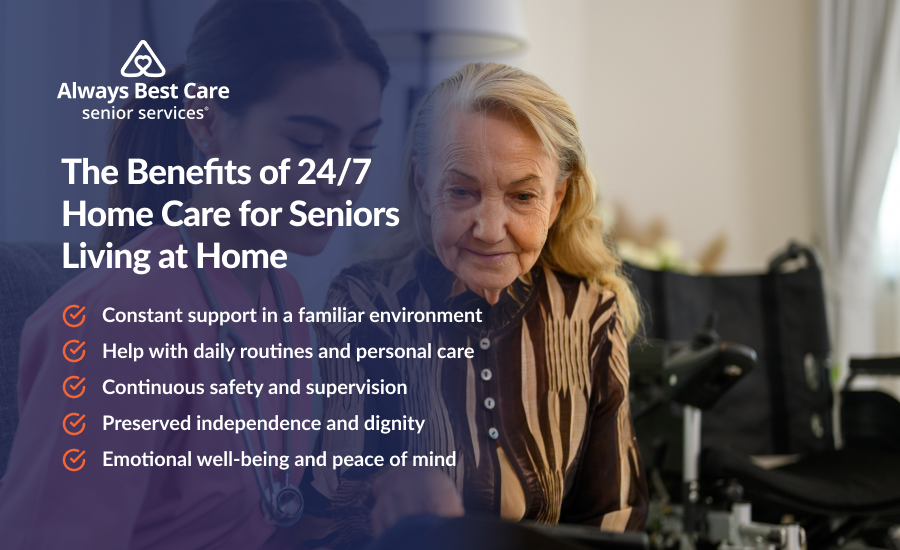
1. Constant Support in a Familiar Environment
With round-the-clock support, seniors can stay in the comfort of their home, surrounded by familiar routines, spaces, and memories.
Instead of relocating to a facility, they get the help they need right where they feel safest.
2. Help With Daily Routines and Personal Care
Caregivers are there throughout the day to help with everyday tasks like:
This level of support helps prevent accidents, reduce confusion, and keep daily life running smoothly.
3. Continuous Safety and Supervision
Overnight care is just as important. Whether it’s helping with bathroom trips, preventing nighttime wandering, or responding to health concerns, someone is always there to help.
4. Preserved Independence and Dignity
Rather than taking over, caregivers work to support the person’s independence, offering help only where it’s needed.
This approach can help elderly individuals stay in control of their routines while still getting the care they rely on.
5. Emotional Well-Being and Peace of Mind
Consistent companionship helps ease feelings of loneliness or anxiety, and it gives families peace of mind knowing their loved one is never truly alone.
Find 24-Hour Home Care for the Elderly at Always Best Care
When your loved one needs constant support but wants to remain at home, Always Best Care is here to help.
Our 24-hour home care goes beyond just coverage; it’s personalized, thoughtful support that adapts to your loved one’s daily rhythms.
Whether they need help getting through the night, managing medications, or simply having someone nearby, our trained caregivers are there.
Home Care for the Elderly: FAQs
What is home care for the elderly?
Home care for the elderly provides support in the comfort of a senior’s own home. It’s built to help older adults stay safe, independent, and comfortable as they age in place.
It’s an ideal option for those who need help at home but don’t require full-time medical care or a senior care facility.
What is included in 24-hour in-home care?
24-hour in-home care provides continuous, around-the-clock assistance to ensure that a senior is never left alone. Caregivers typically work in shifts to stay alert and well-rested.
Services can include:
- Light housekeeping and errands
- Help with bathing, grooming, and dressing
- Medication reminders and monitoring
- Meal preparation and assistance with eating
- Mobility support and fall prevention
- Companionship during the day and overnight
- Support with dementia or Alzheimer’s-related behaviors
24-hour nursing care vs. 24/7 in-home senior care
While both options offer round-the-clock support, the level of care differs:
- 24-hour nursing care typically involves medical care provided by licensed nurses in a skilled nursing facility or, in some cases, at home. This is ideal for seniors with complex medical needs, such as wound care, IV therapy, or post-surgical recovery.
- 24/7 in-home senior care focuses on non-medical assistance with daily living. Caregivers provide help with routines, personal care, companionship, and safety, but they don’t perform clinical tasks.
In short, if your loved one needs medical treatment, nursing care is likely more appropriate.
If they need help with everyday activities and prefer to stay at home, 24/7 in-home care is often the best fit.