Debunking 6 Common Myths About Dementia [+ Reliable Sources]
![Debunking 6 Common Myths About Dementia [+ Reliable Sources]](https://alwaysbestcare.com/wp-content/uploads/2026/03/myths-about-dementia-hero-image.png "Debunking 6 Common Myths About Dementia [+ Reliable Sources] 2")
Table of Contents
Myths About Dementia: Key Takeaways
- Many myths about dementia can delay diagnosis and care
- Dementia and Alzheimer’s are not the same thing, and understanding this difference helps families recognize symptoms early on
- Turning to trusted medical sources instead of relying on myths about dementia can help families make more informed decisions about treatment and care
When your loved one begins to show signs of confusion, forgetfulness, or changes in behavior, it’s easy to feel overwhelmed, and just as easy to fall back on assumptions you’ve heard before.
One of the biggest sources of confusion? The terms “Alzheimer’s” and “dementia,” which are often used interchangeably but are not the same.
Misinformation can delay care, increase anxiety, and prevent families from getting the help they need.
That’s why it’s so important to clear up the common myths about dementia, so families can feel better prepared to support their loved ones.
In this guide, we will:
- Walk you through six of the most common myths about dementia
- See how believing in dementia myths can affect families and caregivers
- Understand the difference between Alzheimer’s and dementia to separate myth from fact
Alzheimer’s vs. Dementia: Debunking 6 Common Myths
The way we understand dementia matters, especially when it comes to supporting a loved one.
Here are six myths about dementia worth clearing up:
Myth #1: Dementia Is a Normal Part of Aging
One of the most persistent myths about dementia is the belief that it’s simply a natural part of growing older.
It’s one thing to lose your car in the parking lot. It’s another to forget why you’re at the store in the first place, or how to get back home.
While mild forgetfulness might increase with age, dementia is not a natural part of getting older.
It refers to a set of cognitive symptoms caused by brain cell damage, not aging itself. If memory problems begin to interfere with daily routines, it’s important to speak with a doctor.
Myth #2: Alzheimer’s and Dementia Are the Same Thing
This is one of the most widespread myths about dementia, and it can make diagnosis and treatment more confusing than it needs to be.
Dementia is a broad term used to describe a range of cognitive symptoms, while Alzheimer’s disease is the most common type.
Other types include vascular dementia, Lewy body dementia, and frontotemporal dementia, each with its own causes and progression.
Myth #3: Memory Loss Is the Only Symptom
We wish this myth was true. However, dementia affects far more than memory.
While memory changes are often the first red flag, dementia can also impact:
- Communication and language
- Decision-making and judgment
- Physical coordination
- Mood and personality
These subtle changes are easy to dismiss early on, which is why challenging myths about dementia are so important, especially when it comes to recognizing symptoms.
Myth #4: Only Older Adults Get Dementia
This is another example of how myths about dementia can lead to missed opportunities for support and care.
While dementia is more often seen in older adults, it can also affect younger people, and when it does, it’s especially challenging for families to recognize and respond to.
Early-onset dementia can begin in a person’s 40s or 50s.
Though uncommon, it’s often misunderstood or misdiagnosed, largely because we don’t expect serious cognitive changes to happen so early in life.
Myth #5: Medications Like Benadryl Cause Dementia
This is one of the more recent myths about dementia, and while it’s rooted in real research, it’s often misunderstood.
A study has found a possible link between long-term, high-dose use of certain medications, particularly anticholinergics like diphenhydramine (found in Benadryl), and an increased risk of dementia.
Keep in mind, occasional or short-term use isn’t known to be harmful.
The takeaway? Talk to a healthcare provider before making assumptions about medications.
Myth #6: There’s Nothing You Can Do to Minimize the Risk
Dismissing the power of prevention is one of the most damaging myths about dementia, and one we can all leave behind.
While there’s no guaranteed prevention, your daily choices can still make a meaningful difference.
What benefits your heart often benefits your brain. Research suggests that lifestyle habits can reduce the risk or delay the onset of dementia. These include:
- Regular movement, even gentle balance exercises
- Staying mentally active with puzzles and reading
- Quality sleep, which helps the brain clear waste proteins
- A brain-healthy diet, like the MIND or Mediterranean plan
- Strong social connections, which support cognitive and emotional health
How Dementia Myths Impact Families and Caregivers
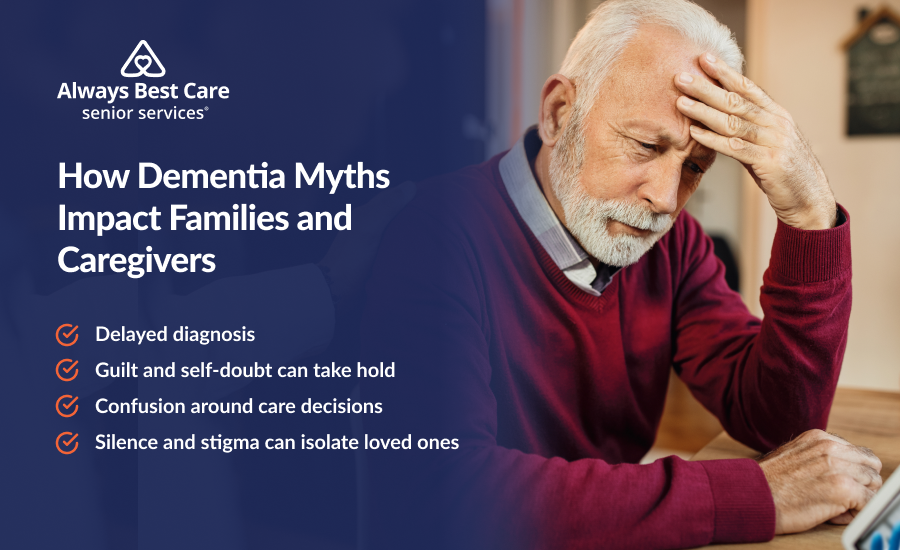
Myths about dementia can quietly influence decisions, delay support, and add emotional weight to an already challenging journey.
Let’s take a look at how myths about dementia can cause more harm than most people realize.
1. Delayed Diagnosis
When families believe in myths about dementia, like the idea that it’s just a normal part of aging, they may overlook early warning signs or wait too long to seek help.
Unfortunately, this delay can mean missing valuable time for treatment, planning, or support services that could improve quality of life.
2. Guilt and Self-Doubt Can Take Hold
Many caregivers look back and wonder if they should have noticed symptoms sooner.
When myths shape their understanding, they might feel guilty or blame themselves for not acting quickly enough, even though dementia often progresses subtly and unpredictably.
3. Confusion Around Care Decisions
When families believe there’s nothing that can be done for dementia, it’s easy to feel stuck.
That uncertainty can make it harder to take the next step, whether it’s exploring treatment or simply seeking support.
However, when myths are replaced with accurate and reliable information, families often feel more confident and better prepared to make informed decisions.
4. Silence and Stigma Can Isolate Loved Ones
Myths about dementia often carry unspoken stigma, the kind that makes families hesitate to talk openly about what’s really going on.
That silence can feel heavy, leaving both the elderly loved ones living with dementia and their caregivers feeling isolated or misunderstood.
When those myths are unpacked, it opens the door to honest conversations and the kind of support everyone deserves.
Alzheimer’s vs. Dementia: Key Comparison
Not sure what really sets Alzheimer’s apart from dementia? Here’s a side-by-side look.
| Category | Dementia | Alzheimer’s |
| Definition | General term for symptoms affecting memory, thinking, and behavior | A specific brain disease that causes dementia |
| Cause | Brain cell damage from various conditions | Complex brain changes and cell damage |
| Scope | Umbrella term (includes Alzheimer’s, vascular, Lewy body, and more) | Most common type of dementia (60–80% of cases) |
| Progression | Depends on cause and type | Gradual and progressive |
| Symptoms | Might include memory impairment, decision-making problems, language challenges | Memory loss, confusion, and behavior changes |
| Aging | Not a normal part of aging | Not a normal part of aging |
| Onset | More common with age, but can happen earlier | Usually 65+, but early-onset possible in 40s or 50s |
| Treatment | Depends on the cause since some types are manageable | No cure, but some treatments might help with symptoms |
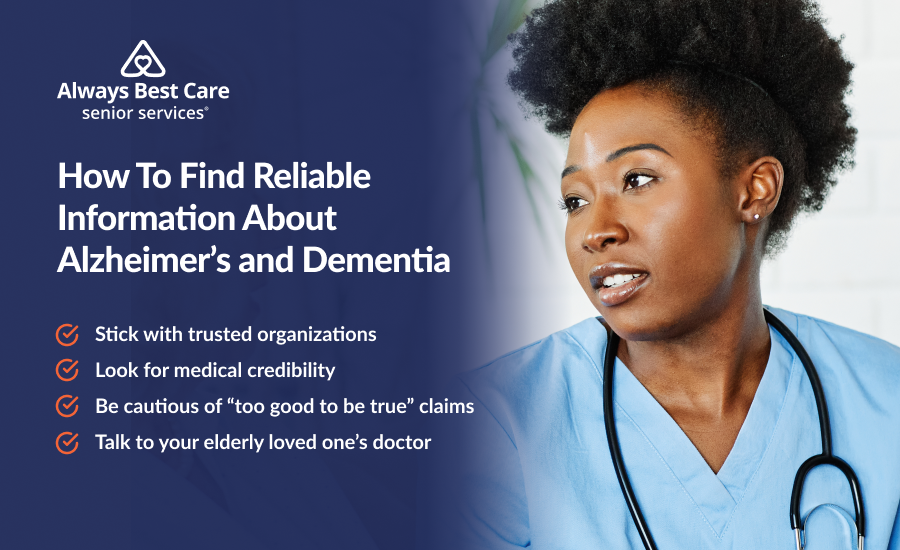
How To Find Reliable Information About Alzheimer’s and Dementia
The only way to separate facts from fiction is by getting curious.
That means asking better questions and turning to reputable sources that offer evidence to back up their claims.
1. Stick With Trusted Organizations
Start with sources that specialize in Alzheimer’s care and research. These organizations are grounded in science and regularly update their content:
- Alzheimer’s Association: Offers easy-to-understand guides on symptoms, diagnosis, daily care, and more.
- National Institute on Aging (NIA): Shares up-to-date research and treatment options from a government health agency.
- Centers for Disease Control and Prevention (CDC): Provides public health information, including caregiving support.
2. Look for Medical Credibility
As you browse, take a moment to check who’s behind the information.
Is it a doctor? Researchers affiliated with medical schools or national health organizations?
Reputable sources usually:
- Include names and credentials
- Cite studies or research
- Clearly note when the page was last updated
If you can’t find any of that, it’s worth questioning how trustworthy the source really is.
3. Be Cautious of “Too Good to Be True” Claims
We understand if you want quick answers or even a cure. Unfortunately, there’s no miracle solution for Alzheimer’s. Be careful with websites or videos that:
- Use fear or guilt to push products
- Promise fast fixes or “natural cures”
- Don’t share where their information comes from
4. Talk To Your Elderly Loved One’s Doctor
If you’re feeling overwhelmed, your loved one’s doctor can help make sense of everything.
Whether it’s a primary care physician or geriatric specialist, they can point you to the right resources and answer your questions with care.
Explore Support for Dementia and Alzheimer’s Caregivers at Always Best Care
When myths about dementia go unchecked, they can make an already emotional journey even harder for families.
At Always Best Care, we help families move past the myths with compassionate support, reliable guidance, and care tailored to each individual’s needs.
We’re here to make caregiving easier and more supportive for everyone involved. Our services include:
- Respite care: Our respite care provides short-term support for your loved one, so you can focus on work, errands, appointments, or simply take time to rest and recharge.
- In-home care services: Many seniors feel most comfortable at home, and we’re here to help them stay there safely. Our caregivers provide personalized support that may include 24/7 care, meal preparation, light housekeeping, and more.
- Skilled home health care: If your loved one is recovering from an illness, surgery, or managing a chronic condition, our team can create a customized care plan to support their health.
- Specialized home care: We also use innovative tools and technology to help monitor your loved one’s well-being. This can include 24/7 virtual care agents, remote patient monitoring, and balance tracking systems that help detect changes and support safer aging at home.
- Senior living referral services: If living at home is no longer the best option, we can help you explore senior living communities that match your loved one’s care needs, lifestyle preferences, and location.
- Veterans assistance program: We’re proud to support veterans and their families. Our team helps eligible veterans access financial assistance programs.
Myths About Dementia: FAQs
How can you spot Alzheimer’s in its early stages?
In many cases, the early signs of Alzheimer’s look similar across different forms of the disease.
At first, the changes may be subtle and easy to overlook. Common early symptoms include:
- Forgetting important information, especially things that were recently learned or important dates
- Asking for the same information repeatedly
Is dementia reversible?
Another common myth about dementia is that the condition can be reversed once symptoms appear.
Currently, there are no treatments that can reverse the condition. However, some approaches may help slow progression, such as regular exercise, therapeutic support, and healthy lifestyle changes.
Is there a cure for dementia?
At this time, there isn’t a cure for dementia. Since dementia can develop from several different underlying diseases, researchers believe it’s unlikely that one single cure will address them all.