
What Does It Mean When an Elderly Person Keeps Falling [+ FAQs]
![What Does It Mean When an Elderly Person Keeps Falling [+ FAQs]](https://alwaysbestcare.com/wp-content/uploads/2024/02/what-does-it-mean-when-an-elderly-person-keeps-falling-hero-image.png "What Does It Mean When an Elderly Person Keeps Falling [+ FAQs] 2")
Table of Contents
What Does It Mean When an Elderly Person Keeps Falling: Key Takeaways
- If an elderly person keeps falling, it could be a sign of an underlying health issue or a decline in overall strength and mobility
- To help prevent repeat falls, make sure your elderly parent stays hydrated and has their medications reviewed regularly
- If your elderly parent keeps falling, it might be time to consider in-home care
About one in four adults over 65 fall each year. And once it happens, the chances of falling again go up. If your parent has started to fall more often, it’s a common issue, but one that shouldn’t be ignored.
Stick with us and you will:
- Understand what to do if your elderly parent keeps falling
- Get practical tips to help prevent future falls
- See how Always Best Care can support you and your loved one
Causes of Recurrent Elderly Falls
Falls among the elderly can occur due to different risk factors, including:
- Chronic health conditions: Elderly individuals can suffer from chronic health conditions like arthritis, heart disease, or diabetes, which can affect their mobility, strength, and overall physical condition. These disorders often weaken muscle strength and balance, increasing the likelihood of falls.
- Poor balance: Age-related changes in balance are common due to the deterioration of the inner ear, which plays a key role in maintaining balance. In addition, weakened muscles can contribute to a greater risk of falling.
- Impaired vision: Impaired vision can make it difficult for the elderly to navigate their environment safely, leading to a higher risk of trips or falls.
- Fall risk medications: Certain medications prescribed to the elderly, such as sedatives, antidepressants, and antihypertensives, can increase the risk of falls as they can cause dizziness.
What To Do When an Elderly Parent Keeps Falling
The first fall of your aging parent can cause a lot of worry.
And while mom or dad might not have suffered any severe injuries from the first fall, knowing how to respond to recurrent falls in the elderly can help prevent future falls.
Here’s what to do when elderly falls keep on occurring:
- Discuss your elderly parent’s health with their doctor: Schedule a medical evaluation with your parent’s geriatrician. This can help identify any underlying medical conditions that might be contributing to falls such as neurological issues or side effects from fall risk medications.
- Ask about your elderly parent’s vision: Make sure your senior parent gets an eye check-up at least once every two years to determine eye conditions that can contribute to elderly falls, such as glaucoma and cataracts.
- Evaluate your elderly parent’s fall risk: Consider having a professional, like an occupational therapist (or Always Best Care), perform a fall risk assessment for your senior parent. This type of assessment determines your loved one’s step length, stride time, balance, and gait, to pinpoint specific areas of vulnerability. Our balance tracking system is a digital fall risk assessment tool that evaluates a person’s balance.
- Modify your elderly parent’s home: Clear walkways of clutter, equip the bathtub with non-slip mats, and install grab bars, raised toilet seats, and shower chairs in the bathroom, to make their living environment safer for their condition.
- Equip your elderly parent with assistive devices: Improve your senior parent’s balance by equipping them with mobility aids, such as canes or walkers.
- Make an emergency plan: Have a plan in place for what to do in case of a fall, including post-fall procedures and emergency contacts, nearby medical facilities, and instructions for accessing your parent’s medical information.
- Stay informed: Keep yourself educated about fall prevention strategies.
- Consider getting professional help: Hire a caregiver to help with your senior parents’ daily activities.
“When a senior starts falling frequently, the first step is to have the senior evaluated by a healthcare professional to identify any medical causes, such as medication side effects, vision changes, balance issues, or underlying conditions. At the same time, families can begin a simple home safety review – removing tripping hazards and improving lighting – while involving the senior in decisions. This approach addresses safety quickly while respecting independence and dignity”.
Sheila Davis
Chief Operating Officer at Always Best Care

How To Prevent Recurrent Elderly Falls
In addition to making your elderly parent’s living environment safer, there are other ways to help prevent repeated falls.
Here’s how you can help prevent your elderly loved one from experiencing recurrent falls:
- Promote regular exercise: Promote exercises that enhance strength, balance, and flexibility to improve your senior parent’s balance. Exercises such as squats, balance walking, or gentle yoga can be particularly beneficial for increasing stability.
- Schedule eye exams: Make sure your senior parent undergoes regular eye examinations, as optimal vision can help prevent future falls.
- Encourage your elderly parent to stay hydrated: Make sure your senior parent drinks eight glasses of water a day, as dehydration can contribute to weakness and dizziness.
- Limit alcohol consumption: Minimize your senior parent’s alcohol intake so it doesn’t impair their balance and coordination.
- Encourage your elderly parent to get enough sleep: Your senior parent should get seven to nine hours of sleep. This will help them maintain a regular sleep routine and prevent tiredness and disorientation, both of which significantly increase the risk of falls.
- Make sure your elderly parent eats a balanced diet: A nutritious diet rich in calcium and vitamin D is important for bone health, which can help prevent injuries in case of falls.
- Review medications: Consult with healthcare providers to review your senior loved one’s medications. Some drugs can affect balance and alertness, so it’s important to be aware of these side effects.
- Assess your elderly parent’s living environment: Conduct a thorough review of your parent’s living space. Remove tripping hazards like loose rugs, clutter, and electrical cords from walkways. Ensure adequate lighting, especially in hallways and staircases.
- Install safety devices in your elderly parent’s home: Install grab bars in the bathroom, along stairways, and in other high-risk areas. Consider using non-slip mats in the bathtub and on shower floors.
- Educate your elderly parent: Attend workshops or seminars on fall prevention with your parent. Teach them safe methods on how to get up from a sitting position and turn while walking, as slow and careful movements can help reduce the risk of falls.
- Make sure your elderly parent wears proper footwear: Encourage your parent to wear non-slip shoes to prevent slips and falls.
- Monitor chronic conditions: Keep a close eye on any chronic health issues that might affect balance or mobility, such as diabetes or heart disease.
- Utilize a personal emergency response system (PERS): Equip your loved one with a personal emergency response system to enable them to call for immediate medical assistance whenever a fall occurs.
- Consider your elderly parents living on one floor: If your aging parent’s home has multiple levels, consider arranging for them to live on one floor so they don’t have to navigate the stairs
- Encourage your elderly parent to wear appropriate clothing: Make sure your senior parent wears clothes that fit properly. Avoid long, loose clothing, such as nightgowns, that can pose a tripping hazard.
Is It Time for In-Home Care if Your Elderly Parent Keeps Falling?
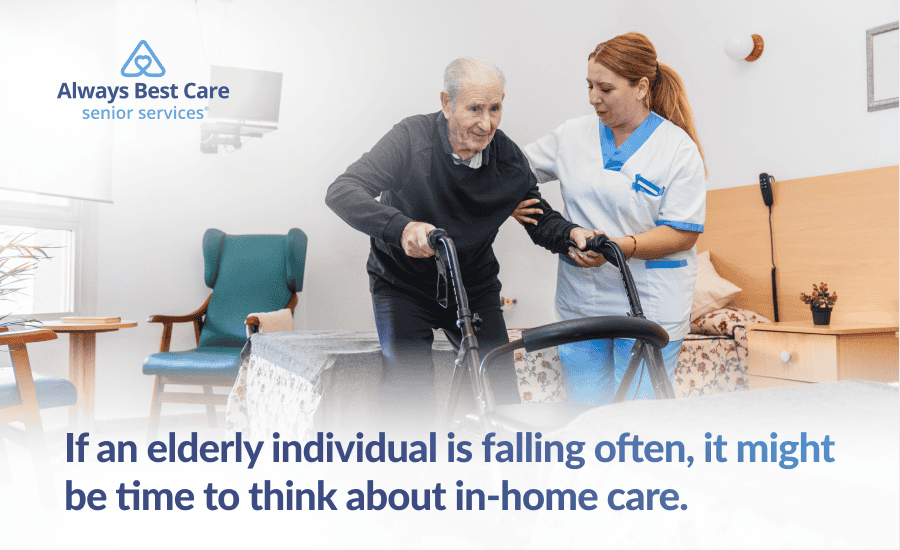
If your elderly parent is falling repeatedly, it might be time to consider in-home care.
Frequent falls can signal declining strength, balance issues, or other health concerns that need professional support. In-home care offers timely help, from daily tasks like light housekeeping to monitoring medical needs.
A trained caregiver can spot fall risks around the house and help make things safer. It’s a simple step that can:
- Prevent future falls
- Give your parent more confidence
- Offer you peace of mind
Explore Elderly Care at Always Best Care Senior Services
Always Best Care Senior Services was founded with the mission of easing the burden caregivers may experience.
Our team is compassionate and committed to delivering reliable and trustworthy care for your senior parent. We prioritize understanding each person’s unique needs and preferences, enabling personalized care.
Our goal is to create a nurturing environment where seniors can thrive, and their families can have the peace of mind knowing their loved ones are in capable and caring hands.
Our senior care services include:
- In-home care services: We offer compassionate care for your senior parent within the familiar and comforting surroundings of their own home. Our services include fall prevention, nutrition monitoring, meal preparation, and more.
- Skilled home health care services: We develop customized care plans for seniors recovering from illnesses or those with specific needs. Our services include chronic illness and medication management, among others, which are tailored to meet the unique needs of your senior parent.
- Specialized home care services: We diligently monitor your loved one’s health using advanced methods and technology, such as remote patient monitoring and personal emergency response systems.
- Respite care services: We offer you the chance to take a much-needed break to focus on work or other personal responsibilities, as our skilled caregivers can provide exceptional care and attention.
- Senior living referral services: We assist in finding the perfect senior living community for your elderly parent based on their needs and location preferences.
- Veterans assistance program: We can help your senior parent obtain financial support for their healthcare needs, as our way of thanking them for their service.
What Does It Mean When an Elderly Person Keeps Falling: FAQs
What are the 5 P’s of senior fall prevention?
You might have heard about the “5 P’s” when it comes to fall prevention—they’re simple checks that can make a big difference in keeping seniors safe. According to the AHRQ, the 5 P’s stand for:
- Pain: Is your loved one in any discomfort that might affect how they move?
- Personal needs: Do they need to use the bathroom, eat, or grab a drink?
- Position: Are they sitting or lying in a safe, comfortable position?
- Placement: Are important items (like their phone, water, or call button) within easy reach?
- Preventing falls: Have you removed anything they might trip over?
What should you do when a senior falls?
First things first, stay calm. It can be scary, but keeping a clear head helps you support them better. Ask your loved one if they’re in pain or if they think they can get up.
If they’re unsure or seem hurt, don’t try to move them right away. Instead, look for signs of injury like bruises, swelling, or anything that seems out of place.
If there’s any doubt, it’s better to call for medical help.
How to help your elderly loved one while waiting for professional assistance?
If help is on the way, your goal is to keep your loved one comfortable and calm.
- Keep them warm with a blanket or coat to prevent chills, especially if they’re lying on the floor
- Talk to them gently because hearing a calm voice can help ease fear or confusion
- Avoid moving them unless they’re in immediate danger (like near stairs or in a cold area)