Wound Care at Home: When Is Skilled Nursing Needed?
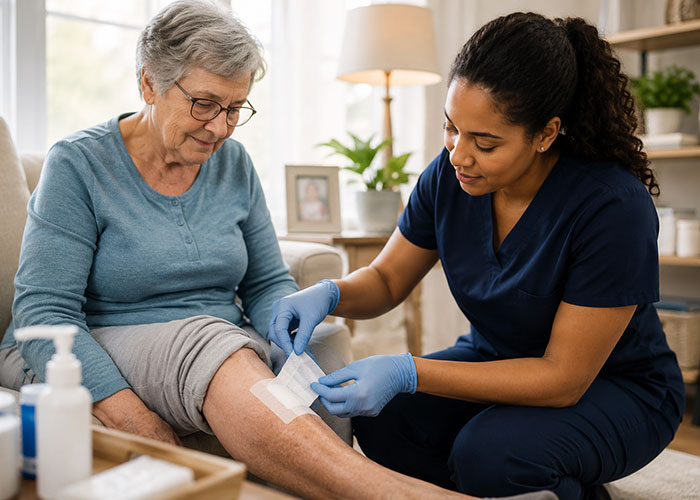
Small cuts or scrapes are often easy to treat at home, but wound care can get more complicated as we get older. Seniors may heal more slowly and often have health issues that raise the risk of infection or other problems. A wound that seems minor at first can sometimes become a bigger health concern.
If you are caring for an aging loved one, it helps to know when basic wound care is enough and when skilled nursing is needed. Home health professionals can give specialized wound care so seniors can recover comfortably at home.
Table of Contents
Why Wounds Can Be More Complicated for Seniors
As we age, our skin changes. It gets thinner, more fragile, and less able to bounce back, making seniors more likely to get cuts, tears, or pressure injuries. The body also heals more slowly over time.
Some health conditions can make wounds even harder to heal. Diabetes, poor circulation, limited movement, and other long-term illnesses can slow healing or raise the risk of infection.
Eating well and staying hydrated also matter. Seniors who do not get enough protein, vitamins, minerals, or fluids may have a harder time healing.
What Types of Wounds May Require Skilled Care?
Not all wounds need a nurse, but some injuries and conditions do need a professional to check and treat them.
Skilled wound care may be recommended for:
- Surgical incisions requiring continued monitoring
- Pressure injuries or bedsores
- Diabetic foot ulcers
- Wounds related to poor circulation
- Skin tears that are difficult to heal
- Burns or more significant injuries
- Chronic wounds that have not improved as expected
A healthcare provider can decide what care is needed and give instructions for treating the wound.
Warning Signs a Wound Needs Medical Attention
It is important to notice if a wound is not healing as it should.
Families should look for signs such as increased redness, warmth, swelling, or pain around the wound. Drainage, a strange smell, or changes in how the wound looks can also be warning signs.
Fever, chills, confusion, or a sudden drop in overall health can mean a serious infection and need quick medical care. Seniors with diabetes, weak immune systems, or circulation problems should be watched closely because problems can develop fast.
What Does a Home Health Nurse Do for Wound Care?
When skilled nursing is part of a senior’s home health care, a nurse can give medical care at home based on the person’s treatment plan.
Depending on the wound and physician’s orders, skilled nursing support may include:
- Assessing the wound and monitoring healing
- Cleaning the affected area
- Changing dressings
- Monitoring for signs of infection
- Providing education about wound care
- Communicating changes or concerns to the healthcare team
A nurse can also teach families what to look for between visits and when to call a doctor.
Having a professional involved can be especially comforting when a loved one has just come home from the hospital, rehab, or surgery.
Preventing Pressure Injuries at Home
For seniors who have trouble moving, preventing wounds is also important. Sitting or lying in one spot for too long can put pressure on certain body parts and raise the risk of skin problems.
The healthcare team may suggest changing positions often, keeping skin clean and dry, using special equipment to relieve pressure, and making sure the senior eats and drinks enough.
Caregivers should also check places like the heels, hips, tailbone, and elbows, since these spots are more likely to get pressure injuries.
Home Health and In-Home Care Can Work Together
Skilled nursing takes care of medical needs, but seniors healing from wounds might also need help with daily tasks.
For example, an in-home caregiver can help with meals, personal care, light cleaning, moving around, and other daily routines. They can also remind seniors to take their medicine and notice changes to share with family or healthcare providers.
By working together, home health and in-home care can provide seniors with both medical support and assistance with daily living.
Supporting Safer Healing at Home
Good wound care can prevent problems and help seniors recover, but families do not have to handle complex wounds alone. When medical treatment is needed, skilled home health professionals can bring their expertise right to the senior’s home.
Always Best Care offers services to help older adults stay safe and supported at home. Depending on what is available in your area and your loved one’s needs, home health services may include skilled nursing, and in-home caregivers can help with daily tasks to make recovery easier.
If your loved one is healing from a wound, surgery, or another medical issue and needs extra help at home, contact Always Best Care at (855) 470-2273 for a care consultation and to learn more about your care options.