
Why Seniors Don’t Always Feel Thirsty: Understanding the Importance of Staying Hydrated in Tempe

Most people rely on thirst to know when to drink water. But for older adults, that built-in signal becomes increasingly unreliable. Seniors can become significantly dehydrated before their bodies even register the need for fluids, and by then, the effects are already taking a toll.
Understanding why this happens, and what to do about it, is one of the most practical steps families can take to protect a senior’s health.
What You Will Learn
- Why thirst can become less reliable with age and increase dehydration risk for seniors.
- Early physical and cognitive signs of dehydration that families can notice.
- Simple routines, drinks, and hydrating foods that can help older adults stay well.
- How compassionate caregivers can support healthy hydration and independence at home.
Table of Contents
The Aging Body and Thirst: What Changes
The human body is roughly 60% water, and maintaining that balance is critical to nearly every biological function. As we age, total body water decreases, and the mechanisms that regulate fluid balance become less efficient.
The hypothalamus, the part of the brain responsible for triggering thirst, becomes less sensitive over time. This means the “drink water” signal arrives late, if at all. Compounding this, the kidneys lose some of their ability to conserve water, so older adults lose fluids more quickly and have less reserve to draw from.
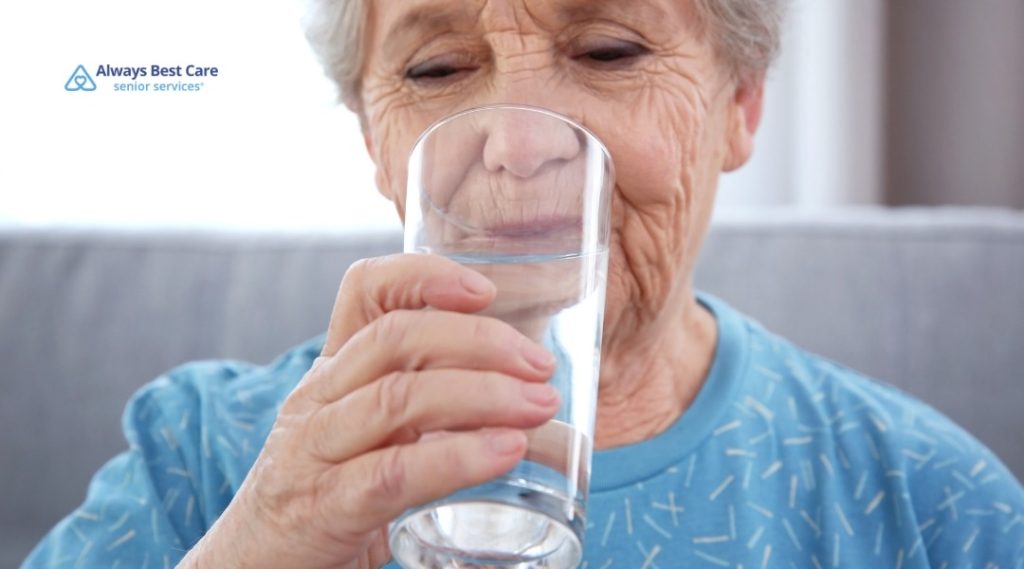
Other factors that reduce fluid intake in seniors include:
- Medications — Diuretics, antihistamines, and certain blood pressure drugs increase fluid loss or suppress thirst
- Mobility limitations — When getting a glass of water requires effort, it’s easy to put it off
- Cognitive changes — Seniors with early dementia may simply forget to drink
- Fear of incontinence — Many older adults intentionally limit fluids to avoid bathroom trips
- Reduced appetite — Less eating means fewer fluids from food sources
Because these changes are gradual, many seniors — and their families — don’t realize there’s a problem until dehydration has already set in.
Why Dehydration Is More Dangerous for Older Adults
Dehydration isn’t just uncomfortable, for seniors, it can be genuinely dangerous. Even a 1–2% drop in body water can impair physical and cognitive performance. At higher levels, the risks escalate quickly.
Dehydration in older adults is linked to:
- Fatigue and muscle weakness
- Dizziness and an increased risk of falls
- Headaches and difficulty concentrating
- Constipation and digestive issues
- Urinary tract infections
- Low blood pressure
- Acute confusion or delirium — often mistaken for dementia
Severe dehydration is one of the leading causes of hospitalization among adults over 65. What makes it especially concerning is that the symptoms are easy to overlook or attribute to other conditions, which delays treatment.

Warning Signs to Watch For
Because seniors may not feel or report thirst, family members and caregivers need to know what to look for.
Early warning signs of dehydration include:
- Dry mouth, lips, or tongue
- Dark yellow or amber-colored urine
- Infrequent urination
- Dry or flaky skin
- Fatigue or low energy without a clear cause
- Dizziness when standing up
- Increased confusion or forgetfulness
If these symptoms appear suddenly or worsen over a short period, contact a healthcare provider promptly. In older adults, dehydration can escalate faster than expected.
Building a Hydration Routine That Works
Since thirst is no longer a dependable cue, hydration needs to become a deliberate habit — built into the daily routine rather than left to chance.
Practical strategies that help:
- Tie fluids to existing habits — A glass of water with every meal and medication dose creates natural checkpoints throughout the day
- Keep water visible and accessible — A filled water bottle or glass on the kitchen counter, nightstand, or favorite chair serves as a passive reminder
- Use reminders — Phone alarms or smart home devices can prompt fluid intake at regular intervals
- Offer variety — Some seniors drink more when they have options: herbal teas, flavored water, broth, or diluted juice
- Hydrate before activity — Before going outdoors, exercising, or during hot weather, drinking ahead of thirst is especially important
Small, consistent habits are far more effective than trying to catch up on fluids at the end of the day.

Hydrating Foods Count Too
Fluids don’t only come from beverages. Many foods contribute meaningfully to daily hydration, which is particularly helpful for seniors with smaller appetites.
High-water-content foods to incorporate:
- Watermelon, strawberries, and oranges
- Cucumbers, celery, and lettuce
- Zucchini and tomatoes
- Broth-based soups and stews
- Yogurt and low-fat milk
Incorporating these into regular meals adds hydration without requiring seniors to drink more than feels comfortable.
How Caregivers Make a Difference
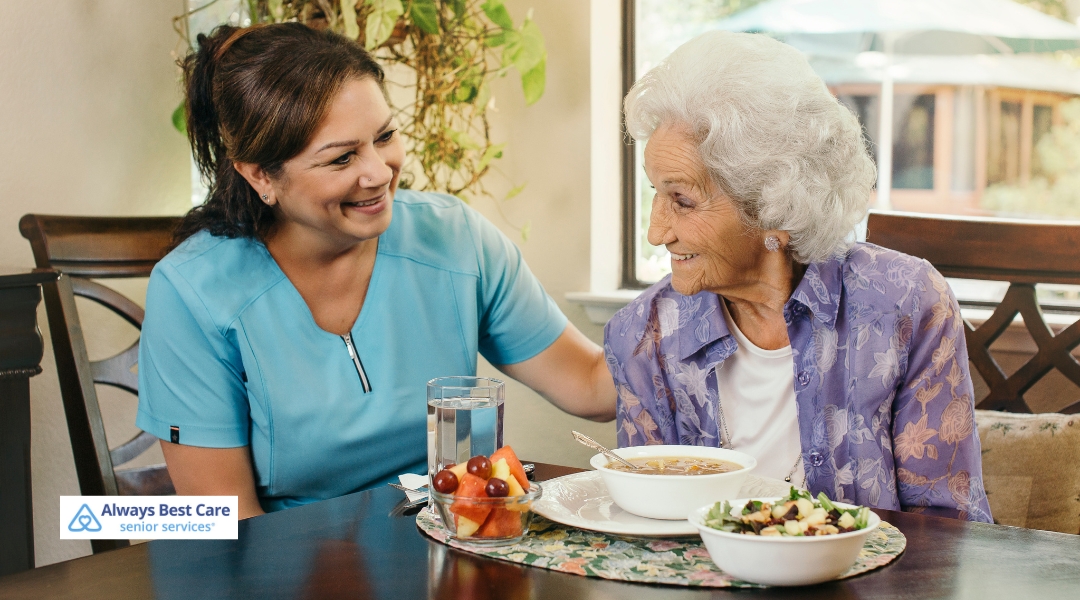
For seniors living alone or managing chronic health conditions, maintaining consistent hydration can be genuinely difficult. Caregivers, whether family members or professional home care aides, play a critical role in bridging that gap.
Ways caregivers can support healthy hydration:
- Offering fluids proactively throughout the day, rather than waiting to be asked
- Preparing meals and snacks that include hydrating ingredients
- Monitoring urine color and frequency as a simple hydration check
- Noting behavioral or cognitive changes that may signal dehydration
- Communicating observations to healthcare providers when needed

Frequently Asked Questions
Q: How much water should seniors drink each day?
A: General guidelines suggest around 8 cups (64 oz) of fluid per day, but individual needs vary based on body weight, activity level, medications, and health conditions. A senior’s doctor can provide a more personalized recommendation.
Q: Can drinking too much water be harmful for seniors?
A: Yes. Overhydration, or hyponatremia, can occur when sodium levels in the blood become too diluted. This is more common in seniors with certain health conditions. Balance matters — consistent, moderate fluid intake throughout the day is the goal.
Q: Are caffeinated drinks like coffee or tea okay for hydration?
A: In moderate amounts, yes. While caffeine has a mild diuretic effect, the fluid in coffee and tea still contributes to overall hydration. Herbal teas are an especially good option for seniors who want variety without caffeine.
Q: What’s the fastest way to rehydrate a senior who seems dehydrated?
A: Encourage small, frequent sips of water or an electrolyte drink. Avoid large amounts all at once, which can cause nausea. If the senior is confused, unable to drink, or showing severe symptoms, seek medical attention immediately.
Q: How can I tell if my parent is drinking enough fluids?
A: Urine color is one of the easiest indicators — pale yellow is a good sign, while dark yellow or amber suggests dehydration. You can also track how often they’re using the bathroom and watch for fatigue, dry mouth, or confusion.
Q: Does hot weather increase dehydration risk for seniors?
A: Significantly. Older adults regulate body temperature less efficiently through sweating, so they lose fluids faster in heat without always feeling it. During warm months, increasing fluid intake and limiting time outdoors during peak heat hours is especially important.
Staying Hydrated, Staying Strong
At Always Best Care of Tempe, our caregivers are trained to support seniors’ overall wellness, including nutrition and hydration. We help build daily routines that keep seniors healthy, comfortable, and independent at home.
If your loved one could benefit from in-home support, call Always Best Care of Tempe at (480) 764-4172 to schedule a care consultation.
Link to the Markdown File version of the article