What Families Can Share Before the First Home Care Visit
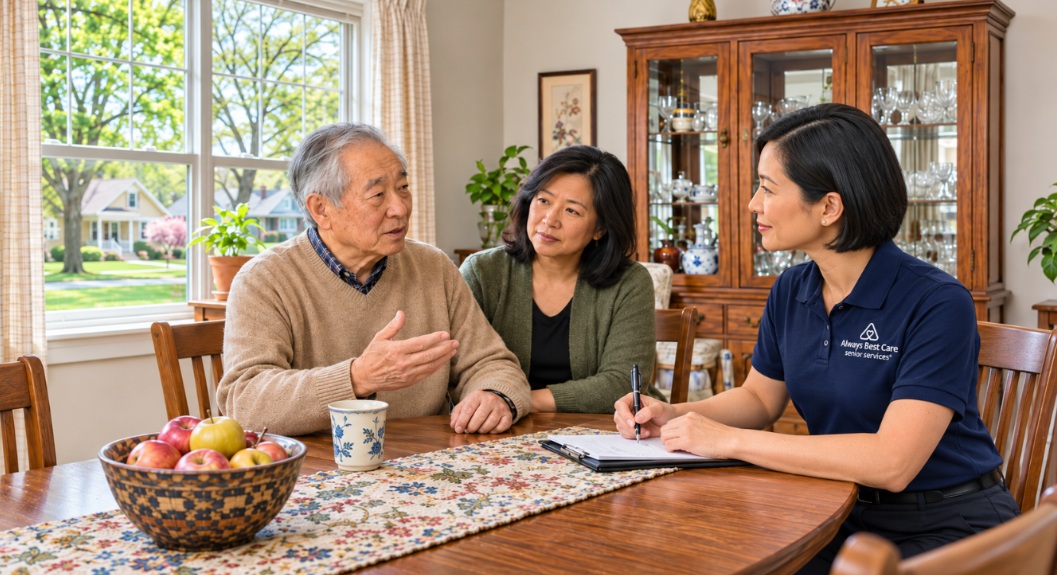
A first home care visit introduces a new person into a familiar space. Even when help is welcome, an older adult may have questions about what will happen and how their preferences will guide the arrangement. Families exploring home care in Marion can prepare by gathering a few practical details together. At Always Best Care of the Cedar Valley Inc., we encourage families to include the senior’s own description of the assistance they want. Family notes can support that voice while leaving room for questions and discussion.
Table of Contents
Prepare Alongside the Person Receiving Care
Invite the older adult to help choose what will be shared. Ask which activities they would appreciate assistance with and what they want the caregiver to understand about their home. Explain why a detail might matter before adding it to a preparation note.
Preferences about dressing, meals, privacy, and household access can be personal. A short description that the senior has reviewed is often more useful than a lengthy account of everything relatives have noticed. Use specific, respectful wording that describes the requested assistance.
Choose a calm time for this conversation. There is no need to settle every future question before the first visit. Start with information that will help someone enter the home respectfully and understand the immediate priorities. Leave space for the senior to add or correct details during the meeting.
Clarify What the First Meeting Will Cover
Before gathering information, ask the provider what kind of meeting is scheduled. A care consultation and a visit for scheduled assistance can serve different purposes. Understanding the arrangement helps families prepare relevant questions and avoid expecting services that have not yet been agreed upon.
| Detail to Confirm | Question for the Provider | How It Helps Families Prepare |
|---|---|---|
| Purpose of the meeting | Is this a consultation or the beginning of scheduled assistance? | Clarifies whether the focus is discussing needs or providing agreed support. |
| People attending | Who will attend, and what is each person’s role? | Helps the senior understand whom they will meet. |
| Expected duration | How much time should we set aside? | Allows the household to plan around other commitments. |
| Requested information | Are any forms or documents needed beforehand? | Gives families time to gather relevant materials. |
| Next steps | What happens after the meeting? | Clarifies how proposed arrangements will be reviewed and confirmed. |
Share these answers with the older adult before the meeting. Knowing what to expect gives them time to consider their own questions without feeling pressured to make every decision immediately.
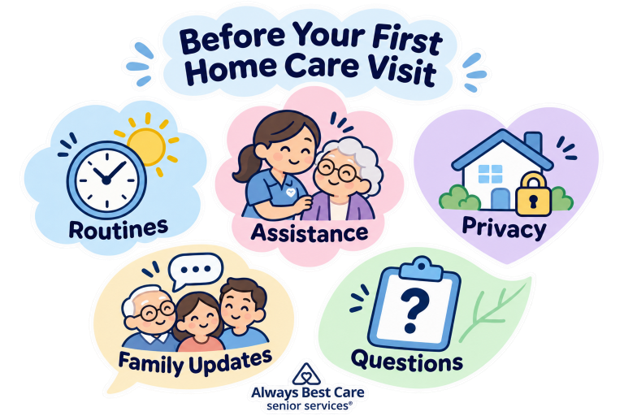
Five Details to Share Before the First Visit
The following topics give families a practical starting point. Use them to organize the conversation rather than treating them as a form that must be completed all at once.
- The Usual Flow of the Day Share when the person typically gets up, eats, rests, and enjoys favorite activities. Identify which times are preferences and which involve a scheduled commitment, such as an appointment. Mention regular calls or visitors that may affect the visit. It is also helpful to explain whether the senior prefers a quiet arrival or a few minutes of conversation before discussing tasks. These details give the caregiver context without requiring a minute-by-minute timetable.
- Requested Assistance and Independent Activities Describe specific tasks instead of using broad labels about the person’s abilities. Someone may select clothing independently but request help with fasteners. Another person may prepare a simple lunch while wanting assistance with cleanup. Ask what the senior wants to continue doing and where support would be welcome. This distinction helps everyone discuss the arrangement without assuming the caregiver should take responsibility for an entire activity. Confirm which requests can be included in the service plan.
- Household Access and Personal Boundaries Agree on how the caregiver should announce their arrival and where they can place their belongings. Mention pets, household rules, and rooms or possessions that should remain private. Share entry instructions through the provider’s agreed process. Door codes and other sensitive access details should not be left in an open notebook. If a pet needs to be secured before someone enters, decide who will handle that arrangement. Families can also review our approach to personalized senior care before preparing questions about how household preferences will be considered.
- Contacts and Communication Preferences Ask the senior whom they want included in routine updates. When appropriate, identify one family contact to coordinate questions and reduce conflicting instructions. Confirm how the care team handles everyday updates, scheduling concerns, and requests to change assistance. Ask which communication channels to use and when families can reasonably expect a response. Avoid assuming that a relative will receive messages after every task. The person receiving care should understand what information is being shared and with whom. Discuss any permissions or documentation the provider requires before including relatives in communication.
- Questions About the Care Arrangement Write down questions about visit priorities, schedule changes, and the boundaries of assistance. Ask how the provider reviews requests when needs change and whom to contact if the planned tasks no longer fit the visit. Families interested in additional social contact can ask about special care options, including telephone reassurance. Confirm availability and suitability rather than assuming these options are automatically included. Keep questions about clinical instructions with the appropriate healthcare professionals. The preparation conversation should clarify the caregiver’s responsibilities and identify requests that require separate guidance.

Keep the Preparation Note Short and Useful
Organize essential information so it can be reviewed together without turning the meeting into an interview about the senior. A concise note can include:
- The older adult’s preferred name and how they want to be addressed.
- Two or three immediate priorities for assistance.
- Relevant household preferences and personal boundaries.
- Approved family contacts and communication questions.
- Details that need clarification before assistance begins.
Avoid adding passwords, financial account information, or unrelated family disagreements. If private information is necessary for a specific arrangement, ask the provider how it should be shared securely.
Before passing along the note, invite the senior to check its wording. Their corrections may reveal that a request has been misunderstood or that an important preference is missing. Keep the note easy to update as the arrangement becomes clearer.
Prepare a Comfortable Space for the Conversation
The setting can influence how easily everyone participates in the first meeting. A few practical adjustments can make the conversation easier to follow while respecting the senior’s familiar surroundings.
A Quiet Place for Clear Communication
Ask the older adult where they would prefer to sit. Choose a space with comfortable seating and enough light to review any paperwork. Lower the television or radio volume if the senior agrees, and avoid holding several conversations at once.
If the person uses reading glasses or hearing aids, ask whether they would like them nearby. Speak directly to the senior and allow time for responses so they can take part without competing with background noise or interruptions.
Relevant Materials Within Easy Reach
Place the agreed preparation note, questions, and any forms requested by the provider nearby. Keep the surface clear enough for everyone to review information comfortably without searching through unrelated papers.
Ask before moving household belongings or rearranging furniture. Store documents containing private information securely until they are needed, and return them to their usual place afterward.
A comfortable meeting space does not require a spotless home or elaborate preparation. The aim is to make it easier for the senior to participate and for everyone to discuss the proposed support clearly.
Give the First Meeting Time to Develop
A helpful first visit does not require instant familiarity. A clear introduction and time to ask questions can help the older adult become comfortable with a new person in their home.
How Can Families Help the Senior Feel Comfortable?
Introduce the caregiver and explain whether the meeting is a care consultation or the start of scheduled assistance. Understanding its purpose helps the senior know what to expect that day.
Whenever possible, let the older adult answer questions directly before relatives add context. Allow pauses and avoid rushing through introductions. Families can offer helpful details while giving the senior room to express their own preferences and concerns.
What Should Families Discuss After the First Visit?
Ask the senior what felt clear and which questions remain unanswered. They may want more information about who will visit, how requests are recorded, or whom to contact when plans change.
Listen for specific feedback without assuming that initial uncertainty means the arrangement is unsuitable. Share agreed questions and requested adjustments through the care team’s established process so they can be addressed before the next visit.
Giving the relationship time to develop allows everyone to learn more about the senior’s expectations. Thoughtful introductions and follow-up conversations can provide a clearer starting point for ongoing support.
Start with Clear Expectations and a Shared Plan
Preparing for home care in Marion, IA begins with listening to the person who will receive support. A few agreed notes about requested assistance, household expectations, and communication can help families approach the first visit with clearer questions.
At Always Best Care of the Cedar Valley Inc., we welcome conversations about practical nonmedical support and individual preferences. To ask about service availability and preparing for a first visit, talk with our team about getting started or call (877) 292-2126.