Helping Cedar Valley Seniors Through Chemotherapy at Home

Chemotherapy can bring significant changes to an older adult’s everyday life. Along with attending treatment appointments, seniors may experience fatigue, changes in appetite, physical discomfort, and emotional challenges that make familiar routines harder to manage.
For families in Cedar Valley, supporting a loved one during cancer treatment often means finding a balance between providing necessary assistance and respecting the senior’s independence. Some days may call for additional help with meals, transportation, or household responsibilities, while others may allow more time for normal activities.
Understanding how treatment may affect daily life can help families prepare for changing needs. With thoughtful planning, communication with healthcare professionals, and appropriate in-home support, older adults can receive practical assistance while remaining comfortable in familiar surroundings.
Table of Contents
Understanding Changes in Energy During Chemotherapy
Cancer-related fatigue can feel different from ordinary tiredness. Even after a full night’s sleep, an older adult receiving chemotherapy may struggle with low energy or find that activities requiring little effort before treatment now feel exhausting.
Energy levels may also fluctuate. A senior might feel relatively comfortable one morning but need more rest later that afternoon. Families can help by allowing flexibility instead of expecting their loved one to maintain the same schedule every day.
Making Daily Responsibilities Less Demanding
Small adjustments can make daily activities easier to manage. Families may consider:
- Dividing household responsibilities into shorter, manageable tasks
- Scheduling important activities when energy levels are better
- Keeping frequently used belongings within easy reach
- Providing assistance with laundry, cleaning, and errands
- Allowing additional time for rest between activities
When approved by the healthcare team, gentle movement may also be appropriate. The goal is to support comfort and preserve energy without unnecessarily limiting independence.
Helping Seniors Maintain Nutrition During Cancer Treatment
Chemotherapy can affect appetite, taste, and digestion. Foods that once seemed appealing may suddenly taste unfamiliar, while nausea, mouth discomfort, or fatigue may make regular meals difficult.
For seniors in Cedar Valley, maintaining proper nutrition during chemotherapy may require flexibility, patience, and adjustments to their usual eating habits.
Rather than expecting a loved one to finish three large meals, families can offer smaller portions throughout the day. Easy-to-prepare foods may also reduce the effort needed when energy is limited.
Supporting Seniors Through Changes in Appetite
Families can help older adults maintain manageable eating routines during chemotherapy by offering smaller, more frequent meals and keeping preferred foods available when appropriate. Adjusting food textures may also make eating more comfortable for seniors experiencing chewing or swallowing difficulties.
Assistance with grocery shopping and meal preparation can reduce daily responsibilities, especially when fatigue makes cooking more challenging. Families should also pay attention to noticeable changes in appetite or unintentional weight loss and communicate these concerns to the healthcare team.
Nutrition recommendations should always follow the guidance of the senior’s oncology team or registered dietitian, as certain treatments and health conditions may require specific dietary precautions.
Encouraging Appropriate Hydration Throughout Treatment
Staying hydrated is another important consideration during chemotherapy. Nausea, taste changes, fatigue, and a reduced sense of thirst can make it difficult for older adults to maintain adequate fluid intake.
Families can help by keeping approved beverages accessible and offering drinks regularly throughout the day.
Some seniors may prefer small, frequent sips rather than drinking a large amount at once. Foods with higher water content may also contribute to hydration when permitted by the healthcare team.
However, fluid needs can vary depending on treatment and existing medical conditions. Families should follow individualized instructions from healthcare professionals.
If a senior cannot keep fluids down, becomes unusually confused or dizzy, or develops possible signs of dehydration, contact the healthcare team promptly.

Organizing Medical Appointments and Transportation in Cedar Valley
Chemotherapy often involves more than scheduled treatment sessions. Blood tests, imaging appointments, consultations, prescription pickups, and follow-up visits can create a demanding calendar for seniors and their families.
Transportation may become especially challenging when an older adult experiences fatigue, weakness, or medication-related side effects.
Planning ahead can help reduce last-minute difficulties.
How Can Families Keep Treatment Appointments Organized?
A simple coordination plan can include:
- Maintain a shared appointment calendar. Record treatment sessions, follow-up visits, and transportation arrangements.
- Arrange dependable transportation. Confirm who will accompany the senior and whether additional assistance is needed.
- Prepare questions before appointments. Write down symptoms, concerns, and changes that the healthcare team should know about.
- Keep important information accessible. Organize contact numbers, medication lists, and instructions provided by healthcare professionals.
Having someone accompany a senior to important appointments may also make it easier to remember instructions and communicate concerns.
Reducing Infection Risks During Chemotherapy
Certain chemotherapy medications can temporarily weaken the immune system, making infections more difficult for the body to fight.
Because each person’s treatment and medical history are different, families should follow the precautions recommended by the oncology team.
Everyday protective habits may include regular handwashing, avoiding close contact with people who are sick, following food safety recommendations, and keeping frequently used household surfaces clean.
Families should also understand which symptoms require immediate medical attention.
A fever during chemotherapy can be particularly serious. If a senior develops a fever or other possible signs of infection, follow the oncology team’s instructions immediately rather than waiting for symptoms to improve.
Providing Emotional Support Through Difficult Days
Cancer treatment can affect emotional well-being as much as physical comfort. Some seniors may worry about their health, feel frustrated by changes in independence, or struggle with disruptions to familiar routines.
Family members do not always need to offer solutions. Sometimes, a meaningful conversation or simply spending time together provides valuable reassurance.
Creating Moments of Normalcy and Connection
Families can help seniors feel connected to everyday life by spending quality time together through familiar and enjoyable activities. Watching a favorite television program, listening to music, sharing conversations unrelated to medical appointments, or participating in relaxing hobbies can provide comfort and a welcome distraction from treatment-related concerns.
When appropriate, spending time outdoors or arranging visits with friends and relatives can also encourage meaningful social interaction. These moments help older adults maintain a sense of identity and connection beyond their medical condition.
If sadness, anxiety, withdrawal, or hopelessness persists, families should encourage their loved one to discuss these concerns with a healthcare professional.
Sharing Caregiving Responsibilities with Additional Support
Supporting someone through chemotherapy can become physically and emotionally demanding for family caregivers.
Between employment, household responsibilities, medical appointments, and personal commitments, relatives may find it difficult to manage every aspect of care independently.
Additional in-home assistance can help families establish a more sustainable routine.
Understanding Daily Support Needs During Chemotherapy
Chemotherapy can affect seniors differently from day to day. The table below highlights common challenges families may encounter and practical ways to provide assistance while respecting their loved one’s independence.
| Common Challenge | Practical Support Families Can Provide |
|---|---|
| Low energy and fatigue | Assist with household chores and allow flexibility for rest |
| Difficulty preparing meals | Help with grocery shopping and prepare meals that follow dietary guidance |
| Transportation challenges | Coordinate rides to treatment sessions and follow-up appointments |
| Changes in daily routines | Adjust household responsibilities according to the senior’s energy levels |
| Emotional stress or isolation | Offer companionship, meaningful conversations, and familiar activities |
| Increased family caregiving demands | Arrange additional non-medical assistance to share everyday responsibilities |
The amount of assistance a senior need may change throughout chemotherapy. Regular communication with the older adult and their healthcare team can help families adjust routines, recognize emerging concerns, and provide support without unnecessarily limiting independence.
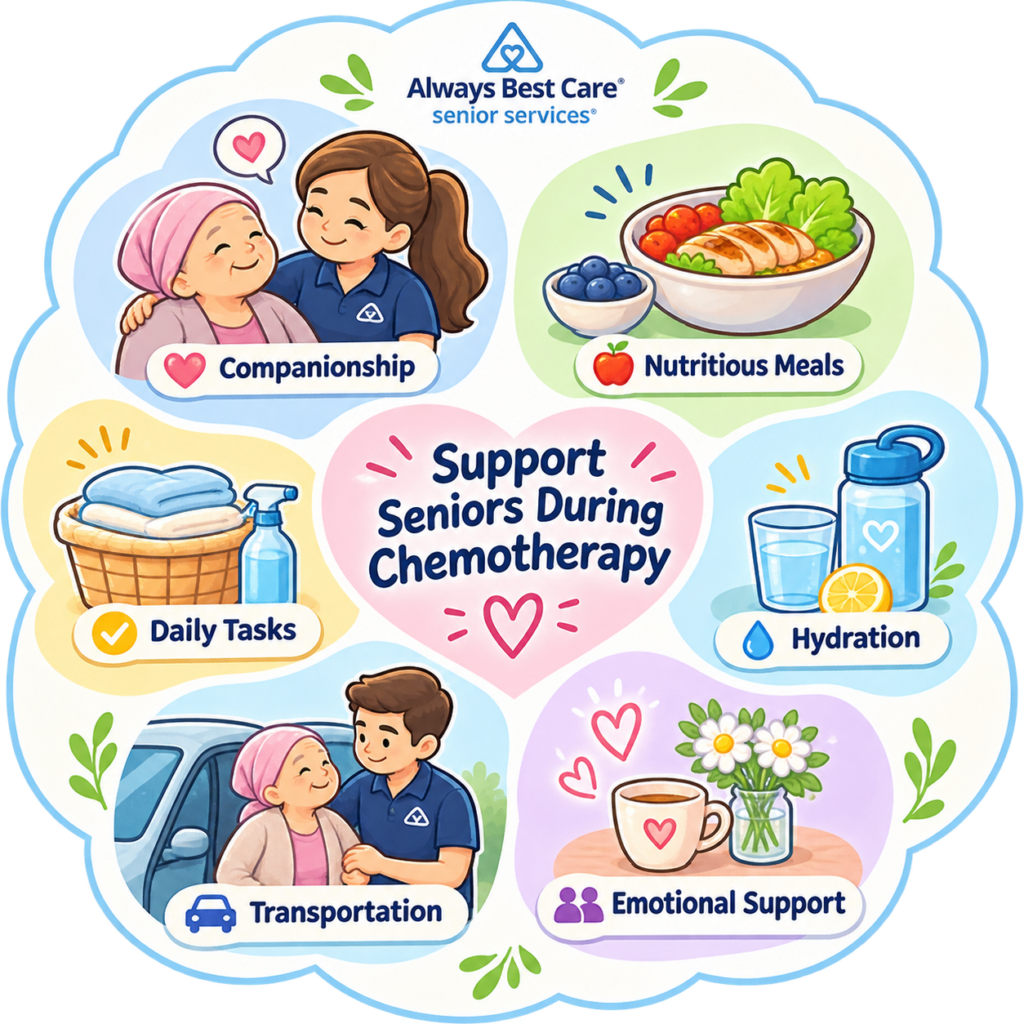
Caregivers may provide support with meal preparation, light housekeeping, errands, medication reminders, companionship, and transportation arrangements, depending on the services available.
How Always Best Care of Cedar Valley Supports Seniors During Chemotherapy
At Always Best Care of Cedar Valley, we understand that older adults receiving chemotherapy may experience different needs throughout their treatment journey.
Some seniors may need occasional help with errands or meals, while others may benefit from more consistent assistance with personal care and household routines.
During cancer treatment, having dependable support at home can help seniors conserve energy and focus on their well-being. Our caregivers provide non-medical assistance that complements the instructions and care provided by the senior’s healthcare team.
Support may include preparing meals, keeping living spaces organized, offering companionship, providing medication reminders, and assisting with everyday responsibilities.
This personalized approach helps seniors maintain comfort and dignity while allowing families to focus on their loved one’s well-being.
Helping Cedar Valley Families Navigate Chemotherapy with Confidence
Every senior’s experience with chemotherapy is different. Some days may be manageable with minimal assistance, while others may require additional rest, encouragement, or practical support.
Families can prepare by remaining flexible, communicating openly, and recognizing when extra assistance may be beneficial.
Whether that means preparing a favorite meal, coordinating transportation, helping with household chores, or simply offering companionship, thoughtful support can make daily life more manageable during treatment.
If your loved one needs additional help at home while undergoing chemotherapy, Always Best Care of Cedar Valley can discuss personalized caregiving options based on your family’s needs.
Call (877) 292-2126 to learn how our caregivers can support your loved one’s comfort, daily routines, and independence throughout cancer treatment.