
Helping Seniors Manage Changing Diabetes Needs in Cincinnati East
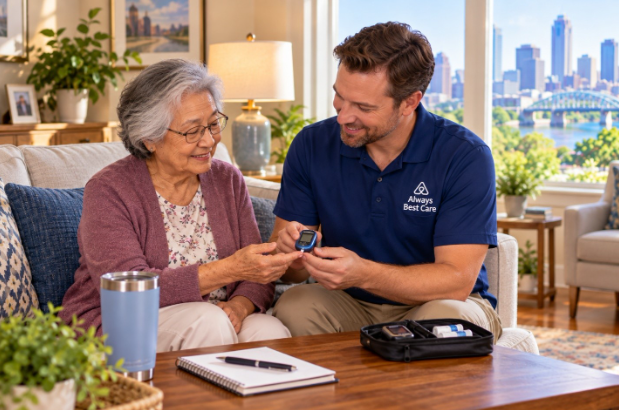
Living with diabetes often involves routines that become familiar over time. An older adult may have spent years following an established schedule for meals, medications, blood sugar monitoring, appropriate activity, and healthcare appointments.
As people grow older, however, changes in memory, mobility, appetite, energy, and everyday abilities can make some of these responsibilities more difficult to organize.
For families in Cincinnati East, providing support can begin with understanding what is normal for a loved one. Family members and nonmedical caregivers do not need to diagnose blood sugar problems or make treatment decisions. Instead, they can help maintain familiar routines, pay attention to meaningful changes, and share health-related concerns with the appropriate healthcare professional.
Table of Contents
Why Can Diabetes Routines Become Harder with Age?
Dealing with diabetes may require an older adult to coordinate several responsibilities throughout the day.
Meals, prescribed medications, monitoring instructions, appointments, and everyday activities can all be part of an established care plan. Changes in memory or mobility may make some of these responsibilities harder to manage independently.
Rather than assuming that a senior’s diabetes needs will remain the same, families can pay attention to how comfortably their loved one manages familiar activities.
How Can Families Recognize Changes in Everyday Habits?
Start with what is typical for your loved one. Consider how they normally eat, communicate, move around the home, participate in activities, and manage everyday responsibilities.
A noticeable departure from those patterns may be worth documenting and discussing with the appropriate healthcare professional.
Families do not need to determine why a change is happening. Simply being able to explain what has changed and when it began can provide useful information when speaking with the senior’s healthcare provider.
Build Support Around the Senior’s Normal Routine
A dependable routine can make multiple responsibilities easier to organize. Instead of introducing unnecessary changes, families can focus on helping an older adult follow the instructions already established by their healthcare professionals.
Depending on the individual’s existing care plan, families may help support the routine by:
- Keeping familiar meal and snack schedules based on the senior’s established guidance.
- Supporting prescribed medication routines with appropriate reminders when needed.
- Following existing monitoring instructions rather than independently changing when or how monitoring is performed.
- Keeping hydration part of the daily routine according to the senior’s individual needs.
- Supporting appropriate everyday activities based on the person’s abilities and professional guidance.
- Keeping healthcare appointments organized and helping prepare questions the senior would like to discuss.
Family members and nonmedical caregivers can provide organization and practical assistance, while decisions about diabetes treatment remain with qualified healthcare professionals.
Match Everyday Assistance to Changing Needs
An older adult may remain independent in some parts of the day while needing assistance with others. Looking at individual activities can help families identify where practical support may be most useful.
| Everyday Routine | How Families and Caregivers Can Help |
| Meals | Assist with grocery shopping and preparing meals based on familiar preferences and routines. |
| Daily Organization | Use calendars and reminders to help keep everyday responsibilities organized. |
| Appointments | Help organize schedules and arrange transportation when appropriate. |
| Household Tasks | Assist with everyday tasks that have become harder to manage. |
| Family Communication | Share relevant observations with family members so health-related concerns can be discussed with the appropriate healthcare professional. |
This approach keeps support focused on the individual rather than assuming every senior living with diabetes requires the same type of assistance.
Adjust Support When Memory Needs Begin to Change
Managing an established diabetes routine may involve remembering several responsibilities throughout the day. Memory changes can make familiar activities more difficult to organize.
A senior may begin needing more help remembering meals, appointments, established medication routines, or other everyday responsibilities.
Familiar Cues Can Make the Day Easier to Organize
Families can use calendars, predictable schedules, appropriate reminders, and consistent placement of commonly used items to make everyday responsibilities easier to follow.
A nonmedical caregiver can provide additional structure through companionship, meal preparation, medication reminders based on existing instructions, transportation, and other practical assistance.
Meaningful changes in memory should be shared with the appropriate healthcare professional rather than being assumed to be part of normal aging.
Consider How Mobility Affects Everyday Routines
Mobility changes can affect responsibilities that may not initially seem related to diabetes. Shopping for groceries, preparing food, completing errands, moving comfortably around the home, or traveling to appointments may become more demanding.
For older adults managing diabetes, families may also want to pay attention to changes in foot health and mobility and discuss any concerns with the appropriate healthcare professional.
Families can consider which activities their loved one still manages comfortably and where practical assistance could make familiar routines easier to maintain.
When Might a Senior Benefit from More Everyday Assistance?
Additional assistance may be helpful when an older adult begins relying more frequently on family members for activities they previously managed independently.
The goal does not have to be taking over the entire routine. A caregiver can provide support with specific responsibilities while encouraging the senior to remain involved in activities that match their abilities and preferences.
For example, a caregiver might handle grocery shopping or more physically demanding household tasks while the senior continues choosing familiar foods, organizing personal items, or participating in other parts of the daily routine.

Everyday Building Blocks for a Familiar Routine
Families may find it easier to think about diabetes-related support as several familiar parts of everyday life rather than one complicated responsibility.

These simple areas can help families identify where everyday assistance may be useful while keeping diabetes-related medical decisions with healthcare professionals.
Keep Health Decisions with the Appropriate Professionals
Family members and nonmedical caregivers can help an older adult maintain familiar routines and communicate meaningful observations, but they should not diagnose health changes or independently modify diabetes treatment.
Questions involving medications, blood sugar levels, monitoring instructions, symptoms, or treatment should be directed to qualified healthcare professionals.
What Should Families Do When a Familiar Pattern Changes?
If something seems noticeably different, families can document what they observe and contact the appropriate healthcare professional when needed.
It may also be helpful to ask the senior’s provider in advance whom the family should contact when questions arise and what instructions they should follow when they notice concerning changes.
For a serious or sudden health emergency, families should seek appropriate emergency assistance.
How Always Best Care Cincinnati East Can Help
Supporting an older adult living with diabetes can involve more than keeping track of one part of the day. Meals, transportation, mobility, companionship, personal routines, and household activities may all influence how comfortably someone manages everyday responsibilities.
Depending on the senior’s individual needs and available services, nonmedical caregivers may assist with:
- Meal preparation
- Medication reminders based on established instructions
- Grocery shopping and errands
- Transportation
- Mobility assistance
- Personal care and grooming
- Companionship
- Everyday household activities
Caregivers can also communicate relevant observations to family members when appropriate so health-related concerns can be directed to qualified healthcare professionals.
Personalized Assistance Can Preserve Familiar Routines
Receiving assistance does not mean an older adult has to stop participating in everyday activities.
Personalized home care can focus on responsibilities that have become more difficult while respecting the senior’s abilities, preferences, and established routines.
This allows support to change with the individual rather than applying the same approach to every older adult living with diabetes.
Help Your Loved One Adapt as Everyday Needs Change
Diabetes routines that worked well for years may become more difficult when an older adult experiences changes in memory, mobility, or everyday abilities.
Families can provide meaningful support by remaining familiar with their loved one’s normal routines, assisting with practical responsibilities, and making sure health-related concerns reach the appropriate healthcare professional.
Always Best Care Cincinnati East can provide personalized nonmedical assistance based on your loved one’s routines, preferences, and everyday support needs.
Call (513) 268-6966 to discuss available care options or contact our Cincinnati East home care team for personalized guidance.