
Helping Seniors Build Diabetes-Friendly Routines at Home

Managing diabetes becomes easier when healthy habits fit naturally into everyday life. For older adults, maintaining regular meals, staying physically active, and following prescribed care instructions can support better overall wellness. Families exploring Blue Ash, OH home care services often want practical ways to help aging loved ones maintain these habits without sacrificing independence or comfort. With thoughtful planning and consistent encouragement, seniors can develop daily routines that make living with diabetes feel more manageable.
At Always Best Care Cincinnati East, we understand that managing a chronic condition involves more than following medical recommendations. It also requires patience, encouragement, and dependable assistance with everyday activities. We believe seniors deserve compassionate support that respects their preferences while helping them remain comfortable in familiar surroundings. Through personalized nonmedical care, we help families establish routines that complement professional diabetes management plans and support meaningful independence.
Table of Contents
Why Are Daily Routines Important for Seniors with Diabetes?
Consistent daily routines can help older adults manage diabetes by making meals, physical activity, medication schedules, and rest more predictable. These habits may support steadier blood sugar management when combined with individualized medical care.
Diabetes management can become more challenging with age. Changes in mobility, vision, memory, appetite, and energy levels may affect a senior’s ability to maintain healthy habits. Additionally, older adults sometimes manage several health conditions simultaneously, making everyday responsibilities more complicated.
A predictable routine reduces the number of decisions seniors must make throughout the day. Instead of wondering when to eat or remembering whether they have completed an important activity, they can follow a familiar schedule.
How Consistency Supports Everyday Wellness
Establishing regular habits can provide several practical benefits:
- More predictable eating patterns: Scheduled meals and snacks can help seniors follow their recommended nutrition plans.
- Improved organization: Familiar routines make it easier to remember appointments and prescribed medication times.
- Greater confidence: Repeating manageable activities can encourage independence and reduce frustration.
- Better communication: Family members and caregivers can more easily notice changes in daily habits.
- Meaningful engagement: Planned activities provide opportunities for companionship, movement, and enjoyment.
However, consistency should never mean rigidity. Seniors may experience changes in appetite, energy, or health that require adjustments.
We encourage families to create flexible schedules that accommodate personal preferences and follow guidance from their loved one’s healthcare team.
Recognizing When Additional Support May Help
Sometimes, a previously independent senior begins struggling with everyday responsibilities. Family members might notice skipped meals, difficulty shopping for groceries, forgotten appointments, or reduced interest in physical activity.
These changes do not automatically indicate worsening diabetes. Nevertheless, they deserve attention because they may interfere with established care recommendations.
Our personalized in home care services can help older adults maintain daily activities while allowing family members to remain involved in important decisions.
Building a Practical Diabetes Friendly Daily Schedule
A successful routine begins with manageable activities that reflect the senior’s health needs, personal preferences, and existing habits. Rather than introducing numerous changes simultaneously, we recommend focusing on a few consistent practices.
The following sample schedule illustrates how everyday assistance can complement a diabetes management plan developed by qualified healthcare professionals.
| Time of Day | Suggested Routine | Everyday Support |
|---|---|---|
| Morning | Breakfast and prescribed morning routine | Meal preparation and reminders |
| Midmorning | Gentle movement or a favorite activity | Companionship and mobility assistance |
| Lunchtime | Balanced meal and hydration | Food preparation and encouragement |
| Afternoon | Rest, hobbies, or an approved activity | Comfortable surroundings and companionship |
| Evening | Dinner and preparation for bedtime | Meal assistance and routine reminders |
This schedule is illustrative rather than a medical prescription. Meal timing, physical activity, glucose monitoring, and medication instructions should follow each senior’s individualized healthcare plan.
Making Healthy Meals Easier to Maintain
Nutrition is an important part of diabetes management, but healthy eating does not need to become complicated or restrictive.
We encourage families to focus on enjoyable meals that align with recommendations from a physician or registered dietitian. The American Diabetes Association’s Diabetes Plate approach, for example, offers a practical visual method for planning balanced meals using non-starchy vegetables, protein foods, and carbohydrate foods.
Caregivers can support established nutrition plans through grocery shopping, meal preparation, and assistance with eating when needed.
Families may also find it helpful to keep familiar ingredients available, prepare appropriate portions, and maintain a comfortable dining environment.
Importantly, older adults should not skip meals or make major dietary changes without appropriate medical guidance, especially when taking medications that can cause low blood sugar.
Encouraging Safe Movement and Activity
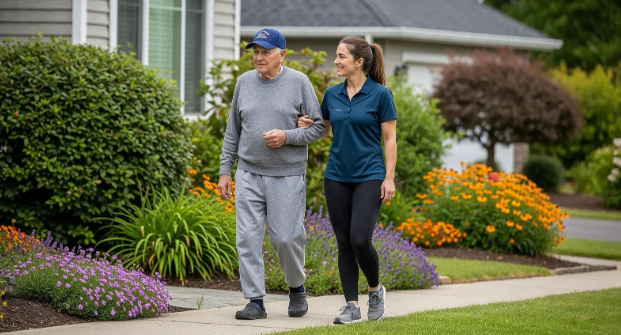
Physical activity can support mobility, balance, emotional wellness, and diabetes management. However, the right activity depends on each senior’s abilities and medical recommendations.
Some older adults enjoy short walks, while others prefer seated exercises, gardening, or gentle movement around the house.
We recommend discussing suitable activities with the healthcare team, particularly when a senior experiences balance difficulties, neuropathy, heart conditions, or a history of low blood sugar.
Our caregivers can provide companionship, assist with everyday mobility, and encourage participation in activities approved by healthcare professionals.
The goal is not to push seniors beyond their limits. Instead, we want to make movement an enjoyable, sustainable part of everyday life.
Five Steps for Creating Sustainable Habits
Families can introduce a manageable routine using this straightforward approach:
- Review existing habits. Identify which activities already work well and which responsibilities create difficulties.
- Consult healthcare professionals. Confirm appropriate meal schedules, activity recommendations, and medication instructions.
- Choose realistic goals. Begin with one or two manageable improvements rather than changing everything immediately.
- Arrange for practical assistance. Determine where family members or professional caregivers can help maintain consistency.
- Review and adjust. Revisit the schedule when health needs, preferences, or abilities change.
This gradual approach respects a senior’s independence while creating opportunities for meaningful support.
How Can Home Care Support Diabetes Friendly Habits?
Nonmedical home care can help seniors maintain diabetes-friendly routines by providing practical assistance with meals, daily activities, companionship, and reminders. These services complement medical care without replacing physicians, nurses, or diabetes educators.
For many families, the challenge is not understanding that healthy routines matter. It is finding enough time and energy to support those routines consistently.
Professional caregivers can help bridge this gap while respecting each senior’s abilities and preferences.
Everyday Assistance That Encourages Independence
We believe effective caregiving means supporting seniors in doing what they can rather than unnecessarily taking over their responsibilities.
Depending on individual needs, our caregivers can assist with several activities:
- Preparing meals that follow an established nutrition plan
- Providing reminders for prescribed medication schedules
- Helping with grocery shopping and household errands
- Assisting with dressing, grooming, and personal hygiene
- Encouraging appropriate daily movement and social activities
- Maintaining an organized, comfortable living environment
Our companion care approach also emphasizes meaningful relationships. Familiar conversation, shared meals, and enjoyable activities can make daily routines feel less like obligations.
Keeping Medical Responsibilities Clear
Diabetes requires individualized medical management. Healthcare professionals determine appropriate medication regimens, blood sugar targets, monitoring schedules, and treatment adjustments.
Our nonmedical caregivers support everyday activities and provide reminders within an established care plan. They do not independently diagnose diabetes, adjust medication doses, interpret glucose readings for treatment decisions, or replace licensed medical professionals.
Families should also understand the warning signs of low blood sugar, which can include shakiness, sweating, dizziness, and confusion. The Centers for Disease Control and Prevention explains these symptoms and the importance of prompt, appropriate action.
We encourage families to discuss an emergency response plan with their loved one’s healthcare team. Severe confusion, seizures, or loss of consciousness require emergency assistance.
By establishing clear responsibilities and communication, families can create a more coordinated approach to everyday support.
Supporting Long Term Comfort and Confidence at Home
Building healthy routines is an ongoing process. As seniors experience changes in mobility, appetite, energy, or personal preferences, their daily schedules may need adjustments.
Common Questions About Diabetes and Home Care
Can seniors with diabetes continue living independently?
Yes. Many older adults with diabetes can continue living independently when their health needs are appropriately managed, and they have access to suitable support. The level of assistance depends on individual abilities, medical recommendations, and home safety considerations.
Can a caregiver help with diabetes meal planning?
Nonmedical caregivers can prepare meals and assist with grocery shopping according to an established nutrition plan. However, individualized dietary recommendations should come from a qualified healthcare professional.
How can families support seniors who resist routine changes?
We recommend beginning with familiar activities, offering meaningful choices, and introducing changes gradually. Listening to personal preferences can make new habits feel more comfortable and sustainable.
Creating a Routine That Works for Your Loved One
A diabetes-friendly lifestyle does not need to revolve around strict schedules or complicated changes. Often, meaningful progress begins with simple habits, supportive relationships, and practical assistance that respects individual needs.
Our approach to supporting daily movement and stability reflects our commitment to helping older adults remain engaged in familiar activities while maintaining their dignity and independence.
At Always Best Care Cincinnati East, we believe compassionate assistance can make everyday diabetes routines more manageable for seniors and their families. Whether your loved one needs help preparing balanced meals, remembering daily activities, or maintaining meaningful companionship, we are here to discuss personalized support. If your family is considering Blue Ash, OH home care services, call (513) 268-6966 to schedule a personalized care consultation and discuss how we can help your loved one build comfortable, consistent routines at home.