

Helping Cincinnati East Seniors Adjust to the End of Daylight-Saving Time

When daylight saving time ends in the fall, clocks move back one hour, giving many people an extra hour of sleep. However, the adjustment can be more challenging for older adults who depend on consistent daily routines.
For seniors living in Cincinnati East and surrounding Ohio communities, earlier sunsets may affect sleep schedules, medication reminders, transportation arrangements, and household safety. Changes in natural lighting can also make familiar activities more difficult, particularly for individuals experiencing vision changes, mobility limitations, or memory concerns.
With thoughtful preparation, families can help older loved ones adjust to the seasonal transition while maintaining comfort, independence, and confidence at home.
Table of Contents
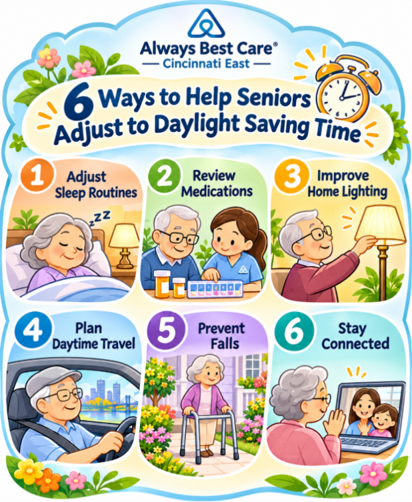
Helping Seniors Adjust Their Sleep Schedules
The body’s internal clock responds to natural light, mealtimes, physical activity, and regular sleep habits. Even a one-hour adjustment can temporarily affect a senior’s established routine.
Rather than changing everything at once, families can encourage gradual adjustments to bedtime and wake-up schedules in the days leading up to the time change.
Establishing a Consistent Sleep Routine
Maintaining familiar daily activities can help seniors adjust more comfortably.
Consider these practical approaches:
- Gradually adjust bedtime and wake-up times before the clocks change.
- Encourage exposure to natural morning sunlight.
- Maintain consistent mealtimes and daily activities.
- Limit lengthy naps, especially later in the afternoon.
- Create a quiet, comfortable sleeping environment.
Opening curtains in the morning or spending time outdoors during daylight hours may help reinforce the body’s natural sleep-wake cycle.
Reviewing Medication Schedules Before the Time Change
Many older adults follow medication routines connected to specific times of day, meals, or bedtime. Although a one-hour adjustment may not affect most medications, certain prescriptions require consistent timing.
Families should review medication schedules before daylight saving time ends and avoid making changes without appropriate medical guidance.
Keeping Medication Reminders Organized
A simple medication review can help prevent confusion during the transition.
Families can check pill organizers, update written medication lists, and confirm that phone alarms or reminder devices reflect the correct time.
If there are questions about timing-sensitive medications, consult the prescribing healthcare professional or pharmacist before adjusting the schedule.
Caregivers may also provide non-medical medication reminders to help seniors maintain established routines.
Improving Home Lighting as Evenings Become Darker
One of the most noticeable changes after daylight saving time ends is the earlier arrival of darkness.
For Cincinnati East seniors experiencing changes in vision, balance, or depth perception, reduced lighting can make moving through familiar spaces more challenging.
Families can help by evaluating areas of the home that become dim during late afternoon and evening hours.

Identifying Areas That Need Better Visibility
Pay particular attention to frequently used spaces, including hallways, staircases, bathrooms, bedrooms, and entryways.
Consider adding brighter light bulbs where appropriate, placing nightlights along commonly used routes, and ensuring light switches remain accessible.
Outdoor entrances, porches, and walkways should also have sufficient lighting to help seniors navigate safely after sunset.
Planning Safer Transportation During Shorter Days
Earlier sunsets can affect older adults who prefer driving during daylight hours.
Headlight glare, reduced contrast, and difficulty identifying pedestrians or road markings may make nighttime driving less comfortable for some seniors.
For Cincinnati East seniors, traveling along busy roads, navigating neighborhood intersections, or driving through areas with limited street lighting may become more challenging during evening hours.
Autumn rain and changing weather conditions may also reduce visibility, making it helpful to plan essential trips before sunset.
Making Transportation Arrangements More Convenient
Families can help older adults plan essential activities during daylight hours whenever possible.
Scheduling medical appointments earlier in the day, combining errands into fewer trips, and arranging transportation assistance can reduce unnecessary evening travel.
When seniors feel uncomfortable driving after dark, family members, trusted friends, or professional caregivers may be able to provide transportation.
The goal is to support safe mobility while respecting each individual’s comfort level and independence.
Reducing Fall Hazards Around Cincinnati East Homes
Earlier darkness may increase the risk of falls when household obstacles become harder to see.
Loose rugs, electrical cords, cluttered walkways, and poorly lit stairs can create unnecessary hazards, especially for seniors experiencing balance or mobility challenges.
Around Cincinnati East homes, fallen autumn leaves, damp walkways, uneven pavement, and slippery outdoor steps may become harder to identify as daylight fades.
Making Everyday Spaces Easier to Navigate
The following table highlights common areas where families can make practical safety improvements.
| Household Area | Suggested Safety Improvement |
|---|---|
| Hallways | Keep pathways clear and install adequate lighting |
| Staircases | Ensure handrails are secure and steps are well-lit |
| Bathrooms | Use nightlights and remove unnecessary obstacles |
| Bedrooms | Keep essential items and light switches within reach |
| Entryways | Improve outdoor lighting and clear walking surfaces |
| Living areas | Secure loose rugs and organize electrical cords |
Encourage seniors to wear supportive footwear and avoid rushing through poorly lit areas.
If an older adult begins avoiding activities because of concerns about falling, families should take those concerns seriously and discuss appropriate safety measures.
Supporting Emotional Well-Being During Seasonal Changes
Shorter daylight hours can influence more than physical safety. Some older adults may spend less time outdoors, participate in fewer activities, or experience changes in mood and social routines.
Reduced opportunities for social interaction can contribute to feelings of loneliness, particularly among seniors who spend much of their time at home.
Maintaining meaningful connections and familiar activities can help support emotional well-being during seasonal transitions.
Encouraging Meaningful Daily Activities
Families can encourage enjoyable activities that fit comfortably into daylight hours.
Consider these approaches:
- Plan daytime outings. Schedule walks, visits, or errands while natural light is available.
- Maintain regular communication. Encourage phone calls and visits with family members and friends.
- Support familiar hobbies. Make time for reading, music, crafts, or other enjoyable activities.
- Keep consistent routines. Maintain regular mealtimes, activities, and opportunities for companionship.
If significant changes in mood, appetite, sleep, or interest in daily activities persist, families should encourage their loved one to speak with a healthcare professional.
How Always Best Care Cincinnati East Helps Seniors Maintain Daily Routines
At Always Best Care Cincinnati East, we understand that seasonal changes can create new challenges for older adults who wish to remain independent at home. Shorter daylight hours may affect daily schedules, household responsibilities, and opportunities for social interaction.
Our caregivers provide personalized nonmedical assistance designed to help seniors maintain familiar routines while adapting to changing daylight hours and seasonal needs.
Practical Assistance with Daily Household Responsibilities
Maintaining a comfortable and organized home can become more challenging when seasonal changes affect energy levels or daily schedules.
Depending on individual needs, care plans, and service availability, our caregivers can assist with meal preparation, light housekeeping, laundry, and other everyday household responsibilities.
Caregivers may also help seniors organize frequently used items, keep walkways free of clutter, and maintain consistent schedules for meals and household activities.
This practical assistance allows older adults to focus on activities they enjoy while remaining involved in everyday decisions and responsibilities.
Consistent Scheduling and Support for Safer Daily Activities
The end of daylight-saving time can affect when seniors prefer to complete errands, attend appointments, or participate in outdoor activities.
Our caregivers can help older adults maintain predictable daily schedules by providing appropriate medication reminders, assisting with appointment planning, and offering transportation assistance when available.
They can also help seniors identify everyday household concerns, such as poor lighting or cluttered walkways, and communicate potential safety needs to family members.
For seniors who prefer completing activities during daylight hours, caregivers can help organize errands and daily responsibilities around their preferred schedules.
These adjustments can support greater comfort and confidence while respecting each senior’s independence.
Meaningful Companionship and Flexible Support for Families
Shorter days and cooler weather may encourage older adults to spend more time indoors, potentially limiting opportunities for social interaction.
Our caregivers provide meaningful companionship through conversations, reading, puzzles, indoor gardening, and other enjoyable activities based on each senior’s interests.
These shared experiences can help older adults remain socially engaged while maintaining familiar routines in the comfort of their homes.
Some seniors may benefit from occasional assistance, while others may need more consistent support as their daily responsibilities or personal needs change.
For families balancing work, caregiving, and personal commitments, dependable in-home assistance can provide additional reassurance and help make everyday responsibilities more manageable.
At Always Best Care Cincinnati East, our goal is to help seniors remain comfortable, confident, and engaged throughout seasonal transitions. By respecting individual preferences and encouraging independence, our caregivers provide compassionate support that helps older adults continue enjoying familiar daily routines while giving families greater peace of mind.
Helping Cincinnati East Seniors Stay Comfortable and Independent This Fall
The end of daylight-saving time may involve only a one-hour clock adjustment, but its effects on sleep, lighting, transportation, and daily routines can last longer for some older adults.
By preparing ahead, families can make the transition easier and create a safer, more comfortable home environment.
Simple adjustments, such as improving household lighting, reviewing medication reminders, and planning activities during daylight hours, can make a meaningful difference.
At Always Best Care Cincinnati East, we are committed to helping older adults maintain their independence through compassionate, personalized in-home care.
If your loved one needs additional assistance adjusting to seasonal changes, call Always Best Care Cincinnati East at (513) 268-6966 to learn more about our home care services and schedule a care consultation.