Wound Care at Home: When Is Skilled Nursing Needed in Knoxville, TN?
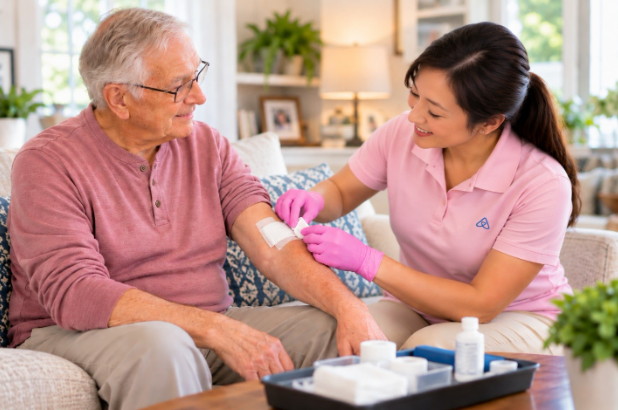
A minor injury may seem manageable at first, but caring for a wound can become more complicated for an older adult. Age-related changes, mobility limitations, existing health conditions, and other individual circumstances can affect a senior’s care needs.
Families should not have to determine on their own whether a wound requires professional treatment. A qualified healthcare professional can evaluate the situation, determine the appropriate care, and provide instructions based on the individual’s needs.
When professional wound care is recommended, skilled nursing may allow eligible seniors to receive certain healthcare services at home. Nonmedical in-home care can complement that support by helping with meals, personal care, mobility, and other everyday routines.
Table of Contents
Why Wound Care May Be More Complex for Older Adults
Older adults may experience physical changes that can make everyday activities and recovery more challenging. They may feel less able to bounce back from changes in activity or routine, while mobility limitations can also affect their ability to comfortably complete everyday tasks.
Existing health conditions may add another layer of consideration. Rather than trying to determine how an injury should be treated, families can communicate concerns to the appropriate healthcare professional and follow the care instructions provided.
Pay Attention to Changes During Recovery
Family members often know what is typical for their loved one. If they notice unexpected changes in comfort, mobility, behavior, or the person’s ability to manage normal activities, those observations can be shared with the appropriate healthcare professional.
Caregivers can also communicate relevant changes they observe during everyday assistance, while leaving medical assessment and treatment decisions to qualified professionals.
When Might Skilled Wound Care Be Recommended?
Not every injury requires skilled nursing. The appropriate level of care depends on the individual’s circumstances and should be determined by a qualified healthcare professional.
Professional wound care may be recommended in situations such as:
- Surgical Incisions Requiring Continued Monitoring
Some surgical wounds may require professional follow-up and care according to the established treatment plan.
- Pressure Injuries
Pressure-related wounds may require skilled attention, particularly when professional wound care has been recommended.
- Wounds Associated with Ongoing Health Concerns
Wounds associated with conditions such as diabetes or circulation concerns may require additional professional oversight based on guidance from the senior’s healthcare team.
- Difficult-to-Heal Skin Tears or Significant Injuries
More complex wounds or skin injuries may require skilled care based on guidance from the senior’s healthcare team.
- Wounds Not Improving as Expected
When recovery does not appear to be progressing as anticipated, families should communicate their observations to the appropriate healthcare professional.
Families should follow the instructions provided by the senior’s healthcare team rather than attempting to independently determine the type or frequency of wound treatment needed.
Who Determines Whether Skilled Nursing Is Needed?
A qualified healthcare professional should determine whether skilled nursing or another healthcare service is appropriate.
The decision may depend on the individual’s condition, care plan, and other circumstances. Families can help by communicating changes they notice and asking questions when they are unsure about instructions.
Professional Care Follows an Established Plan
Skilled nursing is different from nonmedical caregiving because it involves healthcare services performed by qualified professionals.
Families should follow the instructions provided by the healthcare team rather than attempting to independently modify wound-care procedures or treatment.
This distinction is especially important when an older adult is returning home following hospitalization, rehabilitation, or a procedure and has ongoing healthcare needs.
Supporting Everyday Routines During Recovery
A senior receiving professional wound care may also need help with ordinary activities throughout the day.
Depending on the individual’s needs and available services, nonmedical caregivers may assist with:
- Meal preparation
- Personal care
- Dressing and grooming
- Light housekeeping
- Mobility assistance
- Medication reminders based on established instructions
- Transportation and errands
- Companionship
- Other familiar household routines
These services do not replace skilled wound care. Instead, they can provide practical assistance around the older adult’s everyday routine.
Helping Seniors with Limited Mobility at Home
Mobility limitations can affect more than a person’s ability to get from one room to another. An older adult may also find dressing, grooming, preparing meals, completing household tasks, or attending appointments more difficult while recovering.
Follow the Healthcare Team’s Instructions
If a healthcare professional provides specific instructions related to mobility, positioning, activity, or other aspects of recovery, family members and caregivers should follow those directions.
Nonmedical caregivers can provide appropriate everyday assistance according to the established care plan, but they should not independently determine medical procedures or wound-care routines.
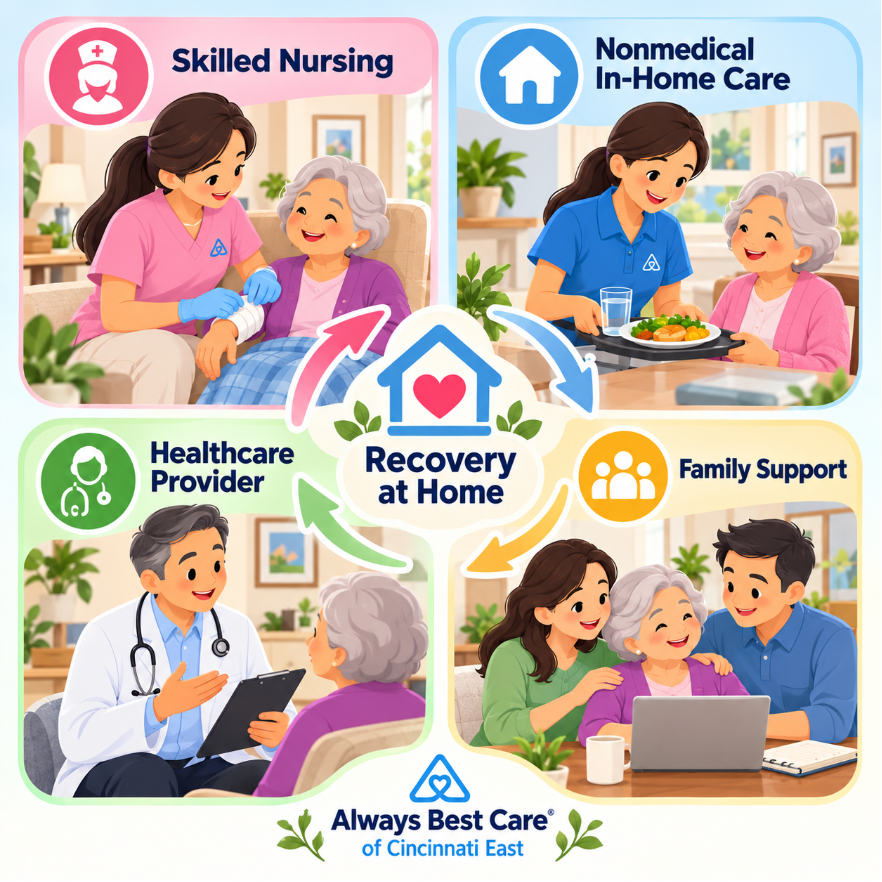
Skilled Nursing and In-Home Care Have Different Roles
Understanding the distinction between skilled nursing and nonmedical home care can help families determine which questions should be directed to which professionals.
| Support Role | How They May Help |
| Skilled Nursing | Provides qualified healthcare services according to the established medical care plan. |
| In-Home Care | Assists with personal care and everyday activities based on the senior’s support needs. |
| Family Support | Helps coordinate routines, communicates observations, and stays involved in the loved one’s care. |
| Healthcare Provider | Determines appropriate medical treatment and provides healthcare guidance. |
Supporting a Senior After a Hospital or Rehabilitation Stay
Returning home after hospitalization, rehabilitation, or a procedure may involve changes to an older adult’s usual routine.
Some seniors may have professional healthcare services arranged as part of their discharge or recovery plan. Others may also benefit from nonmedical assistance with everyday activities.
Make the Transition Home Easier to Manage
Families can prepare by reviewing the instructions provided by the senior’s healthcare team and organizing everyday responsibilities before the loved one returns home.
This might include arranging help with meals, transportation, personal care, mobility, errands, or household routines.
If questions arise about wound care, symptoms, treatment, or recovery instructions, families should contact the appropriate healthcare professional rather than trying to make changes independently.
How In-Home Care Can Complement Skilled Wound Care
Skilled nursing focuses on healthcare needs, while nonmedical caregivers can assist with everyday activities surrounding the senior’s recovery.
For example, a nurse may provide healthcare services according to an established care plan, while an in-home caregiver helps the older adult prepare meals, get dressed, move around the home, or complete other daily routines. Families supporting a loved one with mobility challenges can also explore ways to help prevent falls at home.
In-home caregivers can assist with meals, personal care, light housekeeping, mobility, medication reminders based on established instructions, and other daily activities. These services can complement skilled care while helping the older adult manage familiar routines at home.
Caregivers Can Share Relevant Observations
Because caregivers may spend meaningful time assisting an older adult, they may notice changes in the person’s usual routines or ability to complete everyday activities.
When appropriate, those observations can be communicated to family members so the appropriate healthcare professional can be contacted.
Caregivers should not diagnose a wound, determine whether it is healing properly, or independently change treatment instructions.
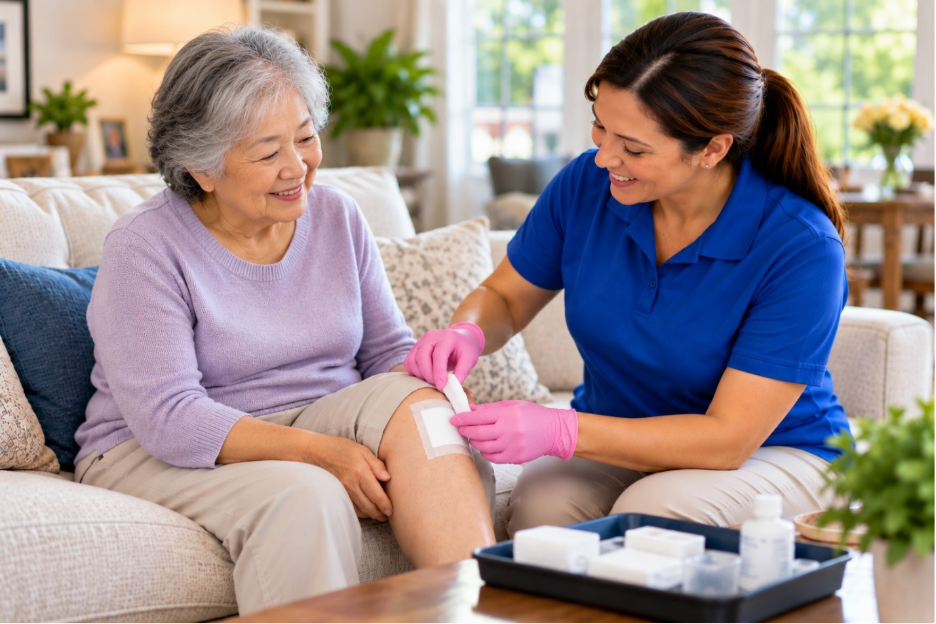
Giving Family Caregivers Additional Support
Caring for someone who is recovering can add responsibilities to a family’s normal routine. Relatives may be coordinating appointments and professional services while also managing meals, personal care, household responsibilities, and transportation.
Nonmedical home care can provide another source of practical assistance based on the senior’s individual needs and available services.
This support does not replace family involvement or professional healthcare. Instead, it can help distribute everyday caregiving responsibilities while the older adult receives the appropriate professional care.
Frequently Asked Questions
When Might an Older Adult Need Skilled Nursing for Wound Care?
A qualified healthcare professional should determine whether skilled nursing is appropriate. The decision can depend on the type of wound, the individual’s circumstances, healthcare-provider instructions, and the established care plan.
Can an In-Home Caregiver Provide Wound Treatment?
Nonmedical caregivers provide assistance with everyday activities rather than skilled wound treatment. When professional wound care is required, it should be provided by an appropriately qualified healthcare professional according to the established care plan.
How Can Families Support a Senior Receiving Wound Care at Home?
Families can help organize appointments, follow instructions provided by healthcare professionals, assist with everyday routines, and communicate relevant changes or concerns to the appropriate healthcare provider.
Support Recovery with the Right Care at Home
An older adult recovering from a wound, procedure, or hospitalization may need different types of assistance. Skilled healthcare professionals can address appropriate medical needs, while nonmedical caregivers can provide practical help with everyday routines.
Always Best Care of Knoxville can help families explore available care options based on their loved one’s individual needs. Depending on service availability and the established care plan, support may include skilled home health services as well as nonmedical assistance with daily activities.
Families considering home care in Knoxville, TN can speak with the local team about available services and determine which type of support may be appropriate for their situation.
Discuss personalized care options with our team or call (865) 259-7770 to learn more about available support for your loved one.