

Helping Seniors Avoid Scams in Knoxville, TN
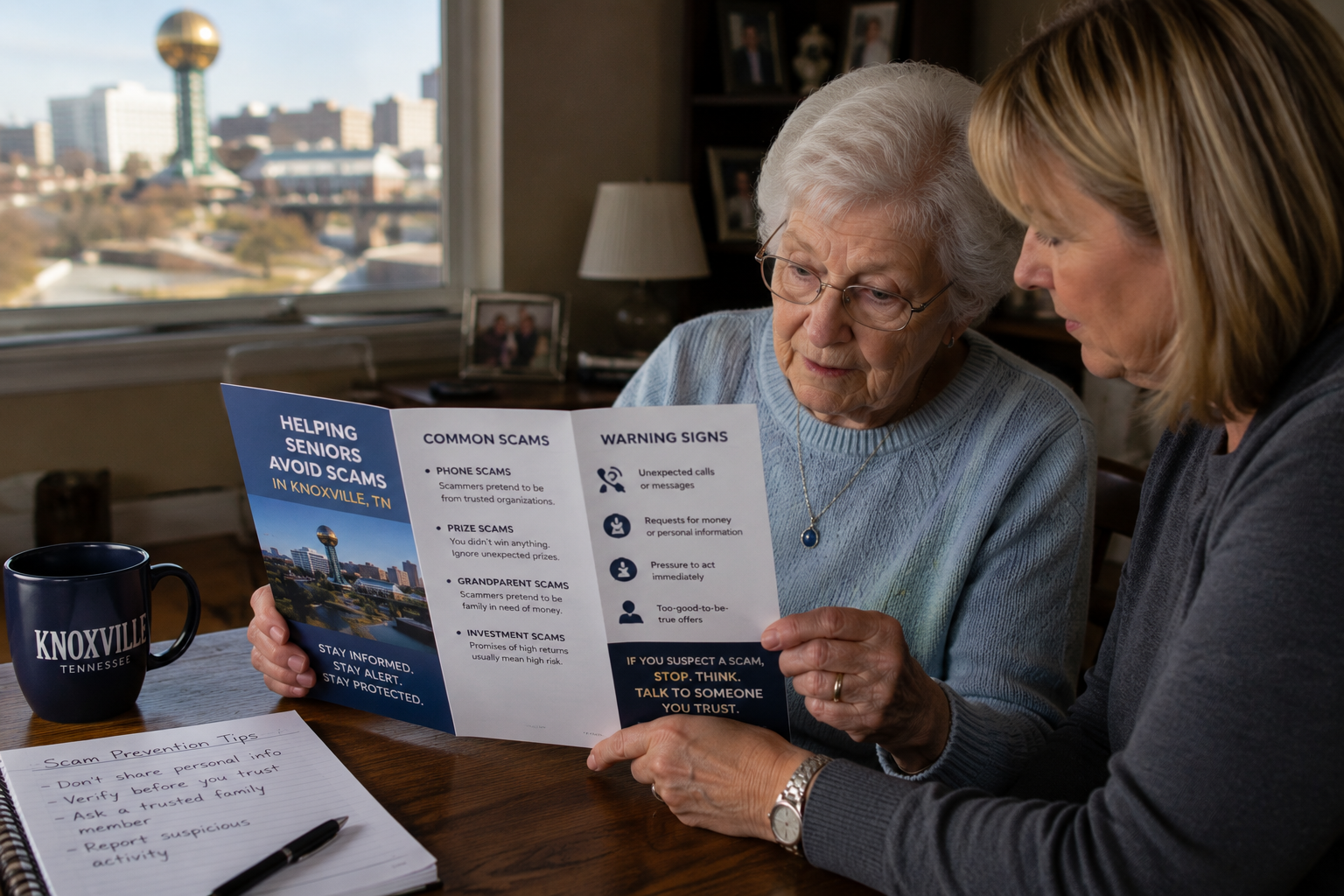
Scammers are becoming increasingly creative in their attempts to target older adults. Whether through phone calls, emails, text messages, social media, or even in-person interactions, fraudsters often look for opportunities to gain trust and exploit vulnerabilities. Unfortunately, seniors are frequently targeted because they may have accumulated savings, maintain strong community values, or be less familiar with emerging digital threats.
The financial and emotional consequences of scams can be devastating. Beyond monetary losses, victims often experience stress, embarrassment, and a loss of confidence. Fortunately, awareness remains one of the most effective ways to reduce risk.
For families throughout Knoxville, understanding how scams work and recognizing warning signs early can help protect aging loved ones from becoming victims of fraud.
Table of Contents
Understanding Why Scammers Target Older Adults
Criminals often focus their efforts on seniors because they perceive older adults as more likely to engage in conversations and respond to requests for assistance.
Some factors that may increase vulnerability include:
- Living alone or having limited daily interaction with others
- Having retirement savings or other financial resources
- Trusting individuals who appear helpful or authoritative
- Limited familiarity with modern technology and online threats
- Desire to avoid burdening family members with concerns
Understanding these factors can help families develop strategies that strengthen protection and encourage safer decision-making.
Scam Tactics Families Should Know About
While scams continue to evolve, many fraud schemes follow familiar patterns that families can learn to recognize.
Emergency Family Scams
Scammers may pretend to be a grandchild, relative, or friend facing an urgent crisis and needing immediate financial assistance.
Government Impersonation Scams
Fraudsters pose as representatives from government agencies and threaten penalties unless payment or personal information is provided.
Online Account Scams
Emails and text messages may appear to come from banks, retailers, or service providers and direct victims to fraudulent websites.
Prize and Sweepstakes Fraud
Victims are told they have won money or prizes but must first pay fees or taxes before collecting their winnings.
Technical Support Scams
Criminals claim a device has been compromised and request payment or remote access to “fix” the issue.
Recognizing these tactics can help seniors pause before responding and verify whether a request is legitimate.
Warning Signs That a Scam May Be Occurring
Most scams rely on pressure, urgency, or secrecy. Families should encourage seniors to be cautious whenever these elements are present.
Common warning signs include:
- Requests for immediate payment
- Demands involving gift cards or wire transfers
- Unexpected requests for personal information
- Messages designed to create fear or panic
- Instructions to keep information secret from family members
- Unusual financial transactions
Families should regularly discuss suspicious situations and focus on encouraging seniors to make informed decisions before taking action.
The Connection Between Isolation and Fraud Risk
Older adults who have limited social interaction may be more vulnerable to scams because they have fewer opportunities to discuss suspicious situations with trusted individuals.
Maintaining strong social connections can provide an important layer of protection. Regular conversations with family members, friends, caregivers, and community organizations create opportunities to identify concerns before financial losses occur.
Reducing isolation also supports emotional wellness and overall quality of life. Seniors who remain engaged with others are often better equipped to recognize suspicious behavior and seek guidance when needed.
How Families Can Strengthen Scam Prevention
Families play a critical role in helping seniors stay informed and protected.
Helpful strategies include:
- Discussing current scam trends openly
- Reviewing suspicious communications together
- Monitoring financial accounts when appropriate
- Encouraging verification before responding to requests
- Helping install call-blocking and spam-filtering tools
- Establishing a trusted contact for major financial decisions
Ongoing communication can help seniors feel comfortable seeking advice without fear of judgment or embarrassment. Regular discussions about recognizing and avoiding common senior scams can further strengthen a senior’s ability to identify suspicious situations before financial losses occur.
The Benefits of Professional Caregiver Support
Professional caregivers can provide an additional level of oversight that helps reduce fraud risks. Their regular interaction with seniors allows them to notice unusual situations, behavioral changes, or concerns that may require attention.
At Always Best Care of Knoxville, caregivers are trained to encourage safe practices and help seniors maintain open communication with family members.
Caregivers may assist by:
- Helping screen unexpected calls or visitors
- Encouraging verification of financial requests
- Providing companionship and engagement
- Noticing changes in behavior or emotional well-being
- Helping seniors stay connected to their support network
This additional support plays an important role in supporting seniors through trusted caregiving assistance, providing peace of mind for both seniors and their families while helping older adults remain safe and connected.
Responding Quickly When Fraud Is Suspected
If a loved one may have been targeted by a scam, immediate action can help minimize potential losses.
Recommended steps include:
- Contact the financial institution involved.
- Monitor accounts for suspicious activity.
- Report the incident to appropriate authorities.
- Change passwords and account credentials if necessary.
- Offer reassurance and emotional support.
A compassionate approach is important, as many victims feel embarrassed or reluctant to discuss what happened.
Helping Knoxville Seniors Stay Safe and Confident
Fraud prevention begins with education, awareness, and strong support systems. By staying informed about common scams and maintaining open communication, families can help seniors avoid becoming victims of financial exploitation.
At Always Best Care of Knoxville, we are committed to helping older adults remain safe, independent, and confident at home. Our caregivers provide compassionate support that promotes well-being while helping seniors navigate everyday challenges more securely.
Support and Peace of Mind for Your Family
If your loved one could benefit from additional companionship and support, Always Best Care of Knoxville is here to help.
Call Always Best Care of Knoxville at (865) 259-7770 to schedule a care consultation and learn how our caregivers can help protect your loved one while supporting independence, safety, and quality of life at home.