Home Wound Management: When DIY Care Becomes Dangerous in Lancaster, PA
Healing a wound at home sounds straightforward — clean it, cover it, and wait. But for older adults, that process is rarely so simple. Slower healing, chronic conditions, and age-related skin changes can turn a minor wound into a serious health risk. Knowing when to manage wound care at home and when to bring in a skilled nurse can make all the difference in how well and how quickly a senior recovers.
Table of Contents
What You Will Learn
- Why wounds may be more difficult to heal in older adults because of fragile skin, diabetes, poor circulation, heart disease, peripheral artery disease, medications, immune changes, nutrition concerns, dehydration, and limited mobility.
- Which wounds may need prompt clinical assessment or physician-directed skilled nursing, including pressure injuries, diabetic foot ulcers, venous or arterial ulcers, post-surgical wounds, skin tears, burns, and chronic wounds that are not improving.
- Warning signs that should lead families to contact a healthcare provider, including spreading redness, warmth, swelling, worsening pain, pus-like or foul-smelling drainage, wound separation, dark tissue, fever, chills, confusion, red streaks, or sudden changes in alertness.
How Aging Changes the Way Wounds Heal
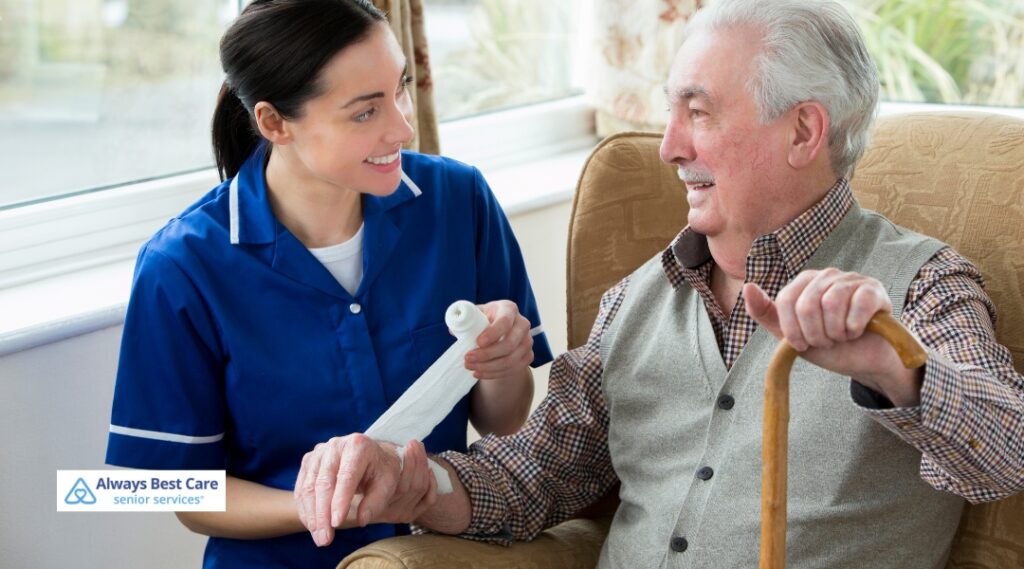
The skin does more than protect the body — it is a living organ that changes significantly with age. After 60, the skin becomes thinner, loses elasticity, and produces fewer of the cells responsible for repair. Blood flow to the skin also decreases, which means oxygen and nutrients reach wounds more slowly.
This is compounded by common age-related conditions:
- Diabetes can damage nerves and blood vessels, reducing sensation and circulation in the extremities — making foot wounds especially dangerous.
- Heart disease and peripheral artery disease restrict blood flow, slowing the delivery of healing nutrients to tissue.
- Immunosuppressive medications (such as steroids or chemotherapy drugs) can reduce the body’s ability to fight infection.
- Malnutrition or dehydration deprives the body of the protein, zinc, and vitamin C it needs to rebuild tissue.
The result: a wound that might heal in a week for a younger adult could take months for a senior — or fail to heal at all without proper intervention.
Types of Wounds That Often Require Skilled Nursing
Not every cut or bruise needs a nurse. But certain wound types carry enough complexity and risk that professional oversight is strongly recommended.
Pressure injuries (bedsores): These develop when sustained pressure cuts off blood flow to skin over bony areas like the heels, tailbone, or hips. Stage 3 and Stage 4 pressure injuries involve deep tissue damage and require specialized dressing protocols and close monitoring.
Diabetic foot ulcers: These are among the most serious wound types in older adults. Poor circulation and neuropathy mean they often go unnoticed until infection sets in. Left untreated, they are a leading cause of lower-limb amputation.
Venous and arterial ulcers: Caused by poor circulation in the legs, these chronic wounds require compression therapy, specific dressings, and ongoing assessment to manage properly.
Post-surgical incisions: After a hospital discharge, surgical wounds still need careful monitoring for signs of dehiscence (reopening) or infection — especially in seniors who may be immunocompromised or malnourished.
Skin tears: Common in seniors due to fragile skin, these injuries can be deceptively difficult to heal and may require specialized closure techniques and dressings.
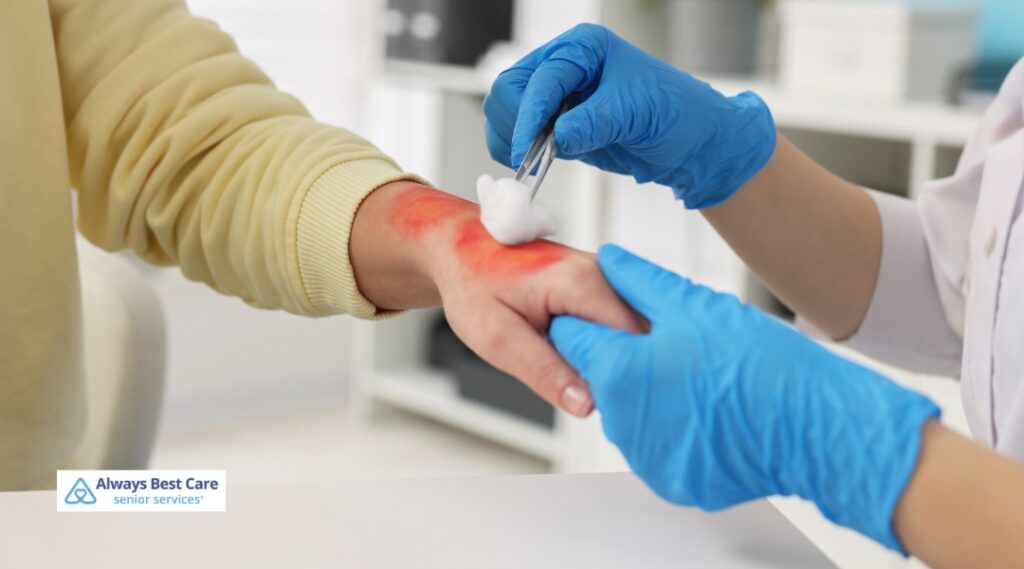
Burns: Even minor burns in older adults can escalate quickly due to reduced skin integrity and slower healing.
Warning Signs That a Wound Needs Immediate Attention
Families and caregivers should monitor wounds closely and act quickly if any of the following appear:
- Increasing redness, warmth, or swelling around the wound site
- Purulent (pus-like) or foul-smelling drainage
- Wound edges that are pulling apart or not closing
- Dark or black tissue forming in or around the wound (a sign of necrosis)
- Fever, chills, or sudden confusion — these can indicate a systemic infection
- Red streaking extending from the wound — a sign of spreading infection (cellulitis or lymphangitis)
- No visible improvement after two weeks of home care
When in doubt, contact a healthcare provider. Infections in older adults can progress to sepsis rapidly, and early intervention is critical.
What a Skilled Home Health Nurse Does for Wound Care in Lancaster
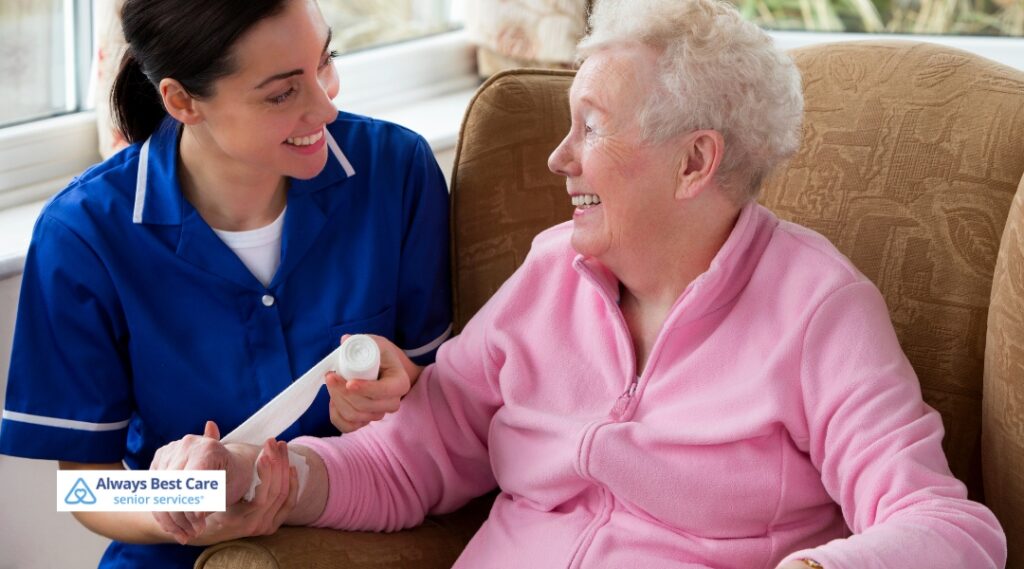
When a physician orders skilled nursing as part of a home health plan, a licensed nurse visits the senior at home to provide clinical wound care that goes well beyond what a family caregiver can safely manage.
Skilled nursing wound care typically includes:
- Wound assessment: Measuring size, depth, and tissue type; documenting changes over time to track healing progress
- Debridement: Removing dead or infected tissue to promote healthy healing
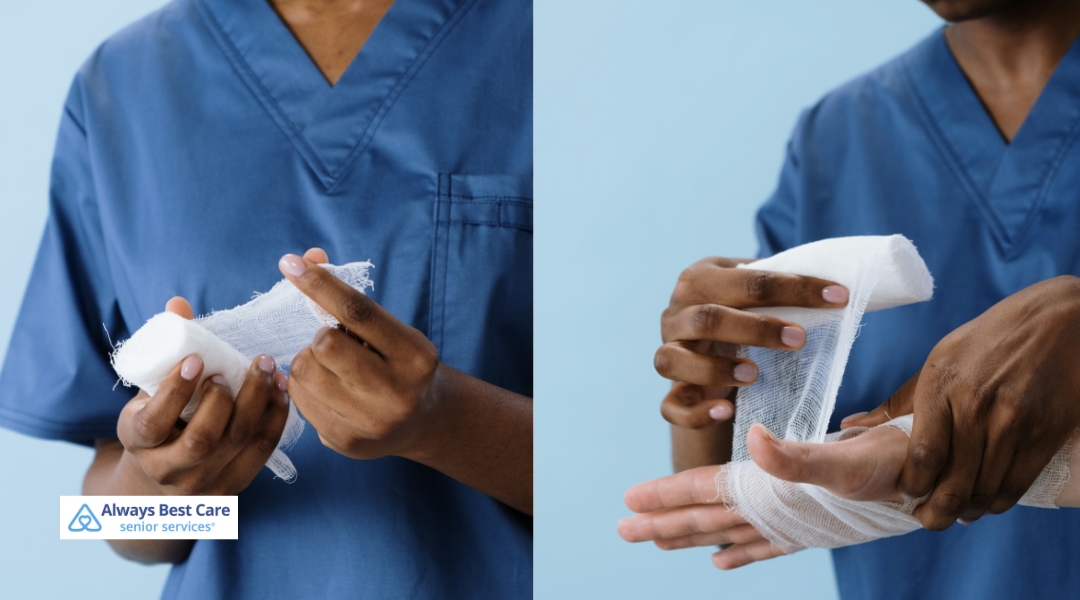
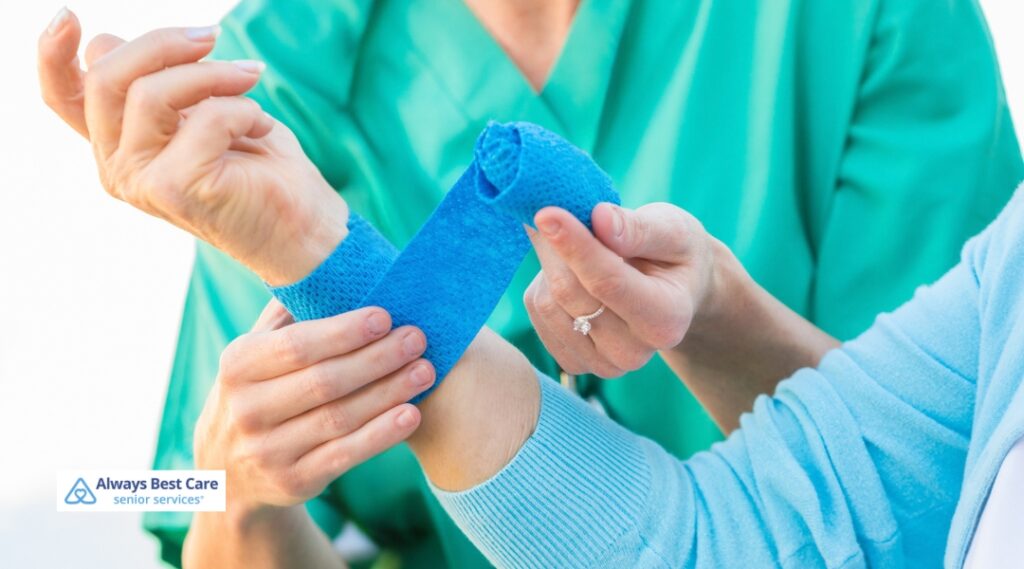
- Dressing changes: Selecting and applying the appropriate dressing type based on wound stage, drainage level, and infection risk
- Infection monitoring: Identifying early signs of local or systemic infection and communicating with the physician
- Compression therapy: For venous ulcers, applying and managing compression bandaging
- Patient and family education: Teaching caregivers how to safely change dressings between visits, what to watch for, and when to call for help
- Care coordination: Keeping the broader healthcare team informed of wound status and any changes in condition
This level of care is especially valuable after a hospital or rehab discharge, when wounds are still in early healing stages and the risk of complications is highest.
Preventing Pressure Injuries Before They Start
For seniors with limited mobility, prevention is just as important as treatment. Pressure injuries are largely preventable with the right protocols in place.
Key prevention strategies include:
- Repositioning every two hours for bed-bound seniors, or more frequently if skin shows early signs of breakdown
- Pressure-relieving surfaces such as specialized mattresses or cushions for wheelchair users
- Skin hygiene: Keeping skin clean and dry, especially in areas prone to moisture (under folds, around incontinence pads)
- Nutrition support: Ensuring adequate protein and hydration to maintain skin integrity
- Daily skin checks: Paying close attention to heels, sacrum, hips, elbows, and shoulder blades
A home health nurse can assess a senior’s risk level using validated tools like the Braden Scale and recommend a prevention plan tailored to their needs.
How In-Home Caregivers Support the Healing Process
Skilled nursing addresses the medical side of wound care, but recovery also depends on how well a senior is supported day to day. In-home caregivers play a vital complementary role by:
- Preparing nutritious meals that support healing
- Assisting with personal hygiene and bathing without disturbing wound sites
- Helping with mobility and repositioning to prevent new pressure injuries
- Reminding seniors to take prescribed medications
- Observing and reporting any changes in the wound or the senior’s overall condition to family or the nursing team
When home health and in-home care work in coordination, seniors receive both the clinical expertise and the daily support they need to heal safely at home.
Supporting Safer Healing at Home in Lancaster
Wound care for older adults is not a one-size-fits-all process. It requires clinical knowledge, consistent monitoring, and a support system that can adapt as healing progresses. Families in Lancaster do not have to navigate this alone.
Always Best Care of Lancaster provides services designed to help older adults recover safely and comfortably at home. Depending on your loved one’s needs and what is available in your area, services may include skilled nursing for medical wound care and in-home caregivers to assist with daily living tasks throughout recovery.
Frequently Asked Questions
Q: Can Medicare cover skilled nursing for wound care at home?
A: Medicare Part A may cover home health services, including skilled nursing for wound care, if the patient is homebound and the care is ordered by a physician. Coverage eligibility and duration depend on individual circumstances. Contact your Medicare plan or a home health agency for guidance specific to your situation.
Q: How often will a skilled nurse visit for wound care?
A: Visit frequency depends on the wound type, severity, and the physician’s orders. Some wounds require daily nursing visits; others may need care two to three times per week. The nurse will adjust the schedule based on how healing progresses.
Q: What is the difference between home health and in-home care?
A: Home health refers to medically supervised services — such as skilled nursing, physical therapy, or occupational therapy — ordered by a physician. In-home care (also called personal care or companion care) provides non-medical support with daily tasks like bathing, meals, and mobility. Both can be provided simultaneously and often work best when coordinated together.
Q: When should a senior go to the ER instead of waiting for a home health visit?
A: Seek emergency care immediately if the senior has a high fever, signs of severe infection (red streaking, rapidly spreading redness), confusion or altered mental status, or a wound that is bleeding heavily and not responding to pressure.
Q: Can a wound heal at home without skilled nursing?
A: Minor wounds in otherwise healthy seniors may heal well with basic home care. However, wounds that are large, deep, infected, or associated with chronic conditions like diabetes or poor circulation typically require professional assessment and treatment to heal safely and avoid complications.
Sources
- National Pressure Injury Advisory Panel (NPIAP). Pressure Injury Stages. https://npiap.com
- American Diabetes Association. Standards of Medical Care in Diabetes. https://diabetesjournals.org/care
- Centers for Medicare & Medicaid Services. Home Health Services Coverage. https://www.medicare.gov/coverage/home-health-services
- Wound, Ostomy and Continence Nurses Society (WOCN). Guideline for Prevention and Management of Pressure Ulcers. https://www.wocn.org
- MedlinePlus / National Library of Medicine. Aging Changes in Skin. https://medlineplus.gov/ency/article/004014.htm
- Johns Hopkins Medicine. Wound Care: What You Need to Know. https://www.hopkinsmedicine.org
Support Safer Wound Recovery at Home
A wound that is worsening, not healing as expected, showing signs of infection, or making mobility and daily routines more difficult can become a serious concern for an older adult. Prompt clinical guidance, a physician-directed care plan, and dependable day-to-day assistance can help families respond earlier and make recovery at home safer and more manageable.
Contact Always Best Care of Lancaster at (717) 924-2252 to learn more and schedule your free consultation.
Link to the markdown version of this blog.