Healthy Eating Tips for Older Adults
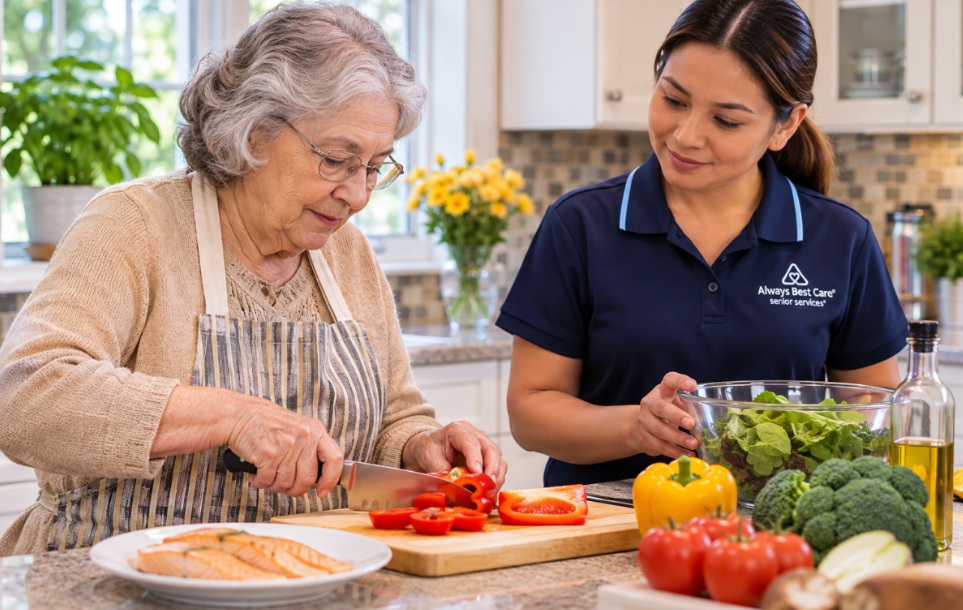
A familiar meal can bring comfort, enjoyment, and meaningful memories to an older adult’s day. The smell of a favorite soup, a traditional family recipe, or a shared breakfast can make everyday routines feel more personal. However, grocery shopping, preparing ingredients, and managing kitchen responsibilities may become more challenging with age.
Families exploring home care services in Fitchburg, WI often want to help their loved ones maintain healthy eating habits without taking away their independence. Practical assistance with meal preparation, shopping, and household organization can make familiar routines easier to manage.
During National Diabetes Month in November, families may also consider how meal planning fits into a senior’s overall well-being. While nutrition recommendations should come from qualified healthcare professionals, everyday assistance can help older adults follow agreed-upon routines.
At Always Best Care of Madison, we understand that mealtimes involve more than food preparation. Respecting personal preferences, encouraging participation, and maintaining comfortable routines are important parts of nonmedical home care.
Table of Contents
Why Is Healthy Eating Important for Older Adults?
Healthy eating supports everyday well-being by providing nourishment for the body’s changing needs. However, the most appropriate eating pattern depends on individual health conditions, activity levels, preferences, and medical guidance.
Some older adults may experience changes in appetite, energy, or their ability to prepare meals. Others may continue enjoying cooking but appreciate assistance with shopping, lifting cookware, or cleaning up afterward.
Families can begin by understanding which activities have become difficult rather than assuming the senior needs an entirely new eating routine.
How Do Nutritional Needs Change with Age?
As people grow older, their nutritional needs and eating habits may change.
Some seniors may need to pay closer attention to protein, hydration, or specific nutrients based on recommendations from their healthcare professionals. Medical conditions and prescribed medications can also influence dietary guidance.
A varied eating pattern may include vegetables, fruits, protein foods, whole grains, and appropriate dairy products or fortified alternatives.
However, no single menu is suitable for every older adult. Families should discuss individual dietary restrictions and concerns with a qualified healthcare professional.

Preserve Personal Preferences and Familiar Foods
Food choices are often connected to family traditions, cultural experiences, and personal memories.
An older adult may enjoy preparing a familiar breakfast, sharing a traditional dish, or eating at a particular time each day. Families can preserve these preferences by offering manageable choices and asking which foods the senior enjoys.
For example, someone may prefer vegetable soup over a sandwich or enjoy selecting ingredients for a favorite family recipe.
When medical guidance requires dietary adjustments, families can ask a registered dietitian or other qualified healthcare professional about suitable alternatives.
The goal is to support appropriate nutrition while keeping meals familiar and enjoyable.
How Can Families Make Meal Preparation Easier?
Meal preparation involves several activities, including planning, shopping, preparing ingredients, cooking, serving food, and cleaning up.
For some older adults, completing every task independently may become tiring. Sharing selected responsibilities can help seniors remain involved without feeling overwhelmed.
Five Practical Steps to Simplify Meal Preparation
A manageable meal routine begins with identifying familiar foods and organizing household responsibilities.
The following steps can help families coordinate practical assistance while respecting the senior’s preferences.
- Create a list of favorite meals. Identify familiar dishes the senior enjoys and consider any individualized dietary instructions.
- Organize grocery shopping. Maintain a shared shopping list and check available ingredients before purchasing additional items.
- Prepare ingredients in advance. Wash vegetables, organize ingredients, or complete other appropriate tasks to make cooking easier.
- Keep portions manageable. Discuss preferred serving sizes without making assumptions about appetite or nutritional requirements.
- Review the routine regularly. Ask whether meal preferences, preparation responsibilities, or medical recommendations have changed.
These steps can make everyday meal preparation more manageable for seniors and their families. A simple plan is often more practical than a complicated system that requires frequent explanations or major changes to familiar habits.
How Can Seniors Stay Involved in Cooking?
Receiving assistance does not mean an older adult must stop participating in meal preparation.
A senior who enjoys cooking may prefer to select recipes, season ingredients, or help arrange food on plates.
Meanwhile, a caregiver may assist with washing produce, handling heavier cookware, or cleaning kitchen surfaces.
The appropriate division of responsibilities depends on the senior’s abilities, comfort, and agreed-upon care plan.
Families should ask which activities their loved one wants to continue managing independently.
This approach allows meal preparation to remain a meaningful activity rather than becoming another responsibility that someone else automatically takes over.
Keep the Kitchen Comfortable and Accessible
A familiar kitchen arrangement can make everyday tasks easier to navigate.
Before reorganizing cabinets or moving frequently used items, families should discuss proposed changes with the senior.
Someone who has stored dishes in the same cupboard for many years may find unexpected changes frustrating.
Simple adjustments may include keeping commonly used utensils within comfortable reach, maintaining clear preparation surfaces, and organizing groceries consistently.
These changes should support the senior’s established routine while addressing individual safety and accessibility needs.
How Can Seniors Enjoy More Variety in Everyday Meals?
Variety can help make meals enjoyable while supporting an individualized nutrition plan.
Families do not need to replace every familiar dish to introduce different ingredients or preparation options.
Instead, they can begin with foods the older adult already enjoys and discuss appropriate ways to maintain variety.
Explore Familiar Foods with Different Ingredients
A favorite soup may include different vegetables depending on the season.
Breakfast might feature familiar protein foods, fruits, or whole grains when appropriate for the senior’s dietary recommendations.
Families can also consider preparing ingredients in different ways to accommodate personal preferences.
However, food choices should not be presented as treatments for medical conditions.
When a senior has diabetes, kidney disease, swallowing difficulties, or other health concerns, individualized dietary guidance should come from qualified healthcare professionals.
Respect Cultural and Family Food Traditions
Traditional recipes often carry personal meaning.
Before suggesting substitutions, families should ask how a dish is usually prepared and which ingredients matter most to the senior.
Some older adults may enjoy sharing stories about meals prepared during childhood or family celebrations.
These conversations can make cooking and mealtimes more meaningful.
When dietary adjustments are medically necessary, a qualified professional can help identify suitable options that respect personal and cultural preferences.
How Does Diabetes Influence Meal Planning for Seniors?
For older adults living with diabetes, meal choices and timing should follow an individualized treatment plan.
The healthcare team may recommend specific approaches to meal planning based on the person’s health needs, medications, and other circumstances.
Nonmedical caregivers should not independently establish dietary restrictions, change medication doses, or determine blood glucose targets.
Coordinate Meal Preparation with Medical Guidance
Families should ensure that authorized individuals understand the senior’s current meal-related instructions.
For example, a caregiver may help prepare an agreed-upon breakfast or organize groceries based on the family’s approved shopping list.
However, questions about carbohydrate intake, meal timing, or medication-related concerns should be directed to the appropriate healthcare professional.
Families can also review diabetes support within everyday home routines to understand how meal preparation, communication, and other nonmedical activities may fit into a broader support plan.
This related resource offers additional context for families supporting an older adult with diabetes at home.
When Should Families Discuss Eating Concerns with a Professional?
Changes in appetite or eating habits may have different causes.
Families should avoid assuming that reduced food intake, unexpected weight changes, chewing discomfort, or swallowing difficulties are simply part of aging.
Persistent concerns should be discussed with an appropriate healthcare professional.
Caregivers and family members can share factual observations, such as whether meals were left unfinished or whether the senior reported discomfort.
Medical professionals should evaluate these concerns and recommend appropriate next steps.
How Can Families Create More Comfortable Mealtimes?
The environment surrounding a meal can influence how comfortable an older adult feels.
Some seniors enjoy conversation and company while eating. Others prefer a quiet setting without distractions.
Families can begin by asking what makes mealtimes pleasant for their loved one.
Create a Relaxed Dining Environment
A comfortable dining space does not need to be elaborate.
Simple arrangements can help make meals more enjoyable while respecting the senior’s preferences.
Families may consider:
- Keeping frequently used dining items within easy reach.
- Reducing unnecessary background noise.
- Providing comfortable seating.
- Allowing sufficient time to enjoy meals.
- Asking whether the senior prefers conversation or quiet.
- Maintaining familiar dining routines whenever practical.
These adjustments can support a more relaxed atmosphere without changing the senior’s entire household routine.
Make Mealtimes an Opportunity for Connection
Sharing a meal can create opportunities for companionship.
A caregiver might listen to a favorite family story, discuss a familiar recipe, or enjoy a relaxed conversation.
For seniors who prefer quieter meals, companionship may involve simply being present without requiring constant interaction.
Families should avoid turning every meal into a discussion about medical conditions or eating habits.
When health-related concerns need attention, choose an appropriate time and communicate respectfully.
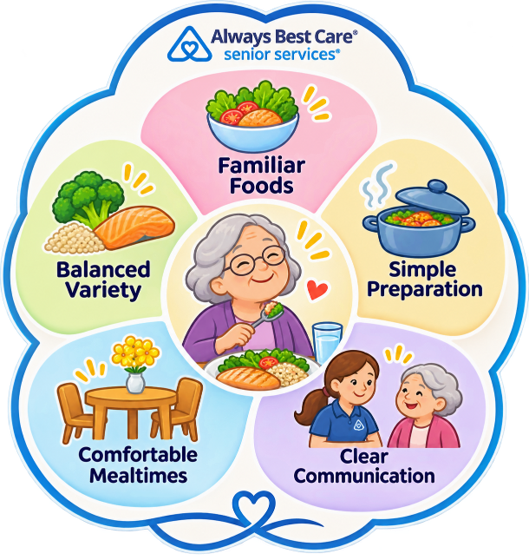
Five Ways to Support Comfortable, Healthy Mealtimes
Healthy eating at home involves several practical considerations beyond choosing ingredients.
The following five areas summarize how families and nonmedical caregivers can support familiar routines while respecting individual nutrition guidance.
Everyday Meal Support at a Glance
Supporting healthy mealtimes involves balancing nutritional needs with familiar routines, personal preferences, and practical assistance. Families and caregivers can focus on simple approaches that encourage independence while making meal preparation and dining more comfortable. The following five areas highlight important considerations for everyday meal support.
- Familiar foods: Preserve favorite meals and cultural traditions whenever appropriate.
- Balanced variety: Follow individualized nutrition guidance while exploring suitable food choices.
- Simple preparation: Share kitchen responsibilities based on the senior’s abilities.
- Comfortable mealtimes: Respect preferences for dining arrangements and companionship.
- Clear communication: Bring nutrition concerns and medical questions to qualified professionals.
Not every senior requires the same level of assistance.
Some older adults may need occasional help with shopping, while others benefit from regular meal preparation support.
The appropriate arrangement should reflect personal preferences, daily abilities, and any relevant healthcare instructions.
How Can Nonmedical Caregivers Support Healthy Eating at Home?
Nonmedical caregivers may help with appropriate household and meal-related activities according to the agreed-upon care plan.
Their role is to provide practical assistance while encouraging seniors to remain involved in decisions about their daily routines.
Families considering in-home support with meal preparation and daily tasks can discuss which activities require assistance and how those responsibilities may be shared.
Maintain Clear Communication Between Caregivers and Families
When several people help with meals, communication becomes important.
A family member may prepare dinner while a caregiver assists with lunch or grocery shopping.
Keeping a simple record of completed tasks and agreed-upon arrangements can reduce confusion.
For example, authorized helpers may document which ingredients were purchased, what meals were prepared, and whether the senior requested changes.
Information should remain factual, respectful, and accessible only to appropriate individuals.
Use a Simple Meal Preparation Handover
A clear meal preparation handover helps families and caregivers maintain consistent support when caregiving responsibilities change. Sharing essential updates about meals, groceries, and personal preferences can prevent confusion and make daily routines easier to coordinate.
| Handover Information | What to Document |
|---|---|
| Meals Prepared | Record which meals were prepared or served during the visit. |
| Grocery Updates | Note items purchased and groceries that still need to be replenished. |
| Meal Preparation Progress | Identify ingredients prepared or stored for upcoming meals. |
| Food Preferences | Document any changes in the senior’s stated food preferences or meal requests. |
| Questions or Concerns | Note observations or questions that should be communicated to the appropriate family member or healthcare professional. |
Maintaining accurate handover records can help caregivers provide consistent assistance while respecting the senior’s preferences and established routines. All updates should follow the agency’s communication procedures, protect personal information, and avoid unsupported assumptions about medical conditions.
Adjust Assistance as Preferences Change
A meal arrangement that works today may need adjustment later.
A senior might develop an interest in a new recipe, prefer eating at a different time, or want to resume an activity they previously found difficult.
Families can review these preferences and discuss appropriate changes.
Medical nutrition instructions should continue to guide any necessary dietary restrictions.
Personalized assistance works best when it remains flexible enough to reflect the senior’s changing needs and choices.
Supporting Healthy Eating and Independence in Fitchburg, WI
Healthy eating at home involves more than selecting nutritious ingredients. Familiar recipes, comfortable mealtimes, practical kitchen assistance, and respectful communication all contribute to a senior’s daily experience.
Families can help older adults maintain independence by identifying tasks that have become difficult and arranging appropriate assistance without unnecessarily taking over activities they still enjoy.
During National Diabetes Month, these conversations can also encourage families to review how meal-related routines align with individualized healthcare guidance.
At Always Best Care of Madison, we help families explore nonmedical home care services in Fitchburg, WI, including meal preparation, companionship, personal care, and other appropriate everyday assistance.
To learn more, call (608) 315-2378 or talk with our care team about support at home to discuss a personalized arrangement that respects your loved one’s needs, preferences, and familiar routines.