
Managing Diabetes at Home for Seniors
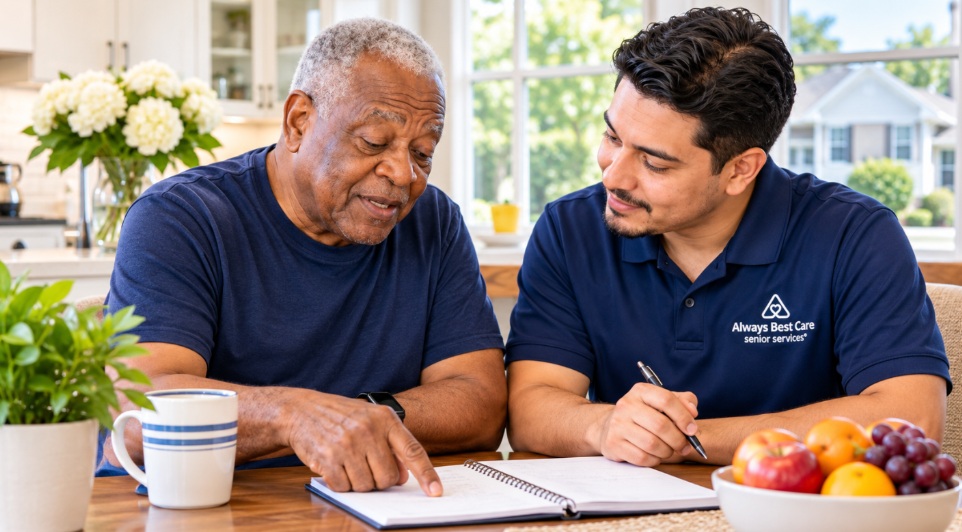
A familiar kitchen, a favorite chair, and a comfortable morning routine can make home feel reassuring. For an older adult living with diabetes, these everyday surroundings also influence how meals, appointments, and daily responsibilities are organized.
Families exploring home care services in Madison, WI may be looking for practical ways to help a loved one manage household activities while following an individualized diabetes care plan. Preparing meals, organizing transportation, and keeping track of questions for healthcare appointments can involve several people, each with different responsibilities.
During National Diabetes Month in November, families have an opportunity to review how everyday routines support their loved one’s comfort, independence, and communication with healthcare professionals.
At Always Best Care of Madison, we understand that practical assistance should respect each senior’s preferences and abilities. Nonmedical home care can help with appropriate daily activities while leaving diabetes diagnosis, treatment, and clinical decisions to qualified healthcare professionals.
Table of Contents
What Does Managing Diabetes at Home Involve?
Managing diabetes at home involves following an individualized medical plan while organizing daily activities around the older adult’s needs and preferences.
A qualified healthcare professional determines appropriate treatment, medication instructions, blood glucose targets, and monitoring recommendations. These instructions may change as a person’s health needs evolve.
Families should rely on the senior’s current medical guidance rather than applying another person’s diabetes routine.
Understanding Medical Care and Everyday Assistance
Medical diabetes management and nonmedical home care serve different purposes.
Healthcare professionals diagnose diabetes, prescribe medications, interpret clinical information, and recommend treatment adjustments.
Nonmedical caregivers may assist with practical activities that help seniors maintain familiar routines, depending on the provider’s services and the agreed-upon care plan.
For example, a caregiver might prepare an agreed-upon meal, help organize transportation to an appointment, or offer reminders permitted within their responsibilities.
These activities do not replace clinical oversight.
Families considering nonmedical home care assistance can begin by identifying which everyday tasks have become difficult and discussing what support may be appropriate.

Keep Seniors Involved in Everyday Decisions
A diabetes diagnosis does not remove an older adult’s right to make personal choices.
Some seniors may appreciate help with grocery shopping while preferring to prepare breakfast independently. Others may welcome assistance getting ready for appointments but want to speak privately with their healthcare professional.
Families can encourage participation by asking which tasks feel manageable and where additional help would be welcome.
Respecting these preferences allows support to remain personal rather than making every interaction revolve around diabetes.
How Can Daily Routines Support Seniors Living with Diabetes?
Consistent routines can make household responsibilities easier to organize, particularly when several relatives or caregivers share responsibilities.
Consistency does not require a rigid schedule. Instead, it means establishing clear expectations about meals, appointments, reminders, and communication.
A simple written plan can help everyone understand their responsibilities while allowing room for the senior’s preferences.
Five Steps to Build a Manageable Daily Routine
Families can begin by discussing existing habits and identifying activities that require additional support. The following steps provide a practical starting point for organizing everyday responsibilities.
- Establish familiar daily activities. Discuss usual times for meals, rest, and enjoyable activities while following the healthcare team’s recommendations.
- Clarify household responsibilities. Identify who handles grocery shopping, meal preparation, and transportation.
- Keep medical instructions accessible. Make current healthcare guidance available to people authorized to use it.
- Organize questions and observations. Use an appropriate notebook or secure communication method to record information for the healthcare team.
- Review the routine when needs change. Update household responsibilities when medical instructions, preferences, or daily abilities change.
These arrangements should reflect the senior’s established habits.
Someone who enjoys preparing meals may prefer assistance washing vegetables rather than having another person take over the kitchen. Another senior may appreciate a quiet breakfast before discussing the day’s appointments.
Small adjustments can preserve independence while making responsibilities easier to manage.
Make Daily Reminders Respectful
Reminders can be helpful when they are appropriate, agreed upon, and consistent with the care plan.
Before introducing reminders, ask the older adult how they prefer to receive them.
Some people may appreciate a calendar or phone alert, while others prefer a brief verbal prompt.
Avoid repeating reminders loudly, speaking impatiently, or discussing private health information in front of visitors.
Medication-related reminders must remain within the caregiver’s permitted responsibilities. Nonmedical caregivers should not independently change prescriptions, medication doses, or treatment instructions.
How Can Families Support Healthy Meal Routines at Home?
Meal planning is an important part of diabetes care, but appropriate food choices and eating schedules depend on the individual.
A registered dietitian or other qualified healthcare professional can help develop nutrition recommendations based on medical needs, medications, and personal preferences.
Families should avoid assuming that every senior with diabetes requires the same diet.
Coordinate Meals with the Healthcare Plan
Some diabetes medications can increase the risk of low blood glucose when meals are skipped or delayed. Questions about meal timing, food choices, or medication-related concerns should be discussed with the healthcare team.
At home, practical assistance can begin with familiar activities such as preparing grocery lists, organizing ingredients, and helping with meals that fit the person’s prescribed plan.
Families can also ask which foods the senior enjoys and which cooking activities they want to continue managing.
Nonmedical caregivers may assist with meal preparation according to the agreed-upon care plan, but they should not independently prescribe dietary restrictions or change a clinician’s nutrition recommendations.
Keep the Kitchen Comfortable and Organized
A familiar kitchen arrangement can help seniors participate in everyday meal preparation.
Families may consider keeping frequently used dishes within comfortable reach, maintaining clear work surfaces, and labeling prepared food when helpful.
However, reorganizing cupboards or changing where ingredients are stored without consulting the senior may create unnecessary confusion.
When an older adult enjoys cooking, assistance should focus on tasks that have become challenging rather than automatically taking over the entire process.
Practical Meal Preparation Considerations
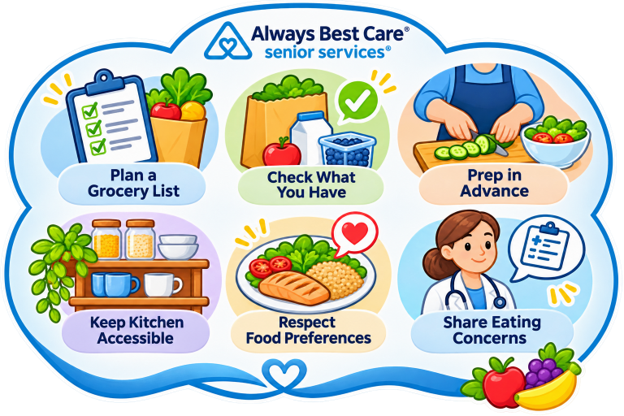
Supporting a senior’s meal routine involves more than preparing food. Families can make everyday tasks easier by organizing groceries, maintaining a comfortable kitchen environment, and respecting established eating habits. Simple planning can also help caregivers and family members coordinate responsibilities while following the senior’s individualized dietary recommendations.
- Maintain a shared grocery list based on agreed-upon meals.
- Check available ingredients before shopping.
- Prepare ingredients ahead of time when appropriate.
- Keep frequently used kitchen items accessible.
- Respect the senior’s food preferences within medical guidance.
- Communicate concerns about eating habits to the appropriate healthcare professional.
These steps can make household routines easier to coordinate without replacing individualized medical nutrition advice.
How Does Nonmedical Home Care Differ from Clinical Diabetes Care?
Families may find it helpful to distinguish everyday assistance from responsibilities that require medical expertise.
This distinction is particularly important when an older adult has several people involved in daily care.
Understanding Caregiver Responsibilities
The following table outlines examples of practical nonmedical assistance and the corresponding clinical boundaries.
| Daily Responsibility | Practical Nonmedical Assistance | Clinical Responsibility |
|---|---|---|
| Meal preparation | Prepare agreed-upon meals and organize groceries | Healthcare professionals determine individualized nutrition guidance |
| Appointments | Help organize transportation and written questions | Healthcare professionals explain tests, diagnoses, and treatment |
| Reminders | Provide permitted prompts according to the care plan | Qualified professionals determine medication instructions and doses |
| Communication | Share factual observations through approved channels | Healthcare professionals assess symptoms and medical concerns |
| Daily activities | Assist with appropriate household and personal routines | Qualified professionals determine clinical limitations and treatment needs |
Caregiver responsibilities depend on training, agency policies, applicable regulations, and the individual’s care plan.
Families should confirm which services are available before arranging assistance.
Why Is Communication Important for Diabetes Support at Home?
Clear communication helps family members, caregivers, and healthcare professionals understand their respective responsibilities.
When several people participate in an older adult’s daily routine, scattered messages can lead to confusion about appointments, meal preparation, or changes that need attention.
A consistent communication process can make information easier to share appropriately.
Share Factual Updates with the Right People
A short, accurate update is often more useful than a lengthy message containing assumptions.
For example, noting that lunch was left untouched, and the designated family member was informed provides clearer information than saying the senior had a difficult day.
Families and caregivers should record relevant observations without attempting to diagnose the cause.
Sensitive information should be shared through approved channels rather than public message groups or materials accessible to visitors.
Prepare Questions Before Healthcare Appointments
Older adults should have opportunities to identify what they want to discuss with their healthcare professionals.
They may have questions about an uncomfortable device, confusing instructions, changes in appetite, or how their routine fits into activities they enjoy.
Families can help organize these questions and arrange transportation when appropriate.
After the appointment, the senior and authorized family members can clarify whether the healthcare professional recommended changes to the household routine.
Any updates to medication, glucose monitoring, or treatment instructions must come from the appropriate clinical professional.
When Should Families Seek Medical Assistance?
Diabetes-related symptoms should not be managed through guesswork.
New or concerning symptoms should be discussed with the healthcare team promptly. Sudden or severe symptoms may require emergency assistance.
Recognize Concerning Changes
Low blood glucose can cause symptoms such as shakiness, sweating, dizziness, and confusion. Severe episodes may lead to seizures or loss of consciousness.
Families should follow the person’s individualized medical response plan and seek emergency help for severe symptoms.
Do not give food or drink to someone who is unconscious or unable to swallow safely.
The healthcare team should explain which symptoms require immediate attention and what actions authorized caregivers or family members should take.
Keep Emergency Instructions Accessible
Having clear emergency instructions can help families and caregivers respond appropriately when unexpected health concerns arise. Keeping important information organized and establishing communication responsibilities in advance can reduce confusion during urgent situations.
Where Should Emergency Instructions and Contact Information Be Kept?
Families should store the senior’s emergency instructions, healthcare contacts, and relevant medical information in an accessible location known to authorized individuals.
A designated folder or clearly organized document can help family members and caregivers locate important details quickly. Information should be reviewed regularly to ensure contact numbers and instructions remain current.
How Should Caregivers Respond to Medical Concerns?
Authorized family members and caregivers should understand whom to notify, when to seek emergency assistance, and how to follow the home care provider’s established escalation procedures.
Nonmedical caregivers should not independently diagnose symptoms, adjust medication doses, or establish treatment targets. When medical concerns arise, they should follow the agreed-upon response plan and seek appropriate professional guidance.
Clear emergency instructions and defined responsibilities help families prepare for unexpected situations while keeping medical decisions in the hands of qualified healthcare professionals.
How Can Dependable Caregiving Support Everyday Independence?
Living with diabetes does not eliminate a person’s interests, relationships, or preferred activities.
A senior may still enjoy music, gardening, reading, spending time with relatives, or preparing a favorite meal.
Thoughtful assistance should make room for these activities rather than allowing every conversation to focus on health-related tasks.
Maintain Familiar Activities and Personal Connections
Companionship can be an important part of an older adult’s daily experience.
A caregiver may share conversation, help with a favorite hobby, or provide appropriate assistance with household activities while encouraging the senior to remain involved.
These interactions should reflect the person’s interests and preferences.
Families can also explore in-home assistance with daily routines when shopping, meal preparation, or other household responsibilities become difficult to manage. Discussing specific needs can help identify suitable nonmedical support while respecting the senior’s independence and personal preferences.
Support Consistency Through Clear Caregiver Communication
Dependable assistance involves more than completing a list of household tasks.
Caregivers should understand the senior’s preferences, communicate appropriately, and follow the agreed-upon care plan.
When staffing changes occur, a respectful introduction and accurate handover can help maintain continuity.
Understanding why dependable caregivers matter in home care can help families recognize the importance of consistency, communication, and personalized assistance when arranging support for an aging loved one.
For example, sharing the senior’s preferred breakfast routine or favorite afternoon activity may help a new caregiver provide familiar support.
Information should be shared only with authorized people and through appropriate channels.
How Can Families Preserve Independence While Offering Support?
Families may feel pressure to organize every part of an older adult’s routine after a diabetes diagnosis.
However, effective support should also preserve opportunities for personal choice and meaningful activities.
Leave Room for Ordinary Life
A visit from a friend, time spent on a favorite craft, or a relaxed conversation can remain part of the day.
Families can ask which activities the senior most wants to maintain and consider how practical assistance can fit around them.
For example, an older adult who enjoys walking outdoors may want help organizing suitable clothing or shoes, while questions about safe activity levels should be directed to the healthcare team.
The aim is to create a workable routine that supports the person rather than organizing the entire household around care tasks.
Three Questions to Guide Family Planning
Creating a practical care plan begins with understanding the senior’s preferences, identifying where additional assistance may be needed, and establishing clear communication among everyone involved. By discussing these priorities together, families can organize daily responsibilities while supporting independence and ensuring that medical concerns reach the appropriate healthcare professionals:
- Which activities does the senior want to manage independently? Identify familiar routines and personal choices that remain important.
- Where would practical assistance be helpful? Discuss household tasks, meal preparation, transportation, and other appropriate nonmedical activities.
- How will concerns reach the healthcare team? Establish clear communication responsibilities and appropriate reporting procedures.
These conversations can help families create an arrangement that respects independence while addressing practical needs.
Supporting Diabetes-Related Daily Routines in Madison, WI
Managing diabetes at home involves combining an individualized medical plan with everyday support that respects the person following it.
Clear responsibilities, familiar meals, appropriate reminders, and reliable communication can make household routines easier to organize. Just as importantly, seniors should remain involved in decisions about the activities and preferences that matter to them.
During National Diabetes Month, families in Madison, WI can use this opportunity to review existing routines and identify areas where additional nonmedical assistance may be helpful.
At Always Best Care of Madison, our team can discuss available home care services, including appropriate personal care, companionship, and assistance with everyday household activities.
To learn more, call (608) 315-2378 or speak with our care team about personalized support for your loved one.