

Enjoying Norfolk Fall Attractions with Senior Care Support
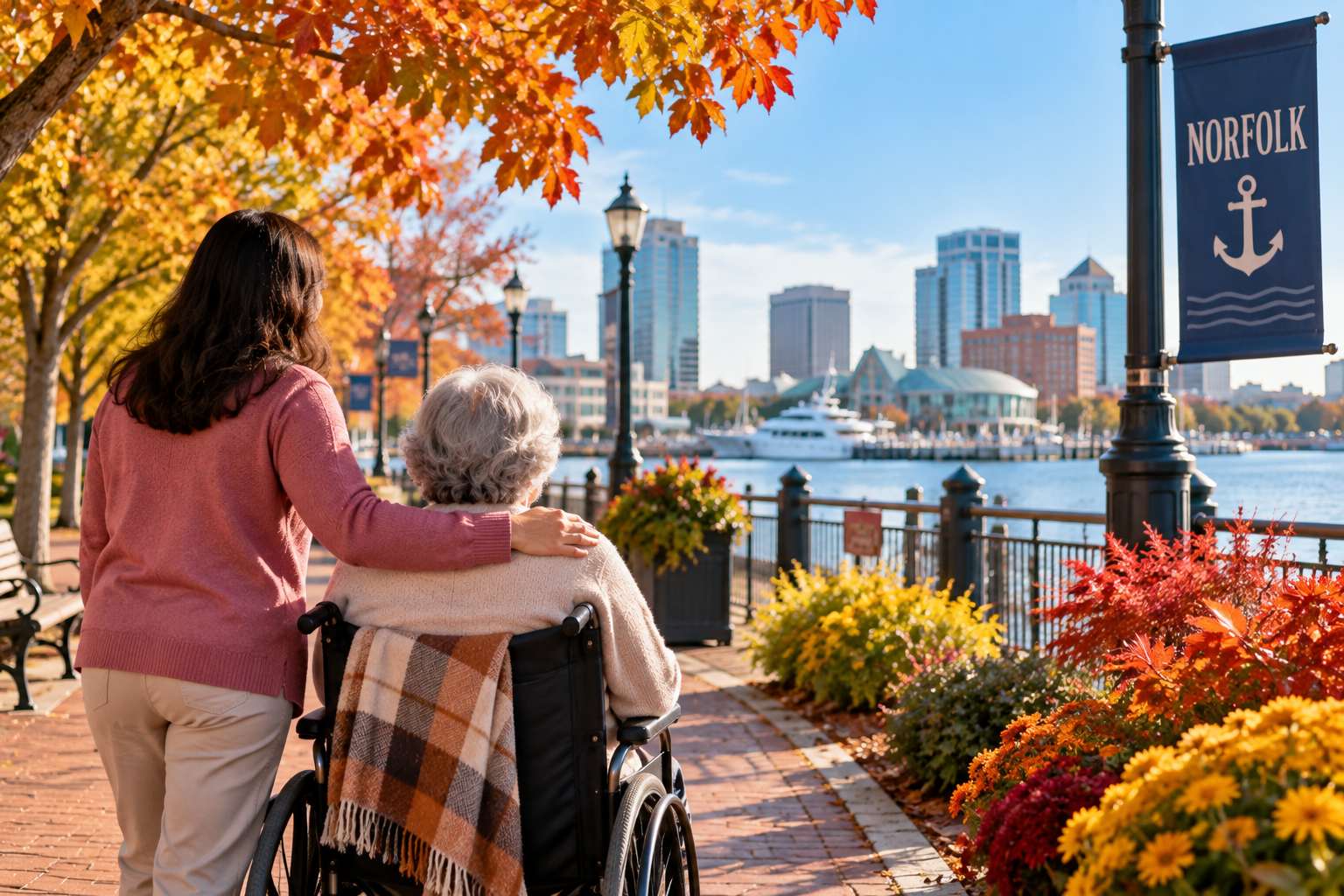
Fall brings cooler temperatures, colorful scenery, and plenty of reasons for older adults to spend meaningful time with family. With home care in Norfolk, VA, seniors can receive personalized assistance that makes planning seasonal outings more manageable while supporting independence and familiar daily routines.
Thoughtful preparation can help older adults participate in fall activities at a pace that reflects their interests, abilities, and comfort level. Whether the plan involves a waterfront visit, a community activity, or a simple afternoon outdoors, the experience does not need to be complicated to be meaningful.
Table of Contents
Choosing Senior-Friendly Fall Activities
Norfolk offers many ways to appreciate the season, from peaceful waterfront outings to community events and leisurely drives through scenic areas. Families should consider an older adult’s mobility, energy level, interests, and usual routine when deciding what to do.
A shorter visit with opportunities to sit and rest may be more enjoyable than filling the day with several activities. Families can also think about how much walking may be involved, whether seating is readily available, and how easy it will be to enter and leave the destination.
Focus on What Your Loved One Enjoys
A seasonal outing does not need to be elaborate. Some seniors may enjoy spending time outdoors, while others may prefer a scenic drive, a quiet meal with family, or a familiar community activity.
Including an older loved one in the planning process can help families choose an activity that reflects the person’s preferences rather than simply selecting what seems most convenient.
Keep the Schedule Manageable
Leaving flexibility in the schedule can make it easier to adjust plans if an older adult becomes tired or simply wants to return home earlier than expected.
Instead of treating a fall outing as an all-day event, families can focus on one enjoyable activity and allow plenty of time before and afterward for familiar routines.
Preparing Before Leaving Home
Good preparation can make a seasonal outing more comfortable from beginning to end. Families can review the day’s schedule, consider the weather, and make sure their loved one has what they need for the planned activity.
Seniors living with limited mobility or memory changes may benefit from an especially simple itinerary with fewer transitions between locations.
Helpful preparations may include:
- Choosing an accessible destination with comfortable seating
- Bringing an extra layer for changing fall temperatures
- Planning opportunities for rest and hydration
- Established medication reminder schedules in mind
- Allowing additional time for walking and transportation
- Scheduling activities around the senior’s usual routine
- Bringing commonly used mobility items when needed
- Keeping emergency contact information readily available
The goal is not to create a complicated checklist, but to think ahead about the small details that may make the outing easier to manage.
Planning Transportation and Accessibility
Getting to and from an activity is an important part of the outing itself. Families may want to consider parking distance, entrances, walking surfaces, seating, and how easily an older adult can get in and out of a vehicle.
Think Beyond the Destination
A location may sound senior-friendly but still involve a long walk from the parking area or extended periods of standing. Checking these practical details ahead of time can help families choose an outing that better matches their loved one’s abilities.
Depending on the established care plan and service availability, transportation assistance, community activity escorts, and support with errands or social outings may help older adults participate in activities outside the home.
Caregiver assistance may also help a senior prepare for an outing, travel to an activity, or manage everyday needs surrounding the trip.
Supporting Mobility During Seasonal Adventures
Mobility needs should be considered when planning any activity outside the home. Professional caregivers can assist with everyday mobility needs as well as getting ready for the day, dressing, grooming, and other personal routines included in the care plan.
Caregiver assistance does not mean an older adult needs to give up participating in activities they enjoy. Instead, the appropriate level of support can be based on what the individual is comfortable doing independently and where additional assistance may be useful.
Families should also avoid pushing an older loved one to complete an activity simply because it was planned. Being willing to shorten or change an outing can keep the experience centered on spending enjoyable time together.
Maintaining Familiar Routines Away from Home
A fun afternoon does not have to completely disrupt an older adult’s established routine. Caregiver support for everyday home routines may include meal preparation, medication reminders, companionship, nutrition support, and personal care based on the individual’s established plan.
Families can consider usual mealtimes, rest periods, and other familiar parts of the day when deciding when an outing should begin and end.
Build the Outing Around the Senior’s Routine
For example, if a loved one typically prefers a quiet afternoon, a morning outing may be more appropriate. If regular meals are an important part of the routine, families can plan the activity around those times rather than delaying them unnecessarily.
Small adjustments can allow seasonal activities to fit into the senior’s day instead of requiring the entire routine to change around the outing.
Helping Seniors with Dementia Enjoy the Season
Autumn activities can still provide meaningful opportunities for older adults living with Alzheimer’s disease or another form of dementia. The activity should reflect the individual’s abilities, preferences, and usual routine.
Familiar companions, quieter destinations, shorter schedules, and predictable routines may make an outing easier to manage.
Personalized dementia and Alzheimer’s support can provide assistance based on an older adult’s established routines and individual needs. Caregivers may also help with everyday activities before or after an outing, allowing seasonal plans to remain centered on familiar experiences and the senior’s preferences.
This keeps the service relevant without making the section sound like another business promotion.
Keep Seasonal Activities Familiar
Families might consider simple activities such as enjoying fall scenery from a familiar location, listening to favorite music during a drive, looking through seasonal decorations, or spending time outdoors together.
The purpose does not need to be completing a particular attraction. A familiar and enjoyable shared experience may be enough.
A Simple Fall Outing Checklist for Families
little preparation can make seasonal outings easier to manage and more enjoyable for everyone. Before heading out, families can use this simple checklist to consider their loved one’s comfort, familiar routines, accessibility needs, and preferences for the day.
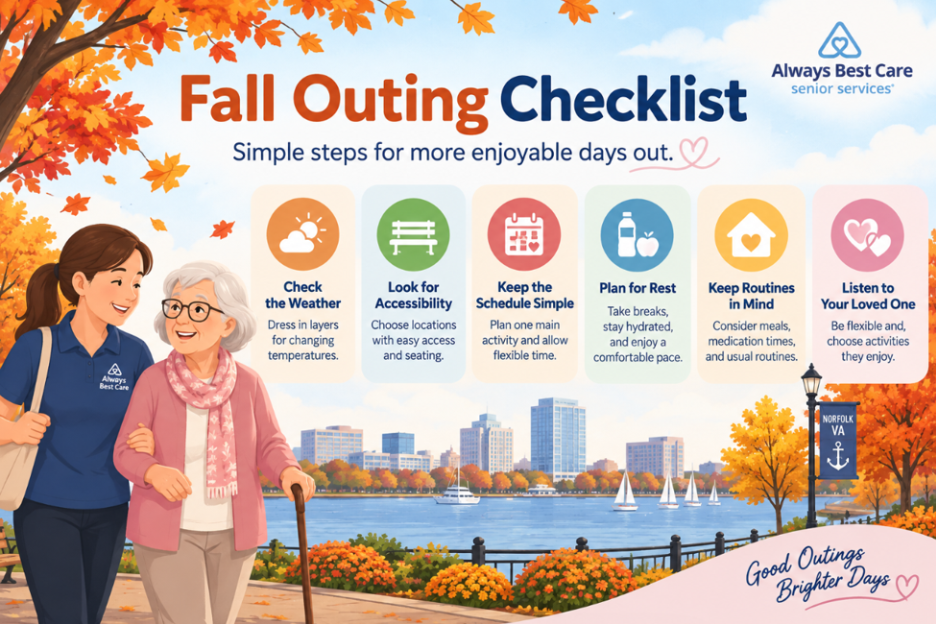
These simple considerations can help families stay flexible and keep the outing centered on what their loved one enjoys. Plans can always be adjusted along the way based on the senior’s comfort, preferences, and energy level.
Giving Family Caregivers Time to Recharge
Family members often balance caregiving with employment, household responsibilities, appointments, and personal commitments. During a busy season, those responsibilities can make it harder to find time for both caregiving and meaningful family activities.
Respite care can provide temporary assistance when a regular family caregiver needs time away from caregiving responsibilities. The Norfolk location states that respite support may range from a few hours to longer arrangements depending on the family’s circumstances and scheduling needs.
Make Room for Enjoyable Family Time
Additional caregiving assistance can also change the way family members spend time together. Instead of every interaction revolving around everyday caregiving tasks, relatives may have more opportunities to focus on conversation, shared activities, and seasonal traditions.
Families should discuss respite schedules and caregiver availability directly with the local care team when planning support.
Supporting Seniors After a Hospital Stay
An older adult returning home after hospitalization may want to participate in familiar family traditions but may also need additional assistance with everyday routines.
Always Best Care Senior Services-Norfolk lists hospital-to-home and post-hospitalization support among its services, including nonmedical assistance such as medication reminders, mobility help, meal preparation, transportation, and personal care.
Let the Senior’s Current Routine Guide the Day
Families should follow the instructions provided by the senior’s healthcare professionals when deciding which activities are appropriate following a hospital stay.
If an outing is appropriate, it may be helpful to keep plans shorter and allow additional time for everyday routines. Nonmedical caregivers can assist with established care needs, but they do not determine when someone is medically ready for an activity.
Providing Support for Veterans
Older veterans may have additional resources to explore when considering support at home. However, VA programs have specific eligibility requirements, and availability should not be assumed based on veteran status alone.
For example, VA Home Based Primary Care is available to enrolled Veterans who meet the program’s clinical requirements when the service is locally available.
Families interested in veteran-related benefits or services should confirm eligibility directly with the Department of Veterans Affairs or an appropriate accredited representative.
Adapting Care as Needs Change
Senior care needs may change over time. Some older adults may need companionship and occasional assistance, while others may benefit from more frequent help with personal routines.
The Norfolk location states that its Care Coordinator can reevaluate and adjust nonmedical home-care services as a senior’s needs change.
When Should Families Revisit the Care Plan?
A change in everyday routines may be a reason to speak with the care team. For example, families may notice that an older loved one needs more help preparing for outings, managing meals, getting dressed, moving around the home, or participating in activities.
Rather than assuming a major change is necessary, families can discuss what they are observing and determine whether adjustments to everyday assistance may be appropriate.
Most Asked Questions
How Can Families Make Fall Outings Easier for Older Adults?
Choose a manageable activity, allow additional travel time, consider accessibility, include opportunities to rest, and plan around the older adult’s usual routine and energy level. Being willing to shorten the outing can also help keep the experience focused on the senior’s comfort.
Can Seniors with Dementia Participate in Seasonal Activities?
Yes. Seasonal activities can be adapted based on the individual’s preferences, abilities, and established routine. Familiar companions, quieter settings, simple schedules, and activities the person already enjoys may be appropriate options.
How Can Respite Care Support Family Caregivers During a Busy Season?
Respite care provides temporary assistance when a regular family caregiver needs time for other responsibilities or personal activities. The type and duration of support can depend on the established care plan, scheduling, and caregiver availability.
Make More Room for Meaningful Fall Moments
Fall outings do not need to be long or elaborate to create meaningful time together. A familiar destination, comfortable pace, thoughtful preparation, and appropriate everyday assistance can help families plan seasonal experiences around what their older loved one genuinely enjoys.
Always Best Care Senior Services-Norfolk provides personalized home care in Norfolk, VA based on each senior’s routines, preferences, and individual support needs.
Call (757) 802-4080 to discuss available care options or explore personalized senior care options with our Norfolk team.