

How To Pay for an In-Home Caregiver: Medicare & Other Options
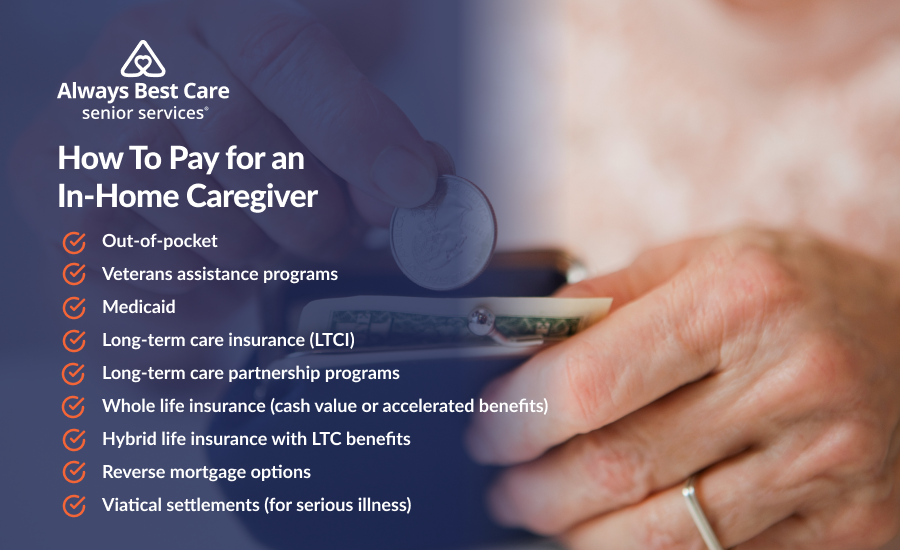
Table of Contents
Pay for an In-Home Caregiver: Key Takeaways
- Medicare pays for in-home care only in specific medical situations, like after a hospital stay or when skilled nursing is required
- If your loved one doesn’t qualify for Medicaid, there are other ways to help pay for in-home care
- To find the best way to pay for in-home care, start by identifying your loved one’s care needs, financial resources, and existing benefits
According to a recent AARP survey, nearly 8 out of 10 adults over 50 said that if they had the choice, they’d rather stay in their own homes as they get older.
And who can blame them? Home is familiar. It’s where memories live, and for many older adults, it offers a sense of independence that’s hard to replicate anywhere else.
But staying at home often means needing a little extra help along the way, especially with daily tasks like cooking, bathing, or getting around safely.
That’s where in-home caregivers come in. The big question many families face is: How do we pay for it?
In this article, we will:
- Explore whether Medicare can pay for an in-home caregiver
- Walk you through the most common ways to cover the cost of in-home care
- Share how to choose the best way to pay for in-home care
Does Medicare Pay for an In-Home Caregiver?
It depends. Here’s the short answer: yes, but only in certain situations.
If your loved one needs skilled medical care at home, like help with wound care, vaccinations, or physical therapy, Medicare can cover part-time in-home health services.
This might also include a home health aide to assist with personal care like bathing, grooming, or dressing, but only if it’s part of a broader medical care plan.
Medicare typically covers:
- Skilled nursing care
- Medical social services
- Physical, speech, or occupational therapy
- Home health aide support (if skilled care is also needed)
- Certain medical equipment (like a walker or wheelchair)
Medicare doesn’t cover full-time caregiving or everyday help, like 24-hour care, cooking, house cleaning, or assistance with bathing and dressing if those are the only services your loved one needs.
Medicare Isn’t an Option? 9 Other Ways to Pay for an In-Home Caregiver
Not eligible for Medicaid and wondering how to cover the cost of home health care? Don’t worry. There are plenty of other ways to pay for in-home care, including:
1. Out-of-Pocket and Family Support
Many families begin by paying for care at home privately.
This can include:
- Personal savings or retirement funds
- Shared contributions from adult children
- Monthly income from Social Security or pensions
While paying out of pocket gives you the most control, it can also stretch your budget more than you expect.
Be honest about what’s realistic. Sitting down as a family to talk through the numbers can go a long way toward setting healthy boundaries and avoiding stress later.
2. Veterans Assistance Programs
Did you know that as of 2023, military veterans made up about 6% of the adult civilian population in the U.S?
If your loved one served in the U.S. military or is the surviving spouse of someone who did, they might be eligible for VA Aid and Attendance.
It’s a little-known benefit that can help cover in-home care or extra support with everyday tasks such as getting dressed or taking a bath.
If you’re looking to access U.S. Veteran Assistance Programs, there are a few ways to get started.
You can:
- Apply online at VA.gov
- Call the VA at 800-827-1000
- Stop by your local VA office or medical center
For more personalized support, consider connecting with a Veterans Service Officer (VSO).
VSOs are free to work with, and they can walk you through applications for things like health care, disability benefits, housing, and education.
3. Medicaid
Medicaid is a great support system for low-income seniors. Many states offer Home and Community-Based Services (HCBS) or waiver programs that cover:
- Health aides
- In-home personal care
- Homemaker services
To qualify, your loved one must meet medical and financial requirements. Eligibility and covered services vary by state.
Work with an elder law attorney or Medicaid planner to avoid missteps.
4. Long-Term Care Insurance (LTCI)
If your loved one took steps to plan ahead, there’s a good chance they might already have a long-term care insurance policy in place.
These policies are designed to help cover:
- In-home caregivers
- Personal care assistance
- Nursing support
Each policy is different.
Review the terms closely, and contact the insurer to understand coverage limits, waiting periods, and what documentation you’ll need to activate benefits.
Tip: Look for daily benefit amounts and maximum payouts over time.
5. Long-Term Care Partnership Programs
If your loved one has LTC insurance through a state partnership program, they might be able to keep more of their savings if they later apply for Medicaid.
This partnership protects assets equal to the value paid out by the policy, a major benefit for those concerned about preserving inheritance or financial security.
Just keep in mind that this option isn’t available everywhere. It’s a state-by-state program, so be sure to check your local guidelines to see if it applies where you live.
6. Whole Life Insurance (Cash Value or Accelerated Benefits)
Some permanent life insurance policies build cash value that can be accessed to cover care expenses:
- Borrow against the policy (loan)
- Use accelerated death benefits in case of serious illness
This can be a helpful way to ease financial stress, especially if other resources are running low.
Just a consideration: This will lower the amount your loved ones receive from the policy later on.
7. Hybrid Life Insurance With LTC Benefits
Hybrid policies combine life insurance and long-term care coverage in one. These are growing in popularity because:
- Funds can be used for care while alive
- If unused, the family still receives a death benefit
- There’s no “use it or lose it” risk
These policies are often easier to qualify for later in life than standalone LTC insurance.
8. Reverse Mortgage Options
If your loved one owns a home and is at least 62 years old, a reverse mortgage might offer a tax-free way to pay for care by converting home equity into cash.
Key points include:
- No monthly loan payments required
- Borrower must continue living in the home
- Loan is repaid when the home is sold or the borrower passes away.
This can be a good fit for seniors who wish to age in place and have limited liquid savings.
9. Viatical Settlements (for Serious Illness)
In a viatical settlement, a life insurance policy is sold to a third party for immediate cash. This is typically an option for those with a terminal illness.
- The seller receives a lump sum
- The buyer takes over the policy and receives the death benefit later.
It’s a big decision, with both financial and emotional impact, so it’s a good idea to talk it through with a trusted financial advisor before moving forward.
How To Choose the Best Way to Pay for In-Home Care
Choosing the best way to pay for in-home care starts with understanding your loved one’s needs, financial situation, and eligibility for assistance programs.
While there’s no one-size-fits-all answer, here’s how you can approach the decision with confidence and care:
1. Start With Your Loved One’s Care Needs
Are they recovering from an illness and need short-term help? Or do they need long-term support with daily activities like bathing, cooking, or mobility?
- Short-term skilled care might be partially covered by Medicare
- Ongoing, non-medical support often requires private pay, Medicaid, or long-term care insurance
2. Review Available Resources
Take a full look at your loved one’s financial picture, including:
- Monthly income (Social Security, pensions, etc.)
- Savings or home equity
- Existing insurance policies (especially long-term care or life insurance)
- Military service (they may qualify for VA benefits)
This helps narrow down realistic options without creating financial stress for the whole family.
3. Explore Public and Private Programs
Depending on your situation, one or more of these might help cover costs:
- Medicaid (for low-income individuals)
- Veterans benefits (like VA Aid and Attendance)
- Long-term care insurance
- Life insurance with cash value or hybrid LTC riders
- Reverse mortgages
- Out-of-pocket or family-funded care
4. Get Professional Guidance
You don’t have to figure this out on your own. Talking with a senior care advisor, elder law attorney, or financial planner can make things a lot clearer.
They can help you:
- Understand your options
- Avoid costly mistakes
- Create a plan that protects your loved one’s care and your family’s finances

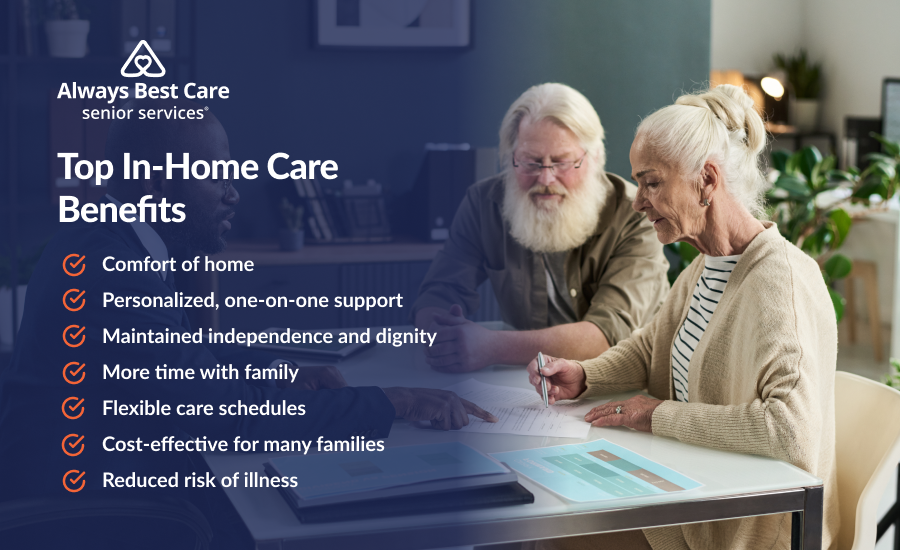
Top In-Home Care Benefits
Choosing in-home care isn’t just about making things easier; it’s about making sure your loved one feels safe, respected, and truly cared for.
Here are the leading reasons families turn to in-home care:
1. Comfort of Home
Staying at home allows older adults to remain in a familiar environment surrounded by personal belongings, routines, and memories.
This sense of familiarity can be especially soothing for individuals with dementia or cognitive decline.
2. Personalized, One-on-One Support
Unlike care in group settings, in-home caregivers focus entirely on one individual’s needs.
Whether it’s help with bathing, meals, or mobility, the care plan is tailored to support your loved one’s specific lifestyle and health goals.
3. Maintained Independence and Dignity
In-home care encourages seniors to stay as independent as possible, with gentle support where it’s needed.
This can help preserve self-confidence, and it provides the elderly with a greater sense of control over their day-to-day lives.
4. More Time With Family
With care delivered at home, families can stay close and involved, offering emotional support, making shared decisions, and spending quality time together without the added stress of managing all caregiving tasks alone.
5. Flexible Care Schedules
From just a few hours a week to around-the-clock support, in-home care can be customized as needs evolve. This flexibility makes it easier to adjust care without making major life changes.
6. Cost-Effective for Many Families
When full-time facility care isn’t necessary, in-home care can be more affordable. Plus, many families use a mix of private funds, long-term care insurance, Medicaid, or veterans benefits to help cover the cost.
7. Reduced Risk of Illness
According to the CDC’s 2023 report, infections like urinary tract infections and bloodstream infections can occur in hospitals and care facilities, even during treatment.
Choosing home care can reduce that risk by limiting exposure to illnesses that spread more easily in group settings, which is especially important for seniors with weakened immune systems.
Discover Compassionate In-Home Care That Fits Your Budget at Always Best Care
Covering the cost of in-home care can be challenging, especially since not everyone qualifies for support through Medicare, Medicaid, or VA benefits.
Fortunately, there are other ways to help ease the financial burden, particularly for short-term care.
With the right information and a bit of planning, families can often find a solution that balances affordability with the level of care their loved one truly needs.
At Always Best Care, we’re here to make that process easier. Our in-home care services are tailored to fit your family’s unique situation, whether you need help for several days or longer.
Pay for an In-Home Caregiver: FAQs
What’s the average cost of hiring an in-home caregiver?
The cost can vary based on location, level of care, and how many hours of support you need.
On average, in-home care ranges from $25 to $35 per hour in the U.S.
If your loved one needs around-the-clock care, it can add up quickly, but part-time help or respite care may be more manageable for your budget.
Does Medicare cover the cost of in-home caregivers?
Not usually. Medicare covers in-home care only when it’s medically necessary, like after a hospital stay, and even then, it’s typically for short-term skilled nursing or therapy services.
If your loved one just needs help with daily activities (like cooking, bathing, or companionship), Medicare won’t cover it. That’s where other options come in.
How do I get Medicare to pay for home care?
Medicare will only pay for home care in certain situations and it’s usually short-term.
To qualify:
- A doctor must prescribe it as medically necessary
- Your loved one must be homebound, meaning it’s difficult for them to leave the house without help
- The care must include intermittent skilled nursing or therapy services (like physical, occupational, or speech therapy)
If these conditions are met, Medicare Part A or Part B may cover services such as skilled nursing, physical therapy, and a part-time home health aide (but only when skilled care is also needed).
Should I hire a caregiver on my own or go through an agency?
You have both options, and each comes with trade-offs.
Hiring someone directly might save you a bit upfront, but it also means you’re in charge of everything: background checks, payroll, taxes, and finding a backup if they call out.
Going through a trusted agency like Always Best Care takes that stress off your plate.
We handle the hiring, training, scheduling, and vetting, so you can focus on what matters most, your loved one’s comfort and well-being.