
Caregiver Stress: Signs, Causes & Healthy Coping Strategies
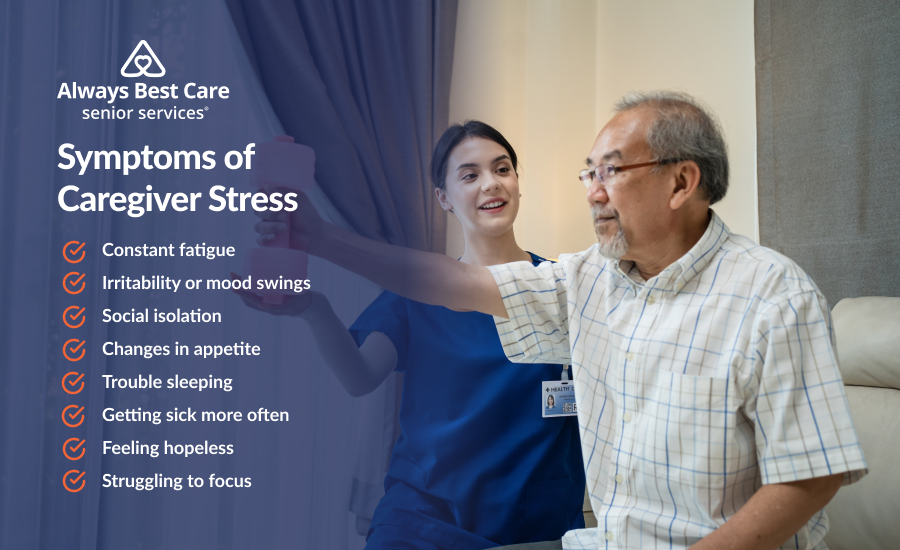
Table of Contents
Caregiver Stress: Key Takeaways
- Signs of caregiver stress can include persistent fatigue, feeling overwhelmed, and social isolation
- Causes of caregiver stress often stem from emotional strain and a lack of time to rest or recharge
- Caregiver stress management is possible thanks to resources for caregiver burnout, healthy coping strategies, and help from family members
Caring for someone you love often means putting their needs first.
Days can quickly fill with helping your loved one get dressed, driving them to appointments or errands, managing important paperwork like power of attorney, and keeping the home safe and organized.
Over time, that steady stream of responsibilities can begin to wear you down. The silver lining? You’re far from alone in this experience.
Caregiving for a family member is becoming more common than ever. A recent Caregiving in the US report estimates that 63 million Americans are now caregivers; a nearly 50% increase since 2015.
If you feel like you’re at your wits’ end and unsure whether it might be caregiver stress, we’re here to help you break down what you’re going through.
Symptoms of Caregiver Stress Syndrome
Caring for someone day in and day out can be one of the most human things we do, and one of the heaviest.
What starts as love-driven support can quietly shift into a routine that leaves little room to breathe.
If you’re wondering whether you’re starting to feel the effects of caregiver stress, here are some signs to watch for:
- Constant fatigue, even after you’ve had time to rest
- Irritability or mood swings that feel out of character
- Pulling away from friends, family, or things you used to enjoy
- Changes in appetite, which might lead to weight loss or gain
- Trouble sleeping, whether it’s falling asleep or staying asleep or even sleeping too much
- Getting sick more often, as stress weakens your immune system
- Feeling hopeless, stuck, or unmotivated, even during quiet moments
- Struggling to focus, make decisions, or stay organized
Causes of Caregiver Burnout
Caregiver burnout doesn’t usually come from one single problem. Instead, it tends to grow over time as responsibilities increase and emotional strain builds.
Top causes of caregiver stress include:
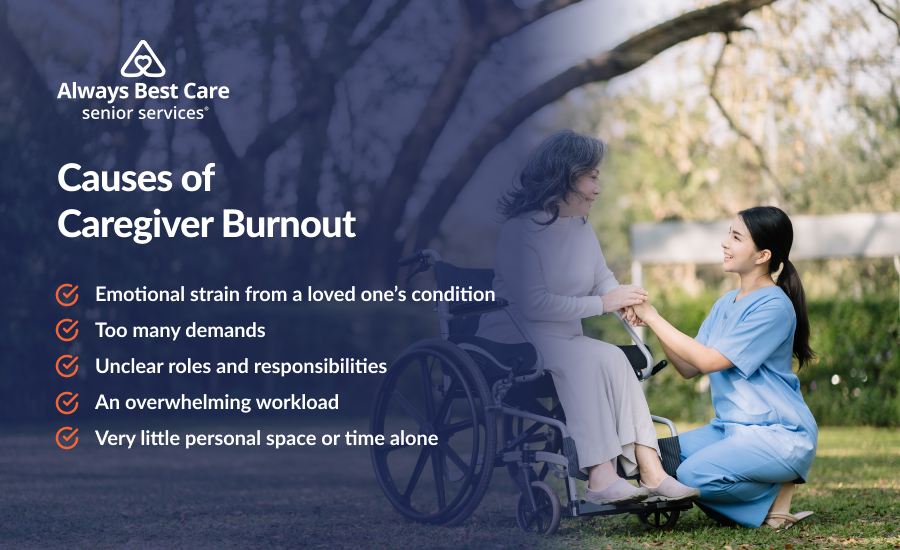
- Emotional strain from a loved one’s condition: Caring for someone with a chronic illness, disability, or age-related decline can be emotionally heavy. Even when you give your best every day, it can be painful to accept that you can’t make your loved one “well.”
- Too many demands: Caregivers often juggle multiple roles at once. A loved one needs care; children need attention, work has expectations, and relationships require time and energy. Trying to meet everyone’s needs, including your own, can quickly become overwhelming. In fact, a 2024 report found that 72% of caregivers say caring for a loved one has increased their stress, anxiety, or depression.
- Unclear roles and responsibilities: Caregiving rarely happens in isolation, as family members, doctors, nurses, therapists, and in-home aides are all involved. When it’s not clear who is responsible for what, confusion can grow.
- An overwhelming workload: Caregiving often means juggling many responsibilities at once. Between medication reminders, meals, appointments, and everyday household tasks, the to-do list can seem endless.
- Very little personal space or time alone: Caregiving can make it difficult to find even a small window to recharge. When responsibilities are constant and people regularly come in and out to help, it can start to feel like there’s rarely a moment just for yourself.
Caregiver Depression vs. Normal Stress
Is it just a rough week, or something more serious? Here’s how to tell the difference.
| Normal Caregiver Stress | Caregiver Depression |
| Temporary frustration or fatigue | Persistent sadness or hopelessness |
| Still feels connected to purpose | Feels numb or disconnected |
| Manages stress with rest or support | Cannot recover with typical coping strategies |
| Occasional emotional outbursts | Frequent crying or emotional shutdown |
| Motivated to find balance | Feels like giving up or withdrawing completely |
Caregiver Stress Relief Techniques You Can Start Today
Here are some caregiver tips that can help you ease stress and find small moments of relief in your daily routine.
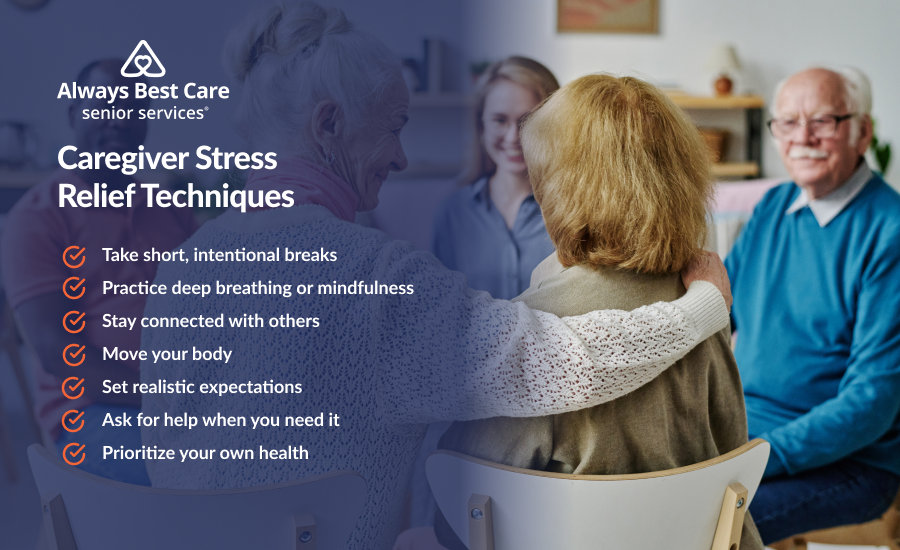
1. Take Short, Intentional Breaks
Stepping away for a few minutes can help reset your mind and body.
A short walk outside, a few quiet minutes with your favorite latte, or even an hour spent tending the garden can create the breathing room you need before returning to your caregiving routine.
2. Practice Deep Breathing or Mindfulness
When stress lingers, your body can start to feel tight and restless. Taking a few moments for slow breathing or mindfulness can help ease that tension.
Inhale slowly through your nose, pause, then exhale at a relaxed pace. Just a few minutes can help bring your focus and energy back.
3. Stay Connected With Others
Spending so much time focused on caregiving can make your world feel smaller.
Reaching out to friends, family members, or support groups can remind you that you’re not alone. Sometimes, simply talking with someone who understands can ease the emotional weight.
4. Move Your Body
Sometimes the best stress relief is simply getting your body moving. A walk around the block, a few stretches, or a peaceful yoga session can help ease tension and improve your mood.
5. Set Realistic Expectations
Many caregivers feel the pressure to do everything perfectly. In reality, caregiving often involves adjusting day by day.
Try to focus on what truly needs to be done and give yourself grace when things don’t go exactly as planned.
6. Ask for Help When You Need It
Caregiving is a heavy responsibility, and it isn’t something you have to manage by yourself. Turning to family, friends, or professional caregivers for support can lighten the load.
Giving yourself permission to accept help creates space to rest and recharge, which ultimately benefits both you and your loved one.
7. Prioritize Your Own Health
Caregivers often focus so much on others that their own health gets pushed aside.
Eating regular meals, getting enough sleep, and keeping up with your own medical appointments can help you stay physically and emotionally strong.
Find Caregiver Support at Always Best Care
Caring for someone you love can be deeply fulfilling, but it can also leave you feeling stretched thin.
If any of this sounds familiar, know you’re not alone, and it doesn’t mean you’re failing. It might simply be a sign that you need more caregiver support, rest, or someone to talk to.
At Always Best Care, we understand that caregiving affects the whole family. That’s why our services are designed not only to support seniors, but also to give family caregivers the breathing room they deserve.
Our trained caregivers can assist with everyday needs such as personal care, meal preparation, companionship, mobility support, and household tasks.
Whether you need a few hours of respite, ongoing in-home care, or help exploring senior living options, our team is here to guide you every step of the way.
Caregiver Stress: FAQs
What is caregiver stress?
Caregiver stress refers to the emotional, physical, and mental strain that can develop when you spend a long time caring for someone else.
While caregiving can be deeply meaningful and rewarding, the daily responsibilities can gradually become overwhelming, especially when you have little time to rest or get the support you need.
How long can caregiver burnout last?
There’s no exact timeline for caregiver burnout.
For some people, exhaustion might ease after a few days of rest and support. For others, it can take weeks or even months to fully recover.
What are the four stages of caregiver burnout?
Caregiver burnout rarely happens all at once. Instead, it often develops gradually through four stages: warning, control, survival, and burnout.
Each stage reflects a growing level of emotional and physical strain as caregiving demands continue to build over time.