Wound Care at Home: Supporting Older Adults in Greater Bethlehem
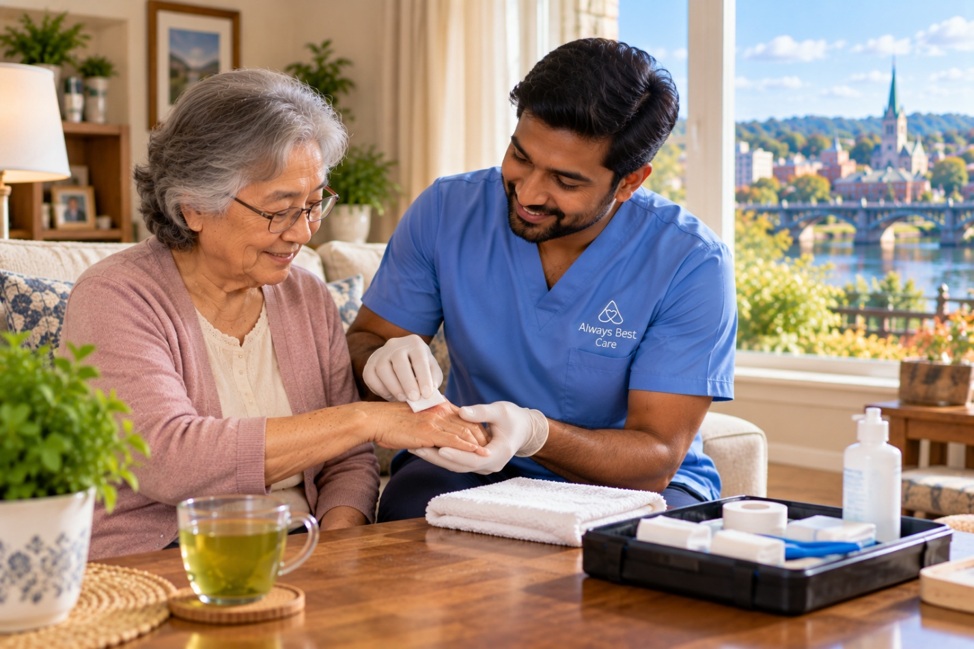
Recovering from a wound can affect more than the wound itself. An older adult may temporarily find it harder to move around the home, prepare meals, get dressed, attend appointments, or keep up with other familiar responsibilities.
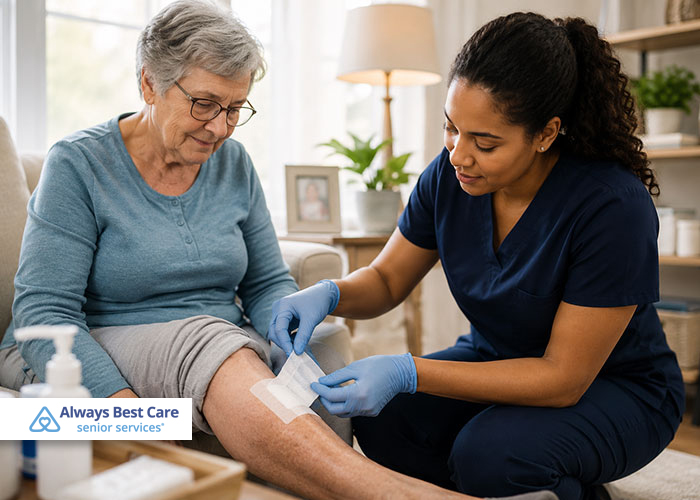
Some wounds may also require professional care. The original article explains that a healthcare provider can determine what type of wound care is needed and provide appropriate treatment instructions.
For families in Greater Bethlehem, understanding the difference between professional wound care and everyday home assistance can make recovery easier to organize. Skilled healthcare professionals can address appropriate medical needs, while nonmedical caregivers can help with practical activities surrounding the senior’s established care plan.
Table of Contents
Why Can Wound Recovery Become More Complicated with Age?
Older adults can experience changes that influence recovery. As skin becomes thinner and more fragile, it may be less able to bounce back from everyday wear and minor injuries. Limited movement and certain existing health conditions can add further challenges.
Families do not need to determine why a wound is changing or decide how it should be treated. Their role can instead focus on following instructions from the healthcare team and communicating concerns to the appropriate healthcare provider.
This is the most natural location for that specific anchor. I would not place it in the mobility section because the linked article is about outdoor exercise, but the anchor phrase itself is being used in the source specifically in the context of age-related changes.
Everyday Changes Can Be Useful to Communicate
Family members often know what is typical for their loved one. During recovery, they may notice that the senior needs more assistance getting dressed, has difficulty moving around the home, or finds familiar responsibilities more tiring than before.
Those observations can be organized and shared with the appropriate healthcare professional.
This allows families to remain involved without placing them in the position of evaluating the wound or making treatment decisions themselves.
When Might Skilled Care Become Part of Recovery?
Not every wound requires skilled nursing. The original source identifies several situations in which professional wound care may be recommended, including surgical incisions requiring continued monitoring, pressure injuries, wounds related to circulation concerns, difficult-to-heal skin tears, significant injuries, and wounds that have not improved as expected.
For the Greater Bethlehem version, I would present this information as a numbered progression rather than duplicating the original list:
- A healthcare professional evaluates the individual’s needs. The appropriate provider determines whether professional wound care is necessary.
- A care plan is established. Instructions may address the healthcare services needed during recovery.
- Qualified professionals provide skilled services when appropriate. The specific services depend on the individual’s care plan and provider instructions.
- Families follow the professional guidance provided. Questions or concerns about treatment should be directed to the appropriate healthcare professional.
- Everyday assistance can be coordinated separately. Nonmedical caregivers may help with daily activities that become harder during recovery.
The important distinction is that families and nonmedical caregivers support the care plan rather than independently deciding how a wound should be treated.
Professional Wound Care Remains a Skilled Responsibility
When skilled nursing is included in an individual’s home health plan, a qualified professional may provide healthcare services based on provider instructions.
The original source describes services that may include professional wound assessment and monitoring, dressing changes, education, and communication with the healthcare team.
The exact services should depend on the individual’s established care plan and professional guidance.
Different Types of Support Serve Different Purposes
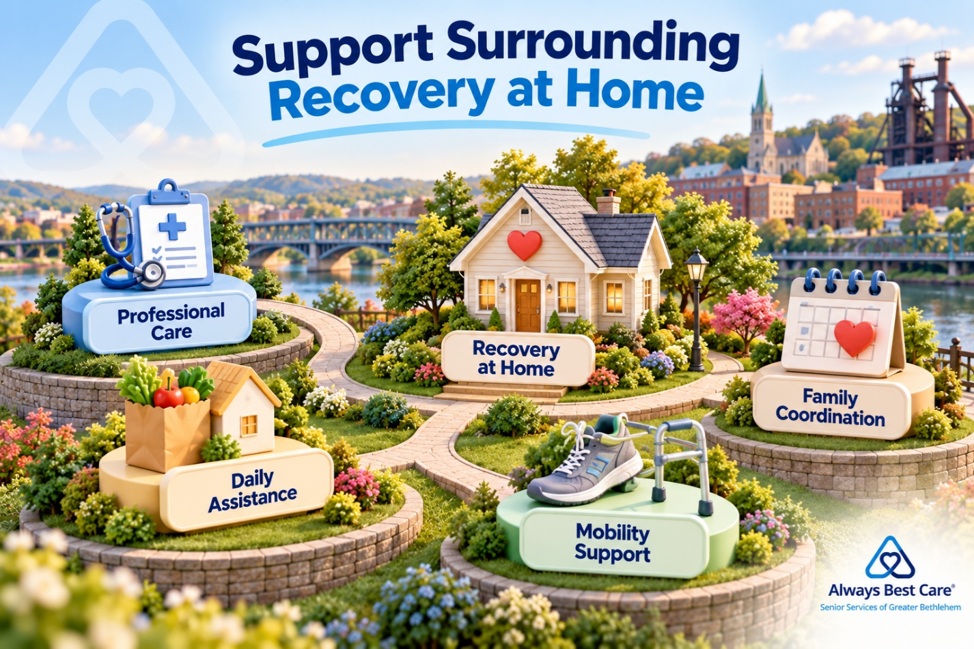
Recovery at home can involve healthcare professionals, nonmedical caregivers, and family members. Understanding what each person is responsible for can make it easier to organize care and direct questions appropriately.
| Support During Recovery | Primary Responsibility | How the Role Fits at Home |
| Healthcare Provider | Medical guidance | Determines appropriate treatment and provides healthcare instructions |
| Skilled Professional | Qualified healthcare services | Provides skilled care according to the established care plan |
| Nonmedical Caregiver | Everyday assistance | Helps with personal care, meals, mobility, errands, and household activities |
| Family Members | Coordination and involvement | Helps organize schedules and communicates relevant observations |
These roles can work alongside one another, but one does not replace another. Clear responsibilities can help families know when a question belongs with the healthcare team and when practical assistance can be handled through nonmedical home care.
Recovery Can Temporarily Change Everyday Responsibilities
Even when a wound is being professionally managed, an older adult may need additional assistance with the rest of the day.
A senior who normally prepares meals may temporarily find standing in the kitchen uncomfortable. Someone who usually runs errands independently may need transportation, while household responsibilities or personal care may require additional assistance.
Practical Assistance Can Fill Everyday Gaps
Depending on individual needs and available services, nonmedical caregivers may help with:
- Meal preparation and grocery-related tasks
- Personal care and grooming
- Light household activities
- Appropriate mobility assistance
- Transportation and errands
- Medication reminders based on established instructions
- Companionship and familiar routines
These responsibilities remain separate from professional wound treatment. The original source similarly distinguishes medical wound care from assistance with meals, personal care, cleaning, mobility, and other daily routines.
Mobility May Influence More Than Movement
When an older adult is recovering, changes in mobility can affect several parts of the day. Moving between rooms, getting dressed, preparing food, completing household activities, or leaving home for an appointment may require more effort.
Families should follow any mobility, positioning, or activity instructions provided by the senior’s healthcare professionals rather than creating their own recovery procedures.
They may also find it useful to review practical ways to help prevent falls at home when temporary mobility changes make familiar activities more challenging.
Familiar Routines Can Continue with the Right Assistance
Recovery does not necessarily mean that someone else needs to manage every responsibility.
For example, a caregiver might provide transportation, carry groceries, or handle more physically demanding household tasks while the older adult continues choosing meals, organizing personal items, or participating in other activities they can comfortably manage.
This keeps assistance focused on current needs while allowing the senior to remain involved in familiar parts of everyday life.

Coming Home May Require a Temporary Routine
Returning home after hospitalization, rehabilitation, surgery, or another healthcare event can change how an older adult manages the day.
The original source notes that having professional involvement may be especially helpful when a loved one has recently returned home after hospitalization, rehabilitation, or surgery.
Families can prepare by organizing practical responsibilities before the senior returns. Transportation, meals, personal care, household assistance, appointments, and caregiver schedules can all be considered ahead of time.
Questions about wound treatment or healthcare instructions should remain with the appropriate professional.
Family Involvement Can Focus on Coordination
Families may find themselves balancing professional appointments with their loved one’s everyday needs. Keeping responsibilities organized can help prevent one family member from trying to manage every part of the recovery process.
Nonmedical home care can provide another source of practical assistance while family members continue participating in decisions and communicating with healthcare professionals.
This type of support complements family involvement rather than replacing it.
Frequently Asked Questions
Who Determines Whether a Senior Needs Skilled Wound Care?
A qualified healthcare professional should determine whether skilled wound care is appropriate. The recommendation may depend on the individual’s circumstances, professional evaluation, and established care plan. The original source specifically places the decision about needed wound care with the healthcare provider.
Can a Nonmedical Caregiver Treat an Older Adult’s Wound?
Nonmedical caregivers provide everyday assistance rather than skilled wound treatment. When professional wound care is needed, qualified healthcare professionals should provide those services according to the established care plan.
A nonmedical caregiver may instead assist with meals, personal care, household activities, transportation, mobility, companionship, and other appropriate routines.
What Can Families Do While a Loved One Recovers at Home?
Families can follow instructions from healthcare professionals, coordinate appointments and practical responsibilities, arrange appropriate everyday assistance, and communicate relevant observations or concerns to the appropriate provider.
They do not need to independently assess whether the wound is healing correctly or make changes to treatment instructions.
Coordinate Everyday Support During Recovery in Greater Bethlehem
Recovering from a wound may involve both professional healthcare and practical assistance with everyday life. Understanding the difference can help families coordinate appropriate support while allowing their loved one to remain involved in familiar routines whenever possible.
Always Best Care Senior Services of Greater Bethlehem can provide personalized nonmedical assistance based on an older adult’s everyday needs, abilities, and changing circumstances during recovery.
Call (484) 896-8867 to discuss available care options, or talk with our Greater Bethlehem team about personalized recovery assistance to explore support that fits your loved one’s routine.