Preparing Your Home for Summer: Senior Safety Tips in Nashville
Summer in Nashville is a season full of promise, longer evenings, backyard gatherings, and a slower pace of life. But for older adults and their families, the warmer months also call for a bit of extra planning. Rising temperatures, unpredictable storms, and increased outdoor activity can all create risks that are easy to overlook until something goes wrong.
The good news? A few intentional steps taken before the heat peaks can make a meaningful difference in how safely and comfortably a senior moves through the season.
What you will learn:
- How to gently prepare a cool, safe home so seniors in Nashville can enjoy summer heat more comfortably.
- Simple, caring hydration and medication routines that help older adults avoid heat-related health issues.
- How to spot and reduce indoor and outdoor safety risks, from walkways and wet floors to storms and power outages.
- Ways compassionate in-home care can support daily routines, wellness check-ins, and peace of mind for seniors and their families.
Table of Contents
Start with the Air, Literally
Heat is the most immediate summer threat for older adults. As we age, the body’s ability to cool itself slows, so a hot afternoon that feels uncomfortable to a younger person can become genuinely dangerous for a senior.
Before temperatures climb, take a close look at the home’s cooling systems:
- Schedule an HVAC inspection and replace air filters
- Test ceiling fans and make sure they’re spinning counterclockwise for summer airflow
- Use blackout curtains or blinds to block afternoon sun in west-facing rooms
- Identify a backup cooling plan at a neighbor’s home, a local library, or a community cooling center in case of a power outage
A consistently cool indoor environment isn’t a luxury for seniors. It’s a health necessity.
Make Hydration Effortless
Dehydration is one of the most underestimated summer risks for older adults. The sensation of thirst naturally diminishes with age, and certain medications, including diuretics and antihistamines, can accelerate fluid loss without obvious warning signs.
Rather than relying on thirst as a cue, build hydration into the daily routine:
- Place water bottles in every room the senior spends time in
- Offer water-rich foods like watermelon, cucumber, and strawberries at meals and snacks
- Set gentle phone reminders or pair drinking water with existing habits (morning coffee, afternoon TV)
- Limit sugary drinks and excess caffeine, which can contribute to dehydration
If a senior is resistant to drinking plain water, herbal teas, flavored sparkling water, or broths are all solid alternatives.
Walk the Property with Fresh Eyes
Outdoor spaces that looked fine in the spring can become hazards by summer. Overgrown plants creep over walkways, garden hoses get left out, and wooden decks or steps can become slippery after rain.
Do a full walkthrough of the outdoor areas with safety in mind:
- Check for uneven pavers, cracked concrete, or raised edges on walkways
- Clear tripping hazards like hoses, garden tools, and loose mats
- Test handrails on steps and ramps; they should feel solid with no wobble
- Trim back plants that narrow pathways or block sightlines
- Confirm that outdoor lighting works, especially near entry points used in the evening
A well-maintained outdoor space gives seniors the freedom to enjoy fresh air and gentle movement without unnecessary risk.
Plan for Severe Weather Before It Arrives
Summer storms can move fast. For seniors, especially those who live alone or rely on powered medical equipment, an unexpected power outage can escalate quickly without a plan in place.
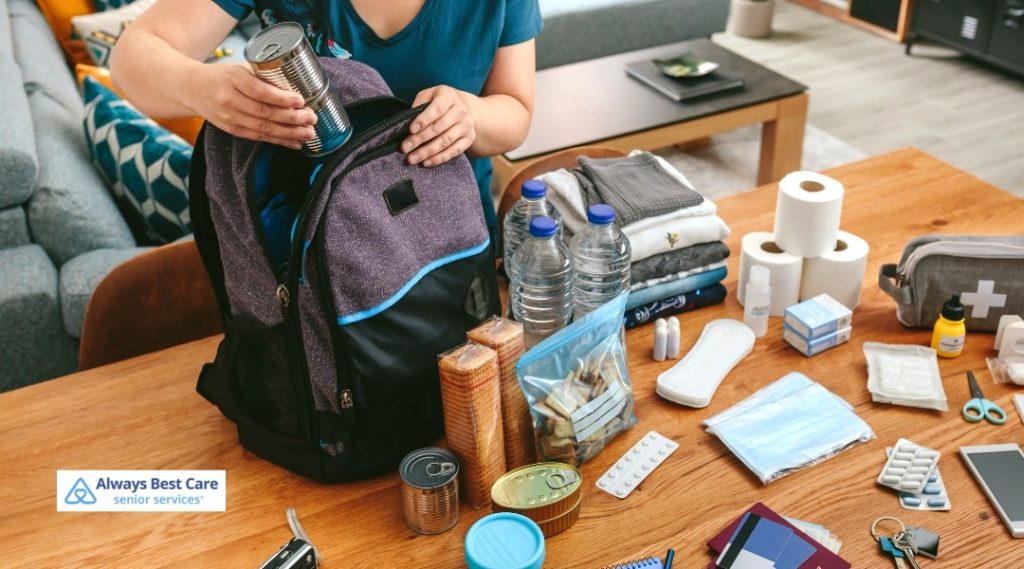
Build a simple emergency kit that includes:
- At least three days of bottled water and nonperishable food
- Flashlights and extra batteries
- A printed list of emergency contacts and medical information
- A supply of necessary medications
- Backup charging options for phones, hearing aids, or medical devices
Beyond the kit, have a direct conversation with family members about what to do if communication is disrupted. Who checks in first? Who is the backup contact? Knowing the answers in advance removes a lot of stress in the moment.
Don’t Overlook Medications
Summer heat doesn’t just affect people; it affects medications too. Many common prescriptions, including blood pressure medications, antidepressants, and diuretics, can increase heat sensitivity or cause faster dehydration. Others can lose potency if stored above recommended temperatures.
A few simple steps can prevent medication-related complications:
- Review storage instructions for all current medications
- Move any medications stored near windows or in warm areas to a cooler location
- Ask a pharmacist or physician whether any current prescriptions increase heat sensitivity
- Keep a current medication list in the emergency kit
This is a conversation worth having proactively, before the hottest weeks of summer arrive.

Reduce Indoor Fall Risks
Fall prevention is a year-round priority, but summer introduces specific indoor hazards. Wet floors near entryways are common when seniors come in from gardening or outdoor walks, and increased activity overall means more opportunities for slips.
Address these risks with a few targeted changes:
- Place non-slip mats at all entry points and in the bathroom
- Keep main walkways clear of seasonal clutter
- Ensure all rooms, especially hallways and stairwells, are well-lit
- Encourage supportive, closed-toe footwear rather than flip-flops or loose sandals
Small adjustments like these take minutes to implement and can prevent serious injuries.
How Always Best Care of Nashville Can Help
Summer preparation is manageable, but it’s a lot to handle alone, especially for seniors who live independently or family caregivers who are already stretched thin.
Always Best Care of Nashville provides in-home support that helps older adults stay safe and comfortable throughout the season. Our caregivers can assist with:
- Home safety walkthroughs and light housekeeping
- Meal preparation and hydration support
- Medication reminders
- Transportation to appointments and errands
- Companionship and wellness check-ins
Whether your loved one needs a few hours of support each week or more consistent daily care, we’re here to help make summer a season they can truly enjoy.

Frequently Asked Questions
Q: At what temperature does heat become dangerous for seniors?
A: Temperatures above 80°F can become risky for older adults, particularly when combined with high humidity. Seniors are more vulnerable because their bodies regulate heat less efficiently. Air conditioning, hydration, and avoiding outdoor activity during peak heat hours (typically 10 a.m. to 4 p.m.) are the most effective protective measures.
Q: How much water should a senior drink each day in summer?
A: Most older adults should aim for at least 6–8 cups of fluid per day, though individual needs vary based on health conditions and medications. Because seniors often don’t feel thirsty until they’re already mildly dehydrated, building regular hydration habits, rather than waiting for thirst, is the safer approach.
Q: What are the warning signs of heat exhaustion in an older adult?
A: Watch for heavy sweating, cool or pale skin, weakness, dizziness, nausea, or a rapid but weak pulse. Heat exhaustion can progress to heat stroke, which is a medical emergency. If a senior shows signs of confusion, stops sweating, or has a very high body temperature, call 911 immediately.
Q: How can I help a senior parent prepare for summer if I don’t live nearby?
A: Start with a phone or video call to walk through the checklist together. Arrange for a local caregiver, neighbor, or home care agency to do an in-person safety check. Set up regular check-in calls during heat waves and make sure your parent has a clear plan for who to contact in an emergency.
Q: When should I consider professional in-home care for a senior during summer?
A: If a senior is living alone, has difficulty managing medications, struggles with mobility, or has a chronic health condition that increases heat sensitivity, professional in-home care can provide meaningful peace of mind. Even part-time support during the summer months can significantly reduce risk.
Summer Comfort, Nashville Strong
Call Always Best Care of Nashville today at (615) 752-2097 to schedule a care consultation and learn how our caregivers can help your loved one stay safe, healthy, and independent all summer long.
Link to the Markdown File version of the article