
Life Inside the Sandwich Generation: One Emergency Away

By Susan Schwartz, Community Relations Director, Always Best Care Greenville
They say your life flashes before your eyes during an emergency, but for him, all he could see was his wife sitting alone in their apartment, waiting for him to come back.
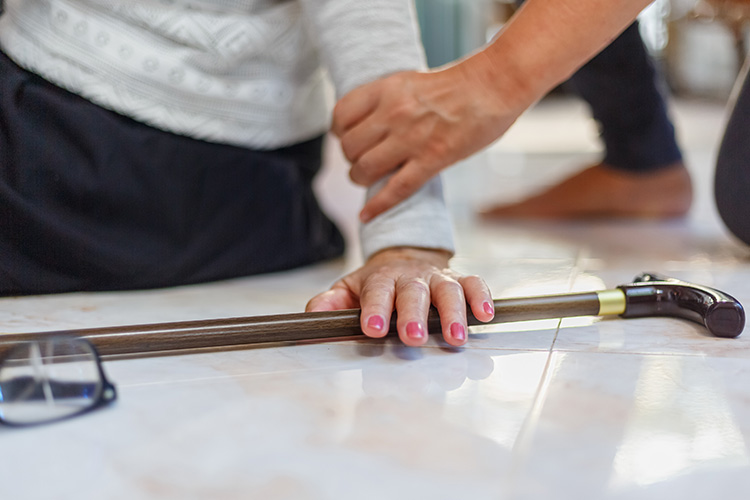
He tripped in the hallway and went down hard. As he lay face down on the floor, stunned and unable to move, his first thought wasn’t about the pain or whether he was injured. It was this: Who is going to take care of her if I can’t get up? Her medications. Her meals. Her safety. Her routine. Her entire world. Every piece of her life rested in his hands.
That moment stayed with him for days, not because of the fall itself, but because of what it revealed. In a single, ordinary moment, he saw how fragile everything was and how completely his wife’s world depended on him being able to stand back up. The fear wasn’t abstract. It was specific, heavy, and impossible to ignore.
He called me soon after and told me, “I can’t risk this happening again without a plan.” What he wanted wasn’t paperwork. He wanted to know that if he couldn’t get back to her, someone else already knew how to step in and keep her life steady.
His crisis opened my eyes to a truth I had been avoiding. Caregivers, no matter who we care for, are one emergency away from someone’s world unraveling. In my life I am the single thread holding it all together. I soon saw the consequences of what that looked like.
I woke up on Friday with a dull ache in my side that got worse as the morning went on. By evening, it had sharpened into something I could no longer ignore. My mom’s caregiver had already left for the weekend, and suddenly I realized how quickly everything could come crashing down. It was just me, my mom, and the dog, and I could barely walk. I called 911 with a single thought running through my mind: Do not let yourself pass out.
I steadied myself and sat on the sofa. Grabbing my phone, I desperately texted my team at work: “I’m in a lot of pain and just called an ambulance.” My phone started pinging back immediately. I felt like fire was ripping through my side as I tried to read their responses while holding myself up.
They had found someone who could come stay with my mom overnight, and she would be here in thirty minutes. They had also arranged coverage for the next day. Relief flooded over me as I fought back tears, though a part of me still counted the minutes until help arrived. That kind of support is what Always Best Care does for all of us. In that moment, I realized just how lucky I was to be a member of this caregiving family.
Several minutes later, I was strapped to a stretcher, doubled over in pain, trying to catch my breath, clinging to the fact that help had arrived.. The red and blue ambulance lights were making a reflection on our cul-de-sac, and my neighbors started coming out to see what had happened. Then, the ambulance doors opened for the fifth time as the EMT delivered the same news I had just heard two minutes prior: “Your mom just tried to walk out your front door and get into the ambulance again.” We could not leave her there alone.
Like so many people in the sandwich generation, caught between caring for an aging parent and supporting the needs of our children, I faced a reality I hadn’t fully acknowledged. I had an emergency plan for my children. I had one for my mother. But I had no plan for the one person holding it all together – me.
Being a primary caregiver is not just managing medications or routines. You are holding up an entire ecosystem that includes your children, your aging parents, responsibilities, and daily life. It collapses the moment you are not there to hold it steady.
And now the question becomes painfully clear: Who takes care of everyone else when you suddenly need someone to take care of you? Caregivers are so busy worrying about everyone else we seldom stop to think about ourselves. But that oversight cannot be ignored, because we are the ones everything depends on in a crisis. Plan A in an emergency is usually the same: Call 911. But what is your Plan B when there are still moving parts that need to be secured? The answer for me was having my neighbor stay with my mom and my dog until the caregiver could get there. What is the answer for you?
Research shows that 64 percent of family caregivers experience emotional stress as part of their role. This should serve as a reminder to all of us caregivers that planning ahead is not just smart, it is essential.
If you or someone you love is caring for an aging parent or a dependent loved one, now is the time to start your plan. You do not have to wait for an emergency to teach you the lesson that I learned the hard way. Our Always Best Care team can guide you step by step so everyone in your life — your children, your aging parents, all those who depend on you, and yes, even your dog — is supported and never left alone.
Let’s start the conversation today.