How In-Home Support Helps Seniors Manage Chronic Conditions

For many older adults, remaining at home is closely connected to their sense of independence. Familiar surroundings, established routines, nearby friends and family, and years of memories can make home an especially meaningful place as health needs begin to change.
A diagnosis of heart disease, diabetes, arthritis, COPD, Parkinson’s, or another ongoing condition may introduce new challenges into everyday life. Activities that once required little thought can become more tiring or difficult, and managing medications, appointments, meals, and household responsibilities may require additional planning.
These changes do not necessarily mean an older adult has to give up living at home. With personalized assistance, many seniors in Houston can continue their routines while receiving help with activities that have become difficult.
In-home care can provide that balance. Caregivers offer practical assistance while encouraging seniors to remain involved in their own routines, decisions, and activities whenever possible.
Table of Contents
How Chronic Conditions Can Affect Everyday Life
Chronic health conditions are different from temporary illnesses because they often require ongoing management. A senior may have several responsibilities to keep track of each day, particularly when more than one condition is involved.
Common challenges may include:
- Keeping track of medications and treatment instructions
- Managing reduced mobility or ongoing discomfort
- Experiencing fatigue during household activities
- Facing a greater risk of falls or injuries
- Getting to medical appointments
- Adjusting meals or daily routines
- Experiencing loneliness or reduced social interaction
Together, these concerns can make daily life harder for an older adult and the family members helping provide support.
The purpose of in-home assistance is not to take over everything a senior does. Instead, caregivers can help make difficult responsibilities more manageable so older adults can focus their energy on their health and the parts of daily life that matter most to them.
Encouraging Independence Instead of Replacing It
One of the most valuable aspects of in-home care is that assistance can be adjusted around the individual.
Some seniors may need help with only a few activities, while others may benefit from more frequent assistance throughout the day. A caregiver can step in where support is necessary while encouraging the senior to continue completing tasks that remain safe and manageable.
This might mean preparing a meal while the senior chooses what they would like to eat, assisting with dressing while allowing them to handle portions of the routine independently, or providing transportation while the senior continues managing their own appointments.
Maintaining this level of participation can help older adults feel more confident and involved in their everyday lives.
For families, personalized support also provides flexibility. Care can change over time as a loved one’s condition, abilities, or routines change.
Making Daily Activities More Manageable in Houston
Fatigue, mobility limitations, discomfort, and other symptoms associated with chronic conditions can make ordinary household responsibilities surprisingly demanding.
When seniors use much of their available energy completing chores, they may have less energy for appropriate activity, social interaction, appointments, or hobbies. Caregiver assistance can help create a more manageable balance.
Depending on individual needs, support may include:
- Bathing, dressing, and personal care
- Planning and preparing meals
- Light housekeeping and laundry
- Grocery shopping and errands
- Transportation to medical appointments
- Medication reminders
- Companionship and everyday assistance
The amount of help does not have to remain the same indefinitely. Families can consider the senior’s current abilities and adjust assistance as circumstances evolve.
This flexibility can be especially helpful when an ongoing condition causes periods when a senior feels stronger as well as times when additional support may be useful.
Why Consistent Health Routines Matter
Managing an ongoing health condition often involves many small responsibilities repeated every day. Maintaining those routines can become difficult when a senior is tired, has mobility limitations, or simply has several things to remember.
Caregivers can provide practical reminders and assistance that help seniors remain consistent with routines recommended by their healthcare providers.
Daily support may include:
- Following prescribed medication schedules
- Eating regular, balanced meals
- Maintaining adequate hydration
- Participating in physician-approved physical activity
- Keeping scheduled healthcare appointments
- Maintaining an organized daily routine
These services are not a replacement for physicians, nurses, or other medical professionals. Instead, they help seniors manage everyday responsibilities surrounding their care.
For an older adult living with a chronic illness, dependable daily assistance can make following established routines feel less overwhelming.
Noticing Changes That May Need Attention
Ongoing health conditions can sometimes lead to additional medical care or hospitalization when symptoms worsen. Regular interaction with a senior may make it easier for families and caregivers to recognize when something appears different from the person’s usual routine.
Changes worth paying attention to may include:
- Reduced appetite or changes in eating habits
- Increased or unusual fatigue
- New difficulty walking or moving safely
- Swelling or noticeable mobility changes
- Increased confusion or changes in behavior
Caregivers do not diagnose these symptoms or replace medical professionals. However, when a caregiver notices that something seems different, the concern can be shared with family members so they can determine whether the senior’s healthcare provider should be contacted.
Recognizing changes early gives families an opportunity to respond before a concern potentially becomes more serious.
Creating a Home Routine That Supports Safety
Aging with a chronic condition may affect balance, strength, stamina, or coordination. As these abilities change, activities such as doing laundry, carrying groceries, preparing meals, or moving through cluttered areas may require more effort. Caregiver assistance can reduce some of this physical strain.
Light housekeeping can help keep commonly used areas more organized. Assistance with errands can reduce unnecessary trips outside the home. Meal preparation can make it easier for seniors to have regular meals without spending excessive energy in the kitchen.
Support can also be adapted to what the senior can safely accomplish. The objective is to make everyday life easier while preserving opportunities for independence.
For many Houston seniors, this balance can make remaining in familiar surroundings feel more practical and sustainable.
Why Companionship Matters When Managing Chronic Illness
The effects of an ongoing health condition are not limited to physical symptoms. Changes in mobility, energy, and independence may also affect a senior’s emotional and social well-being.
An older adult who no longer drives, has difficulty leaving home, or cannot participate in activities as easily as before may begin spending more time alone.
Companionship can provide meaningful social interaction throughout the week. Depending on the senior’s preferences and abilities, a caregiver might:
- Share conversation over a meal
- Participate in hobbies or favorite activities
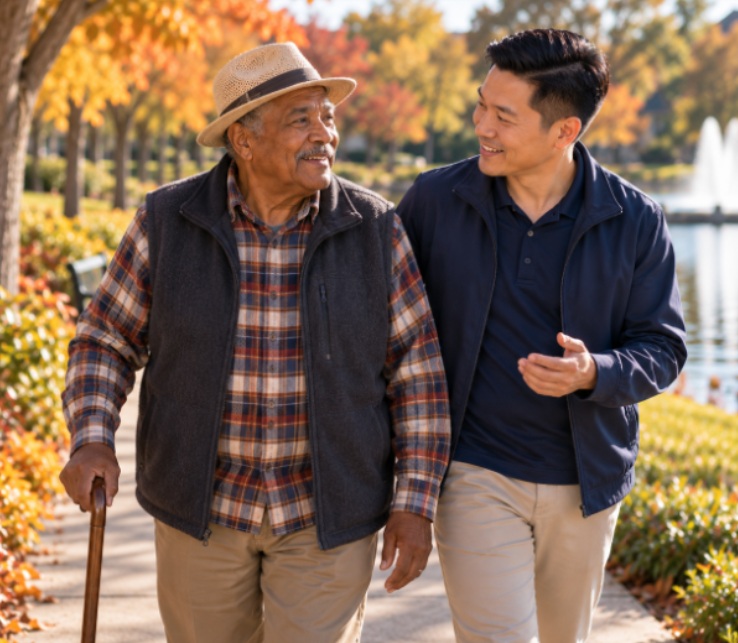
- Accompany the senior on appropriate walks
- Help them stay connected with family
- Provide company during everyday routines
These interactions can make the home environment feel less isolating.
For family members who cannot be present every day, knowing that a dependable caregiver is spending time with their loved one can also provide valuable reassurance.
Helping Family Caregivers Manage Ongoing Responsibilities
Chronic condition support often involves the entire family. Adult children, spouses, and other relatives may help with appointments, meals, errands, household tasks, and regular check-ins.
Over time, balancing these responsibilities with work, children, personal commitments, and other obligations can become difficult.
Professional in-home care can provide another source of dependable assistance. Rather than replacing the family’s involvement, a caregiver can complement the support relatives already provide.
Families may use caregiver assistance for certain routines, specific times of day, transportation needs, or companionship. This allows relatives to remain involved while sharing some of the practical responsibilities associated with supporting an older loved one at home.
How Always Best Care Senior Services – Houston, TX Supports Aging in Place
At Always Best Care Senior Services – Houston, TX, we recognize that every older adult has different routines, abilities, health concerns, and personal preferences. Chronic condition support should reflect those differences.
Our caregivers provide personalized assistance designed around the everyday needs of seniors who want to continue living at home.
Depending on the individual, support may include:
- Personal care assistance
- Meal preparation
- Medication reminders
- Light housekeeping
- Transportation and errands
- Companionship
- Help maintaining everyday routines
Whether a loved one is managing diabetes, COPD, mobility challenges, or multiple ongoing health concerns, dependable assistance can help make everyday responsibilities more manageable.
Care plans can also adapt as circumstances change, giving families the flexibility to consider different levels of support over time.
Supporting Independence for Houston Seniors at Home
Living with a chronic condition may require changes to everyday routines, but it does not automatically determine where an older adult must live.
With appropriate support, many seniors can continue enjoying the familiarity of home while receiving assistance with activities that have become difficult. Caregivers can help with practical responsibilities, provide companionship, encourage established routines, and give families another source of dependable support.
The right approach should respect what a senior can still do independently while providing assistance where it can make everyday life safer and more manageable.
If your loved one is managing a chronic condition and could benefit from additional support at home, Always Best Care Senior Services – Houston, TX is ready to discuss their individual needs.
Call Always Best Care Senior Services – Houston, TX at (281) 231-2813 to explore personalized in-home care services and learn how our caregivers can help your loved one remain comfortable, confident, and independent at home.