Senior Wound Care at Home: Creating a Safer Recovery in Houston, TX
Coming home after surgery, hospitalization, rehabilitation, or treatment for an injury can be a welcome transition for an older adult. However, recovery at home may require more support when a wound still needs monitoring or treatment.
Wound healing can become more complicated with age. Older skin is more delicate, the body’s healing process may slow, and conditions such as diabetes, poor circulation, or limited mobility can create additional challenges.
For families in Houston and West Houston, understanding when a wound may require skilled nursing can help them determine what type of support their loved one needs. Qualified home health professionals can provide clinical wound care when ordered as part of the senior’s treatment plan, while nonmedical caregivers can assist with everyday routines during recovery.
Table of Contents
Why Can Wound Recovery Be More Challenging for Seniors?
Skin changes naturally over time. As it becomes thinner and more fragile, older adults may be more vulnerable to cuts, skin tears, and pressure injuries. They may also be less able to bounce back as quickly from injuries as they once did.
Certain health conditions can create additional challenges. Diabetes, poor circulation, limited mobility, and other long-term health concerns may interfere with healing or increase the risk of infection.
Nutrition and hydration are important as well. Seniors who do not receive adequate protein, vitamins, minerals, or fluids may have more difficulty supporting the body’s normal healing process.
Because several factors may affect recovery at the same time, families should follow the wound care instructions and treatment plan established by their loved one’s healthcare professionals.
Which Wounds May Require Skilled Care?
Not every wound requires a home health nurse. Some wounds, however, may need professional assessment, treatment, or continued monitoring.
Skilled wound care may be recommended for:
- Surgical incisions requiring continued monitoring
- Pressure injuries or bedsores
- Diabetic foot ulcers
- Wounds related to poor circulation
- Skin tears that are difficult to heal
- Burns or more significant injuries
- Chronic wounds that are not improving as expected
A healthcare provider should determine the appropriate treatment based on the type of wound, the senior’s overall health, and other individual factors.
Families should follow those professional instructions rather than attempting treatments that have not been included in the senior’s established care plan.
Know What Changes Around a Wound May Need Attention
During recovery, families can support an older adult by following the guidance provided by healthcare professionals and communicating noticeable changes or concerns.
Changes Around the Wound
Families may notice changes such as increased redness, warmth, swelling, discomfort, drainage, odor, or differences in the wound’s appearance. These observations can be shared with the appropriate healthcare professional for further guidance.
Changes in the Senior’s Overall Condition
Changes in how the senior feels or behaves may also be important to communicate. If a family member notices a sudden or concerning change in the senior’s overall condition, they should follow the healthcare team’s instructions about when and whom to contact.
Professional Guidance During Recovery
Some older adults may require closer professional monitoring based on their individual health circumstances and established care plan. Families can help by following professional instructions, keeping appointments, and sharing relevant observations rather than trying to evaluate the wound or determine treatment on their own.
What Can a Home Health Nurse Do for Wound Care in Houston?
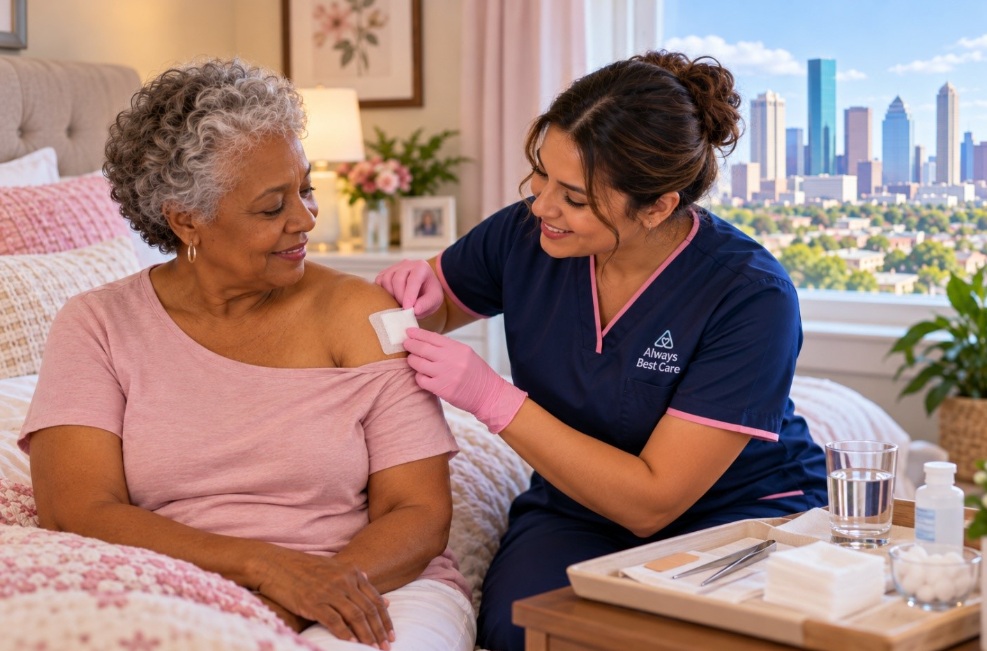
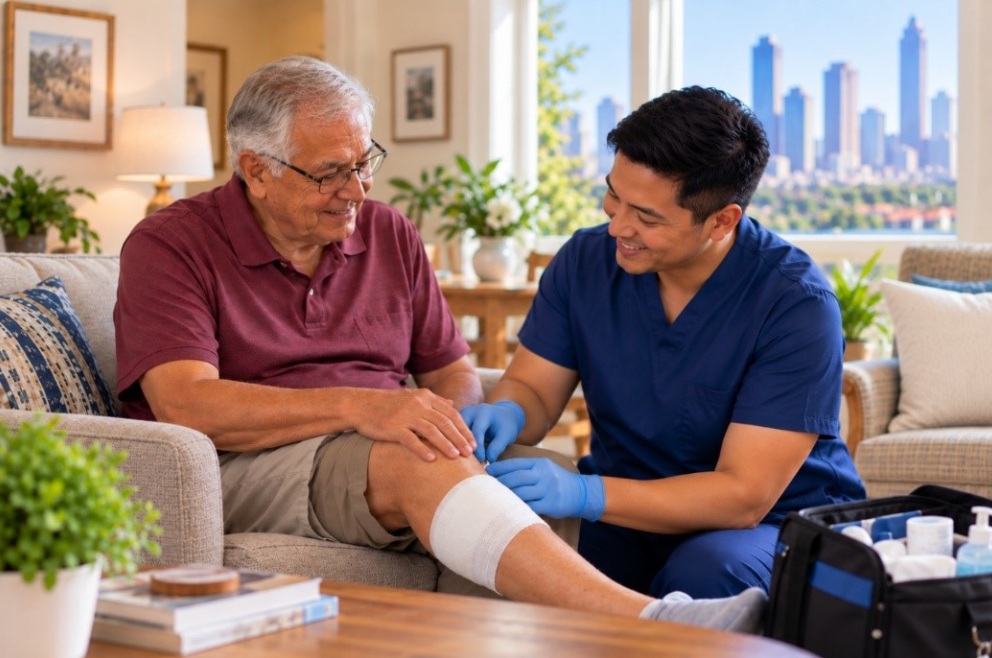
When skilled nursing is included in a senior’s home health care plan, a qualified nurse can provide medical services at home according to the individual’s treatment plan and healthcare provider’s orders.
Depending on the senior’s needs and established care plan, skilled nursing support may include:
- Assessing and monitoring the wound to follow changes during the healing process.
- Cleaning the affected area according to professional instructions and the care plan.
- Changing wound dressings using appropriate techniques and materials.
- Monitoring for concerning changes that may need to be communicated to the healthcare team.
- Providing wound care education to help the senior and family understand professional instructions.
- Coordinating with the healthcare team when relevant changes or concerns arise.
A nurse may also explain what family members should be aware of between visits and when they should contact a physician or another appropriate healthcare professional.
This type of professional support may be especially helpful when a senior has recently returned home after surgery, hospitalization, or rehabilitation and still requires clinical follow-up as part of the established care plan.
Prepare the Home for a More Manageable Recovery
A senior’s surroundings can affect how easily they manage everyday activities while recovering.
Families can look around the home and consider whether commonly used spaces are easy for their loved one to access. Frequently needed items can be kept within comfortable reach, and pathways should remain clear when mobility is temporarily limited.
Depending on the senior’s care plan, families may also need to think about where the older adult rests, eats meals, completes personal care, or receives nursing visits. Seniors who spend extended periods sitting or lying down may be more likely to get pressure injuries, so families should follow any positioning or mobility guidance provided by the healthcare team.
The goal is not to create a medical environment throughout the home. Instead, practical preparation can make everyday routines less demanding while the senior follows the recovery instructions provided by healthcare professionals.
Help Protect Seniors Who Have Limited Mobility
Reduced mobility can increase the risk of pressure injuries. Remaining seated or lying in the same position for an extended period may place continued pressure on certain areas of the body.
Depending on the individual’s condition, the healthcare team may recommend measures such as repositioning, keeping the skin clean and dry, using appropriate pressure-relieving equipment, and supporting adequate nutrition and hydration.
Heels, hips, the tailbone, and elbows are common areas where prolonged pressure may occur. Rather than independently checking these areas or creating a prevention routine, families and caregivers should follow the guidance provided by the senior’s healthcare professionals.
The appropriate approach can differ from one senior to another based on mobility, overall needs, and the established care plan. Following professional instructions helps keep prevention efforts aligned with the individual’s specific circumstances.
Support Everyday Needs While the Senior Heals
Recovery can affect more than wound care. Discomfort, reduced mobility, or temporary activity restrictions may make familiar household tasks and daily routines more difficult for an older adult. Having practical assistance available can help make these responsibilities more manageable.
| Area of Support | How a Caregiver May Help |
|---|---|
| Personal Routines | Assistance with bathing, dressing, and other everyday activities |
| Meals and Home Tasks | Meal preparation and light housekeeping |
| Mobility and Appointments | Appropriate mobility assistance and transportation to follow-up appointments |
| Daily Support | Medication reminders based on existing instructions, companionship, and familiar routines |
These forms of assistance are separate from skilled wound care. Nonmedical caregivers can focus on everyday needs and routines, while qualified healthcare professionals remain responsible for wound assessment, treatment, dressing changes, and other clinical services included in the senior’s established care plan.
How Can Families Help Between Skilled Nursing Visits?
A home health nurse may only be present for scheduled visits, so much of a senior’s recovery occurs while family members or caregivers are helping with everyday routines.
Families can support the established care plan by helping their loved one maintain meals and hydration, attend follow-up appointments, and follow any mobility or activity guidance provided by healthcare professionals.
They can also remain attentive to meaningful changes in the senior’s condition.
If something appears different or concerning, families should contact the appropriate healthcare professional rather than attempting to diagnose the cause or independently change the treatment plan.
How Can Skilled Nursing and In-Home Care Work Together?
Some seniors recovering at home may need both professional healthcare services and assistance with everyday activities. When both are part of the recovery plan, understanding their different responsibilities can make care easier for families to coordinate.
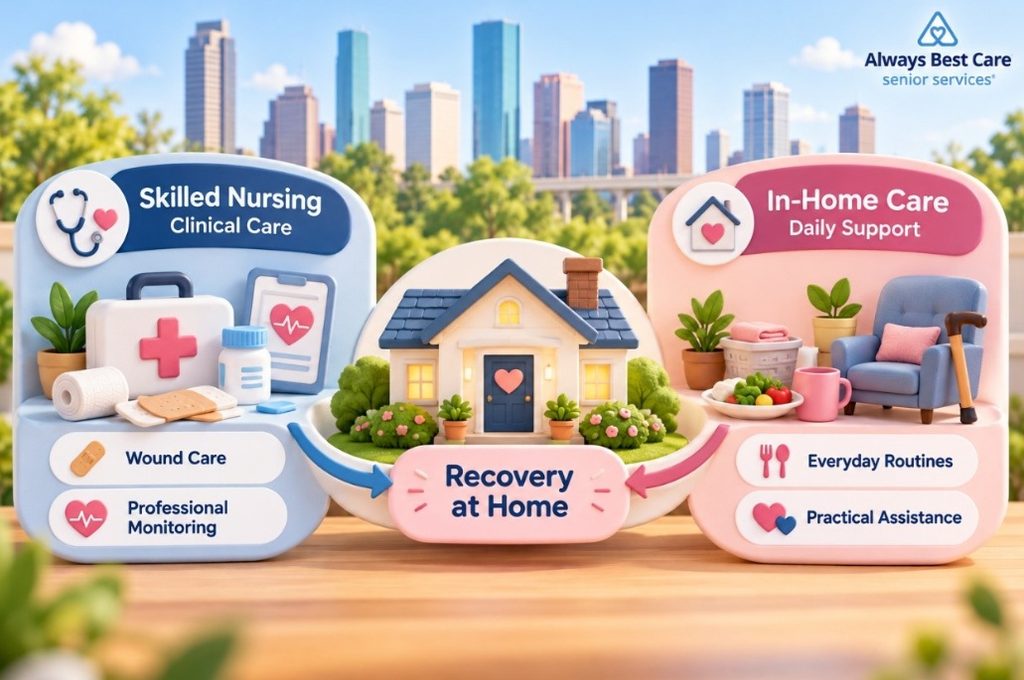
A home health nurse may provide qualifying clinical services according to the established care plan, such as wound assessment, dressing changes, monitoring, or other ordered services. A nonmedical caregiver can focus on meals, personal care, light housekeeping, appropriate mobility assistance, companionship, and other daily routines.
Keeping these responsibilities clearly separated helps families understand which professionals should address each need while allowing different forms of support to complement the senior recovery plan.
If a nonmedical caregiver notices a meaningful change in the senior’s condition, the observation can be shared with the family so they can follow the established care plan and contact the appropriate healthcare professional when needed.
How Always Best Care Senior Services – Houston Can Support Recovery
Recovering at home after a wound, surgery, hospitalization, or rehabilitation stay can require different types of assistance at different stages.
Always Best Care Senior Services – Houston can help families explore support based on their loved one’s individual needs. Depending on eligibility and available services, skilled home health professionals may address qualifying medical needs, while nonmedical caregivers can assist with everyday activities and routines.
For families throughout Houston and West Houston, having the appropriate support at home can make daily responsibilities more manageable while a senior follows the treatment plan established by their healthcare professionals.
Make Recovery at Home Safer and More Manageable
Wound healing can take time, especially when an older adult is also managing chronic health concerns or mobility limitations. Families can support recovery by following professional wound care instructions, watching for concerning changes, and making everyday activities easier to manage.
Complex wounds should remain under appropriate medical supervision. When skilled care is required, qualified healthcare professionals can provide assessment and treatment according to the senior’s individual care plan.
If your loved one is recovering from a wound, surgery, or another medical issue, call Always Best Care Senior Services – Houston at (832) 631-1805 or discuss personalized recovery support with our Houston team.