
Home Care Support When Family Caregivers Need Time Away

Time away can mean attending an appointment, meeting a friend, or having an afternoon without a running list of household responsibilities. For a family caregiver, making that time possible usually starts with a clear plan for the person staying home. Families considering home care in Houston, TX can begin by identifying the routines that need support during the break. Always Best Care Senior Services – Houston, TX can discuss assistance that fits those everyday needs.
A break does not need to begin with a major change to the household schedule. It can start with a defined period, a manageable set of tasks, and a conversation with the older adult. The aim is to make room for the family caregiver’s time while keeping the senior involved in decisions about the visit.
Table of Contents
Define What Time Away Will Look Like
Be specific about the start time, expected return, and reason a clear handoff matters. The family caregiver may be unavailable during an appointment or may prefer one planned check-in while resting. Agree on how updates should be handled before leaving. This reduces uncertainty for everyone and helps prevent routine questions from filling the entire break.
Include a buffer if travel or an appointment may run longer than expected. Ask the provider how schedule changes should be communicated and what arrangements are possible. Confirm the details rather than assuming additional time can be added on the day. If the plan depends on another relative collecting groceries or preparing a meal, make that responsibility explicit.
Decide Which Tasks Need Another Person
List the activities that occur during the period away, then identify which ones require assistance. The senior may want help preparing lunch but prefer to choose the menu. They might appreciate company for a hobby while handling other parts independently. A useful task list describes the requested help without turning every familiar activity into a caregiver responsibility.
Families working out ways relatives can share senior care responsibilities can use the same approach to separate recurring tasks from occasional favors. Give each task a clear owner. Describe what completing it looks like. Note where necessary items are kept. Ask whether the arrangement feels workable. Update the list if responsibilities change.
The provider’s home care assistance with everyday routines and companionship can be discussed against that list. Ask which requested tasks can be included in the visit, how preferences are communicated, and what the family should prepare beforehand. A confirmed plan gives the senior and the family caregiver a shared understanding of the time together.
Keep the Senior’s Choices Visible in the Handoff
Practical notes should explain more than where the dishes are stored. They can also describe how the older adult likes to spend the afternoon, whether they prefer a quiet conversation, and which parts of a routine they want to handle themselves. Ask the senior what they would like a new caregiver to know. Their answers may be brief, but they often supply the most useful details.
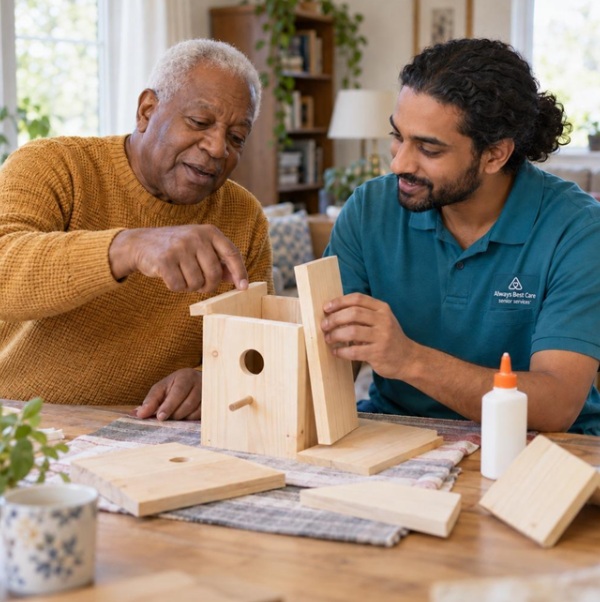
Introduce the arrangement in ordinary terms. Explain who is coming, when the visit begins, and what help has been requested. Give the senior a chance to ask questions or suggest an activity. A favorite book, a simple craft, or time looking through photographs can offer a comfortable starting point when both people are getting acquainted.
Turn General Requests Into Useful Notes
| General request | Clearer handoff detail | Senior’s choice to include |
|---|---|---|
| Help with lunch | Ingredients and dishes are on the kitchen counter | Ask which meal sounds appealing |
| Keep company | A hobby box is beside the living-room chair | Offer a choice of activity |
| Help with clothing | Everyday clothing is in the top drawer | Let the senior select an outfit |
| Pass on updates | Use the agreed family contact number | Ask what the senior wants shared |
Keep the notes short enough to find information quickly. Put essential contact details together, label unfamiliar household items, and remove directions that no longer apply. If relatives disagree about a preference, ask the older adult rather than leaving competing instructions. The visit should reflect the current agreement, not several different versions of the household routine.
Set Up a Break That Can Be Repeated
A first visit can be a chance to learn what works. Choose a realistic period and avoid filling it with too many new tasks. The family caregiver might use the time for a personal errand, a meal with a friend, or quiet rest. There is no need to justify the break by turning it into another productivity assignment.
After returning, discuss the visit with the senior and review any practical questions. Did the timing work? Were the notes easy to follow? Was there an activity the senior particularly enjoyed? Use the answers to adjust the next arrangement. Small changes can make future breaks easier to organize without rewriting the entire plan.
A Five-Point Handoff Review
- Define the Break: Set the start and return times.
- Agree on Tasks: Confirm the help needed during the visit.
- Keep Choices: Share the senior’s everyday preferences.
- Share Essentials: Leave clear notes and contact details.
- Review the Visit: Discuss what worked after returning.
Keep this review near the household notes so the next arrangement has a clear starting point. A family can reuse the format while changing the times, activities, and tasks. The details should stay flexible enough to reflect the senior’s choices and the caregiver’s reason for being away.
Families exploring home care in Houston, TX can bring this outline to a conversation about practical support. Always Best Care Senior Services – Houston, TX can discuss the requested routines and available arrangements. Schedule a home care consultation for family caregiver breaks or call (281) 231-2813 to take the next step.