What to Tell a Caregiver Before a Senior’s Overnight Trip
An overnight trip changes more than the address where an older adult will sleep. It can change where familiar items are kept, who is nearby, and how the evening and morning unfold. Families considering home care in Katy, TX around a short visit can prepare a clear handoff before the bags are packed. Always Best Care Senior Services – Houston, TX can discuss everyday support needs and the arrangements the family wants to confirm.
Begin by clarifying the caregiver’s role. Will help be requested before departure, after the senior returns, or during a visit at another location? Discuss each part directly with the provider. A travel plan should identify who is responsible at each stage, including the host receiving the older adult and the person handling changes to the schedule.
Table of Contents
Describe the Destination and the Actual Arrangement
Share the destination address, host’s name, arrival time, and expected departure. Explain whether the older adult has stayed there before and what they know about the sleeping space. Give the caregiver information relevant to the agreed tasks rather than a full itinerary of every family event. The important details are the ones that help another person follow the routine.
If support is being requested at the destination, confirm the location, timing, and requested assistance before relying on it. Do not assume an existing home schedule automatically carries over to another address. Write down who will meet the senior, where the overnight bag should go, and how the family will communicate when the arrival is complete.
Families planning the handoff can review details to share before a caregiver-supported trip. Separate the trip into departure, evening, morning, and return. Identify the person responsible for each part. Put the agreed contact information beside their name. Check the plan with the senior. Remove details that do not apply to this particular visit.
The provider’s home care help with personal routines and companionship can be discussed in relation to those stages. Ask what assistance can be arranged and what preparation the household should complete. Keep the final handoff consistent with the tasks and timing actually agreed upon.
Explain the Evening Routine in Everyday Terms
An older adult may have a familiar order for changing clothes, having a light snack, and settling into a bedroom. Share that order without turning it into a rigid timetable. Note what usually helps the person feel comfortable and what they prefer to do independently. Ask the senior which details they want included.
Describe the sleeping space in advance if possible. Confirm the location of the bathroom, a suitable place for glasses, and where the senior’s belongings will be kept. A host can show these features on arrival instead of leaving the older adult to work them out late in the evening. Keep commonly used items easy to locate and avoid rearranging them without discussing the change.
Pack Around the Routine
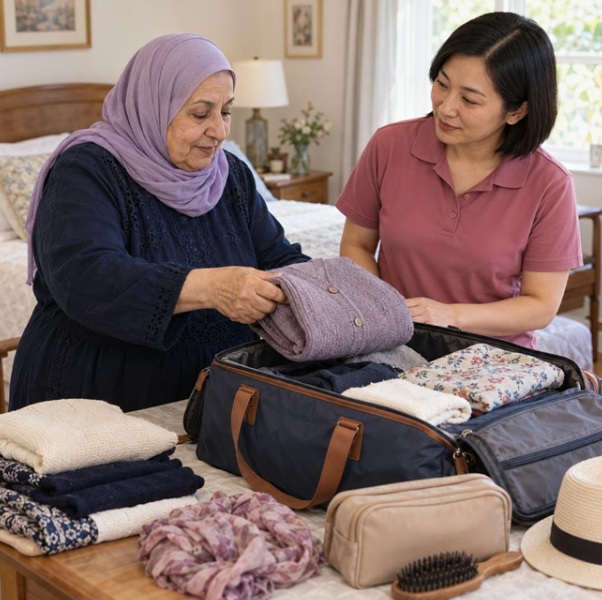
Create a short list based on the senior’s habits and the length of the visit. Everyday clothing, personal toiletries, a preferred cardigan, and familiar reading material may belong on it. Let the older adult choose items when possible. Label bags clearly enough that the host can tell which one contains the things needed first.
Keep essentials together instead of spreading them among several relatives’ bags. Tell the caregiver or host where the first-night items are located. If something will be supplied at the destination, confirm it beforehand. A simple check before leaving is easier than trying to remember whether an important item was packed after everyone has arrived.
Give the Morning the Same Attention as Bedtime
Morning routines can be overlooked because families focus on the evening arrival. Explain the senior’s preferred wake-up time, breakfast choices, and usual order for getting dressed. Share the assistance requested for those activities and the choices the older adult should make themselves. Confirm when the person collecting them will arrive.
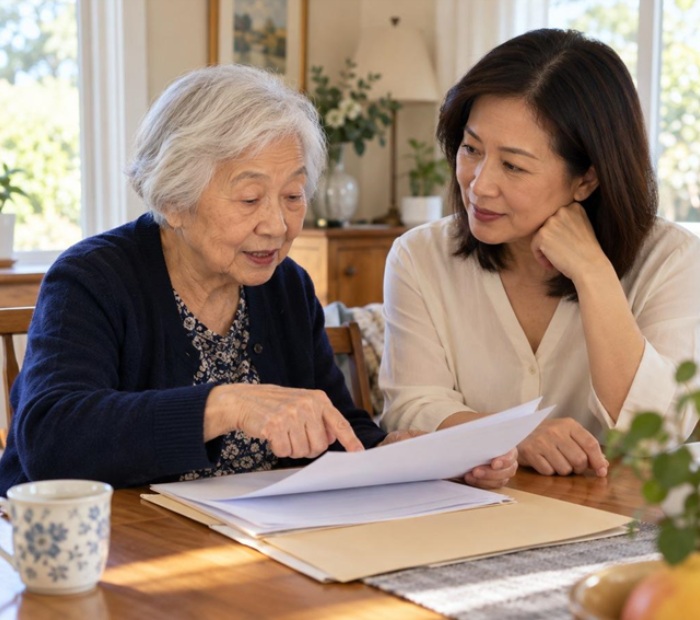
Use one brief handoff sheet to connect the two parts of the visit. The table below is a practical example that families can adapt with the senior.
| Part of the visit | Detail to share | Person to confirm it with |
|---|---|---|
| Arrival | Address, expected time, bag location | Host and driver |
| Evening | Preferred routine and belongings needed first | Senior and agreed helper |
| Morning | Breakfast preferences and requested assistance | Senior and host |
| Return | Pickup time and tasks after arriving home | Driver and family contact |
Agree on Updates and Changes Before Leaving
Choose one family contact for routine questions and give the host that person’s number. Decide whether an arrival message and a next-morning update are enough. Too many separate check-ins can make it difficult to know which version of the plan is current. A clear communication arrangement helps people pass on useful information without constantly interrupting the visit.
Details to Confirm on the Handoff Sheet
- Destination address and the host’s contact information.
- Arrival, pickup, and expected return times.
- Agreed assistance during the evening and morning.
- Location of clothing, toiletries, and familiar items.
- Main family contact and the plan for schedule changes.
Review the sheet with the senior and the people helping before departure. Ask whether anything important is missing, especially a preference that may seem too ordinary to mention. A person may want breakfast before dressing or a few quiet minutes before joining the household. These small details can make the visit feel more familiar.
When the senior returns, ask what worked and what they would change next time. Update the handoff while the details are fresh. Families arranging home care in Katy, TX can use those notes to explain support needed before or after another trip. Always Best Care Senior Services – Houston, TX can help discuss the practical arrangements. Start a home care conversation before an overnight visit or call (281) 231-2813.