

How In-Home Care Helps Seniors Manage Daily Diabetes Routines

Table of Contents
Key Takeaways
- Nonmedical caregivers can support the routines around an established diabetes care plan.
- Meal preparation, household organization, transportation, and reminders often affect daily follow-through.
- A caregiver does not diagnose, provide treatment, or replace a nurse, physician, or other qualified clinician.
- Changes in eating, memory, mobility, or task completion may mean the current support plan needs review.
- Clear communication between the senior, family, caregiver, and healthcare team helps keep roles appropriate.
Daily Diabetes Routines Need Reliable Support
Daily diabetes management can become harder at home when meals happen at irregular times, groceries run low, supplies are misplaced, or mobility makes kitchen and pharmacy trips difficult. Home care in Humble, TX can help with the everyday structure around a senior’s established care plan, without taking over the medical decisions that belong to the senior and healthcare team.
A diabetes routine is rarely just one task. It can involve getting up on time, preparing appropriate food, following instructions provided by a clinician, keeping the home organized, attending appointments, and noticing when a familiar routine has become difficult to complete. A senior may not say, “I need help with diabetes.” Instead, family may notice skipped meals, unopened groceries, repeated uncertainty about the day’s schedule, or a growing reluctance to use the kitchen.
Nonmedical support should complement, not replace, medical guidance. Caregivers can help a person follow an existing plan through reminders, practical assistance, and companionship. They do not diagnose diabetes concerns, adjust medication, interpret readings, administer clinical care, or replace nurses, therapists, or physicians.
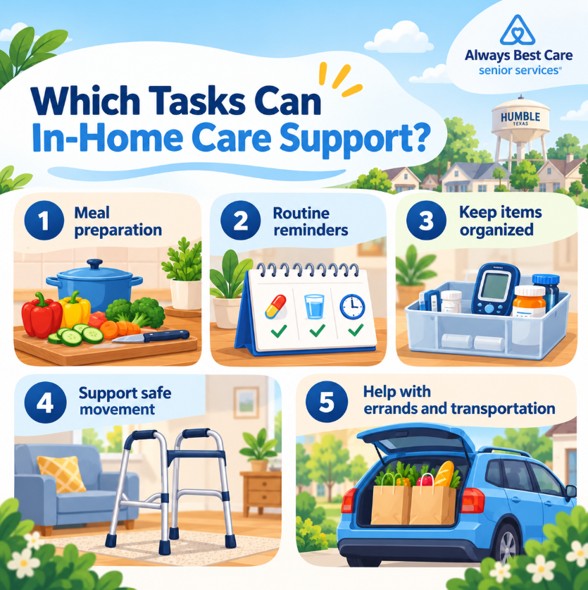
Which Tasks Can In-Home Care Support?
Personalized in-home care for seniors can help with everyday non-medical tasks that make an established diabetes routine easier to maintain. The appropriate level of assistance depends on the senior’s needs, preferences, and instructions from their healthcare team.
A caregiver may provide practical support in the following ways while respecting the senior’s independence:
- Build meals around the household plan. A caregiver can assist with grocery lists, food shopping, meal preparation, and cleanup based on food choices and instructions already provided by the senior or clinician. The caregiver should not create a medical diet or make clinical nutrition decisions.
- Provide routine reminders. Caregivers can offer reminders for meals, hydration, appointments, and medications as directed. A reminder is not medication management, dose selection, or a substitute for professional medical oversight.
- Keep essential items organized. Help may include putting commonly used supplies in familiar places, checking that the kitchen has usable food, and preparing a written daily schedule where the senior can see it.
- Support safe movement at home. A caregiver can assist with personal care, accompany a senior through the home, and reduce the need to rush on stairs or carry heavy grocery bags. This matters when pain, weakness, poor balance, or fear of falling causes someone to avoid the kitchen or bathroom.
- Help with errands and transportation. Rides or escorts for grocery shopping, pharmacy pickups, and healthcare visits may reduce missed tasks caused by no longer driving or feeling unsteady in public.
The goal is not to make every decision for the senior. It is to remove the daily obstacles that turn a manageable routine into a repeated struggle.
A Routine That Fits Real Life
A written care plan only works if the household can support it. Families often focus on whether a loved one remembers what to do, but follow-through can also be affected by an empty refrigerator, a hard-to-reach pantry, fatigue after bathing, a changed sleep schedule, or a spouse who is no longer able to help as before.
Start by looking at the full day, not one isolated reminder. Note when the senior usually wakes up, eats, takes medications, rests, shops, and attends appointments. Then ask where the routine breaks down. A caregiver’s schedule can be shaped around those pressure points rather than added at a random time that does not solve the actual problem.
Can Meals Support the Care Plan?
Yes, meal support can make an established diabetes plan more realistic when food access or preparation is the barrier. A caregiver may help prepare familiar meals, portion food according to the household’s instructions, label leftovers, and keep the kitchen clean enough to use comfortably.
The overlooked issue is often consistency. If a senior is eating only toast because standing at the stove feels unsafe, or skipping lunch because groceries are difficult to carry inside, the concern is not simply motivation. It is a daily-living problem that may call for practical assistance and a conversation with the healthcare team about any medical concerns.
Helpful routines do not need to feel restrictive. Families may find value in daily routines that feel more comforting while still keeping key tasks visible and predictable.
Consistent Timing Reduces Missed Tasks
Regular timing can reduce confusion, especially when memory changes or disrupted sleep make days blend together. A caregiver can arrive before a usual meal, help set up the day’s food, offer a reminder based on the established schedule, and note whether routine tasks were completed.
Documentation should stay simple and useful. Families may want agreed-upon updates about meals prepared, appointments attended, changes in appetite, or whether the senior seemed confused by a familiar task. Clinical questions and urgent health concerns should go to the appropriate healthcare professional.
Mobility Can Affect Daily Follow-Through
Mobility limitations can quietly disrupt diabetes routines long before a senior asks for help. Difficulty moving between rooms may affect access to the kitchen, bathroom, or essential supplies. These challenges can contribute to skipped meals, inconsistent hydration, or greater reliance on convenience foods.
Everyday Movement and Household Accessibility
Simple activities such as preparing meals, retrieving supplies, or carrying groceries can become difficult when a senior experiences weakness, poor balance, or limited mobility. A caregiver can assist with safe movement, light housekeeping, laundry, and food preparation to reduce unnecessary physical strain.
Keeping frequently used items within easy reach and maintaining clear walking paths may also make daily routines more manageable.
Consistent Support for Daily Independence
The right level of assistance allows seniors to remain involved in familiar activities without handling every physical task alone. Caregivers can provide practical help while respecting personal preferences, established schedules, and individual abilities.
For seniors whose needs extend beyond nonmedical assistance, families can also explore skilled home healthcare services to understand what additional professional support may be available.
Combining appropriate assistance with an established diabetes care plan can help seniors maintain greater consistency in their daily routines while preserving independence.
Match Support to Medical Needs
Nonmedical home care and clinical diabetes care can work alongside each other, but their responsibilities are different. Ask each provider what they can and cannot do before services begin.
| Everyday In-Home Assistance | Qualified Healthcare Professional Involvement | Why The Difference Matters |
|---|---|---|
| Meal preparation and cleanup | Medical nutrition guidance | Food preferences follow an established plan |
| Medication reminders | Medication changes or clinical administration | Reminders do not replace medical oversight |
| Grocery and pharmacy errands | Advice about supplies or treatment | Caregivers organize access, not treatment |
| Appointment transportation | Assessment of symptoms or readings | Clinical concerns need clinical direction |
| Routine observations shared with family | Diagnosis or treatment decisions | Families know when to contact the care team |
A clear division of responsibilities protects the senior from mixed messages. It also helps caregivers know when to notify family and when a concern should be directed to the senior’s healthcare team.
Questions to Ask Before Choosing Care

Choosing in-home care for a senior managing diabetes involves more than confirming that assistance is available. Families should understand how caregivers will support established routines, communicate concerns, and respect the senior’s independence.
Diabetes-related daily needs vary, so the care plan should consider usual meal times, mobility, memory, household setup, and personal preferences.
How Will Caregivers Support Existing Daily Routines?
Ask how the agency develops a care schedule around the senior’s everyday activities rather than expecting the senior to adjust to a standard routine.
Important considerations include meal preparation, grocery shopping, hydration reminders, light housekeeping, and assistance with personal care. Families may also want to discuss whether visits can be scheduled during the times when the senior needs the most help.
Caregivers should follow established instructions and preferences without making medical decisions or changing prescribed diabetes care plans.
How Will the Agency Communicate with Family Members?
Clear communication helps families understand whether daily routines are being maintained and when additional assistance may be necessary.
Ask who receives caregiver updates, how changes in household needs are documented, and whom family members should contact with questions.
If several adult children are involved, identifying one primary contact can help prevent conflicting instructions.
Families should also ask how caregivers report observations such as missed meals, reduced appetite, difficulty completing familiar tasks, or changes in usual alertness. Medical concerns should be directed to the senior’s healthcare team.
What Happens When Care Needs Change?
A senior’s daily support needs may change over time. Families should understand how the agency evaluates requests for additional assistance and adjusts nonmedical care schedules.
Ask whether services can begin with a few weekly visits focused on groceries, meal preparation, and household organization. Discuss how the agency responds when a senior declines assistance or becomes uncomfortable with changes to familiar routines.
It is equally important to clarify which responsibilities fall outside nonmedical caregiving and when a healthcare professional should be consulted.
Starting with manageable assistance can give seniors time to become comfortable with receiving help while maintaining control over their daily decisions.
Selecting appropriate in-home care begins with understanding the senior’s routines, preferences, and practical challenges. Asking these questions can help families choose assistance that supports everyday consistency without replacing personal independence or professional medical guidance.
When Should Families Reassess Support?
Families should reassess support when daily tasks are repeatedly not getting done, even with reminders and help. Changes in eating patterns, confusion about a familiar schedule, increased difficulty moving safely through the home, or growing dependence on relatives can signal that the routine needs a closer look.
Medical concerns, new symptoms, or uncertainty about diabetes instructions should be discussed with the senior’s healthcare team. Nonmedical caregivers can share observations, but they cannot determine what a change means medically.
If you are still unsure, focus on what is becoming harder and what support would make the next week safer and less stressful. A thoughtful plan for home care in Humble, TX, can begin with a conversation rather than an all-or-nothing decision. Always Best Care of Kingwood can help your family discuss personalized in-home care options that fit your loved one’s daily routine. Call (832) 852-5292 to learn more.