

Home Care for Seniors Who Need Help with Morning Routines

Table of Contents
Key Takeaways
- Repeated difficulty with morning tasks can signal a need for practical support before a crisis occurs.
- Mapping the full morning routine shows which tasks need help and which abilities should remain independent.
- Family help works well when it is reliable, welcomed, and matched to the level of hands-on care needed.
- Morning home care can provide assistance while respecting privacy, preferences, and familiar routines.
- New or urgent health symptoms need appropriate clinical guidance, not non-medical caregiving alone.
A difficult morning does not automatically mean an older adult needs full-time care, but recurring problems deserve attention. Home care in Kingwood, TX can be arranged around the part of the day that has become hard, whether that is getting safely out of bed, dressing, preparing breakfast, or keeping track of the next step.
Morning support is often most useful when families act before delays become skipped meals, rushed toileting, avoidable falls, or a parent refusing to leave the bedroom. The goal is not to take over. It is to make the start of the day safer, calmer, and more manageable.
What Makes Mornings Harder at Home?
Morning routines become harder when several small tasks start requiring more time, balance, memory, or energy than before. Getting out of bed, standing at the sink, choosing clothes, fastening buttons, using the bathroom, washing up, and preparing food can all become barriers.
A senior may begin staying in sleepwear longer because dressing feels tiring, avoid a shower because stepping in feels unsteady, or skip breakfast because the kitchen feels like too much work. Some people lose track of the order of routine tasks. Others know what needs to be done but need more time or a steady presence nearby.
Changes can have many causes. Poor sleep, pain, reduced mobility, memory changes, medication effects, grief, and a recent illness can all affect how a morning goes. A new, sudden, or concerning change in strength, awareness, breathing, speech, balance, or behavior calls for appropriate clinical guidance.
Non-medical caregivers can assist with daily living tasks, companionship, reminders, and safety support. They do not diagnose conditions, provide treatment, administer clinical care, or replace a physician, nurse, or therapist.
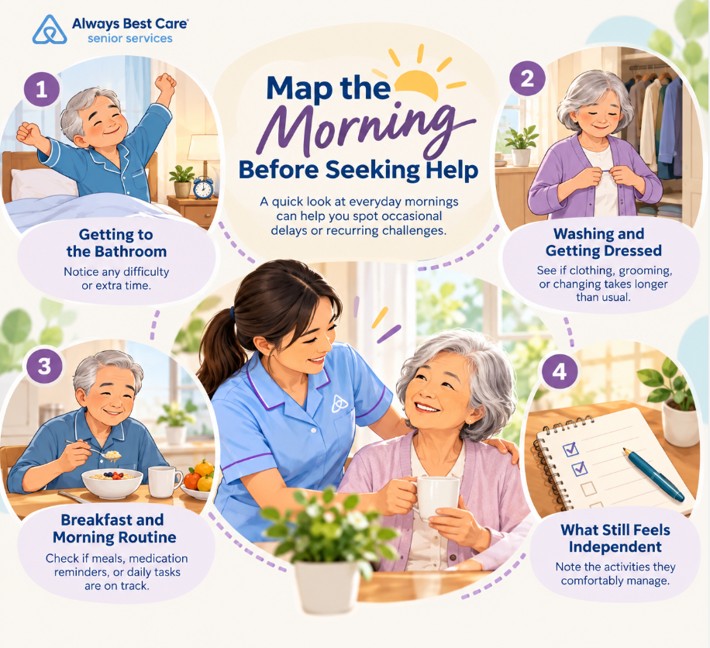
Map the Morning Before Seeking Help
Families often notice the outcome, such as a parent not being ready for an appointment, without seeing where the routine breaks down. A simple observation over several ordinary mornings can show whether the issue is an occasional delay or a recurring barrier.
Use this sequence to identify what support would actually be useful:
- Start with waking and getting up. Note whether the senior gets out of bed safely, needs extra time, or avoids standing without something to hold.
- Follow the path to the bathroom. Watch for hesitation, furniture grabbing, poor lighting, clutter, difficulty with clothing, or reluctance to use a certain room.
- Look at washing and dressing. Separate choosing clothes from putting them on. A person may still make personal choices but need help with socks, fasteners, shoes, or grooming.
- Observe breakfast and morning reminders. Notice whether food is prepared and eaten, whether drinks are within reach, and whether routine reminders are enough.
- Write down what remains independent. Include tasks the senior completes comfortably, as well as the level of prompting, standby support, or hands-on help needed.
For example, a parent who spends forty minutes getting ready once after a poor night may not need a new arrangement. A parent who repeatedly skips bathing, cannot safely pull-on pants, and misses breakfast because the morning feels overwhelming may benefit from scheduled assistance.
This kind of map keeps families from choosing too much help too soon or waiting until the situation becomes harder to manage. It can also support a more thoughtful conversation about comforting daily routines for seniors at home.
Which Support Option Fits the Need?
The right arrangement depends on the tasks involved, the senior’s comfort, and whether help can be provided consistently. A family member who can reliably assist with breakfast may be enough for one household, while personal care needs may require a more structured plan.
| Support Option | Consistency | Hands-On Assistance | Family Oversight |
|---|---|---|---|
| Family-Led Morning Help | Depends on availability | Varies by comfort and ability | Usually high |
| Informal Check-Ins | Often limited | Usually minimal | Still needed |
| Professional In-Home Support | Scheduled around needs | Can include personal care | Shared through communication |
The table is not a ranking. It is a practical way to match the arrangement to the real demands of the morning.
Family-Led Morning Help
Family-led help can fit when a relative lives nearby, has dependable availability, and can safely handle the needed tasks. It may work especially well for simple check-ins, breakfast setup, transportation, or a few routine reminders.
The weak point is consistency. Work schedules, distance, illness, parenting responsibilities, and exhaustion can turn a workable plan into a rushed one. If a senior needs daily toileting, dressing, or mobility support, families should be honest about what can be maintained without strain.
Informal Check-Ins
Informal check-ins can work when the senior is largely independent and needs reassurance more than hands-on care. A neighbor, friend, or relative may call, stop by, or confirm that the person is up and moving through the day.
This option is less suitable when help involves private tasks, physical steadiness, or close observation. A phone call cannot tell someone whether an older adult is struggling to transfer from bed or has not eaten because opening containers is difficult.
Professional In-Home Support
Personalized in-home care assistance for daily morning routines may be a better fit when morning needs occur regularly, require personal care assistance, or cannot be covered reliably by family. Care may include help with bathing, dressing, grooming, toileting, meal preparation, light household tasks, companionship, and reminders.
A scheduled caregiver can also give adult children more room to be family rather than managing every morning task. Thoughtful care planning helps families coordinate daily responsibilities while allowing older adults to maintain familiar routines, personal preferences, and independence at home.
Morning Assistance Should Preserve Choice
Morning help should not turn an older adult into a passive observer of their own day. The most respectful approach starts with choices that still belong to the senior, including when to get up, what to wear, how they prefer to wash, and what they would like for breakfast.
A caregiver may lay out clothing options rather than decide what someone wears. They may offer a steady arm while the person does as much dressing as possible, or provide a reminder before stepping in with hands-on help. The right level of assistance may change from task to task.
Privacy matters most during bathing, dressing, and toileting. Families should discuss what help is welcome, what should be offered only when requested, and how a caregiver should communicate before entering a bedroom or bathroom.
Resistance to help is common, especially when a parent sees assistance as a loss of independence. Framing support as a way to keep control over the day can be more productive than focusing only on what has become difficult. Starting with a limited morning schedule may feel more acceptable than making a broad change all at once.
What Should Families Discuss with Providers?
A useful care conversation is specific. General statements such as “Mom needs help in the morning” leave too much unclear, while a clear routine helps a provider understand the support needed.
Before arranging care, discuss these details:
- The usual wake-up time, bedroom setup, and typical sequence from bed to breakfast.
- Mobility concerns, including stairs, transfers, use of mobility aids, fear of falling, or rooms the senior has begun avoiding.
- Personal-care boundaries, preferred products, modesty concerns, and how much hands-on help is acceptable.
- Food preferences, hydration habits, dietary instructions already provided by a clinician, and breakfast preparation needs.
- Reminder needs, including appointments, routine medications, glasses, hearing aids, or other daily essentials.
- Household details such as pets, clutter, entry instructions, laundry needs, and areas that create safety concerns.
- Scheduling expectations, family updates, and what should happen if the senior’s usual ability or condition changes.
The conversation should also cover what the caregiver should not do. Non-medical home care can support daily tasks and report concerns to the appropriate family contact, but clinical questions and changes that need medical evaluation should be directed to the appropriate healthcare professional.

Choose Help That Supports a Sustainable Morning
The decision is not simply whether a parent can still complete a morning routine. It is whether the routine is safe, comfortable, and sustainable for the senior and for the people trying to help. Home care in Kingwood, TX, may be worth considering when small struggles are becoming regular, family coverage is uncertain, or personal care is no longer something a loved one can manage privately and safely.
Revisit the plan as abilities and preferences change, and seek appropriate clinical input for new or urgent symptoms. Always Best Care of Kingwood can help your family discuss personalized morning care assistance based on your loved one’s daily needs and preferences. Call (832) 852-5292 to explore available home care options.