
How Senior Caregivers Assist with Bathing and Grooming at Home
Families exploring home care services in Houston, TX may find that bathing and grooming assistance helps older adults maintain their personal hygiene, comfort, and independence at home. Everyday activities such as showering, washing hair, getting dressed, and completing grooming routines can become challenging with age, particularly when mobility limitations, fatigue, or balance concerns make these tasks more difficult.
Personal care assistance does not mean taking control away from seniors. Depending on individual needs, caregivers may provide nearby supervision, hands-on assistance, or help preparing the bathroom while respecting privacy, personal preferences, and familiar habits. The goal is to make daily routines more manageable while allowing older adults to remain involved in their own care.
Table of Contents
When Personal Care Starts Feeling Difficult
Bathing and grooming may become difficult long before a senior asks for help. A person may skip showers, wear the same clothing repeatedly, avoid washing their hair, or stop using an upstairs bathroom because stepping into the tub feels uncertain.
These changes are often related to privacy concerns, fear of falling, pain, fatigue, or embarrassment rather than a lack of interest in personal hygiene. Recognizing these challenges early can help families introduce appropriate assistance without making seniors feel that their independence is being taken away.
What Changes Might Families Notice?
Families may notice damp towels left unused, unopened grooming supplies, body odor, unwashed hair, or clothing that no longer fits the weather or occasion. A parent may also insist they already bathed when they have not, especially if memory changes make routines harder to track.
Avoiding a certain room can be an important clue. If an older adult stops using the shower they have used for years, it may signal that reaching it, standing safely, or getting in and out has become more difficult.
Personal Preferences Still Guide the Routine
Personal care should follow the older adult’s normal habits as closely as possible. That includes preferred bath times, products, clothing choices, hairstyle, shaving routine, and whether they prefer a shower, sponge bath, or partial wash on a particular day.
Accepting help can feel deeply personal. A caregiver can support the parts of the routine that have become hard while leaving the senior in charge of the parts they can still do safely.
What Does Bathing Help Usually Include?
Bathing and grooming assistance may range from standby support to direct help, depending on the person’s mobility, comfort, and the provider’s policies. A clear care plan helps everyone understand what the caregiver will do and where the older adult wants to remain involved.
| Support Area | Standby Help | Hands-On Help | Family Consideration |
|---|---|---|---|
| Showering | Nearby supervision | Washing hard-to-reach areas | Transfer ability |
| Dressing | Clothing laid out | Help with fasteners | Personal style |
| Hair care | Items prepared | Washing or brushing | Product preferences |
| Oral care | Reminders and setup | Help as appropriate | Denture routine |
| Toileting | Nearby support | Personal assistance | Privacy needs |
The level of bathing and grooming assistance should reflect the senior’s abilities, comfort, and personal preferences. Families can use these distinctions to discuss appropriate responsibilities with the care provider, establish clear expectations, and make adjustments as needs change. The goal is to provide practical support while preserving dignity, privacy, and independence during everyday personal care routines.
Bathing Support and Safety Assistance
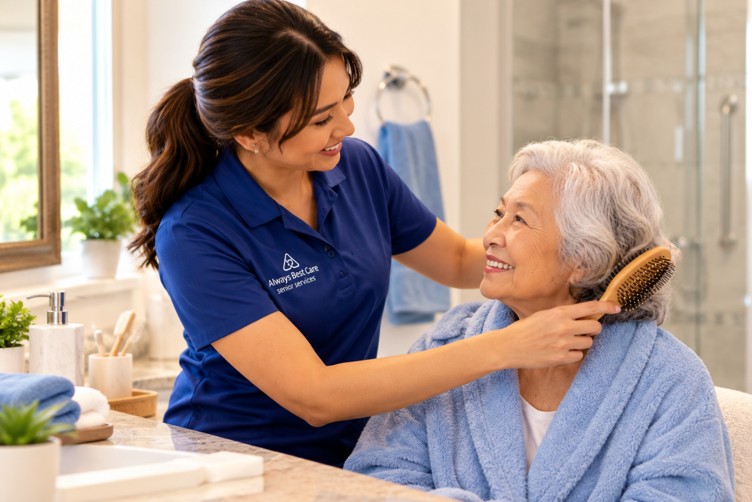
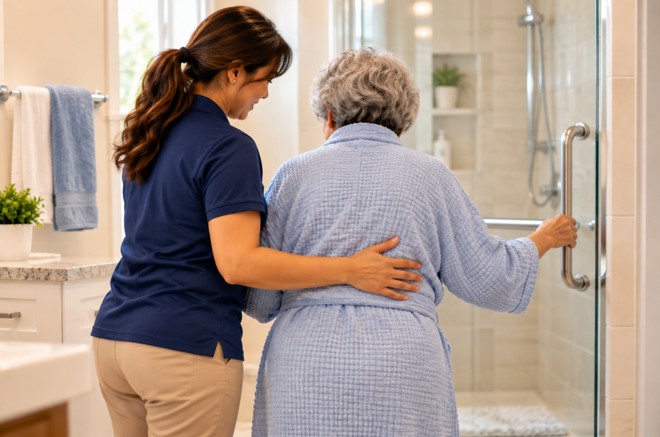
A caregiver may help prepare a warm, uncluttered bathroom; set out towels and clothing; adjust the pace; and stay close while the person walks, stands, or uses the shower. They may assist with washing areas that are difficult to reach and help dry thoroughly, especially where moisture could cause discomfort.
The level of support should match the senior’s abilities on that day. Someone who usually manages with supervision may need more help after a poor night’s sleep or during a period of weakness.
Grooming Tasks That Support Daily Comfort
Grooming often includes brushing hair, shaving support, skin moisturizing, oral-care setup, nail care within provider policy, dressing, and choosing clean clothing. These are not merely appearance tasks. Feeling clean and put together can help an older adult feel ready to visit with others, leave the house, or simply enjoy the day.
Which Tasks Need a Family Discussion?
Families should discuss sensitive tasks before the first visit, especially bathing, intimate hygiene, toileting, incontinence care, shaving, and help with dressing. Ask what level of personal assistance is available and how the agency handles a senior who declines care.
A direct conversation upfront avoids a caregiver arriving without enough information or a family assuming help will be provided in a way the senior does not want.
Before the Bathing Routine Begins
The best bathing routine usually begins before anyone turns on the water. Families should identify the bathroom the senior prefers, where clean clothes are kept, which products are familiar, and whether the person wants a family member nearby for the first visit. Small details, such as a preferred robe or a towel warmed in the dryer, can make an unfamiliar situation feel less intrusive.
The environment matters as much as the task. Preparing the bathroom ahead of time helps reduce unnecessary rushing and allows caregivers to focus on the senior’s comfort and safety.
Before bathing assistance begins, families can review these practical preparations:
- Clear walking paths. Remove clutter and obstacles between the bedroom and bathroom.
- Check bathroom safety. Ensure adequate lighting, appropriate non-slip surfaces, and accessible grab bars where needed.
- Organize personal items. Keep towels, clean clothes, toiletries, and preferred grooming products within easy reach.
- Consider comfort and privacy. Prepare a comfortable room temperature and discuss how much assistance the senior prefers.
- Choose a suitable time. Schedule bathing when the senior typically feels rested, comfortable, and steady.
These preparations can make personal care feel more familiar and manageable. A caregiver should not have to search through cabinets while the senior waits undressed or uncomfortable.
It also helps to plan around energy levels. Some people are steadier in the morning, while others prefer privacy later in the day. If a couple is aging at home together, personal care schedules should respect both partners’ routines and shared space.
Families may also benefit from learning about in-home care support for couples aging together when coordinating personal care and other household responsibilities.
Preparing the bathroom, respecting familiar habits, and communicating personal preferences can help create a more comfortable bathing experience. With thoughtful planning, seniors can receive appropriate assistance while maintaining their dignity and involvement in everyday routines.
During Close-Contact Care
Close-contact care should feel calm, explained, and consent-based. A caregiver should tell the older adult what is happening before helping, ask permission where appropriate, and give the person time to respond. Even when a senior needs substantial assistance, they should not be talked over or hurried through a routine.
How Is Privacy Protected During Care?
Privacy is protected by closing doors, using towels or robes to cover areas not being washed, and exposing only the area receiving care. A caregiver can also step out while the senior completes a private task, then return when asked.
Bathing assistance preserves dignity when the caregiver offers choices and respects modesty. A senior may prefer to wash their face, chest, or private areas independently, even if they need help with balance or reaching their feet.
Comfort Cues Can Change the Plan
A senior may become tired, cold, embarrassed, frustrated, or confused partway through the routine. Caregivers should notice these cues and slow down, offer a break, or shift to a shorter routine when appropriate.
Nonmedical caregivers assist with everyday tasks and safety support. They do not diagnose skin concerns, determine the cause of pain, provide treatment, or replace nurses, therapists, or physicians. New wounds, persistent pain, unusual skin changes, or a sudden change in ability should be shared with an appropriate health professional.
What Should Families Communicate Beforehand?
Share the person’s usual routine, mobility concerns, communication style, cultural preferences, and topics that may cause distress. Mention whether the senior prefers a caregiver of a particular gender, how they respond when they feel rushed, and whether they need reminders before a bath day.
Families should also decide how often do families expect updates from caregivers, especially when relatives live in different households. Clear expectations help families stay informed without making every care visit feel monitored.
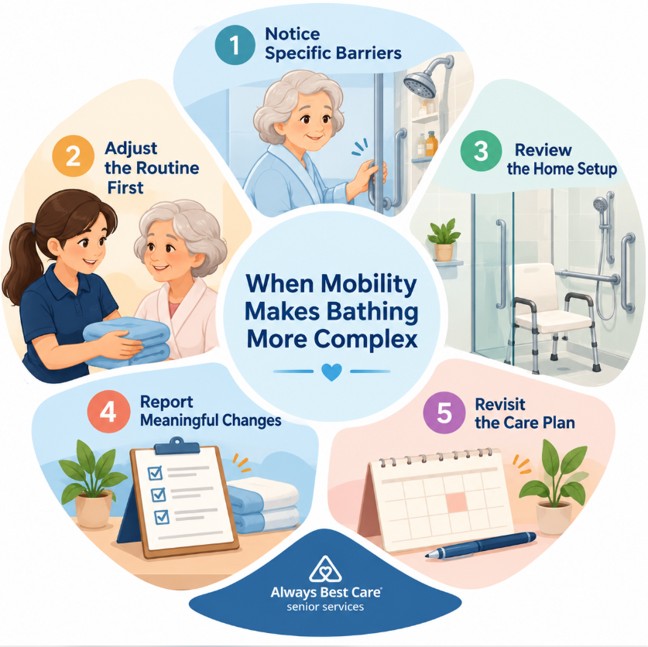
When Mobility Makes Bathing More Complex
Bathing becomes more complex when balance, endurance, pain, confusion, or skin condition changes the person’s ability to participate safely. Use a deliberate process rather than assuming yesterday’s routine will work today.
- Notice the specific barrier. Determine whether the difficulty is stepping over a tub edge, standing long enough to wash, reaching lower legs, remembering the steps, or tolerating the water temperature.
- Adjust the routine first. A seated wash, shower chair if appropriate, shorter routine, or grooming on a different day may be more manageable than pushing through a full shower.
- Review the home setup. Keep needed items within reach and remove tripping hazards. Avoid asking an unsteady person to carry towels, clothing, or toiletries while walking.
- Report meaningful changes. Sudden weakness, new pain, dizziness, confusion, or skin changes deserve guidance from an appropriate health professional. A nonmedical caregiver can observe and communicate concerns but does not assess or treat them clinically.
- Revisit the care plan. If hands-on support is becoming more frequent, discuss whether the schedule, task list, or level of assistance needs to change.
Waiting until a fall, near-fall, or repeated hygiene problem occurs can leave the senior feeling ashamed and the family reacting under pressure. Earlier planning gives everyone more room to preserve familiar routines.
Choosing Home Care Services in Houston
The right provider should be willing to talk through the practical details, not just promise general help. Ask how caregiver compatibility is considered, how preferences are recorded, what communication families can expect, and what happens when bathing needs change. Explain whether your parent needs support once a week, at certain times of day, or alongside other daily assistance such as meals, errands, companionship, or medication reminders.
Bring a short list of routines, mobility concerns, preferred products, privacy boundaries, and questions about changes you have noticed. As you explore home care services in Houston, TX, Always Best Care of Kingwood can help your family discuss personalized bathing and grooming assistance that respects your loved one’s comfort, dignity, and independence. Call (832) 852-5292 to learn more about available care options.