Senior Wound Recovery at Home: What Norfolk Families Should Watch For
A small cut or scrape may be relatively simple to manage, but wounds can become more complicated as a person grows older. Aging skin is more fragile, healing may take longer, and existing health conditions can create additional concerns.
For families in Norfolk caring for an older loved one at home, knowing what to watch for during recovery can make an important difference. A wound that does not appear to be improving, or a noticeable change in the senior’s overall condition, may require professional attention.
Families do not need to assess or treat complex wounds themselves. Qualified home health professionals can provide skilled wound care when it is part of the senior’s treatment plan, while nonmedical caregivers can assist with everyday activities that may become more difficult during recovery.
Table of Contents
Why Can Wounds Be More Difficult for Older Adults?
Skin naturally changes with age. It becomes thinner and more fragile, which can make older adults more vulnerable to cuts, skin tears, and pressure injuries. Older adults may also be less able to bounce back as quickly from injuries, and the body’s healing process may slow over time.
Certain health conditions can add another layer of difficulty. Diabetes, poor circulation, limited mobility, and other long-term conditions may affect healing or increase the risk of complications.
Nutrition and hydration can matter during recovery as well. Older adults who do not receive enough protein, vitamins, minerals, or fluids may have more difficulty supporting the body’s normal healing process.
Because several factors can influence recovery, families should follow the wound care instructions provided by their loved one’s healthcare professionals.
Know Which Wounds May Need Skilled Care
Not every minor injury requires skilled nursing. However, certain wounds may need professional assessment, treatment, or continued monitoring based on the individual’s circumstances and established care plan.
Recovery Following a Procedure
Surgical incisions and other wounds following a procedure may require continued professional care or monitoring after an older adult returns home. Families should follow the instructions provided by the healthcare team regarding ongoing wound care.
Wounds Connected to Ongoing Health Concerns
Pressure injuries and wounds associated with diabetes or circulation concerns may require additional professional attention. The appropriate approach should be determined by a qualified healthcare professional familiar with the senior’s needs.
Persistent or More Significant Wounds
Skin tears that are difficult to heal, burns, significant injuries, or wounds that are not progressing as expected may also require professional evaluation.
The appropriate level of care depends on the individual, the type of wound, and the treatment plan established by a healthcare provider. Families should not independently determine treatment for a complex or persistent wound.
Pay Attention to Changes Around the Wound
One of the most useful things families can do is become familiar with what their loved one’s healthcare team has told them to expect during recovery.
Noticeable changes in redness, warmth, swelling, discomfort, drainage, odor, or appearance can be communicated to the appropriate healthcare professional. Families do not need to determine why the change occurred or whether it represents a complication.
The senior’s healthcare team can provide guidance about what changes should be reported and when additional medical attention may be appropriate. This may be particularly important when an older adult has other health concerns that could affect recovery.
Watch the Senior’s Overall Condition Too
The wound itself is not the only consideration during recovery. Changes in how an older adult feels, behaves, moves around the home, or manages familiar activities may also be useful to communicate to the healthcare team.
Family members often know what is typical for their loved one. If they notice a sudden or concerning change in the senior’s overall condition, they should follow the healthcare team’s instructions about when and whom to contact.
Families should avoid assuming that an unexpected change is simply part of aging. Medical questions and concerns should be directed to an appropriate healthcare professional, with urgent or emergency assistance sought when necessary.
What Can a Home Health Nurse Do for Wound Care in Norfolk?
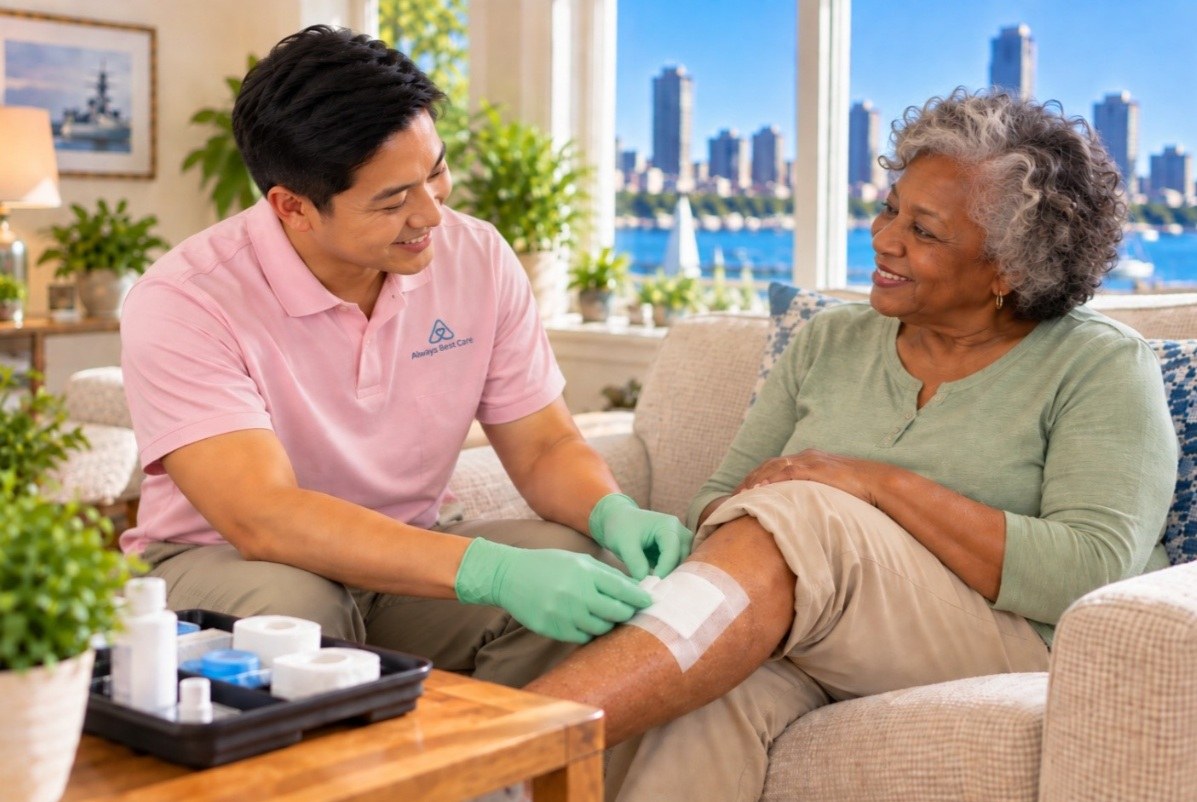
When skilled nursing is part of a senior’s home health care plan, a qualified nurse may provide professional services at home according to the established treatment plan and healthcare-provider instructions.
| Area of Skilled Support | What It May Include |
|---|---|
| Wound Care | Professional assessment, monitoring, cleaning, and dressing changes |
| Education | Helping the senior and family understand professional care instructions |
| Care Coordination | Communicating relevant changes or concerns with the healthcare team |
The specific services provided will depend on the senior’s individual care plan and professional instructions. This support may be particularly useful when an older adult returns home following surgery, hospitalization, or rehabilitation.
Reduce Pressure-Injury Risks During Recovery
Mobility may temporarily decrease when an older adult is recovering from surgery, illness, or another medical concern. For seniors who already have difficulty moving, spending extended periods in one position can place pressure on certain areas of the body and make them more likely to get pressure injuries.
The senior’s healthcare team may recommend steps such as:
- Changing positions according to the care plan.
- Keeping the skin clean and dry.
- Using appropriate pressure-relieving equipment.
- Supporting adequate nutrition and hydration.
- Following mobility recommendations from healthcare professionals.
The heels, hips, tailbone, and elbows are among the areas that may be vulnerable to pressure injuries.
Families and caregivers should follow the specific prevention and positioning guidance provided for the individual rather than creating their own clinical routine.
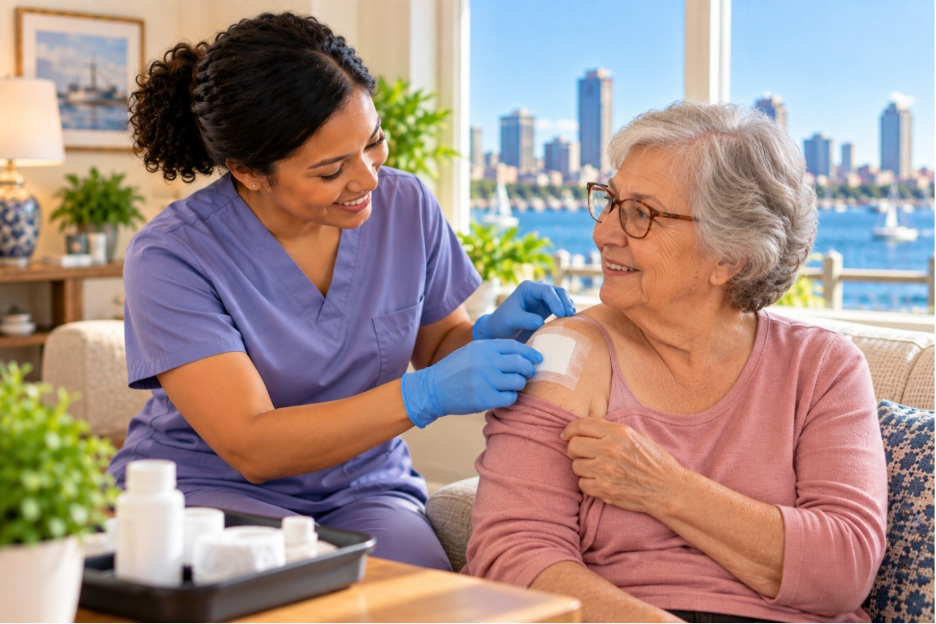
Make Everyday Activities Easier During Recovery
Healing from a wound may affect more than the injured area. Reduced mobility, weakness, discomfort, or activity restrictions can make everyday responsibilities harder.
An older adult may temporarily need additional help with:
- Preparing meals
- Bathing and dressing
- Light housekeeping
- Moving safely around the home
- Medication reminders
- Transportation to appointments
- Companionship and daily routines
These forms of assistance are separate from clinical wound care.
A nonmedical caregiver can help with activities of daily living, but wound assessment, dressing changes, treatment decisions, and other clinical responsibilities should remain with qualified healthcare professionals when those services are required.
Keep Communication Going Between Visits
Much of a senior’s recovery happens between scheduled healthcare visits.
Family members and caregivers can help by remaining observant and communicating meaningful changes. If the wound looks different, the senior becomes unusually uncomfortable, or their overall condition changes, those observations can be shared with the appropriate family member or healthcare professional.
Nonmedical caregivers should not diagnose the change or independently alter the treatment plan.
Clear communication can help the appropriate professional decide whether the senior needs additional evaluation or changes to their care.
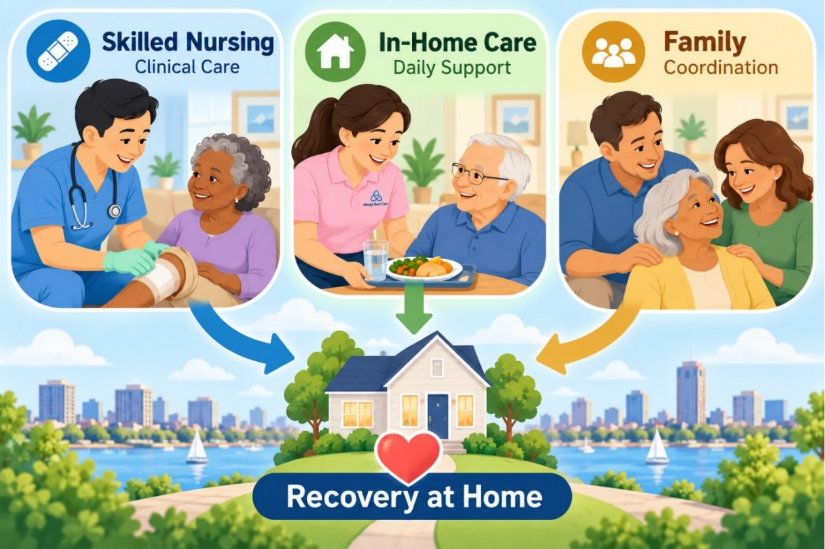
How Can Skilled Nursing and In-Home Care Work Together?
Some older adults may need both professional healthcare services and assistance with everyday activities while recovering at home. Although these types of support can be part of the same recovery experience, their responsibilities remain different.
A home health nurse may provide qualifying clinical services according to the established care plan, while a nonmedical caregiver can focus on meals, personal care, light housekeeping, appropriate mobility assistance, medication reminders based on existing instructions, transportation, companionship, and other everyday routines.
How Always Best Care of Norfolk VA Can Support Recovery at Home
Recovery needs can vary considerably from one older adult to another.
Always Best Care of Norfolk, VA can help families explore available support based on their loved one’s individual needs. Depending on eligibility and available services, skilled home health professionals may address qualifying medical needs, while nonmedical caregivers can assist with everyday activities that have become more difficult during recovery.
Having the appropriate type of support can help an older adult maintain daily routines while following the treatment and recovery plan established by their healthcare professionals.
Support Safer Healing at Home in Norfolk
Families can play an important role during wound recovery by following professional instructions, observing meaningful changes, and helping make everyday routines easier for their loved one.
Complex wounds should remain under appropriate medical supervision. When skilled treatment is needed, qualified healthcare professionals can provide wound care according to the senior’s individual treatment plan.
If your loved one is recovering from a wound, surgery, or another medical issue and could benefit from additional support at home, speak with our Norfolk team about recovery support or call (757) 802-4080 to discuss available care options.