When Does a Wound Need a Skilled Nurse at Home in Arcadia, CA?
Healing from a wound at home sounds straightforward — but for older adults, it rarely is. Skin that was once resilient becomes thinner and slower to repair. Chronic conditions like diabetes or poor circulation can quietly turn a minor wound into a serious medical concern. Knowing when to manage a wound at home and when to call in a skilled nurse can make a real difference in how well — and how safely — a senior recovers.
Table of Contents
What You Will Learn
- Why wound healing can become more difficult in older adults because of thinner skin, reduced circulation, diabetes, limited mobility, nutrition concerns, medications, and other chronic health conditions.
- Which wounds may require clinical assessment or skilled nursing support, including pressure injuries, diabetic foot ulcers, post-surgical incisions, venous or arterial ulcers, skin tears, burns, and wounds that are not healing as expected.
- Warning signs that require prompt contact with a healthcare provider, such as increasing redness, warmth, swelling, worsening pain, foul-smelling drainage, a wound becoming larger or deeper, dark or black tissue, fever, chills, or sudden confusion.
How Aging Changes the Way Wounds Heal
The skin is the body’s largest organ, and it changes significantly with age. Older skin produces less collagen, holds less moisture, and has a reduced ability to regenerate after injury. This means that even a small cut or skin tear can take weeks to close — and may never fully heal without proper care.
Beyond the skin itself, several systemic factors affect wound healing in seniors:
- Reduced circulation limits the delivery of oxygen and nutrients to damaged tissue
- Diabetes impairs immune response and nerve sensation, making it harder to detect or fight infection
- Medications such as blood thinners or corticosteroids can slow clotting and tissue repair
- Nutritional deficiencies — particularly low protein, zinc, or vitamin C — directly impair the body’s ability to rebuild tissue
- Limited mobility increases the risk of pressure injuries in areas like the heels, hips, and tailbone
These factors don’t just slow healing — they can allow a wound to worsen rapidly if left unmonitored.
Types of Wounds That Often Require Skilled Nursing
Not every wound requires a nurse, but certain types carry enough complexity or risk that professional oversight is strongly recommended.
Pressure injuries (bedsores): Caused by prolonged pressure on bony areas, these wounds can progress from surface redness to deep tissue damage quickly — especially in seniors with limited mobility.
Diabetic foot ulcers: Poor circulation and nerve damage in the feet make these wounds particularly difficult to heal and prone to serious infection. Left untreated, they can lead to hospitalization or amputation.
Post-surgical incisions: After a procedure, incisions need to be monitored for proper closure, signs of infection, and appropriate healing — especially if the senior was discharged home sooner than expected.
Venous or arterial ulcers: These wounds, caused by poor blood flow in the legs, are chronic and often require specialized dressings and compression therapy to manage effectively.
Skin tears: Common in older adults with fragile skin, skin tears may seem minor but can become infected or fail to close without proper wound care technique.
Burns: Even moderate burns require careful wound management to prevent infection and minimize scarring.
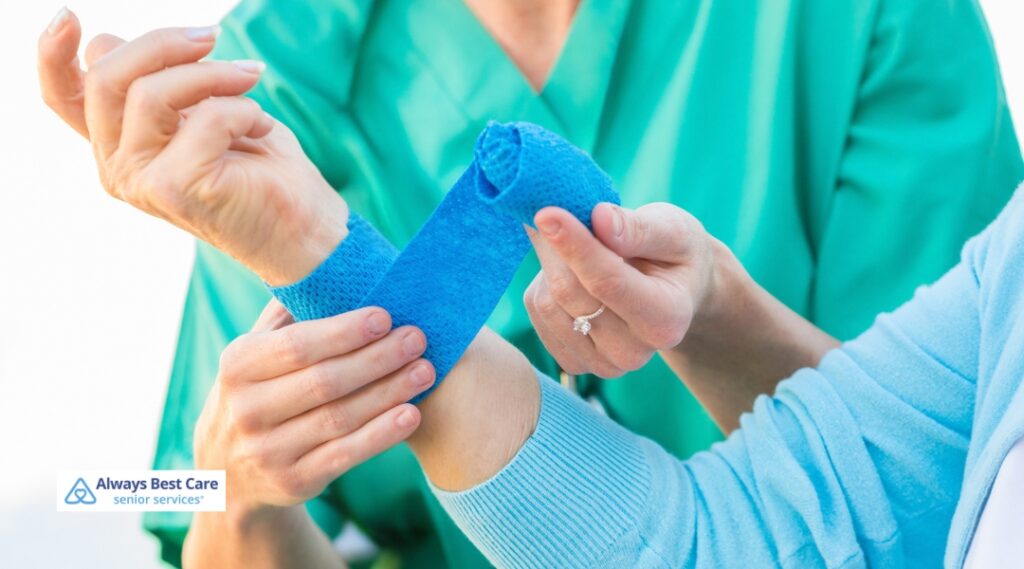
Warning Signs That a Wound Needs Immediate Attention
Families and caregivers should monitor wounds closely and seek medical attention if any of the following appear:
- Increasing redness, warmth, or swelling around the wound
- Discharge that is cloudy, yellow, green, or foul-smelling
- The wound is growing larger or deeper instead of closing
- Fever, chills, or sudden confusion — which may indicate a systemic infection
- Skin around the wound turning dark or black
- Pain that is worsening rather than improving
In seniors with diabetes or compromised immune systems, infections can escalate quickly. When in doubt, contact a healthcare provider rather than waiting to see if the wound improves.
What a Skilled Home Health Nurse Does for Wound Care in Arcadia
When a physician orders skilled nursing as part of a home health plan, a licensed nurse visits the senior at home to provide clinical wound care — no hospital or clinic visit required.
Skilled nursing wound care typically includes:
- Wound assessment: Measuring and documenting the wound’s size, depth, and condition at each visit to track healing progress
- Debridement and cleaning: Removing dead or infected tissue and thoroughly cleaning the wound to reduce infection risk
- Dressing changes: Applying the appropriate type of dressing based on the wound type and stage of healing
- Infection monitoring: Identifying early signs of infection and communicating with the physician to adjust the care plan
- Medication management: Administering or coordinating topical or oral treatments as ordered
- Caregiver education: Teaching family members how to care for the wound between visits, what to watch for, and when to call for help
This level of care is especially valuable after a hospital discharge, when wounds are still fresh and the risk of complications is highest.
Preventing Pressure Injuries Before They Start
For seniors with limited mobility, prevention is just as important as treatment. Pressure injuries are largely preventable with the right strategies in place.
A home health nurse or care team may recommend:
- Repositioning schedules: Changing the senior’s position every one to two hours to relieve pressure on vulnerable areas
- Pressure-relieving equipment: Specialized mattresses, cushions, or heel protectors that distribute weight more evenly
- Skin care routines: Keeping skin clean, dry, and moisturized to maintain its protective barrier
- Nutritional support: Ensuring adequate protein and fluid intake to support tissue integrity
- Regular skin checks: Inspecting high-risk areas — heels, hips, tailbone, elbows, and shoulder blades — at every care visit
Catching early signs of skin breakdown before a wound develops is far easier than treating a pressure injury once it has formed.
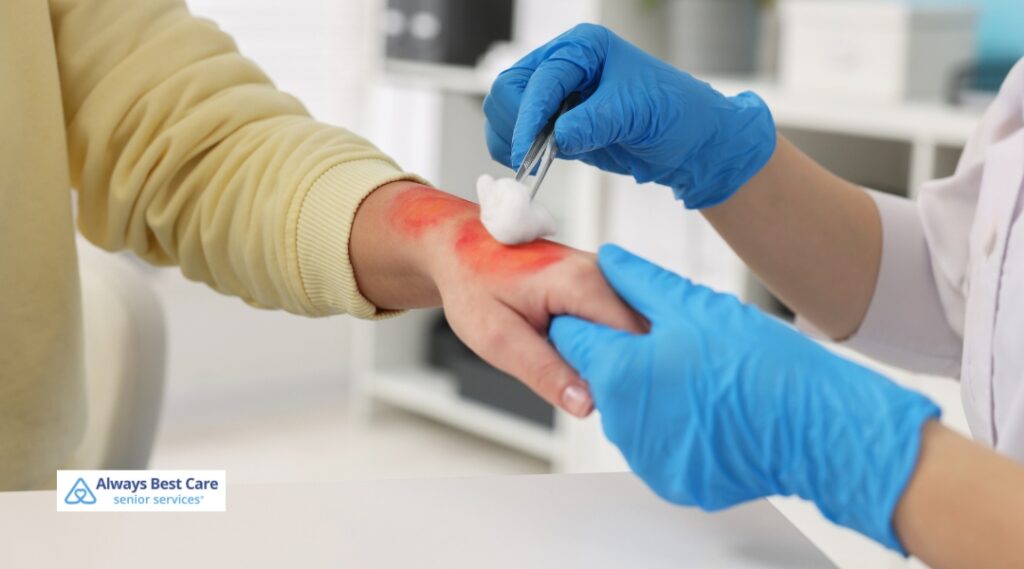
How In-Home Caregivers Support the Healing Process
Skilled nursing addresses the medical side of wound care, but recovery also depends on how well a senior is supported day to day. This is where in-home caregivers play a complementary role.
A caregiver can assist with:
- Preparing nutritious meals that support healing
- Helping with personal hygiene and bathing without disturbing wound sites
- Assisting with mobility and repositioning to reduce pressure injury risk
- Reminding seniors to take prescribed medications on schedule
- Observing and reporting any changes in the wound or the senior’s overall condition to family or the care team
When skilled nursing and in-home care work in coordination, seniors receive both the clinical oversight and the daily support they need to recover safely at home.
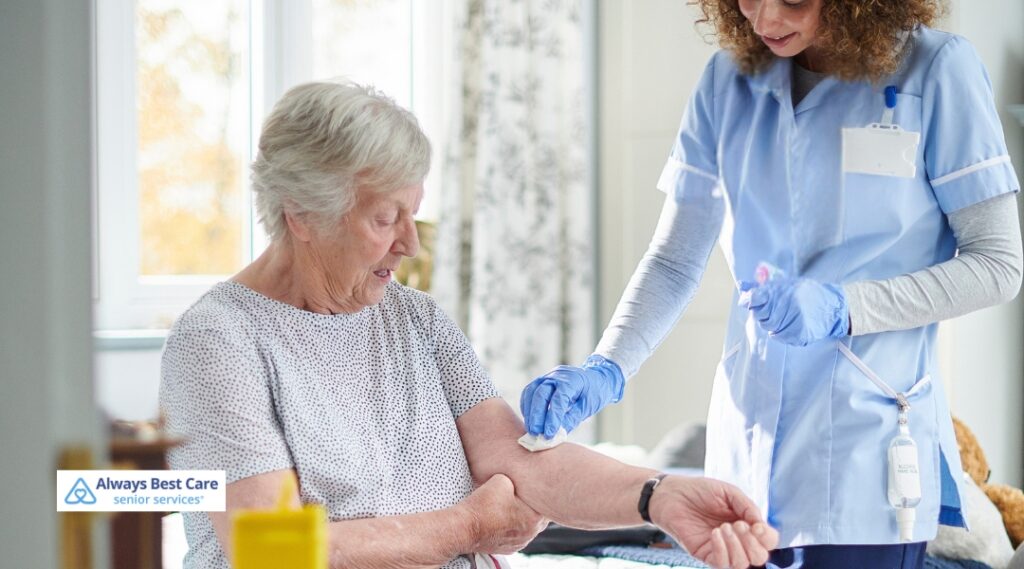
Supporting Safer Recovery in Arcadia
Wound care is not one-size-fits-all — and for older adults, the stakes are higher. A wound that goes unmonitored or is managed incorrectly can lead to serious infection, hospitalization, or long-term complications.
Always Best Care of Arcadia provides services designed to help seniors heal at home with the right level of support. Depending on your loved one’s needs and what is available in your area, services may include skilled nursing through a home health partner and in-home caregiving to assist with daily tasks throughout recovery.
Frequently Asked Questions
Q: How do I know if a wound needs a nurse or if I can treat it at home?
A: Minor wounds — small cuts, superficial scrapes, or minor abrasions — can often be managed at home with proper cleaning and bandaging. However, if the wound is deep, won’t stop bleeding, shows signs of infection, or involves a chronic condition like diabetes, a healthcare provider should evaluate it. When in doubt, it is always safer to get a professional opinion.
Q: Does Medicare cover skilled nursing for wound care at home?
A: Medicare Part A may cover skilled nursing services at home if the patient is homebound, the care is medically necessary, and it is ordered by a physician. Coverage is determined on a case-by-case basis. Contact your healthcare provider or a home health agency to verify eligibility.
Q: How often will a skilled nurse visit for wound care?
A: Visit frequency depends on the type and severity of the wound, the physician’s orders, and how healing progresses. Some wounds require daily visits initially, while others may need care two to three times per week. The nurse will adjust the schedule in coordination with the care team as the wound heals.
Q: Can a wound heal at home even if it is serious?
A: Many serious wounds — including post-surgical incisions, diabetic ulcers, and pressure injuries — can be successfully managed at home with skilled nursing care. Home-based wound care is often preferable for seniors because it reduces exposure to hospital-acquired infections and allows recovery in a familiar, comfortable environment.
Q: What should I do if I notice a wound getting worse between nurse visits?
A: Contact the home health agency or the senior’s physician right away. Do not wait for the next scheduled visit if you observe signs of infection, rapid changes in the wound’s appearance, or a decline in the senior’s overall health.
Sources
- National Institutes of Health (NIH) — Wound Healing in Older Adults
- Centers for Disease Control and Prevention (CDC) — Diabetes and Foot Health
- National Pressure Injury Advisory Panel (NPIAP) — Pressure Injury Prevention
- Medicare.gov — Home Health Services Coverage
- American Academy of Dermatology (AAD) — How Skin Changes with Age
- Wound, Ostomy and Continence Nurses Society (WOCN) — Clinical Resources on Wound Care
Support Safer Wound Recovery at Home
A wound that is not healing properly can become a serious concern for an older adult, especially when diabetes, poor circulation, limited mobility, recent surgery, or other health conditions are involved. Prompt clinical guidance, a clear care plan, and dependable daily support can help families respond earlier and make recovery at home more manageable.
Contact Always Best Care of Arcadia at (626) 778-1441 to learn more and schedule your free consultation.
Link to the markdown version of this blog.