

Veterans Home Care in Norwalk, CT: A Family Guide
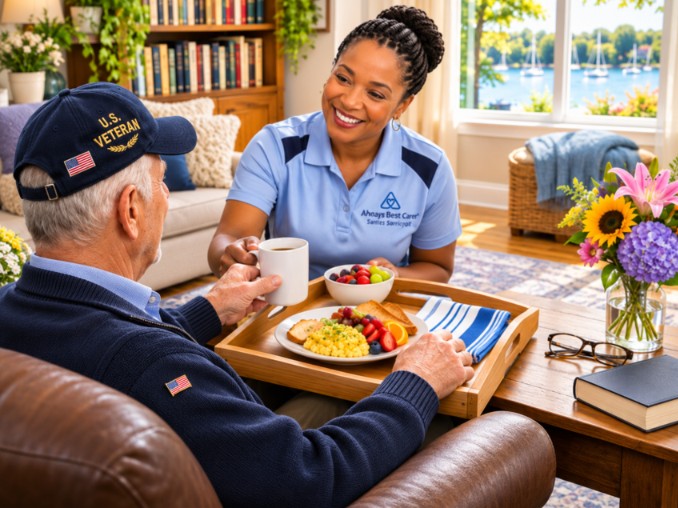
For veterans and families considering home care Norwalk, CT, the best starting point is understanding what would make daily life safer, more comfortable, and easier to manage. Rather than immediately choosing a list of services, families should consider the veteran’s routines, preferences, and responsibilities that have become increasingly challenging.
Many older veterans value their independence and may prefer to continue managing familiar activities without unnecessary assistance. Others may welcome help with meals, transportation, household responsibilities, or companionship while remaining in the comfort of their own homes.
At Always Best Care of Stamford, families can explore personalized home care arrangements that respect veterans’ choices while addressing their changing daily needs.
Table of Contents
Understanding Veterans’ Priorities and Daily Routines
Every veteran has different experiences, abilities, and expectations about receiving assistance.
Some may appreciate regular companionship, while others prefer quiet time and limited interruptions. Understanding these preferences can help families introduce assistance without unnecessarily changing familiar routines.
What Matters Most to the Veteran?
Families should begin by asking which activities the veteran wants to continue managing independently and where additional help would be welcome.
For example, an older veteran may enjoy preparing breakfast but find grocery shopping or cleaning increasingly tiring. Another may prefer assistance with transportation while continuing to organize personal belongings independently.
These conversations help identify support that complements existing abilities rather than replacing them.
How Can Families Respect Personal Boundaries?
Personal boundaries are important when introducing professional caregiving.
Families can discuss preferred schedules, private spaces, communication styles, and whether the veteran has specific preferences regarding caregiver assignments.
Veterans should remain involved in these decisions whenever possible.
Respecting personal boundaries can make assistance feel more comfortable and encourage open communication about changing needs.
When Should Daily Routines Be Adjusted?
Changes in mobility, energy, personal care abilities, or household responsibilities may indicate that familiar routines need additional support.
Families should look for recurring difficulties rather than assuming one challenging day means an older veteran can no longer manage independently.
Adjustments can begin with specific tasks and expand when appropriate.
What Types of Support Can Help Older Veterans at Home?
Veterans may benefit from different forms of assistance depending on their health, household responsibilities, and family involvement.
Understanding the difference between nonmedical home care, clinical services, and family support helps establish appropriate expectations.
Families can explore veterans’ assistance and home care options to learn more about available local support.
Comparing Home Care and Related Support Options
A veteran may need assistance with daily living while also receiving medical care from qualified healthcare professionals.
The following table explains how different support arrangements can work together.
| Type of Support | Examples of Assistance | Primary Purpose |
|---|---|---|
| Nonmedical Home Care | Personal care, meals, companionship, light housekeeping | Daily living assistance |
| Clinical Care | Medical assessment and skilled treatment | Health-related needs |
| Family Assistance | Visits, errands, appointments, shared activities | Personal involvement |
| Care Coordination | Scheduling, updates, shared responsibilities | Organized support |
These arrangements are not necessarily alternatives to one another.
For example, a family member may coordinate appointments while a professional caregiver assists with meals and household tasks. Healthcare professionals can separately address medical concerns.
Keeping responsibilities clearly defined helps prevent misunderstandings and ensures that assistance remains within the appropriate scope of care.
Coordinate Veterans’ Care Across Family Members
When several relatives participate in caregiving, communication becomes especially important.
Without an agreed-upon plan, family members may unintentionally duplicate responsibilities, overlook appointments, or provide conflicting instructions.
A simple communication system can help everyone understand their role while respecting the veteran’s privacy.
Establish Clear Family Responsibilities
Families can assign responsibilities based on availability, location, and individual capabilities.
One relative may coordinate appointments, another may manage household supplies, and another may serve as the primary contact for professional caregivers.
The veteran should participate in these decisions whenever possible.
Maintain Respectful Communication and Care Notes
Clear communication helps family members and professional caregivers stay informed about an older veteran’s daily needs and changing routines. A shared notebook or family-approved digital system can make it easier to organize important updates and avoid misunderstandings.
Families can focus on documenting the following information:
- Upcoming Appointments: Record scheduled medical visits, transportation arrangements, and other important commitments.
- Care Schedule Changes: Note adjustments to caregiver visits, family responsibilities, or daily assistance.
- Meal and Personal Preferences: Document preferred meals, familiar routines, and activities the veteran enjoys.
- Mobility and Daily Concerns: Share observations about changes in movement, comfort, or the ability to complete everyday tasks.
- Questions Requiring Follow-Up: Keep track of concerns that need clarification from caregivers, family members, or healthcare professionals.
Families should agree on who can access these updates and avoid sharing sensitive personal information unnecessarily.
Keeping care notes factual, respectful, and organized can help everyone provide more consistent assistance. Regular communication also allows families to address concerns promptly while respecting the veteran’s privacy, independence, and personal preferences.
6 Essentials of Coordinated Veterans Home Care
Coordinating home care for an older veteran becomes easier when families understand the different types of support that contribute to daily comfort and independence. The following infographic highlights six essential elements of veteran’s home care, from respecting personal choices and providing daily assistance to encouraging companionship, family coordination, and regular care reviews.
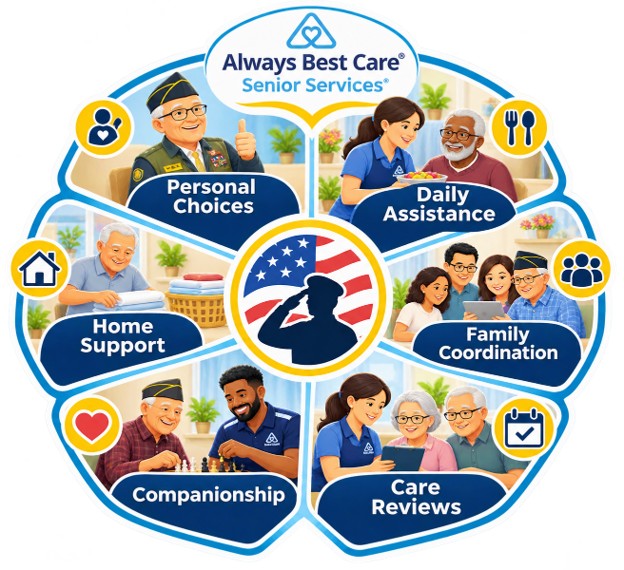
These six essential elements can help families coordinate home care more effectively while respecting each veteran’s personal preferences, familiar routines, and changing needs.
By balancing daily assistance, companionship, family involvement, and regular care reviews, families can create a supportive environment that promotes comfort, dignity, and independence at home.
How Can Families Improve Everyday Comfort at Home?
Comfort involves more than receiving assistance with household responsibilities.
For many older veterans, familiar surroundings, predictable routines, and meaningful activities contribute to a greater sense of independence.
Families can begin with small adjustments that make daily life more manageable.
Practical Ways to Support Comfort and Independence
Before changing a veteran’s routine, families should identify which activities create the most difficulty and which habits remain important.
The following questions can guide practical adjustments.
- Which Activities Cause the Most Difficulty? Identify whether mornings, bathing, meal preparation, household tasks, or transportation require additional assistance.
- Which Familiar Routines Should Continue? Preserve preferred mealtimes, hobbies, reading habits, and social activities whenever practical.
- What Type of Companionship Feels Comfortable? Consider whether the veteran enjoys conversation, shared activities, or quiet company.
- How Can the Home Be Easier to Navigate? Keep frequently used belongings accessible, reduce unnecessary clutter, and discuss appropriate safety improvements.
- Is the Current Support Arrangement Working? Ask whether assistance feels helpful, respectful, and consistent with personal preferences.
These questions encourage families to consider both practical responsibilities and the veteran’s emotional comfort.
Small adjustments can make everyday activities easier without requiring major changes to established routines.
Choosing Veterans Home Care That Fits Individual Needs
Selecting professional assistance involves more than identifying available services.
Families should consider caregiver compatibility, scheduling flexibility, communication expectations, and the provider’s approach to changing needs.
Questions to Ask a Home Care Provider
An initial consultation is an opportunity to understand how caregiving arrangements work in practice.
Families may want to ask about caregiver screening, experience supporting older veterans, schedule adjustments, family communication, and procedures for reporting concerns.
They should also clarify which services are available locally and whether additional coordination is needed for particular responsibilities.
A useful consultation should leave families with a clearer understanding of available options rather than pressure them into making immediate decisions.
Understanding Veterans’ Benefits and Eligibility
Some veterans may qualify for assistance through applicable veterans’ programs, depending on their circumstances and the specific program requirements.
However, eligibility, approved services, provider participation, and potential out-of-pocket costs should be confirmed before families rely on a particular benefit.
Families should contact the appropriate Veterans Affairs representatives or authorized program administrators to clarify coverage and requirements.
Professional nonmedical home care can complement other approved services, but not every caregiving arrangement is automatically covered by veterans’ benefits.
Review Home Care Support as Veterans’ Needs Change
A care arrangement that works well today may require adjustments later.
An older veteran who initially benefits from companionship or household assistance may eventually need more frequent visits, additional personal care, or changes to the family caregiving schedule.
Regular conversations can help identify these needs before responsibilities become difficult to manage.
Recognizing Changes in Daily Responsibilities
Families may notice changes in meal preparation, mobility, personal care, social participation, or the ability to keep track of appointments.
These observations can provide useful information when reviewing an existing care plan.
However, sudden confusion, significant physical changes, or other concerning symptoms should be discussed promptly with an appropriate healthcare professional.
Supporting Family Caregivers Through Flexible Assistance
Family caregivers may also experience changing responsibilities as an older veteran’s needs evolve.
Scheduled professional assistance can help relatives manage personal commitments while ensuring their loved one receives appropriate support.
Families can review respite care support for family caregivers when considering temporary or recurring assistance.
Respite arrangements may provide family caregivers with opportunities to attend appointments, manage household responsibilities, or rest.
Reviewing both the veteran’s needs and the family’s caregiving capacity can help establish a more sustainable arrangement.
Personalized Veterans Home Care in Norwalk, CT
Supporting an older veteran at home begins with understanding personal priorities, respecting established routines, and identifying where assistance would be most helpful.
A thoughtful care arrangement should recognize the veteran’s independence while providing dependable support with everyday responsibilities.
Always Best Care of Stamford offers a free, no-obligation consultation to help families discuss individual care needs and explore available home care options. To learn more about personalized veterans home care, request a veteran’s home care consultation or call (203) 292-6200 to discuss suitable assistance for your loved one.