Wound Care at Home: When Is Skilled Nursing Needed in Stamford, CT?
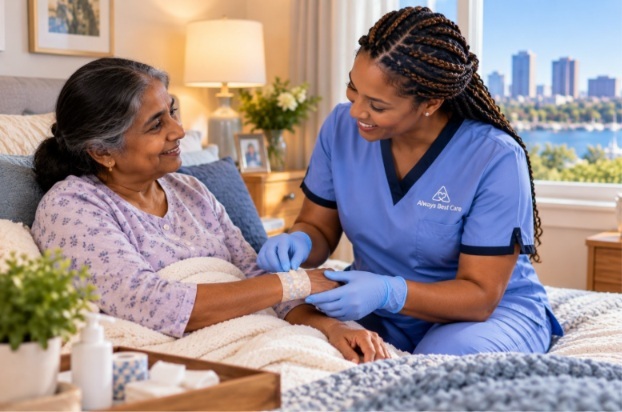
Recovering from a wound can make everyday life more complicated for an older adult. Something that initially seems manageable may require professional attention depending on the type of injury, the person’s overall health, and how recovery progresses.
Families may also find themselves balancing medical appointments with meals, mobility, personal care, household responsibilities, and other everyday needs.
For families in Stamford, understanding the different roles of skilled nursing and nonmedical home care can make planning support easier. Medical wound treatment should remain with qualified healthcare professionals, while caregivers can assist with everyday routines surrounding recovery.
Table of Contents
Why Can Wound Recovery Become More Complex with Age?
Older adults may experience physical changes that make everyday activities and recovery more challenging. They may feel less able to bounce back from changes in activity or routine, while mobility limitations can also affect their ability to comfortably complete everyday tasks.
Existing health conditions may add another layer of consideration. Rather than trying to determine how an injury should be treated, families can communicate concerns to the appropriate healthcare professional and follow the care instructions provided.
What Changes During Recovery Should Families Pay Attention To?
Families can become familiar with how their loved one normally feels and functions throughout the day.
Changes in comfort, mobility, appetite, energy, or the ability to complete familiar activities may be useful to document and communicate to the appropriate healthcare professional.
Families should follow the instructions provided by the senior’s healthcare team regarding when to contact a provider or seek more immediate assistance rather than trying to independently evaluate the wound.
When Might Skilled Wound Care Be Recommended?
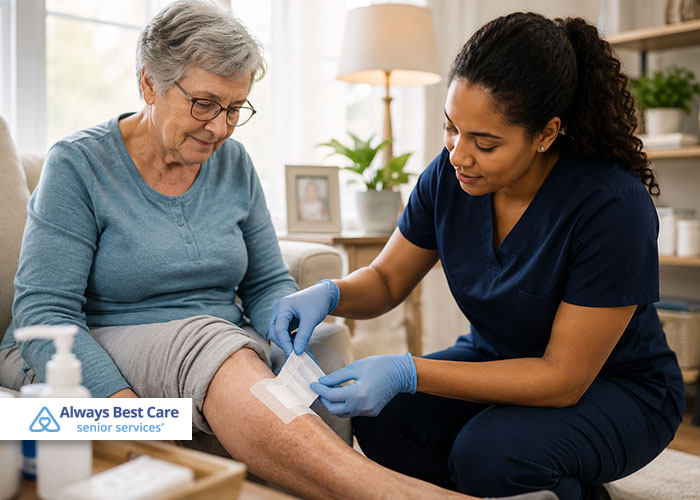
Not every wound requires skilled nursing. A healthcare professional should determine whether medical wound care is needed based on the individual’s circumstances and established treatment plan.
Depending on professional guidance, skilled nursing may be involved when an older adult is recovering from:
- A surgical procedure requiring continued professional care at home.
- A wound requiring ongoing professional monitoring as part of an established treatment plan.
- An injury that is not progressing as expected according to the healthcare team.
- A wound associated with an existing health condition that requires professional management.
- A more significant injury for which a healthcare professional has recommended skilled care.
The healthcare professional overseeing treatment should determine what wound care is appropriate and how it should be provided.
Understand the Different Roles in At-Home Recovery
Skilled nursing and nonmedical home care can both be useful during recovery, but they serve different purposes.
| Type of Support | Primary Role at Home |
|---|---|
| Skilled Nursing | Provides medical care according to an established treatment plan and professional orders. |
| In-Home Caregiver | Assists with nonmedical daily activities such as meals, personal routines, mobility, and light household tasks. |
| Family Members | Provide companionship, help organize appointments, and communicate relevant observations. |
| Healthcare Provider | Directs medical treatment and determines when professional wound care is needed. |
Keeping these roles clear can help families understand which questions should be directed to healthcare professionals and where nonmedical caregiver assistance may fit into the recovery routine.
Supporting Everyday Needs During Recovery
A wound can affect more than the injured area. An older adult may temporarily find it harder to prepare meals, dress, move around the home, complete household activities, or travel to appointments.
Practical support can make these everyday responsibilities easier to manage while the senior follows the recovery plan established by their healthcare team.
Everyday Assistance Can Complement Professional Care
A nonmedical caregiver can focus on the activities surrounding recovery rather than providing medical wound treatment.
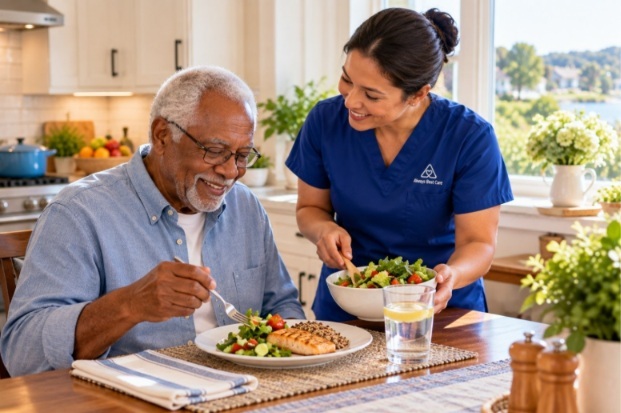
For example, assistance might include preparing meals, helping with personal routines, completing light household tasks, providing companionship, or offering appropriate mobility assistance.
This allows skilled healthcare professionals to remain responsible for medical care while everyday assistance is provided according to the senior’s individual needs.
Mobility May Affect the Recovery Routine
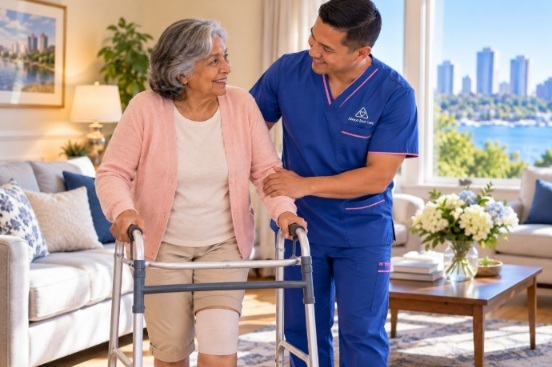
Limited mobility can make daily activities more difficult during recovery. A senior may need additional assistance moving around the home, completing errands, preparing food, or handling other everyday responsibilities.
Families can follow the healthcare team’s instructions regarding activity and positioning rather than independently developing wound-prevention or treatment routines.
They can also consider whether the home environment and daily schedule make it easier for their loved one to follow professional guidance.
How Can Families Support Safer Movement at Home?
Families can focus on keeping commonly used areas accessible and helping with everyday activities according to the senior’s abilities and established care instructions.
When mobility is limited, reducing unnecessary obstacles and providing appropriate assistance with routine activities may also be useful.
Families supporting a loved one with mobility challenges can explore ways to help prevent falls at home while continuing to follow recommendations from the senior’s healthcare professionals.
Bringing Medical Care and Everyday Support Together
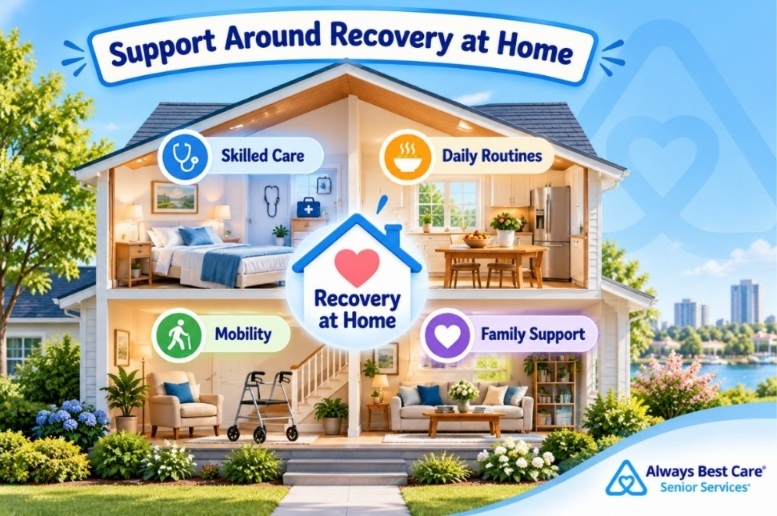
Recovery at home may involve several types of support working alongside one another. A simple visual can help families understand how these roles connect without confusing nonmedical caregiving with skilled medical care.
Coming Home After a Hospital or Rehabilitation Stay
Returning home can involve changes to the senior’s usual routine. Appointments may need to be coordinated, everyday activities may take longer, and temporary assistance may be useful while the older adult adjusts.
Families can follow discharge instructions and direct medical questions to the appropriate healthcare professionals.
How Can Families Make the Transition Home Easier to Manage?
Before or shortly after the senior returns home, families can look at practical everyday needs. Consider whether help is needed with meals, transportation, personal routines, household activities, or mobility.
Keeping important appointments and instructions organized can also make it easier for family members and caregivers to understand their respective responsibilities.
If the senior is receiving skilled nursing, nonmedical caregiver assistance can be coordinated around those visits without replacing professional medical care.
How Always Best Care of Stamford Can Support Everyday Recovery
When an older adult is recovering at home, family members may find themselves handling more daily responsibilities than usual.
Depending on individual needs and available services, nonmedical caregivers may assist with:
- Meal preparation
- Medication reminders based on established instructions
- Personal care and grooming
- Mobility assistance
- Light household activities
- Grocery shopping and errands
- Transportation
- Companionship
Caregivers can also share relevant observations with family members when appropriate so medical concerns can be directed to the healthcare professionals overseeing treatment.
Practical Assistance Can Reduce Everyday Demands
Home care can focus on the responsibilities that have become harder during recovery while allowing the senior to remain involved in activities they can comfortably manage.
A caregiver might prepare a meal, assist with household routines, provide transportation, or offer companionship while the older adult continues following their healthcare team’s recovery instructions.
The amount of assistance can also be revisited as the senior’s everyday abilities and needs change.
Support Recovery with the Right Care at Home
Recovering from a wound can involve both medical needs and everyday challenges. Understanding the difference between skilled wound care and nonmedical home care can help families determine which type of assistance is appropriate.
Healthcare professionals should remain responsible for evaluating and treating wounds, while caregivers can provide practical assistance with the daily activities surrounding recovery.
Always Best Care of Stamford can help families explore personalized support based on their loved one’s everyday routines and care needs.
Call (203) 292-6200 to discuss available care options, or contact our team for personalized home care support during your loved one’s recovery.