Wound Care at Home: When Is Skilled Nursing Needed in Knoxville, TN?
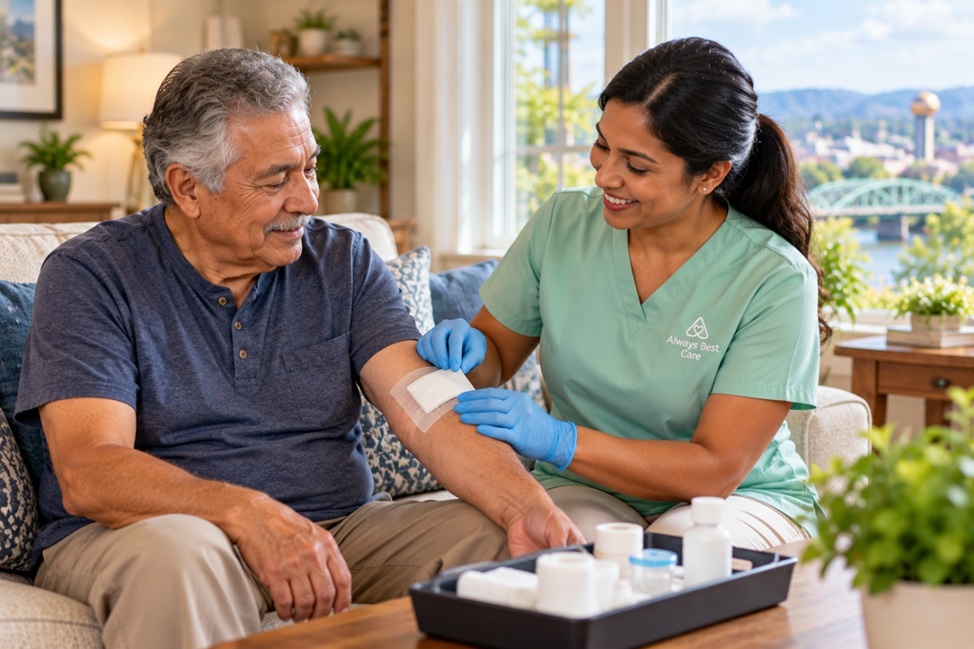
A minor injury may seem manageable at first, but recovery can become more complicated for an older adult. Changes in mobility, everyday abilities, existing health conditions, and other individual circumstances can influence the type of support a senior need.
Families should not have to decide on their own whether a wound requires professional treatment. A qualified healthcare professional can evaluate the situation, determine appropriate care, and provide instructions based on the individual’s needs.
When professional wound care is recommended, skilled nursing may allow eligible seniors to receive certain healthcare services at home. Nonmedical caregivers can serve a different role by assisting with meals, personal care, mobility, transportation, and other everyday responsibilities surrounding recovery.
Table of Contents
Why Recovery at Home May Require Different Types of Support
Older adults may find certain activities more difficult while recovering. Getting dressed, preparing meals, moving around the home, keeping appointments organized, or completing household responsibilities may require more effort than usual.
Existing health conditions and mobility limitations can also affect the individual’s overall care needs. The original article notes that wounds can be more complicated for older adults and that healthcare providers should determine what professional care is appropriate
Changes During Recovery Deserve Attention
Family members are often familiar with their loved one’s usual routines and abilities. They may notice that an older adult is moving differently, finding familiar activities harder to complete, or requiring more assistance than before.
Rather than trying to determine the medical cause, families can organize their observations and share relevant concerns with the appropriate healthcare professional.
Nonmedical caregivers can do the same when they notice meaningful changes during everyday assistance. Medical assessment and treatment decisions should remain with qualified professionals.
When Skilled Wound Care Becomes Part of the Care Plan
Not every injury requires skilled nursing. A healthcare professional should determine whether professional wound care is appropriate based on the individual’s circumstances and established care plan.
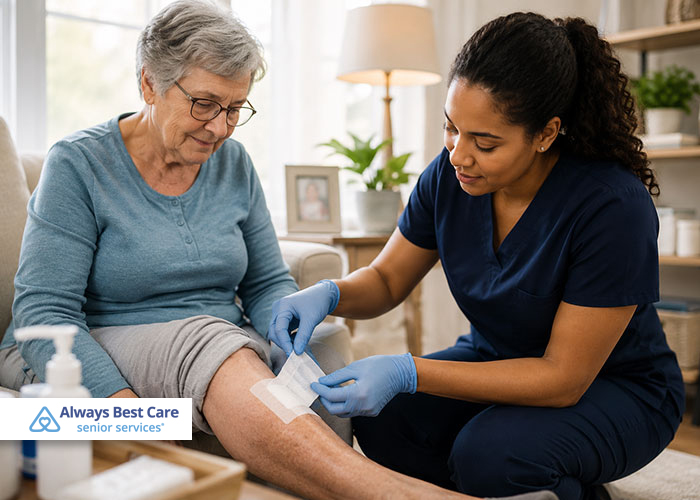
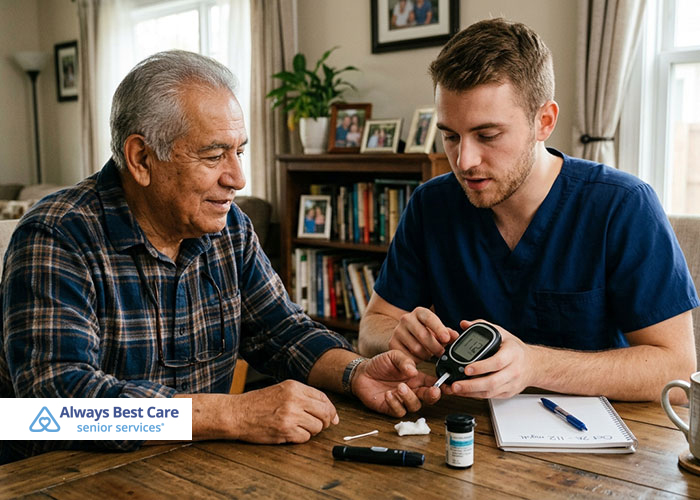
The original source identifies several situations in which professional wound care may be recommended, including surgical incisions, pressure injuries, wounds associated with diabetes or circulation concerns, difficult-to-heal skin tears, significant injuries, and wounds that have not improved as expected.
- A professional evaluation identifies a need for skilled care. Families can follow the recommendations provided by the senior’s healthcare team.
- The senior is returning home with ongoing healthcare needs. This may occur after hospitalization, rehabilitation, surgery, or another procedure.
- Professional monitoring is included in the care plan. A qualified nurse can provide appropriate services according to healthcare-provider instructions.
- The family’s questions go beyond everyday assistance. Concerns about wound treatment, healing, or changes in the senior’s condition should be directed to the appropriate healthcare professional.
Professional Care Follows Healthcare Instructions
When skilled nursing is part of the individual’s home health plan, qualified professionals may provide services according to the established care plan.
The source describes skilled wound-care services such as professional assessment, monitoring, dressing changes, education, and communication with the healthcare team.
Family members and nonmedical caregivers should follow professional instructions rather than independently changing wound-care procedures or treatment.
Skilled Nursing, Home Care, and Family Support Have Different Roles
Recovery at home may involve several people, but each type of support serves a different purpose. Understanding these roles can help families know who to turn to for medical guidance, everyday assistance, and care coordination.
| Type of Support | Primary Role During Recovery |
| Healthcare Provider | Determine appropriate medical treatment and provides healthcare guidance. |
| Skilled Nursing | Provides qualified healthcare services according to the established care plan. |
| Nonmedical In-Home Care | Assists with personal care and everyday activities based on the senior’s support needs. |
| Family Support | Helps coordinate routines, organizes practical needs, and communicates relevant observations. |
These roles can complement one another without replacing each other. Clear communication among families, caregivers, and healthcare professionals can help keep responsibilities organized while the older adult receives the appropriate support during recovery.
Everyday Responsibilities May Still Need Attention
Professional wound care addresses healthcare needs, but an older adult may still need assistance managing ordinary activities throughout the day. This distinction is already supported in the original article, which separates skilled nursing from help with meals, personal care, light cleaning, mobility, and other routines.
Practical Assistance Can Surround Professional Care
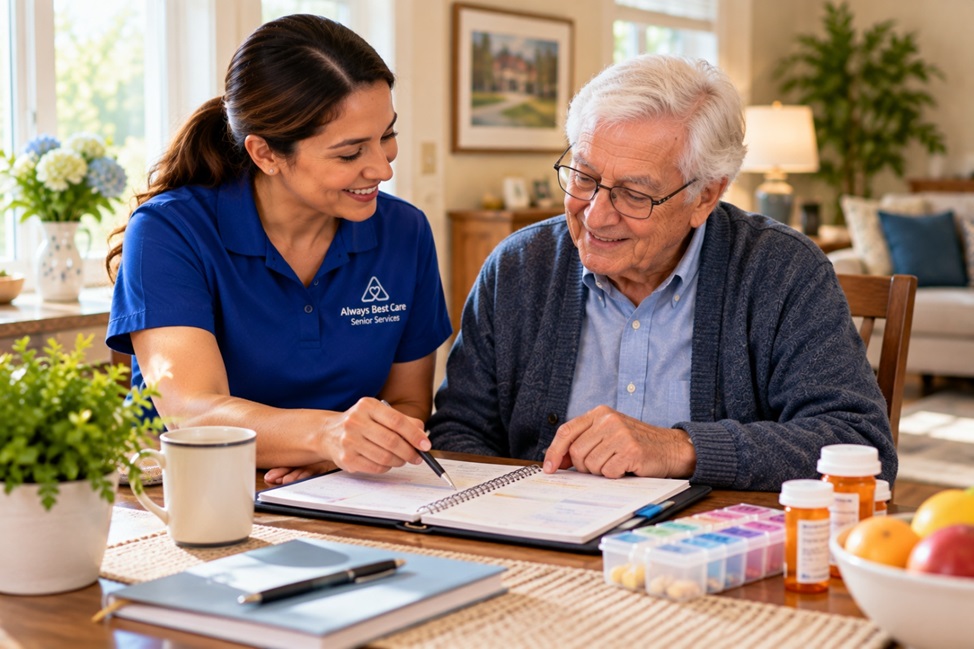
Depending on the senior’s needs and available services, a nonmedical caregiver may assist with:
- Meal preparation
- Personal care and grooming
- Light housekeeping
- Mobility assistance
- Appropriate medication reminders
- Transportation and errands
- Companionship
- Familiar household routines
These services do not replace professional wound treatment. Instead, they can help make the rest of the senior’s day more manageable while appropriate healthcare services remain under professional direction.
Mobility Can Change the Recovery Experience
An older adult recovering at home may find movement more difficult than before. Dressing, preparing meals, moving between rooms, attending appointments, and completing household tasks can all require additional effort.
If the healthcare team provides instructions related to mobility, positioning, or activity, families and caregivers should follow those directions. The current Knoxville version appropriately establishes this distinction between everyday assistance and medical decision-making.
Families can also explore practical ways to help prevent falls at home when mobility changes make everyday movement more challenging.
Familiar Activities Can Continue During Recovery
Recovering from a wound does not necessarily mean an older adult need someone else to take over the entire daily routine.
For example, a caregiver might provide transportation, carry groceries, or handle more physically demanding household tasks while the older adult remains involved in familiar activities, they can comfortably complete.
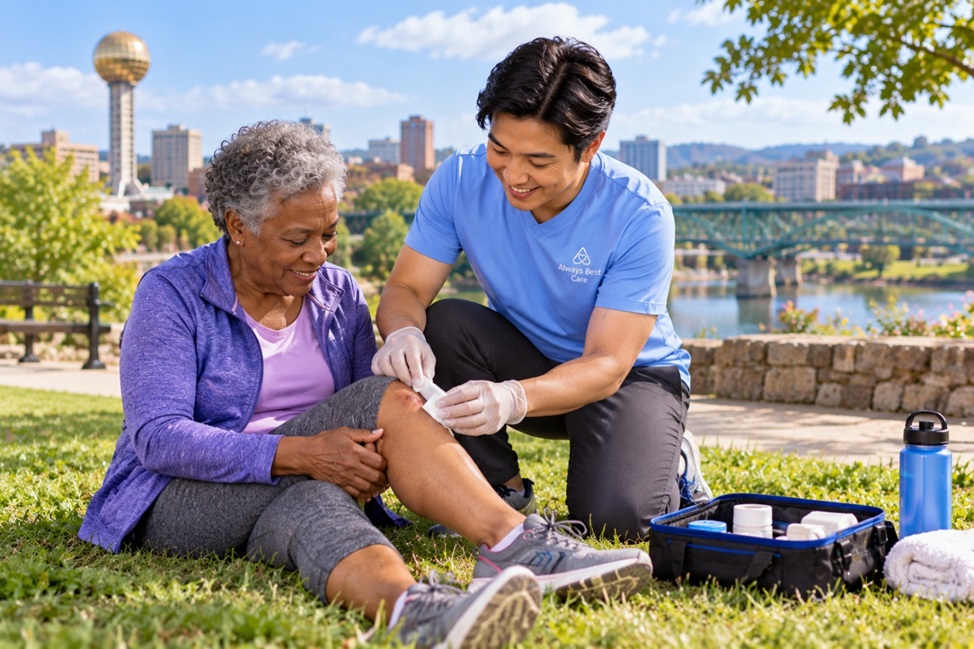
This type of assistance can help make everyday responsibilities more manageable while professional wound care remains under the direction of the appropriate healthcare professionals.
How Different Types of Support Can Come Together During Recovery
Recovery at home may involve several types of support, each serving a different purpose. Understanding how professional care, everyday assistance, mobility support, and family coordination fit together can help Upper BuxMont families navigate their loved one’s recovery with greater confidence.
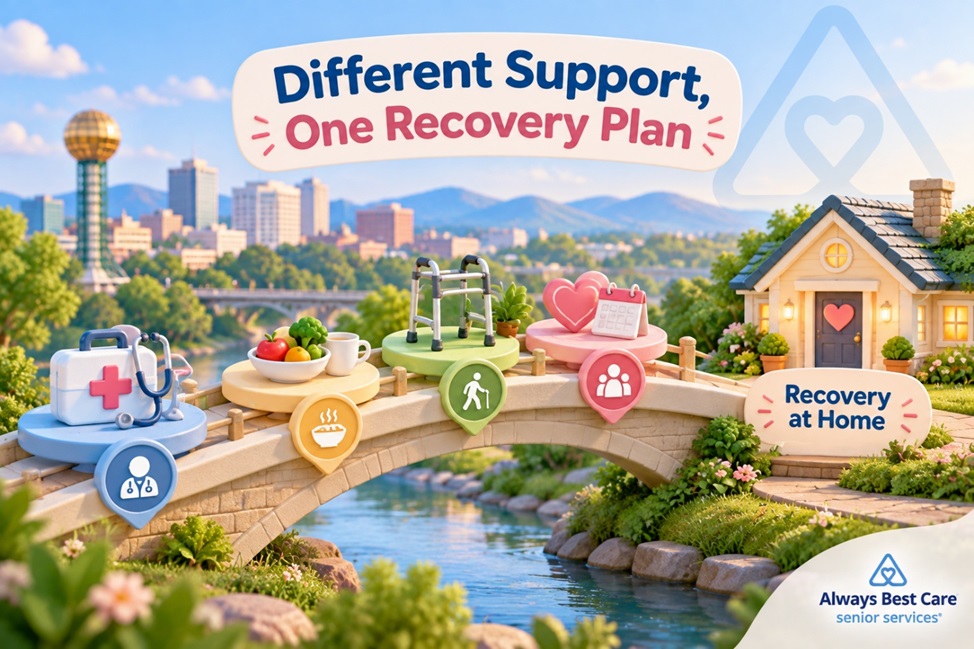
Each type of support has its own role during recovery. Keeping those responsibilities clear can help families coordinate appropriate assistance while ensuring medical needs remain with qualified healthcare professionals.
Returning Home Can Temporarily Change the Daily Routine
Coming home after hospitalization, rehabilitation, surgery, or another procedure may require adjustments to an older adult’s normal schedule. The source specifically notes that professional involvement can be especially relevant during these transitions.
Planning Ahead Can Simplify the Transition Home
Before the senior returns home, families can organize practical responsibilities such as meals, transportation, personal care, household assistance, and appointment schedules.
They can also keep healthcare-provider instructions and important contact information readily available.
Questions about wound care, treatment, symptoms, or recovery instructions should be directed to the appropriate healthcare professional rather than handled through trial and error at home.
Family Caregivers May Need Practical Support Too
Recovery can add several responsibilities to a family’s normal schedule. Relatives may be coordinating appointments and professional services while also managing meals, transportation, personal care, and household needs.
Shared Responsibilities Can Make the Routine More Manageable
Nonmedical home care can provide another source of practical assistance based on the senior’s individual needs and available services.
This does not replace family involvement or professional healthcare. Instead, it can help distribute everyday responsibilities while family members remain involved in their loved one’s recovery.
Frequently Asked Questions
When Might an Older Adult Need Skilled Nursing for Wound Care?
A qualified healthcare professional should determine whether skilled nursing is appropriate. The decision can depend on the individual’s circumstances, healthcare-provider instructions, and established care plan.
Can an In-Home Caregiver Provide Wound Treatment?
Nonmedical caregivers assist with everyday activities rather than skilled wound treatment. When professional wound care is required, it should be provided by an appropriately qualified healthcare professional according to the established care plan.
How Can Families Support a Senior Receiving Wound Care at Home?
Families can organize appointments and everyday responsibilities, follow instructions provided by healthcare professionals, and communicate relevant observations or concerns to the appropriate provider.
These three FAQs are already present in the Knoxville version and clearly reinforce the professional/nonmedical distinction.
Coordinate the Right Support During Recovery in Knoxville
Recovery at home may involve more than one type of assistance. Skilled healthcare professionals can address appropriate medical needs, while nonmedical caregivers can help an older adult manage meals, personal care, transportation, mobility, household responsibilities, and other familiar parts of the day.
Always Best Care of Knoxville can help families explore available services based on their loved one’s individual circumstances and everyday support needs.
Call (865) 259-7770 to discuss available care options, or speak with our Knoxville team about personalized recovery support to explore assistance that fits your loved one’s changing routine.