
Dehydration in Older Adults: What Vacaville Caregivers Need to Know About Fading Thirst

For most of us, thirst is a built-in reminder to drink water. But for older adults, that signal often fades, quietly and gradually, leaving the body under-hydrated without any obvious warning. This is one of the most overlooked health risks in senior care, and for caregivers, understanding it can make a real difference.
What you will learn:
- Why your loved one’s thirst signal fades with age and what that means for their daily health.
- The early warning signs of dehydration every caregiver should recognize before they become serious.
- Simple, practical ways to build hydration into a senior’s everyday routine, from meals to reminders.
- How thoughtful in-home care support helps seniors in Vacaville stay safe, sharp, and thriving at home.
Table of Contents
The Aging Body and Thirst: What Changes
The human body is roughly 60% water, and maintaining that balance is critical for nearly every bodily function. As we age, several physiological shifts make it harder to stay hydrated:
- Reduced thirst perception: The hypothalamus, which regulates thirst, becomes less sensitive with age. Seniors can be significantly dehydrated before they feel the urge to drink.
- Declining kidney efficiency: Aging kidneys are less effective at conserving water, meaning the body loses fluids more quickly.
- Lower total body water: Older adults naturally have less water stored in their bodies, leaving less buffer when fluid intake drops.
- Medication side effects: Diuretics, blood pressure medications, and certain antihistamines can all increase fluid loss.
- Mobility and access barriers: For seniors with limited mobility, simply getting up to pour a glass of water can be a deterrent.
These factors don’t work in isolation — they compound each other, making dehydration a persistent and underestimated risk.

Why Dehydration Hits Seniors Harder
Dehydration in older adults isn’t just uncomfortable — it can be dangerous. Even mild fluid loss can trigger a cascade of health issues that are easy to misattribute to other causes.
Physical effects include:
- Fatigue and muscle weakness
- Headaches and dizziness
- Constipation and digestive discomfort
- Low blood pressure and increased fall risk
- Urinary tract infections
Cognitive effects include:
- Confusion or sudden disorientation
- Difficulty concentrating
- Memory lapses that mimic early dementia symptoms
This last point is particularly important. Dehydration-related cognitive changes are sometimes mistaken for neurological decline, leading to unnecessary concern — or worse, missed treatment. Keeping seniors well-hydrated is one of the simplest ways to protect both their physical and mental sharpness.
Spotting the Warning Signs Early
Because seniors may not feel thirsty even when dehydrated, family members and caregivers need to know what to look for. Early intervention prevents a manageable situation from becoming a medical emergency.
Watch for these signs:
- Dry or sticky mouth and cracked lips
- Dark yellow or amber-colored urine
- Infrequent urination
- Dry, less elastic skin
- Sudden confusion or increased forgetfulness
- Unusual fatigue or weakness
- Dizziness when standing up
If multiple symptoms appear together or worsen quickly, contact a healthcare provider promptly. Severe dehydration can require hospitalization and may have lasting effects on kidney function and cardiovascular health.
Building Hydration Into the Daily Routine
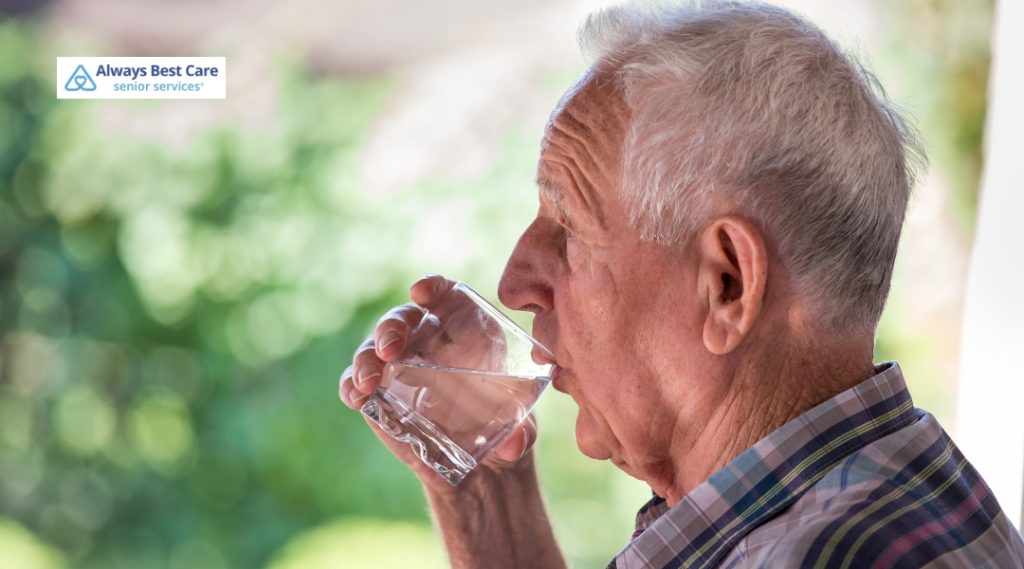
Since thirst can’t be relied on as a trigger, the most effective strategy is making hydration habitual — something that happens on a schedule, not on demand.
Practical approaches that work:
- Pair fluids with meals: A glass of water at breakfast, lunch, and dinner adds up to a meaningful baseline without extra effort.
- Use visual cues: Keep a filled water bottle or pitcher in a visible spot as a constant reminder.
- Set phone or watch reminders: Simple alarms throughout the day can prompt regular sipping.
- Start the day with water: Drinking a glass first thing in the morning helps offset overnight fluid loss.
- Make it enjoyable: Herbal teas, sparkling water, or water infused with lemon or cucumber can make hydration feel less like a chore.
Small, consistent habits are far more effective than trying to “catch up” on fluids after the fact.
Hydration Goes Beyond the Glass
Water is the gold standard, but it’s not the only source of hydration. Many everyday foods contribute meaningfully to daily fluid intake — a helpful advantage for seniors who struggle to drink enough on their own.
High-water-content foods to incorporate:
- Watermelon and strawberries
- Cucumbers and celery
- Oranges and grapefruit
- Lettuce and spinach
- Broth-based soups and stews
- Yogurt and low-fat milk
Building meals around these foods adds hydration naturally while also delivering fiber, vitamins, and minerals that support overall health.

How Caregivers Make a Difference
For seniors living alone or managing chronic health conditions, maintaining consistent hydration can be genuinely difficult. A caregiver’s presence — whether family or professional — can be the deciding factor in whether healthy habits stick.
Caregivers can support hydration by:
- Offering beverages proactively throughout the day, not just at mealtimes
- Preparing hydrating meals and snacks
- Monitoring urine color and frequency as a simple hydration check
- Noting behavioral or cognitive changes that may signal dehydration
- Coordinating with healthcare providers when concerns arise
This kind of attentive, day-to-day support is often what makes the difference between a senior who thrives at home and one who faces repeated health setbacks.
How Always Best Care of Vacaville Supports Healthy Hydration
At Always Best Care of Vacaville, hydration is part of how we approach whole-person care. Our caregivers work with seniors to build practical daily routines that support good nutrition, consistent fluid intake, and overall well-being — all within the comfort of home.
From preparing balanced, hydrating meals to offering gentle reminders and watching for early signs of health changes, our team is committed to helping your loved one stay healthy, comfortable, and independent.
If your loved one could benefit from compassionate, attentive in-home care, we’re here to help. Call Always Best Care of Vacaville at (707)30-68245 to schedule a free care consultation.

Frequently Asked Questions
Q: How much water should seniors drink each day?
A: Most older adults need around 6–8 cups (48–64 oz) of fluid per day, though individual needs vary based on health conditions, medications, activity level, and climate. A healthcare provider can offer personalized guidance.
Q: Why don’t seniors feel thirsty even when dehydrated?
A: Aging reduces the sensitivity of the hypothalamus — the brain region that triggers thirst. This means the body’s internal alarm system becomes less reliable over time, making it easy for seniors to become dehydrated without realizing it.
Q: Are caffeinated drinks like coffee or tea bad for hydration?
A: Moderate amounts of caffeinated beverages do contribute to daily fluid intake, though they have a mild diuretic effect. Herbal teas and decaffeinated options are generally better choices for seniors focused on staying hydrated.
Q: What’s the fastest way to rehydrate a senior who seems dehydrated?
A: For mild dehydration, offering small, frequent sips of water or an electrolyte drink is effective. Avoid large amounts all at once. If symptoms are severe — such as confusion, rapid heartbeat, or inability to keep fluids down — seek medical attention immediately.
Q: Can dehydration confuse seniors?
A: Yes. Dehydration is a well-documented cause of acute confusion and cognitive changes in older adults. In some cases, it can closely mimic symptoms of dementia or a stroke. Rehydration often resolves these symptoms quickly when caught early.
Q: How can I tell if my elderly parent is drinking enough water?
A: Urine color is one of the most reliable indicators — pale yellow is ideal, while dark yellow or amber suggests dehydration. Tracking how often they use the bathroom and watching for fatigue, dry mouth, or confusion are also helpful signs to monitor.
Link to the Markdown File version of this article.